Babies do not need to go barefoot for brain development, but safe bare feet support healthy movement and sensory learning.
The question “do babies need to go barefoot for brain development” comes up often because early movement shapes balance, body awareness, and motor skills. Current child development guidance does not show that barefoot time alone makes babies smarter, yet it can help them feel surfaces, move freely, and learn how their bodies work. This guide explains what science supports, when bare feet help, when shoes are useful, and how to keep your baby’s feet safe.

Do babies need to go barefoot for brain development?
No. Babies do not need to go barefoot for brain development in the sense that bare feet are not a required condition for healthy brain growth. Brain development depends on many factors, including sleep, nutrition, responsive care, play, movement, language, and a safe relationship with caregivers.
Still, barefoot play can support important skills. The feet contain many nerve endings. When a baby kicks, wiggles, presses, or rubs the feet against a surface, the brain receives information about touch, pressure, position, and movement.
This process is called sensory feedback. It works like a conversation between the feet and the brain. The feet send messages, and the brain uses those messages to guide balance, posture, and movement.
It is more accurate to say that barefoot time may support motor and sensory development. It does not directly boost intelligence or guarantee earlier walking.
What brain development means in this context
Brain development includes the growth of several connected skills:
• Body awareness, which helps a baby sense where the feet and legs are
• Balance and posture, which support sitting, standing, and walking
• Motor planning, which helps the brain organize new movements
• Sensory processing, which helps a baby respond to touch and pressure
• Coordination, which links vision, muscles, joints, and the brain
These skills develop through daily experiences. Bare feet are one useful tool, but they are not the only tool.

How barefoot time may support infant development
When parents ask, “do babies need to go barefoot for brain development,” they often mean whether bare feet help babies learn to walk. The answer is that barefoot movement may make some early movement tasks easier, especially indoors on a clean, safe floor.
A baby can feel the floor more clearly without a thick sole. That extra feedback may help the baby adjust foot pressure and leg position while crawling, pulling up, cruising, or taking early steps.
Sensory feedback from the feet
The soles of the feet detect contact with the floor. This information helps the nervous system understand whether the surface is firm, soft, smooth, or uneven.
For example, a baby standing barefoot on a firm floor may notice pressure under the heels and toes. The brain can then adjust the ankle and leg muscles to help the baby stay upright.
This does not mean a baby must practice barefoot to develop normally. Socks, soft clothing, and safe footwear can also provide useful sensory experiences.
Balance and early walking
Early walkers often use their toes, arches, ankles, and heels in changing ways. Bare feet allow the foot to spread and move without a stiff sole.
Flexible feet may help a new walker:
• Grip the floor with the toes
• Shift weight from one leg to the other
• Feel changes in the surface
• Practice ankle control
• Build confidence during early steps
The American Academy of Pediatrics generally supports flexible, lightweight footwear for new walkers and recommends letting children go barefoot in safe places. This advice focuses on comfort, movement, and foot protection rather than brain power.
Muscle strength and movement variety
Babies build strength through many types of movement. They roll, crawl, sit, squat, reach, climb, and stand. Barefoot time can make these movements feel more direct, but the larger goal is free and varied movement.
A baby who spends all day in a container, stiff shoe, or restrictive clothing may have fewer chances to practice. The concern is limited movement, not simply the presence of socks or shoes.

What research really says about barefoot babies
Research supports the value of movement and sensory experiences in infancy. However, there is no strong evidence that babies must go barefoot for brain development or that barefoot time alone produces better cognitive outcomes.
Studies of early motor development show that babies learn through active practice and interaction with their environment. They need chances to move, explore, and respond to different surfaces. The evidence does not prove that bare feet are superior in every setting.
Pediatric foot experts often recommend flexible footwear for babies who are walking outside. They also commonly advise avoiding stiff, heavy, or tight shoes during early walking.
It is important to separate three ideas:
• Barefoot time may support sensory and motor learning
• Shoes can protect feet from heat, cold, sharp objects, and rough ground
• Neither barefoot time nor shoes directly determines intelligence
Some online claims say that bare feet “wire the brain” or make babies smarter. These claims go beyond the evidence. The brain develops through a broad mix of movement, play, touch, communication, sleep, nutrition, and responsive care.
Why the evidence has limits
Infant development is hard to study in a simple way. Families differ in culture, flooring, climate, income, childcare, and access to safe play spaces. Researchers also cannot easily isolate the effect of barefoot time from the effect of movement itself.
A baby who often goes barefoot may also spend more time playing on the floor. The extra movement, not bare feet alone, may explain some observed benefits.
That is why a careful answer to “do babies need to go barefoot for brain development” must include uncertainty. Bare feet can be helpful, but they are not a developmental requirement.
Benefits of letting babies go barefoot
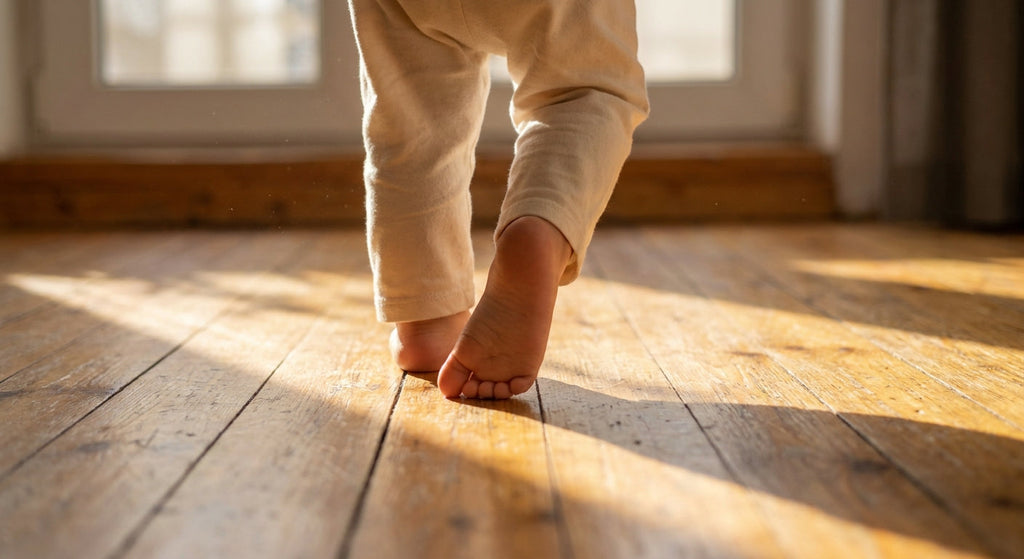
Safe barefoot play can be a simple part of a baby’s daily routine. It does not need to be long or formal. A few minutes during floor play, diaper changes, or indoor exploration may be enough.
Possible benefits include:
Better awareness of the floor
Bare feet give babies direct information about pressure and texture. This may help them learn how the body interacts with the ground.
More natural foot movement
Without a stiff sole, the foot can bend, spread, and move as the baby crawls or stands. This supports practice with small balance changes.
Easier observation of movement
Parents can see how the feet move when there are no socks or shoes covering them. This may help you notice rubbing, swelling, unusual stiffness, or a persistent difference between the two sides.
More comfortable early practice
Some babies dislike shoes at first. Bare feet can make crawling, pulling up, and cruising feel easier. Comfort may encourage a baby to practice movement more often.
Richer sensory play
A baby can explore safe surfaces such as a clean floor, a play mat, or a soft blanket. Always supervise this activity and check the area first.
These benefits answer part of “do babies need to go barefoot for brain development,” but they should be viewed as possible advantages, not guaranteed outcomes.
When babies should wear socks or shoes
Bare feet are not always the safest choice. Babies need protection when the floor or ground may cause injury.
Use socks, booties, or shoes when needed for:
• Cold weather
• Hot pavement, sand, or pool decks
• Sharp stones, glass, thorns, or rough ground
• Public spaces with unknown cleanliness
• Surfaces that may contain chemicals or animal waste
• Outdoor walking in places without safe, soft ground
For babies who are not walking, soft socks or booties are usually enough for warmth. Tight socks can leave marks around the ankles or toes, so check the skin after wearing them.
When a baby begins walking outside, choose shoes that fit well. Look for a flexible sole, a wide toe area, light weight, secure fastening, and enough room for the toes to move.
How to check shoe fit
Try these simple steps:
-
Check that the toes can spread and move.
-
Leave a small amount of growing room without allowing the foot to slide.
-
Look for red marks after the shoes come off.
-
Make sure the heel does not lift excessively.
-
Avoid hard, narrow, heavy, or highly structured shoes.
A shoe should protect the foot without acting like a stiff box. For early walkers, comfort and freedom of movement matter more than brand names or decorative features.
How to create safe barefoot time at home
If you want to know how to include barefoot time safely, start with the environment. A clean indoor floor is often a good place for short periods of supervised play.
Before removing socks or shoes:
• Pick up small objects that could cause choking
• Check the floor for splinters, sharp edges, and hot spots
• Keep pets nearby only if they are calm and supervised
• Avoid slippery surfaces near stairs
• Stay close when the baby is standing or cruising
• Keep the room warm enough for the baby
You can add gentle sensory variety without making the activity complicated. Let your baby touch a clean play mat, a soft blanket, or a firm floor. Avoid extreme textures, loose materials, and anything that may break apart.
Never place a baby’s bare feet on a hot surface. Babies may not have the ability to move away quickly or explain that something hurts.
A simple daily example
During floor play, remove the baby’s socks for five to ten minutes. Let the baby kick, roll, crawl, or stand with support. Then put the socks back on if the room is cool or the feet feel cold.
This approach keeps the focus on movement and comfort. It also avoids turning barefoot time into a test that a baby must pass.

Common mistakes parents should avoid
Many parents worry that they are harming development if their baby wears socks. That fear is not supported by good evidence. The bigger mistake is treating one habit as the secret to brain growth.
Avoid these common errors:
Keeping a baby barefoot in unsafe places
Bare feet can be hurt by heat, cold, sharp objects, or dirty surfaces. Protection should come first.
Choosing stiff shoes too early
Heavy shoes can make movement harder for a new walker. Use soft, flexible footwear until the child needs more protection.
Forcing barefoot time
Some babies dislike cold floors or certain textures. Stop if your baby cries, becomes distressed, or shows signs of discomfort.
Comparing one baby with another
Babies reach motor milestones at different times. A baby who walks later is not automatically delayed, and a baby who walks early is not automatically more advanced.
Ignoring persistent concerns
Contact a pediatrician if your baby consistently uses one side less, seems very stiff or floppy, loses a skill, or has pain, swelling, or unusual foot positioning.
In the families and caregivers I have advised, the most useful change is often simple: give babies more safe floor time and less pressure to perform. Parents sometimes focus on whether the feet are covered, while the baby mainly needs room, time, and encouragement to move.

Barefoot time by age and stage
The answer to “do babies need to go barefoot for brain development” can vary slightly by developmental stage. The basic principle remains the same: support movement, protect the feet, and follow the child’s cues.
Newborns
Newborns do not need shoes. Socks or soft booties can keep the feet warm, but they should not be tight.
Gentle kicking without restrictive clothing can let newborns move their legs freely. Always support the baby’s head and follow safe sleep guidance.
Crawling babies
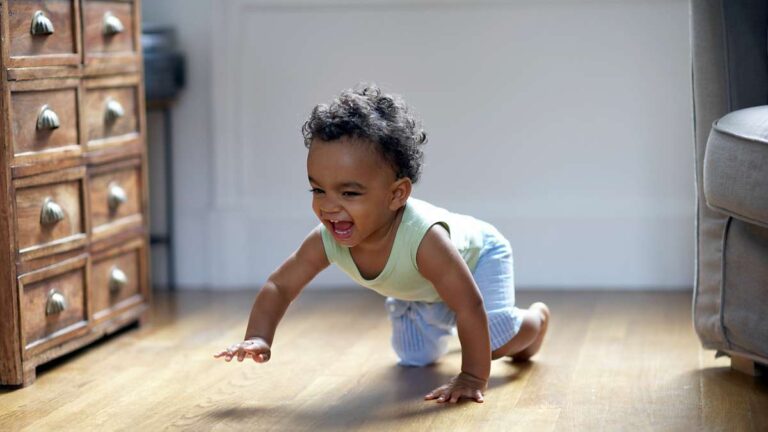
Bare feet can help crawling babies feel the floor during play. This may support body awareness and traction on a safe surface.
Barefoot time is optional. A baby can crawl and develop well while wearing comfortable socks.
Babies pulling to stand
This stage involves major practice with balance and weight shifting. Bare feet indoors may help the baby feel the floor while holding a stable surface.
Remove obstacles and block access to stairs, cords, and unstable furniture.
New walkers
New walkers often do well barefoot indoors when the floor is safe. Outdoors, use flexible shoes that protect the feet without restricting normal movement.
Check the fit often. Baby feet grow quickly, and a shoe that fit last month may now rub the toes.
Do babies need to go barefoot for brain development if they wear socks?
No. Babies can develop normally while wearing socks. Bare feet may offer extra sensory feedback, but socks do not stop healthy brain development when they fit comfortably and allow free movement.
Does walking barefoot make babies smarter?
There is no good evidence that barefoot walking increases intelligence. Barefoot movement may support balance, body awareness, and motor practice, but brain development depends on many experiences.
Should babies wear shoes before they walk?
Most babies do not need shoes before walking outdoors. Soft socks or booties are usually enough for warmth, while shoes become useful for protection when a baby walks outside.
Can barefoot time help a baby learn to walk?
It may help a baby feel the floor and move the feet freely. However, safe practice, strength, balance, and individual readiness matter more than whether the feet are bare.
How long should a baby go barefoot each day?
There is no required number of minutes. Offer short periods of supervised barefoot play indoors when the room and floor are safe, and stop when your baby seems cold or uncomfortable.
When should parents ask a doctor about a baby’s feet?
Ask a pediatrician about persistent pain, swelling, marked stiffness, unusual foot shape, major side-to-side differences, or loss of movement skills. A doctor can assess the child and refer you to a specialist if needed.
Conclusion
Babies do not need to go barefoot for brain development, but safe barefoot play can support sensory feedback, balance, and early movement. The best approach is flexible rather than rigid: allow bare feet on clean, safe indoor surfaces, and use well-fitting protection when the environment is cold, hot, sharp, or unsafe.
Think of barefoot time as one small piece of a much larger developmental picture. Give your baby plenty of safe floor play, warm interaction, sleep, and freedom to explore at their own pace. If you have concerns about movement or foot development, discuss them with your pediatrician, and share your experience or questions in the comments.