
Most babies can try plain Cheerios at about 9 months, once they can sit upright, pick up small foods, and move food from the front of the mouth to the back. Some babies may be ready closer to 8 months, while others need more time.
Cheerios are not a required food. They are simply one option for practicing self-feeding. Offer them only when your baby shows feeding readiness, and always watch your baby closely while they eat.
This guide applies to babies in the United States. It follows guidance from the CDC, the American Academy of Pediatrics, and the FDA.


What age can babies eat Cheerios?
Babies can usually eat plain Cheerios when they are ready for finger foods, often between 8 and 10 months. For many babies, this is around 9 months. Age alone does not decide readiness.
Your baby should be able to:
- Sit upright with little or no support.
- Keep their head and neck steady.
- Reach for food and bring it to their mouth.
- Pick up food with their fingers.
- Move food around with their tongue.
- Swallow soft foods without pushing them out each time.
- Show interest in food during family meals.
Early in this stage, babies may use their whole hand to grab food. This is called a palmar grasp. They may not yet have the small finger-and-thumb grip needed to pick up one Cheerio.
A baby does not need teeth to eat Cheerios. Babies can mash soft foods with their gums. Still, dry cereal can be firm, so the way you serve it matters.
The CDC recommends introducing solid foods at about 6 months, when a baby shows readiness signs. That does not mean every 6-month-old is ready for dry finger foods. At 6 months, many babies are still learning to eat smooth or mashed foods.

Are Cheerios safe for babies?
Plain Cheerios may be a reasonable finger food for a ready baby, but no dry cereal is completely risk-free. A Cheerio can become a choking hazard if a baby puts several pieces in the mouth at once, eats while lying down, or eats without close supervision.
The American Academy of Pediatrics lists hard, round, or difficult-to-chew foods as choking risks. Cheerios are small and dry, so parents should use careful feeding habits even though the cereal softens with saliva.
Follow these safety rules:
- Seat your baby upright. Use a stable high chair with the baby’s body supported.
- Stay within arm’s reach. Do not leave your baby alone with food.
- Offer a few pieces at a time. This can help prevent stuffing.
- Avoid distracted eating. Do not offer cereal in a car seat, stroller, or while your baby is walking or playing.
- Check the cereal first. Do not serve pieces that are stale, unusually hard, or clumped together.
- Learn infant CPR and choking first aid. The American Red Cross provides infant CPR information and classes.
Gagging is not the same as choking
Gagging is common when babies learn to eat. A gagging baby may cough, make noise, or bring food forward. This is part of the learning process.
Choking is different. A choking baby may be unable to breathe, cry, cough, or make sound. Treat suspected choking as an emergency and use age-appropriate first aid.
Do not put your fingers into a baby’s mouth to search for food. You could push the food farther back. If you can clearly see the food and can remove it safely, do so. Otherwise, follow infant choking first-aid steps and call 911 when needed.


Which type of Cheerios is best for babies?
Plain Original Cheerios are usually the simplest choice because they generally have less added sugar than many flavored varieties. However, formulas can change, so read the package label before serving.
Compare cereals by checking:
- Added sugar
- Sodium
- Serving size
- Ingredients
- Allergens
- Whole-grain content
The 2020–2025 Dietary Guidelines for Americans recommend avoiding added sugars for children younger than 2. Babies also need nutrient-rich foods, such as vegetables, fruits, beans, eggs, meat, fish, yogurt, and iron-fortified cereals. Cheerios should not replace these foods.
What about Honey Nut Cheerios?
Do not give Honey Nut Cheerios to a baby younger than 12 months unless your pediatrician gives you specific advice. The concern is honey.
The CDC advises against honey for children younger than 12 months because honey can contain spores that may cause infant botulism. The risk applies to honey in foods and drinks, not only to a spoonful of raw honey.
Product recipes can differ by country and can change over time. Check the ingredient list on the exact box in your home. If it contains honey or honey powder, wait until after your child’s first birthday.
Other flavored Cheerios may contain more added sugar, sweeteners, or sodium than plain cereal. They may be acceptable for older children in small amounts, but they are not the best first choice for a baby.
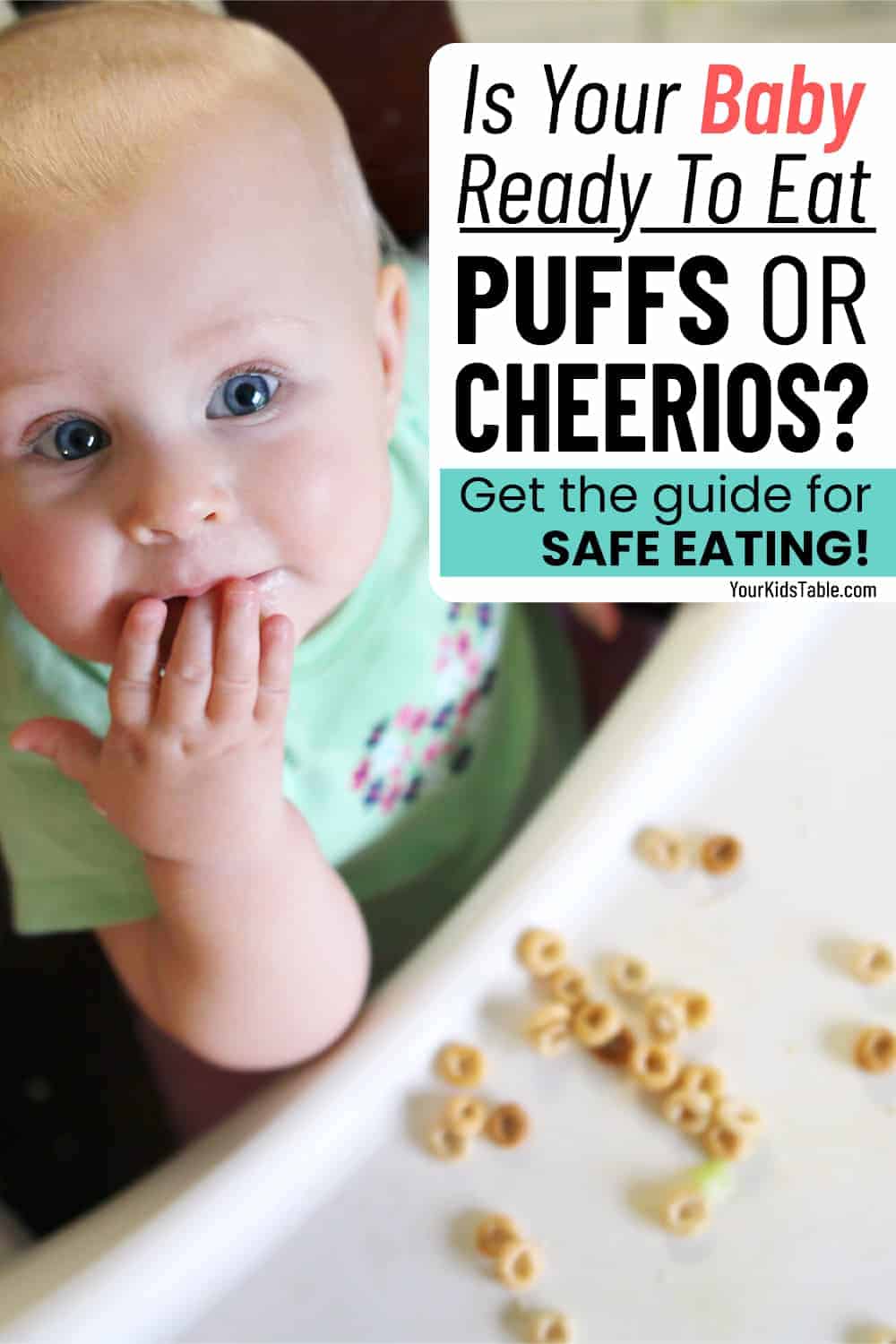
How to introduce Cheerios safely
Start with a small amount when your baby is calm and alert. A good time is after a milk feeding, rather than when your baby is very hungry. Breast milk or infant formula remains the main source of nutrition during the first year.
Use this simple process:
- Place your baby upright in a high chair.
- Put one or two plain Cheerios on the tray.
- Let your baby pick them up independently.
- Watch how your baby handles the cereal.
- Add a few more pieces only if your baby is managing them well.
- Stop if your baby becomes tired, upset, or repeatedly stuffs food into the mouth.
Some parents soften Cheerios with a little water, breast milk, formula, or plain yogurt. This can make the cereal easier to mash, but it may also make it sticky. Sticky foods can be harder to manage, so offer only a small amount and watch closely.
You can also crush Cheerios and mix them into a soft food, such as:
- Plain, unsweetened yogurt
- Mashed banana
- Applesauce with no added sugar
- Mashed avocado
- A vegetable puree
A crushed cereal mixture does not give the same finger-food practice as whole pieces. It may still be useful for a baby who is not yet ready to pick up dry cereal.
Do not put Cheerios into a bottle. Bottles should contain breast milk, infant formula, or water when your child’s health professional recommends water. Adding cereal to a bottle can increase choking risk and does not reliably help babies sleep longer.


How many Cheerios can a baby eat?
There is no single safe number for every baby. Begin with one or two pieces, then watch your baby’s response. If your baby handles them well, you can offer a small handful over time.
Think of Cheerios as a practice food, not a full meal. Babies have small stomachs and need foods with more nutrition than dry cereal alone.
A balanced meal might include:
- A soft vegetable or fruit
- An iron-rich food, such as egg, beans, meat, fish, or iron-fortified cereal
- A source of healthy fat, such as avocado or full-fat plain yogurt
- Breast milk or infant formula
Avoid using Cheerios as a reward or keeping them available all day. Frequent snacking can reduce interest in meals and may expose teeth to food often.
If your baby eats several pieces and seems comfortable, there is usually no need to panic. Watch for coughing, trouble breathing, repeated vomiting, swelling, rash, or other symptoms. Seek urgent help for breathing problems or signs of severe allergic reaction.

Can babies have Cheerios every day?
A baby can have plain Cheerios often, but daily use is not necessary. Variety matters more than one specific cereal.
Offer different textures and foods across the week. This helps your baby practice eating and supports exposure to many tastes. Include iron-rich foods regularly because babies need iron for healthy growth and development.
Cheerios are easy to carry, but convenience should not turn them into the main food in a baby’s diet. If your baby fills up on cereal, they may eat less of foods that provide more protein, iron, fat, and vitamins.
For babies with constipation, Cheerios may not be the best snack if they replace fruits, vegetables, beans, or other fiber-rich foods. Offer water with meals when your pediatrician says your baby is ready for water. The AAP explains that babies generally begin small amounts of water around 6 months, while breast milk or formula remains the main drink during the first year.

When should you avoid Cheerios?
Wait and ask your child’s pediatrician for guidance if your baby:
- Cannot sit upright safely.
- Has poor head or neck control.
- Frequently coughs or chokes during meals.
- Has trouble swallowing.
- Has a known condition that affects feeding.
- Was born prematurely and has not reached feeding readiness.
- Has a developmental delay that affects oral skills.
- Has had a possible food allergy reaction.
A pediatrician or feeding specialist can help with texture, posture, and food size. Do not assume that a baby who can pick up a toy is ready for dry cereal. Eating requires separate mouth and swallowing skills.
Stop feeding and seek medical advice if your baby develops hives, facial swelling, repeated vomiting, wheezing, trouble breathing, unusual sleepiness, or pale or blue skin after eating. Trouble breathing or swelling of the mouth or throat requires emergency care. Call 911.
Common mistakes when giving babies Cheerios
The most common mistake is focusing on age while ignoring readiness. A baby may be 9 months old but still need softer foods or more help with self-feeding.
Other mistakes include:
- Giving Honey Nut Cheerios before 12 months.
- Offering a large pile that encourages stuffing.
- Feeding in a reclined position.
- Walking away while the baby eats.
- Serving cereal in the car or stroller.
- Using flavored cereal as a main meal.
- Adding cereal to a bottle.
- Confusing gagging with choking.
- Offering food when the baby is overtired.
- Assuming a food is safe because another child ate it safely.


The safest routine is simple: upright position, close supervision, small amounts, plain cereal, and a varied diet.

Quick decision guide
| Baby’s situation | Can you offer plain Cheerios? | What to do |
|---|---|---|
| Younger than 6 months | No | Wait for solid-food readiness and medical guidance |
| Around 6–7 months, just starting solids | Usually not as dry finger food | Begin with suitable soft foods and follow readiness signs |
| Around 8–10 months with good sitting and grasping skills | Often yes | Start with one or two pieces and supervise closely |
| Older than 12 months | Usually yes | Continue to check the label and offer a varied diet |
| Any age with swallowing problems | Ask first | Get guidance from a pediatrician or feeding specialist |
| Younger than 12 months and cereal contains honey | No | Choose a honey-free product |
The key decision is not the exact month. It is whether your baby can sit safely, control food in the mouth, and eat under close supervision.

Key takeaways
- Babies often try plain Cheerios around 9 months, but readiness matters more than age.
- Cheerios are not a substitute for breast milk, infant formula, or a varied diet.
- Offer cereal only while your baby sits upright and you stay close.
- Start with one or two pieces.
- Avoid Honey Nut Cheerios and other foods containing honey before 12 months.
- Plain Cheerios are usually a simpler choice than sweetened varieties.
- Learn the difference between gagging and choking.
- Ask your pediatrician for help if your baby coughs, chokes, or struggles with textures.
FAQs
Can a 6-month-old eat Cheerios?
A 6-month-old may be ready to start solid foods, but many 6-month-olds are not ready for dry finger foods. Begin with foods that match your baby’s skills. Ask your pediatrician if you are unsure whether your baby can manage a Cheerio safely.
Do Cheerios dissolve in a baby’s mouth?
Cheerios soften with saliva, but they do not instantly dissolve. A baby still needs to manage the cereal with the tongue, gums, and swallowing muscles. Softening the cereal may change its texture, but it does not remove the need for supervision.
Can babies eat Cheerios without teeth?
Yes. Babies do not need teeth to eat many soft finger foods. They use their gums to mash food. However, your baby should still show other readiness signs, such as sitting upright and handling food well.
Can Cheerios cause constipation?
Cheerios do not cause constipation in every baby. Problems are more likely when cereal replaces fruits, vegetables, beans, or fluids that support a varied diet. If constipation continues or causes pain, contact your child’s pediatrician.
Are Cheerios a choking hazard?
Any small, dry food can cause choking. Reduce risk by using an upright high chair, offering a few pieces at a time, staying within reach, and learning infant choking first aid. No feeding method removes choking risk completely.
What should I do if my baby gags on a Cheerio?
Stay calm and watch your baby. Gagging is often noisy and can happen as babies learn to eat. Do not blindly sweep the mouth with your finger. If your baby cannot breathe, cough, cry, or make sound, treat it as choking and follow emergency first-aid steps.
Conclusion
Most babies can try plain Cheerios when they are ready for finger foods, often around 8 to 10 months. Start with a small amount, keep your baby upright, and supervise every bite.
Choose a honey-free, lower-sugar option. Keep Cheerios as one small part of a varied diet that includes iron-rich foods, fruits, vegetables, and breast milk or infant formula. If your baby has trouble swallowing or shows signs of an allergic reaction, stop and contact a health professional.
