Sometimes, but a stethoscope may not detect a fetal heartbeat until later in pregnancy.
Many expectant parents wonder, “Can you hear a baby’s heartbeat with a stethoscope?” The answer depends on the baby’s age, position, the placenta’s location, and the type of listening device. This guide explains what to expect, how fetal heart sounds differ from a parent’s pulse, and when professional care is needed.
Can You Hear a Baby’s Heartbeat With a Stethoscope?
Yes, it may be possible to hear a baby’s heartbeat with a stethoscope, but it is not easy or reliable in early pregnancy. Most people cannot hear it during the first trimester with a standard stethoscope.
A fetal heartbeat often becomes easier to detect with a fetoscope, a special medical device, around 18 to 20 weeks of pregnancy. A regular stethoscope may require more time, skill, and patience. In some cases, the heartbeat may not be clear until the third trimester.
Several factors affect whether you can hear it:
• Gestational age: The heartbeat is harder to detect early in pregnancy.
• Baby’s position: A baby facing away from the abdominal wall may be difficult to hear.
• Placenta location: An anterior placenta can soften or block sound.
• Parent’s body shape: Extra tissue between the device and uterus may reduce sound.
• Device quality: A clinical stethoscope or fetoscope works better than a low-cost home device.
• Listening skill: Health professionals learn where and how to listen.

When Can You Hear a Fetal Heartbeat?
The timing varies, so there is no single week that works for everyone. A transvaginal ultrasound may detect cardiac activity much earlier, often around 5 to 6 weeks of pregnancy. This is very different from hearing the heartbeat through the abdomen.
A handheld Doppler may detect fetal heart sounds around 10 to 12 weeks in some pregnancies. However, it can take longer, especially when the pregnancy is still early or the baby is moving.
A fetoscope usually works later. Many clinicians use one from about 18 to 20 weeks onward. With a regular stethoscope, hearing a baby’s heartbeat may be more realistic between 20 and 30 weeks, but some people still cannot hear it clearly.
Here is a simple comparison:
| Method | Usual time fetal cardiac activity may be detected |
|---|---|
| Transvaginal ultrasound | About 5 to 6 weeks |
| Handheld Doppler | Often 10 to 12 weeks |
| Fetoscope | Often 18 to 20 weeks |
| Regular stethoscope | Often 20 to 30 weeks or later |
These time ranges are estimates, not guarantees. Not hearing a heartbeat with a stethoscope does not prove that anything is wrong.

Why Is a Baby’s Heartbeat Hard to Hear With a Stethoscope?
A fetal heartbeat is quiet and sits deep inside the uterus. Sound must travel through the baby’s body, amniotic fluid, uterus, abdominal wall, and the listening device before reaching your ears.
The baby’s heart is also very small. Its sounds can be covered by movement, the parent’s breathing, bowel sounds, or the parent’s own heartbeat.
The placenta can make a difference as well. When the placenta is attached to the front wall of the uterus, it may act like a soft cushion. This can make fetal heart sounds harder to detect.
A baby’s position matters, too. The clearest sound usually comes from the baby’s back because the heart is close to the spine. If the baby turns toward the parent’s back, a stethoscope may pick up little or no sound.
This is why a trained health professional may move the device across several areas of the abdomen. They are not guessing. They are looking for the spot where the sound is strongest and most consistent.

What Does a Fetal Heartbeat Sound Like?
A fetal heartbeat is often described as a fast, steady “gallop” or a soft “whoosh-whoosh.” It is much faster than an adult heartbeat.
A typical fetal heart rate is about 110 to 160 beats per minute. The exact rate can change with movement, sleep, and the stage of pregnancy.
The parent’s pulse is slower. It usually falls near 60 to 100 beats per minute, although exercise, stress, illness, and pregnancy can change it.
To avoid confusion, a clinician may check the parent’s pulse at the same time. If the sound matches the parent’s pulse, it may be the parent’s heartbeat rather than the baby’s.
A simple guide:
• Fetal heartbeat: Usually 110 to 160 beats per minute.
• Parent’s pulse: Often 60 to 100 beats per minute.
• Fetal sound: Fast, regular, and galloping.
• Parent’s pulse sound: Slower and often matches the wrist or neck pulse.
Counting beats by ear is not always accurate. A monitor or ultrasound gives a more dependable reading.

How Do Professionals Listen for a Fetal Heartbeat?
During a prenatal visit, a health professional first estimates the baby’s location. They may use the pregnancy stage, abdominal feel, and previous exam findings to choose the best area.
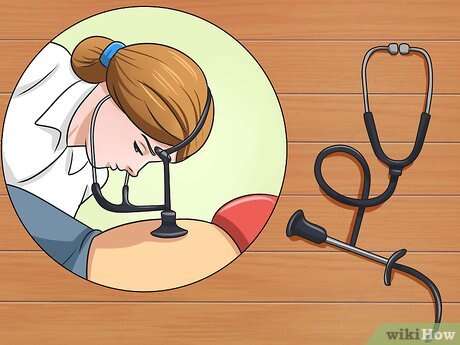
The parent usually lies back in a comfortable position. The clinician places the fetoscope or Doppler over the abdomen and listens for a steady rhythm.
With a fetoscope, the clinician must place their ear close to the device. This takes practice. A standard stethoscope may require the same careful placement, but its design is not made specifically for fetal heart sounds.
A professional may also compare the sound with the parent’s pulse. This helps prevent a common mistake: confusing the parent’s heartbeat with the baby’s.
A normal prenatal check does more than listen for a heartbeat. It may also include:
• Blood pressure measurement.
• Urine testing.
• Fundal height measurement.
• Questions about movement, pain, bleeding, or fluid loss.
• Ultrasound or electronic monitoring when medically needed.
Hearing a heartbeat is reassuring, but it is only one part of pregnancy care.

Can You Hear a Baby’s Heartbeat at Home?
Some parents try to listen at home with a standard stethoscope, fetoscope, or home Doppler. A stethoscope is generally low risk because it does not send energy into the body. The main problem is that it may not give a clear answer.
A home Doppler can create more concern. A person may hear the parent’s pulse, blood flow through the placenta, or other sounds and mistake them for the baby’s heartbeat. The opposite can also happen: a healthy heartbeat may be missed because of the baby’s position.
Home devices should not replace prenatal visits. They cannot confirm that a pregnancy is healthy, and they cannot reliably detect problems such as reduced oxygen, growth concerns, or placental complications.
If you choose to try a stethoscope, use it only as a gentle listening activity. Do not use the result to decide whether to call a doctor or visit an emergency department.

Safe Tips for Trying to Hear a Baby’s Heartbeat
If your health professional has said that home listening is appropriate, a few steps may improve your chance of hearing fetal heart sounds.
-
Wait until later pregnancy. A standard stethoscope is unlikely to work well in early pregnancy.
-
Choose a quiet room. Turn off fans, music, and other sources of noise.
-
Lie in a comfortable position. Many people find that slightly turning to one side feels better than lying flat for a long time.
-
Start low on the abdomen. The best location depends on the baby’s position and pregnancy stage.
-
Move slowly. Shift the stethoscope a small amount at a time rather than pressing hard.
-
Check your own pulse. Feel your wrist while listening to make sure the sound is not your heartbeat.
-
Stop if you feel pain, dizziness, shortness of breath, or discomfort.
-
Do not keep searching for a long time. Repeated attempts can increase worry without providing useful information.
A useful lesson from routine prenatal care is that technique matters as much as equipment. Even a trained clinician may not hear a heartbeat right away. Not finding it with a stethoscope is not the same as finding a problem.

Stethoscope vs. Doppler vs. Ultrasound
These tools do different jobs. They should not be treated as equal ways to check a pregnancy.
Regular stethoscope
A regular stethoscope listens to sounds through the abdominal wall. It is simple and does not use imaging or electronic sound waves. However, it may not detect fetal heart sounds until later pregnancy.
Fetoscope
A fetoscope is designed for listening to fetal heart sounds. It often works better than a standard stethoscope during the second half of pregnancy. It still requires good placement and experience.
Handheld Doppler
A Doppler uses ultrasound to detect movement from the fetal heart and turns it into an audible sound. It may detect a heartbeat earlier than a stethoscope, but home use can lead to false reassurance or unnecessary fear.
Ultrasound
Ultrasound creates an image and can show cardiac activity, the uterus, the placenta, and the baby’s development. It is the most useful option when a clinician needs more information than sound alone can provide.
The best tool depends on the medical question. A simple stethoscope cannot replace an ultrasound when there is pain, bleeding, uncertain pregnancy dating, or concern about fetal well-being.

When Should You Contact a Health Professional?
Contact your prenatal care team if you are worried about your pregnancy, even if you heard a sound with a stethoscope. A heartbeat heard at home does not rule out other pregnancy concerns.
Seek urgent medical care for symptoms such as:
• Heavy vaginal bleeding.
• Severe or lasting abdominal pain.
• Leakage of fluid.
• Fainting or severe dizziness.
• Chest pain or trouble breathing.
• Severe headache, vision changes, or sudden swelling.
• A noticeable decrease in fetal movement after your clinician has taught you what to expect.
Do not wait for a home Doppler or stethoscope check if you have warning signs. It is safer to receive a professional assessment.
A common mistake is assuming that hearing a heartbeat means everything is fine. Another mistake is assuming that not hearing one means a pregnancy has ended. Both conclusions can be wrong without a proper clinical exam.
What Research and Clinical Guidance Say
Medical guidance supports using ultrasound, Doppler monitoring, and fetal heart assessment based on the pregnancy stage and clinical need. Fetal heart rate is interpreted along with movement, growth, blood flow, symptoms, and other findings.
The American College of Obstetricians and Gynecologists describes fetal heart rate assessment as one part of prenatal and labor care. It also emphasizes that monitoring methods have limits and must be interpreted by trained professionals.
Auscultation with a fetoscope remains a useful clinical skill, especially later in pregnancy. Still, it is less sensitive than ultrasound or electronic fetal monitoring for many medical questions.
This distinction matters for online health information. A stethoscope can help a parent connect with the pregnancy, but it is not a diagnostic test.
Frequently Asked Questions
Can you hear a baby’s heartbeat with a stethoscope at 12 weeks?
Usually, no. A handheld Doppler or ultrasound may detect fetal cardiac activity around this time, but a regular stethoscope generally cannot.
Can you hear a baby’s heartbeat with a stethoscope through the belly?
Sometimes, especially later in pregnancy. The result depends on the baby’s position, placenta location, body tissue, equipment, and the listener’s skill.
Can you hear a baby’s heartbeat with a stethoscope at 20 weeks?
It may be possible at 20 weeks, particularly with a fetoscope and an experienced clinician. A regular stethoscope may still fail to pick up a clear sound.
How can you tell a fetal heartbeat from the mother’s heartbeat?
A fetal heartbeat is usually faster, often between 110 and 160 beats per minute. Checking the parent’s pulse at the same time can help, but professional equipment gives a more reliable answer.
Is it safe to use a stethoscope on your pregnant belly?
Yes, using a standard stethoscope is generally safe because it only listens to sound. However, it should not replace prenatal care or delay medical attention.
What should I do if I cannot hear the heartbeat?
Do not assume the worst. Contact your prenatal care provider, especially if you have pain, bleeding, fluid loss, or reduced fetal movement.
Is a home Doppler better than a stethoscope?
A Doppler may detect fetal heart sounds earlier, but it can be misread and may cause false reassurance. Neither device replaces a professional evaluation.
Conclusion
So, can you hear a baby’s heartbeat with a stethoscope? Sometimes, but the heartbeat is often too faint to detect until the middle or later part of pregnancy. A fetoscope, Doppler, or ultrasound may work earlier, yet each tool has limits.
Use home listening only as a gentle experience, not as a health check. Keep prenatal appointments, learn the warning signs, and contact your care team when something feels wrong. For more pregnancy guidance, explore trusted medical resources or share your questions with your prenatal provider.