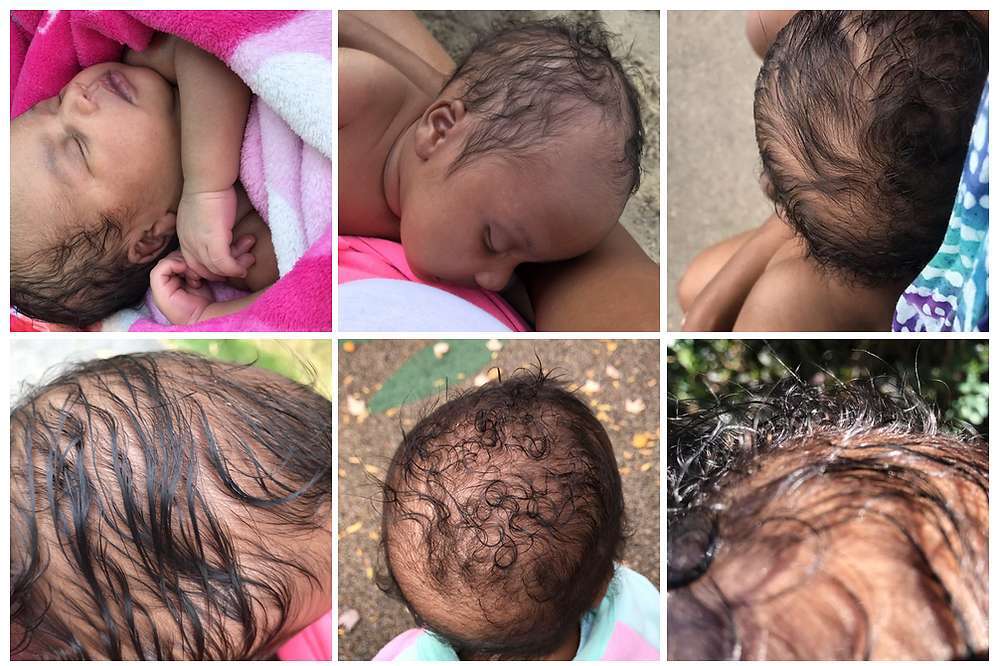
Many babies lose some or all of their newborn hair during the first few months of life. Shedding often starts between 2 and 4 months, but the timing can vary. Some babies lose hair soon after birth, while others keep their first hair for a year or longer.
This hair loss is usually normal. A baby’s hair may fall out because newborn hairs enter a resting phase after birth, or because the back of the head rubs against a crib mattress, car seat, or other surface. New hair usually grows back over the next several months.
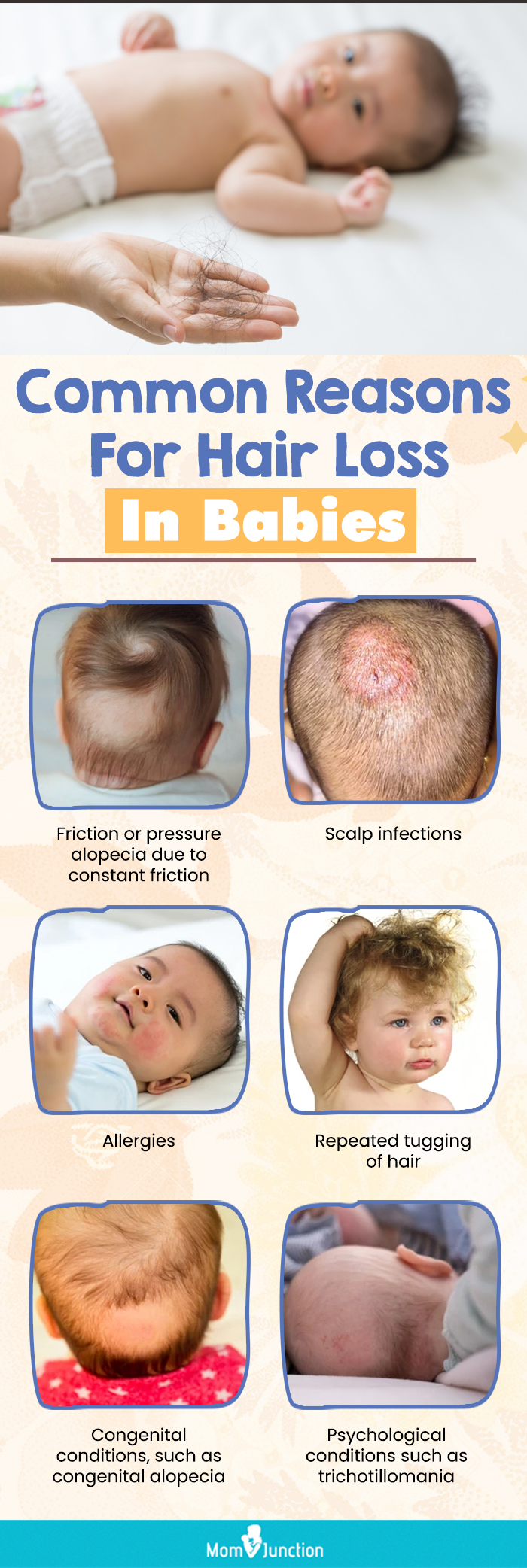
Why Do Babies Lose Their Hair?
Most infant hair loss happens because the normal hair-growth cycle changes after birth. Hormone levels also shift, and many newborn hairs move from the growth phase into a resting phase. The old hairs then shed as new hairs prepare to grow.
This process is sometimes called telogen effluvium. It can happen without illness and does not mean that the baby will have thin hair permanently.
A baby may also lose hair from repeated rubbing. The back or sides of the head may rub against:
- A crib mattress
- A bassinet
- A stroller
- A car seat
- A play mat
- A parent’s shoulder
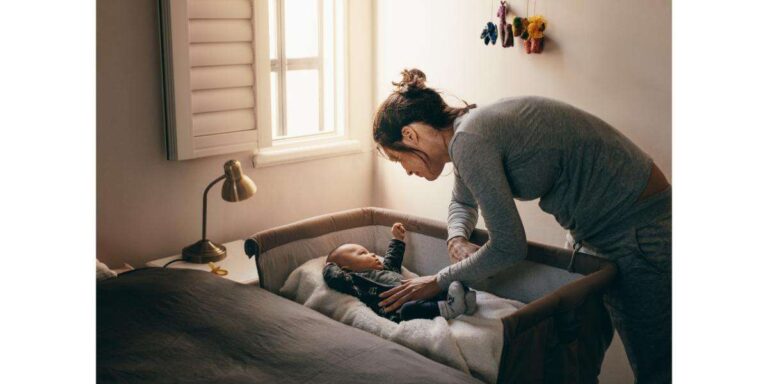
This type of hair loss is called friction alopecia. It is common because young babies spend much of their time lying on their backs. Back sleeping remains the safest sleep position, so parents should not place a baby on the stomach to prevent hair loss.
What is lanugo?
Lanugo is fine, soft hair that covers much of a fetus’s body before birth. It often falls out before delivery, but some babies are born with it, especially babies born early.
Lanugo is not the same as the thicker hair on the scalp. It usually disappears on its own during the first weeks of life.
Does cutting or shaving a baby’s hair make it grow back thicker?
No. Cutting or shaving changes only the visible hair shaft. It does not change the hair root, growth rate, color, or thickness.
Hair can look darker or thicker after a haircut because the new ends are blunt. That change is only an appearance effect.
When Does Baby Hair Usually Fall Out?
Baby hair often sheds during the first 2 to 6 months. The exact timing differs from child to child.
Some babies have noticeable shedding. Others lose hair so slowly that parents see only a thin patch on the back of the head. A few babies keep their birth hair and do not have an obvious shedding phase.
| Baby’s age | What parents may notice |
|---|---|
| Birth to 1 month | Fine body hair may shed. Scalp hair may stay the same. |
| 2 to 4 months | Newborn scalp hair may begin to thin or fall out. |
| 4 to 6 months | A bald or thin spot may appear where the head rubs. |
| 6 to 12 months | New scalp hair often becomes easier to see and may have a different color or texture. |
| Around 12 months and later | Hair growth may look more steady, though some children remain fine-haired. |
This timeline is a guide, not a rule. A baby’s hair can grow in before the original hair fully sheds. New hair may also look different from the hair present at birth. It may be straighter, curlier, lighter, darker, or finer.

Is a Bald Spot on a Baby’s Head Normal?
A small bald spot on the back of the head is often normal, especially between about 3 and 6 months. The spot usually comes from normal shedding combined with friction.
A normal friction-related bald spot often has these features:
- It is on the back or lower side of the scalp.
- The skin looks smooth and normal.
- There is no swelling, pus, bleeding, or open sore.
- The baby seems comfortable.
- Short new hairs may begin to appear over time.
Do not change safe-sleep practices to prevent a bald spot. The American Academy of Pediatrics recommends placing babies on their backs for every sleep on a firm, flat sleep surface without loose bedding, pillows, or positioners.
During awake time, offer supervised tummy time. This can reduce the amount of time a baby rests on the back of the head and also supports motor development. A parent or caregiver should stay with the baby during tummy time.
Avoid using sleep positioners, rolled towels, wedges, or soft head supports unless a child’s clinician gives specific medical instructions. These items can create a suffocation risk.
When Should You Call a Pediatrician?
Contact your child’s pediatrician if hair loss looks unusual, spreads quickly, or affects the scalp skin. A medical check is especially useful when hair loss occurs with other symptoms.
Call the pediatrician about:
- Round, sharply defined bald patches
- Red, swollen, scaly, crusted, or painful skin
- Pus, bleeding, or open sores
- Broken hairs or black dots on the scalp
- Severe itching or frequent scratching
- A rash on other parts of the body
- Fever, poor feeding, unusual sleepiness, or poor weight gain
- Hair loss after a new medicine or significant illness
- Hair that does not begin to return after many months
- Hair loss involving the eyebrows or eyelashes
Seek prompt medical advice for a newborn with a spreading scalp infection, marked swelling, fever, or a baby who seems unwell.
Several conditions can cause hair loss, including tinea capitis, a fungal scalp infection; alopecia areata, an immune-related condition that can cause smooth patches; skin inflammation; and, rarely, problems affecting overall health. These conditions cannot be diagnosed reliably from a photo alone.
Do not use antifungal creams, steroid creams, essential oils, hair-growth products, or supplements on a baby’s scalp unless a clinician recommends them. Some adult products can irritate infant skin or delay the correct diagnosis.

How to Care for a Baby’s Hair and Scalp
Normal baby hair loss does not need treatment. Gentle care can protect the scalp and reduce irritation.
- Wash the scalp gently. Use a small amount of mild baby shampoo as needed. Rinse well and pat the scalp dry.
- Do not pull or brush hard. Use a soft brush only when needed. Avoid tight bands, clips, braids, or styles that pull on the roots.
- Do not scratch flakes. If your baby has cradle cap, loosen scales gently after they soften. Picking can cause bleeding or infection.
- Keep sleep surfaces safe. Do not add pillows, padded hats, or head supports to reduce rubbing.
- Use supervised tummy time. Give the back of the head a break while the baby is awake and watched.
- Watch the skin, not just the hair. Changes such as redness, swelling, sores, or scaling matter more than the amount of hair in the brush.
Cradle cap, also called infantile seborrheic dermatitis, can cause greasy or flaky scales on the scalp. It is common and usually harmless. It does not usually cause permanent hair loss, although hairs may come out with thick scales if a parent picks at them.
A baby should not wear a hat indoors for long periods if the scalp becomes hot or sweaty. Hats may be useful outdoors in suitable weather, but they should fit safely and should not be used during sleep.
What New Hair Growth May Look Like
New hair may appear uneven at first. A baby can have short hairs in one area and longer hair in another. This does not always mean that the hair is falling out again.
The replacement hair may differ from the birth hair in:
- Color
- Thickness
- Curl pattern
- Texture
- Growth speed
Hair growth is also influenced by family traits. Some babies have a full head of hair early, while others have fine hair until toddlerhood. The amount of hair at birth does not reliably predict how much hair a child will have later.
Take a photo once a month in similar light if you want to track change. Daily checks can make normal variation seem more dramatic. Bring the photos to a pediatric visit if the pattern concerns you.

Common Questions About Infant Hair Loss
Do all babies lose their newborn hair?
No. Many babies shed some hair, but not every baby has noticeable hair loss. Some keep their birth hair, and some grow new hair underneath it.
Does baby hair fall out at 3 months?
It can. Hair loss around 3 months is common, but it may begin earlier or later. A small, smooth patch on the back of the head at this age is often linked to normal shedding and friction.
Can a baby lose hair from lying on the back?
Yes. Repeated rubbing can cause a temporary thin or bald patch. Babies should still sleep on their backs because back sleeping lowers the risk of sleep-related infant death.
How long does it take for a baby’s hair to grow back?
New hair often becomes visible within several months, but the full pattern can take longer. Many babies have more noticeable hair by 6 to 12 months. The timing varies widely.
Should I put oil on my baby’s scalp?
Use scalp products only when needed and choose products recommended by your child’s clinician. Oils do not stop normal hair shedding. Some products can irritate the scalp or worsen flaking.
Can teething cause a baby’s hair to fall out?
Teething is not a proven direct cause of hair loss. Hair shedding that happens during the same period may simply reflect the normal infant hair cycle or friction.
Key Takeaways
- Baby hair commonly sheds during the first few months of life.
- Hair loss often starts around 2 to 4 months, but normal timing varies.
- A bald spot on the back of the head is often caused by rubbing and is usually temporary.
- Always follow safe-sleep guidance: place babies on their backs on a firm, flat surface.
- Call a pediatrician for spreading bald patches, scalp redness, scaling, sores, pain, itching, or other signs of illness.
- Do not use adult hair-loss treatments or medicated products without medical advice.
Sources and Further Reading
- American Academy of Pediatrics: Safe Sleep and Back Sleeping
- American Academy of Pediatrics: Cradle Cap
- Seattle Children’s: Hair Loss
- American Academy of Dermatology: Hair Loss in Children
- Centers for Disease Control and Prevention: Ringworm

Conclusion
When a baby’s hair falls out during the first months of life, the change is usually part of normal growth. Shedding may affect the whole scalp or create a small friction spot on the back of the head. In most cases, the hair returns without treatment.
Keep the scalp clean, avoid pulling or harsh products, and continue safe back sleeping. If the scalp looks inflamed, the bald patches are sharply defined, or your baby seems sick, contact a pediatrician for an examination.