A bassinet wedge is usually not safe for infant sleep. Babies should sleep on a firm, flat, level surface on their backs. Do not add a wedge, pillow, rolled towel, or positioner to raise your baby’s head or stop rolling.
This guidance applies in the United States. The American Academy of Pediatrics (AAP) and the federal Safe to Sleep program advise using a firm, flat, non-inclined sleep surface with only a fitted sheet.
A wedge may look small and harmless. But even a slight slope can let a baby slide or roll into a position that blocks breathing. It may also create gaps between the baby, mattress, and bassinet sides.

What is a bassinet wedge?
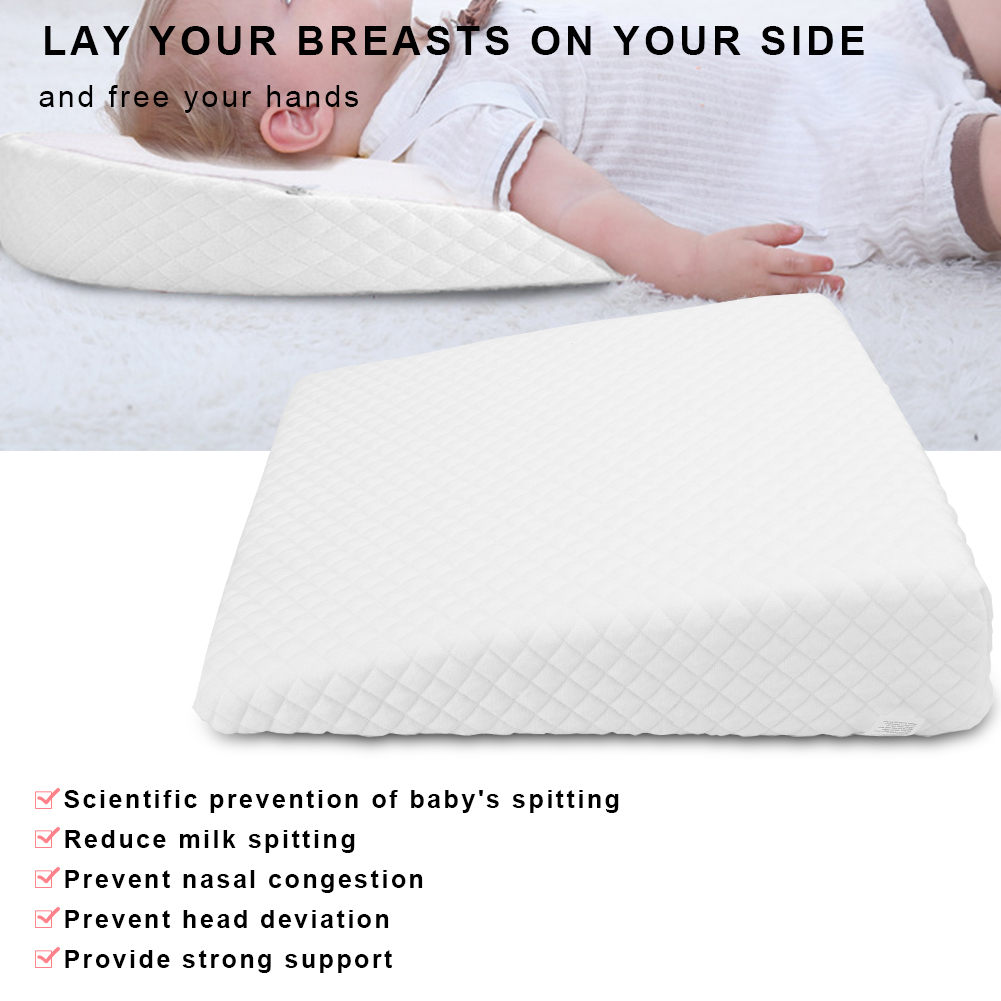
A bassinet wedge is a sloped insert or support that raises one end of a bassinet mattress. Some products are sold for baby reflux, congestion, or head positioning. Others are made as “sleep positioners” or mattress inclines.
These products are not all the same:
- Under-mattress wedge: A sloped support placed below the mattress.
- Mattress insert: A pad or cushion placed on top of the mattress.
- Positioner: A device with side supports that aims to hold a baby in one place.
- Inclined sleeper: A sleep product designed with a built-in slope.
The safety concern applies to both homemade and commercial products. A wedge placed under the mattress can still change the baby’s body position. A soft insert or positioner adds extra material that can press against the face or interfere with breathing.
The word “bassinet” does not make every accessory safe. A product is suitable for a bassinet only when the bassinet maker designed, tested, and approved it for that exact model and use.
Why are bassinet wedges risky?
Bassinet wedges can create several hazards, even when a baby starts the night on their back.
Sliding and airway blockage
On a sloped surface, a young baby may slide downward. The head can fall forward, with the chin pressed toward the chest. This position can narrow the airway.
Babies do not always have the strength to lift or turn their heads. A small change in position can matter more for a newborn than for an older child.
Rolling into an unsafe position
A slope may make it easier for a baby to roll onto their side or stomach. Once there, a baby may not be able to roll back.
The U.S. Consumer Product Safety Commission (CPSC) has warned about inclined infant sleep products. Federal rules limit the angle of covered infant sleep products to no more than 10 degrees because steeper designs may increase the risk of suffocation.
That rule does not mean a 10-degree wedge is safe to add to a bassinet. A product’s design, mattress fit, side height, and restraint system also matter. A loose accessory can make a level bassinet unsafe.
Gaps and entrapment
A wedge can lift or bend the mattress. That may create a gap between the mattress and the bassinet wall.
A baby’s face, head, arm, or body could become trapped in that gap. A mattress that no longer fits tightly may also move when the baby kicks or turns.
Soft materials near the face
Many wedges use foam, padding, or fabric. These materials can cover a baby’s nose and mouth. They may also trap heat.
The AAP safe-sleep recommendations advise keeping pillows, blankets, bumpers, stuffed toys, and other soft items out of the infant’s sleep area.

Can a wedge help a baby with reflux?
A bassinet wedge is not a proven or recommended home treatment for infant reflux during sleep.
Babies with reflux should still be placed flat on their backs for sleep. The AAP explains that back sleeping does not increase the risk of choking from reflux. A healthy baby’s airway anatomy and protective reflexes help reduce that risk.
Raising the head of a crib, bassinet, or mattress does not reliably stop reflux. It may cause the baby to slide into a dangerous position. The U.S. Food and Drug Administration (FDA) also warns parents not to use infant sleep positioners because of suffocation risk.
Do not place a baby in a car seat, swing, bouncer, or inclined product for routine sleep to manage reflux. If your baby falls asleep there, move the baby to a firm, flat, separate sleep surface as soon as practical.
Ask your child’s pediatrician about feeding and holding changes that may help while your baby is awake. Do not thicken feeds, change formula, or use reflux medicine without medical advice.

Are bassinet wedges safe if the baby cannot roll yet?
No. The risk is not limited to babies who can roll.
Newborns can slide, slump, turn their heads into soft material, or move into a chin-to-chest position. They may not have the muscle control to correct their posture.
Safe sleep rules apply from birth. Place the baby on their back for every nap and night until the baby’s first birthday, unless a qualified medical professional gives different, specific instructions for a diagnosed condition.
A baby who cannot roll may need even more protection from added items. Lack of rolling skill does not make an incline safe.

What should you use instead of a bassinet wedge?
Use a bassinet or crib that meets current U.S. safety rules and has:
- A firm, flat, level mattress.
- A tight-fitting sheet made for that mattress.
- No gap between the mattress and the bassinet sides.
- No pillows, wedges, positioners, blankets, or padded inserts.
- A clear sleep area with the baby placed on their back.
Keep the baby’s sleep space in your room, but not in your bed. The AAP recommends room sharing without bed sharing, ideally for at least the first six months.
If you are worried about reflux, congestion, or noisy breathing, contact the baby’s pediatrician. Safe options may involve feeding technique, awake upright time, or treatment for an underlying problem. These steps depend on the baby’s age and health.
Seek urgent help for signs of breathing trouble, such as blue or gray lips, severe chest pulling, pauses in breathing, choking, or unusual difficulty waking. Call 911 in the United States for an emergency.
What if the bassinet came with a wedge?
Check the bassinet’s official manual and the manufacturer’s current safety information before using any accessory.
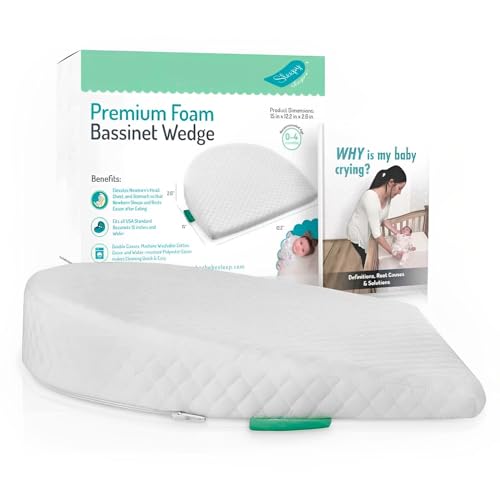
If the wedge is a required part of the original sleep surface, follow the exact instructions for that model. Do not replace it with a different wedge or use it in another bassinet. The manufacturer’s instructions should explain the approved mattress, orientation, age range, and setup.
However, stop using the product and ask the manufacturer for clarification if:
- The wedge is not shown in the manual.
- The item is an aftermarket accessory.
- The mattress does not sit flat or fit tightly.
- The baby slides, rolls, or sinks.
- The product creates a gap.
- The label makes medical claims without clear safety instructions.
- The bassinet or accessory has been recalled.
You can search U.S. recalls through the CPSC recall database. Do not rely only on online reviews or seller descriptions. A product can have many positive reviews and still be unsuitable for unsupervised infant sleep.

How to check a bassinet for safe sleep
Before each use, complete this quick check:
- Check the surface. It should be firm, flat, and level.
- Check the mattress fit. There should be no visible space between the mattress and the sides.
- Clear the sleep area. Remove wedges, pillows, toys, loose blankets, and positioners.
- Check the sheet. Use only a fitted sheet made for that mattress.
- Check the baby’s position. Place the baby on their back, with the head and face uncovered.
- Check the setup. Keep the bassinet on a stable surface and follow the manual.
- Check for damage. Do not use a bassinet with broken parts, sagging materials, or an altered frame.
A wearable blanket can help keep a baby warm without loose bedding. Choose one that fits the baby’s size and does not cover the head or face. Weighted sleep sacks and weighted swaddles should not be used.

Common mistakes parents make with bassinet wedges
The most common mistake is treating a small incline as harmless. A slope of only a few degrees can still change how the baby’s head and body rest.
Other mistakes include:
- Putting a towel under one end of the mattress.
- Using a nursing pillow as a sleep positioner.
- Adding a foam wedge after a pediatrician’s general comment about reflux.
- Leaving a baby to sleep in a swing or bouncer because the baby sleeps better there.
- Using a product designed for supervised rest as an overnight sleep space.
- Assuming that “orthopedic,” “anti-reflux,” or “breathable” means safe for sleep.
- Placing a second mattress on top of the original one.
- Using an old bassinet without checking for recalls or damaged parts.
A medical professional may recommend a special sleep setup for a rare condition. That advice should be specific to your baby and should explain the risks, the exact product, and how to use it. General reflux advice is not the same as an individualized medical plan.

Bassinet wedge safety: a simple decision guide
| Situation | Safer choice |
|---|---|
| You want to raise the baby’s head | Keep the sleep surface flat and ask the pediatrician about the concern |
| The baby spits up often | Continue back sleeping and discuss feeding or reflux symptoms with the pediatrician |
| The baby sleeps better at an angle | Move the baby to a firm, flat surface for routine sleep |
| The wedge came from a third-party seller | Do not use it unless the bassinet maker confirms it in writing for that model |
| The bassinet manual requires an included incline | Follow the exact manual and check for updated manufacturer safety notices |
| The mattress has a gap after adding the wedge | Remove the wedge and do not use the setup |
| The baby has breathing symptoms | Seek medical care; do not treat breathing trouble with an incline |
The deciding factor is not whether the wedge feels stable to an adult. The key question is whether the complete sleep system keeps the baby flat, clear of soft items, and unable to slide into a dangerous position.

Frequently asked questions
Is a slight bassinet incline safe for a newborn?
A parent should not add a slight incline to a bassinet. U.S. safe-sleep guidance calls for a firm, flat, level surface. A small slope can still allow sliding, rolling, or airway obstruction.
Can I put a wedge under a bassinet mattress for congestion?
No. A wedge is not a safe treatment for routine infant congestion. Contact the baby’s pediatrician for age-appropriate care. Seek urgent help for breathing distress.
Are anti-reflux bassinets safe?
It depends on the exact product and design, but parents should not assume that an “anti-reflux” label means safe for unsupervised sleep. Check whether the product is an approved infant sleep product, review its manual, and look for CPSC recalls. Avoid adding an aftermarket wedge.
Can babies sleep on an incline in a supervised setting?
Supervision does not remove the risk of sliding or airway blockage. Use inclined products only as the maker directs, and do not use them for routine sleep. If a baby falls asleep in an inclined device, move them to a firm, flat sleep surface.
What if my pediatrician told me to elevate the mattress?
Ask the pediatrician to clarify the exact setup and why it is needed. Explain that current U.S. safe-sleep guidance recommends a flat surface. For a diagnosed medical condition, follow the child’s clinician, but do not improvise with towels, pillows, or an unapproved wedge.
Bottom line
For most babies, bassinet wedges are not safe for sleep. Use a firm, flat, level mattress with a fitted sheet and keep the bassinet empty except for the baby.
If reflux, congestion, or sleep problems worry you, call the baby’s pediatrician rather than changing the angle of the sleep surface. Remove any unapproved wedge today, check the bassinet manual and CPSC recalls, and use a clear, level sleep space.