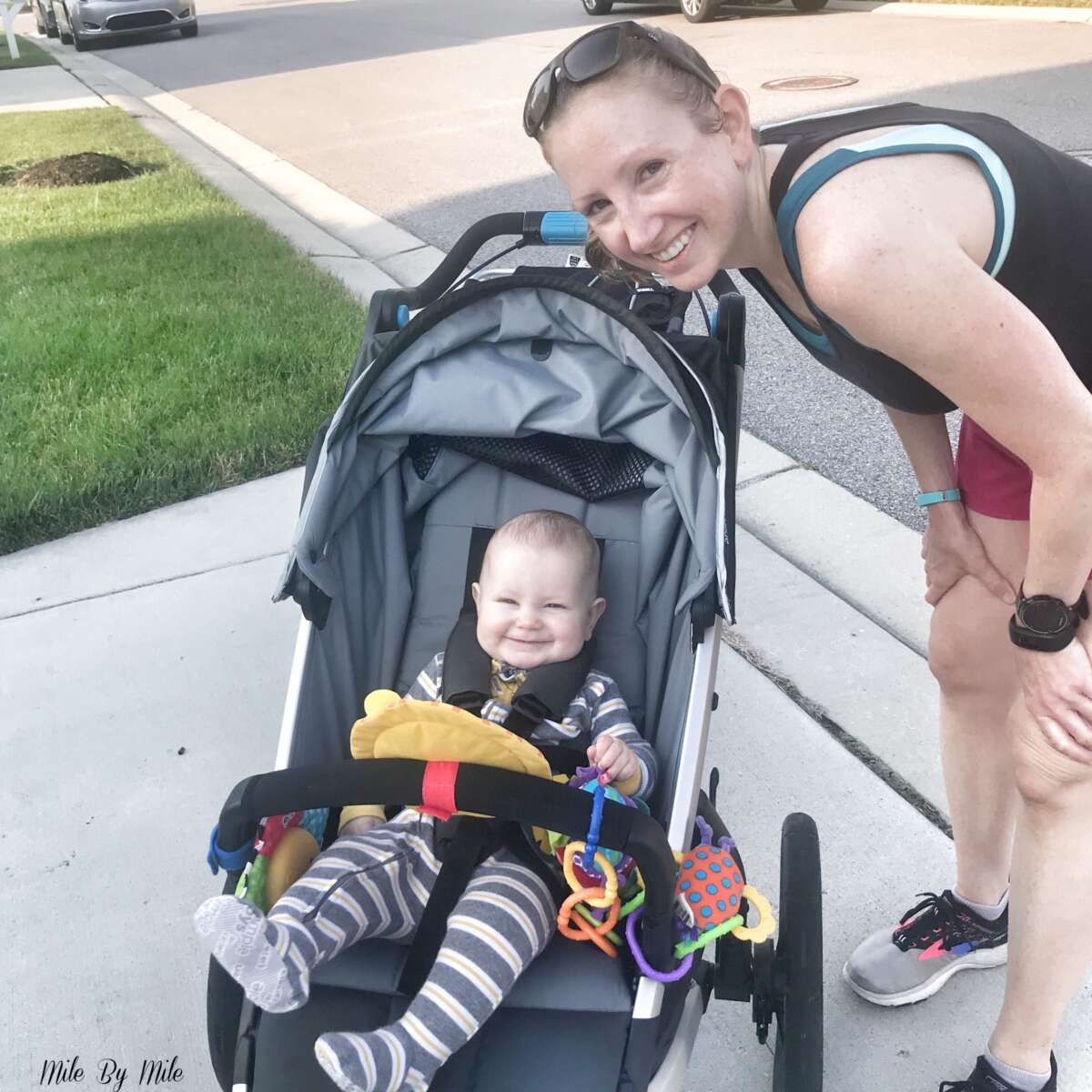
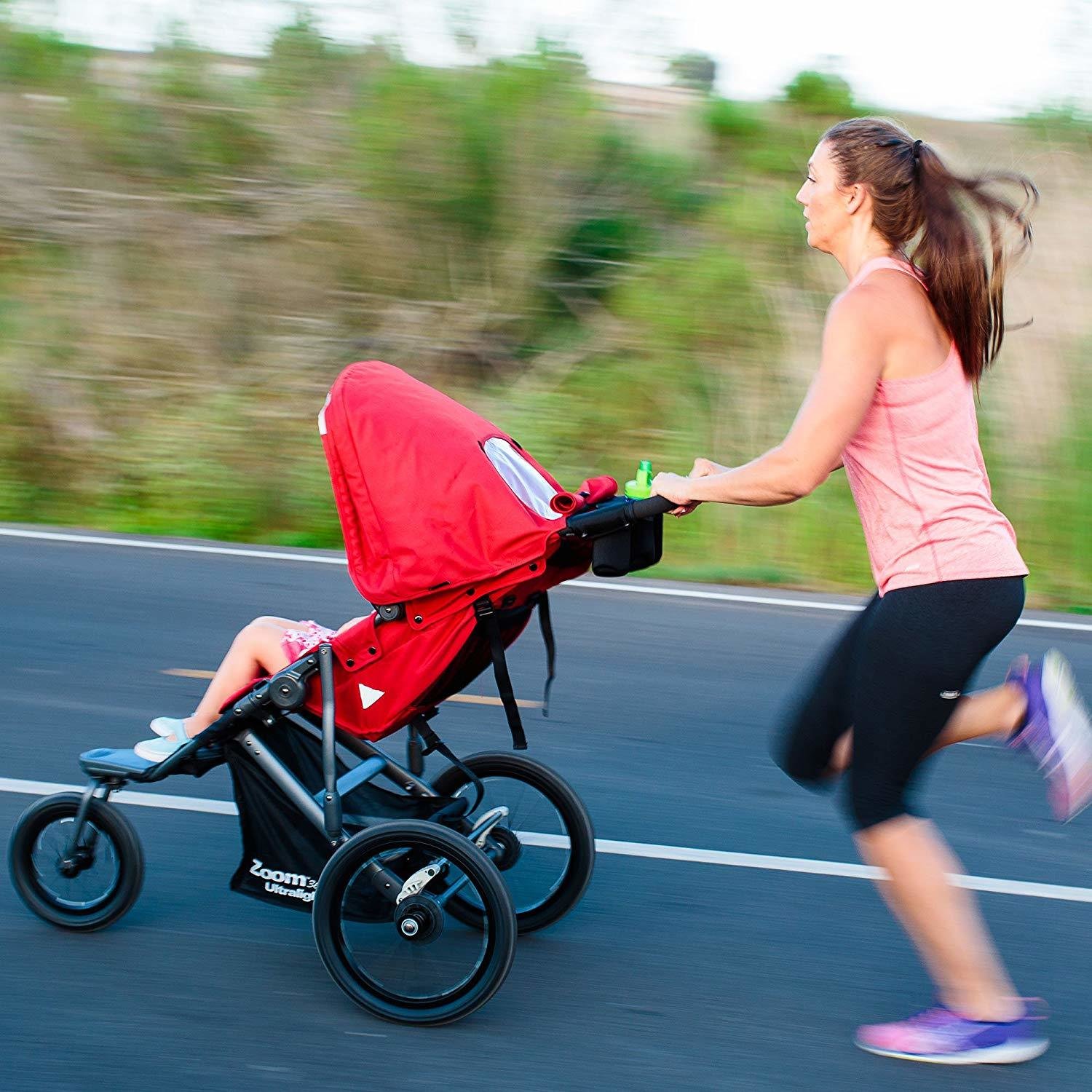
Yes. Running with a stroller is usually harder than running without one, even on a flat path. The stroller adds weight, changes your arm position, affects your posture, and makes turns, hills, and stops more demanding.
That does not mean stroller running is unsafe or impractical. A suitable jogging stroller, a smooth route, and a gradual plan can make it a useful way to stay active while caring for your child. The key is to treat it as a different form of running—not as an identical workout with extra equipment.
This guide explains why running with a stroller feels harder, how much your pace may change, how to choose a safe route, and when you should wait or stop.

Why Is Running With a Stroller Harder?
Running with a stroller is harder because you must move both your body and the stroller. You also have less freedom to use your arms, adjust your balance, or react quickly to changes in the ground.
The main challenges are:
- Extra load: You are pushing the stroller, your child, and any supplies.
- Changed arm swing: One or both hands stay on the handlebar.
- Different posture: Many runners lean slightly forward or reach toward the handle.
- More rolling resistance: Small wheels, soft tires, grass, gravel, and hills require more force.
- Reduced maneuverability: Turning, avoiding obstacles, and stopping take more planning.
- More heat and fatigue: Your child may be protected from the wind while you continue to work hard.
A stroller also changes how your body shares the work. In normal running, your arms help balance your legs and support a steady rhythm. When your hands grip a handlebar, your upper body may become more fixed. This can increase strain in your shoulders, neck, back, or wrists.
Research on stroller running is limited compared with research on ordinary running. However, laboratory studies and running biomechanics research support a simple conclusion: pushing a stroller changes running form and increases the physical demand of the task. The exact effect varies by stroller, child weight, terrain, speed, and the runner’s fitness.
How Much Slower Do You Run With a Stroller?
Many people run more slowly with a stroller, but there is no single speed penalty that applies to everyone. A flat, paved path with a light child may feel only slightly harder. A hill, loose surface, or heavy load can make the same pace feel much more difficult.
Use effort, not pace, as your main guide. A practical comparison looks like this:
| Running condition | Likely effect |
|---|---|
| Flat, smooth pavement | Small to moderate increase in effort |
| Long gradual hill | Moderate to large increase in effort |
| Short steep hill | Large increase in effort |
| Grass or packed dirt | More rolling resistance |
| Gravel, sand, or uneven ground | Much harder steering and balance |
| Heavy child or loaded basket | Greater force needed to accelerate |
| Strong wind | Higher effort, especially on exposed paths |
| Frequent stops | More work to restart the stroller |
These are general patterns, not measured guarantees. Your stroller’s wheel size, tire pressure, frame design, and load can change the result.
For example, a runner who normally completes a 10-minute mile may need to run by feel rather than force the same pace with a stroller. A pace that feels easy without the stroller may become a moderate effort with it. On a hill, the difference may be much greater.
A useful rule is to slow down until you can speak in short sentences. If you cannot talk without gasping, reduce your pace or switch to walking. This is especially helpful when you are returning to exercise after childbirth, recovering from an injury, or running in hot weather.
Does a Jogging Stroller Make Running Easier?
A true jogging stroller can make running more manageable, but it does not make stroller running easier than running freely. It mainly reduces problems caused by poor equipment.
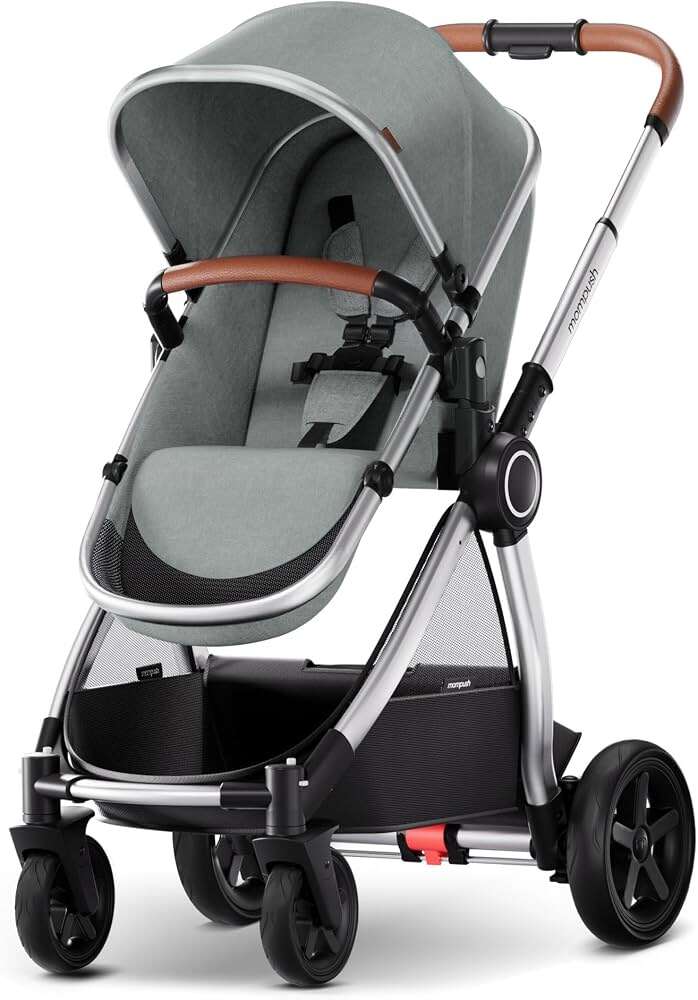
A jogging stroller usually has features such as:
- A larger front wheel
- Air-filled or air-style tires
- A fixed or lockable front wheel
- A hand brake
- A wrist strap
- A five-point harness
- A sturdy frame
- A handlebar that supports a more natural running posture
A small everyday stroller may work well for walking but can be unstable or difficult to control at running speed. Its small swivel wheels can catch on cracks or turn suddenly. Some models are not designed for jogging at all.
Before running, read the manual for your exact model. Check:
- Whether the manufacturer allows jogging or running.
- The minimum child age and developmental requirement.
- The maximum child weight.
- Whether the front wheel must be locked.
- Whether the hand brake is intended for speed control.
- Whether the wrist strap should be used.
- Which surfaces the stroller can handle.
Do not assume that a stroller labeled “all-terrain” is automatically suitable for running. All-terrain usually describes where a stroller can roll. It does not always mean the stroller is designed for jogging.

When Can a Baby Ride in a Jogging Stroller?
In the United States, parents should follow the stroller maker’s age and development rules. Many jogging strollers are not intended for infants under about 6 months, and some require the child to sit upright without help.
The reason is simple: running creates more vibration and movement than walking. A young infant may not have enough head, neck, or trunk control to tolerate that motion safely in an upright seat.
Before jogging with a baby, confirm all of the following:
- The child meets the manual’s minimum age.
- The child has the required head and neck control.
- The stroller seat is approved for running in that position.
- The harness fits snugly.
- The child is seated correctly and is not leaning out.
- The stroller is not being used with an unapproved car seat adapter or insert.
- The route is smooth enough for the stroller and child.
The American Academy of Pediatrics advises parents to use the manufacturer’s instructions and to wait until a baby is old enough for the specific jogging stroller. If the manual is unclear, contact the manufacturer before running.
Do not place a young infant in a standard jogging seat simply because the stroller reclines. Reclining may help with comfort, but it does not necessarily make the seat suitable for running.
How to Run Safely With a Stroller
The safest approach is to start with control, not speed. Practice handling the stroller while walking before you attempt to jog.
1. Inspect the stroller
Check the tires, wheel attachment, brakes, harness, folding joints, and handlebar. Inflate air tires to the pressure listed by the manufacturer. A soft tire can make steering harder and increase rolling resistance.
Make sure the front wheel is set for the surface and activity. A swivel wheel may be useful for walking, while a locked wheel may provide more stable tracking during a run. Follow the model’s instructions.
2. Test the route on foot
Choose a route that is:
- Paved or firm
- Wide enough for the stroller
- Free of major cracks and loose rocks
- Away from fast traffic
- Not crowded with cyclists or pedestrians
- Close enough to home if you need to stop
Avoid steep downhills when you are learning. A stroller can gain speed quickly, and the child’s weight adds momentum.
3. Secure the child
Use the five-point harness every time. Check that the straps sit correctly and that the child cannot slide down or lean over the side.
Do not hang heavy bags from the handlebar unless the stroller maker allows it. Extra weight high on the handle can make the stroller less stable, especially when empty or on a slope.
4. Use the wrist strap
The wrist strap helps keep the stroller connected to you if you trip or lose your grip. It does not replace your hands on the handlebar.
Never wrap the strap tightly around your hand. Keep enough freedom to release your grip if the stroller begins to pull you.
5. Start with short run-walk intervals
Begin with 10 to 20 minutes on a flat route. Try periods such as:
- Two minutes of easy jogging
- Two minutes of walking
- Repeat several times
If the stroller feels stable and your body feels normal during and after the session, add time slowly. Do not increase distance, speed, hills, and load at the same time.
6. Practice stopping and turning
Before running near other people, practice:
- Stopping with the hand brake
- Slowing before a turn
- Moving around a crack or branch
- Turning the stroller without twisting your torso
- Releasing one hand briefly only when necessary and safe
Keep both hands on the handlebar when the ground is uneven, when descending, or when you need full control.

Should You Push With One Hand or Two?
Two hands usually give you better control, especially on uneven ground, during turns, and at higher speeds. One-handed pushing may allow a more natural arm swing, but it can also make the stroller pull to one side and increase the load on one shoulder.
If you use one hand briefly on a smooth, straight path, switch sides often. Do not make one-handed pushing your default technique if it causes:
- Shoulder pain
- Wrist pain
- Back twisting
- Uneven stride
- Difficulty keeping the stroller straight
- Delayed braking
Some runners hold the handle with one hand and swing the other arm. Others keep both hands on the bar and focus on a relaxed upper body. Neither method is right for every runner.
The best position is the one that lets you keep your shoulders relaxed, your elbows slightly bent, your torso mostly upright, and the stroller under control. Avoid leaning heavily over the handlebar or using it to support your body weight.
Is Running With a Stroller a Good Workout?
Yes. Running with a stroller can be an effective workout because it often increases effort at a slower pace. It may also build skill in pacing, steering, and handling small changes in terrain.
However, it is not always a replacement for ordinary running. The stroller can change your stride and limit arm movement. If every run is done while pushing, you may not practice the form or speed you use when running freely.
A balanced week may include:
- One or two easy stroller runs
- One stroller-free run, if childcare allows
- Walking or low-impact exercise
- Strength work for the hips, legs, back, and core
- Rest or gentle movement as needed
Your training plan should match your current health and recovery. After pregnancy, return gradually and stop if you notice pelvic pressure, urine leakage, pain, unusual bleeding, dizziness, or a feeling of heaviness. These symptoms are reasons to speak with a health care professional, such as an obstetric clinician or pelvic floor physical therapist.
For any runner, stop the session if you have chest pain, faintness, severe shortness of breath, new weakness, or sharp joint pain.

How Do Hills, Heat, and Weather Change the Difficulty?
Hills and weather can make stroller running much harder than expected. A route that feels easy without a stroller may become challenging when you add a child and supplies.
Hills
Uphill sections require more force to move the combined load. Downhill sections create a control problem because the stroller may accelerate while you are trying to slow down.
Walk steep hills until you can control the stroller without leaning heavily on the handle. Avoid sudden braking unless needed, since an abrupt stop can disturb the child and strain your arms.
Heat
A stroller canopy can block sun, but it may also reduce airflow around the child. Never cover the stroller with a blanket or towel, because this can trap heat.
Check the child often. Warning signs include unusual sleepiness, flushed or hot skin, sweating changes, rapid breathing, or poor responsiveness. Move to shade, stop exercise, and seek medical help if the child seems seriously overheated.
The National Weather Service and the American Academy of Pediatrics both recommend extra caution with children in hot weather. Infants and young children can become overheated faster than adults.
Wind and rain
Headwinds increase the force needed to push. Wet surfaces can reduce traction and make braking less predictable. Strong wind can also affect the stroller canopy and balance.
Postpone the run when conditions make steering or visibility difficult. A treadmill or indoor walking route may be a better option in extreme weather.
Common Mistakes to Avoid
The most common mistakes involve speed, equipment, and assuming that a stroller will behave like a bicycle or a shopping cart.
Avoid these errors:
- Running with a stroller that is approved only for walking
- Ignoring the manufacturer’s age or weight limits
- Leaving the front wheel in an unsuitable setting
- Running fast downhill
- Skipping the wrist strap
- Carrying too many heavy items on the handle
- Using a loose harness
- Covering the stroller to block heat or insects
- Running on rough trails before practicing on pavement
- Holding the same one-handed position for the entire run
- Increasing distance too quickly
- Running beside traffic without a safe separation
- Assuming a sleeping child is comfortable or cool enough
A stroller is not a substitute for supervision. Stay close, keep the child secured, and check the child during the run.
How Can You Tell If Stroller Running Is Too Hard?
The workout is too hard when your control, form, or recovery begins to decline. Do not judge the session only by whether you can finish the planned distance.
Slow down or stop if:
- Your shoulders rise toward your ears
- You lean hard over the handle
- Your back twists to one side
- The stroller veers or feels unstable
- You cannot stop smoothly
- Your grip becomes weak
- You begin to trip or drag a foot
- You feel pain rather than normal effort
- Your child appears upset, overheated, or poorly supported
A good first session should feel controlled. You should be able to steer, brake, talk, and check the child without panic.
If stroller running repeatedly causes pain, try walking with the stroller, shorten the run, change the route, adjust the handlebar if the model allows it, or seek an assessment from a qualified physical therapist.
Key Takeaways
- Yes, running with a stroller is usually harder than running without one.
- The main causes are added weight, reduced arm swing, altered posture, and more difficult steering.
- A jogging stroller can improve control, but it does not remove the extra effort.
- Follow the exact age, weight, and running rules in the stroller manual.
- Start on a flat, smooth route with short run-walk intervals.
- Use the harness, wrist strap, and correct wheel setting.
- Walk steep hills and avoid extreme heat, rough ground, and fast downhill running.
- Judge success by control and comfort, not by matching your usual pace.
Frequently Asked Questions
Can I jog with a regular stroller?
Usually, you should not unless the manufacturer clearly states that the model is designed for jogging. Standard strollers may have small wheels, weaker suspension, or a front wheel that is difficult to control at running speed.
Is running with a stroller bad for your back?
It can increase back strain if you lean over the handle, twist your torso, use one hand for too long, or push a heavy load. Keep your shoulders relaxed and your torso as upright as practical. Stop if pain develops.
Is it harder to run uphill with a stroller?
Yes. You must overcome gravity while moving the combined weight of the stroller, child, and gear. Walk steep hills until you can maintain safe control.
Can I run with a newborn in a jogging stroller?
Do not assume that you can. Many jogging strollers require a child to be at least 6 months old and able to hold the head and neck steady. Follow the model’s manual and ask the manufacturer if the instructions are unclear.
Is a stroller run good for weight loss?
It can contribute to overall activity and energy use, but weight change depends on total food intake, exercise, sleep, health, and time. Do not increase intensity quickly just to burn more calories.
Can I run with a stroller on a trail?
Only if the stroller maker allows that surface and you can keep full control. Start with firm, smooth paths. Avoid loose gravel, roots, deep sand, steep slopes, and narrow trails until you have tested the stroller safely.
Conclusion
Running with a stroller is harder for most people, but it can still be a useful and enjoyable way to exercise with your child. Expect a slower pace, greater effort, and more attention to steering and weather.
Choose a stroller made for jogging, follow its safety instructions, and begin with short, easy sessions. If you can keep the stroller stable, maintain a relaxed posture, and keep your child comfortable, you are using the right goal: safe, controlled movement—not a perfect pace.