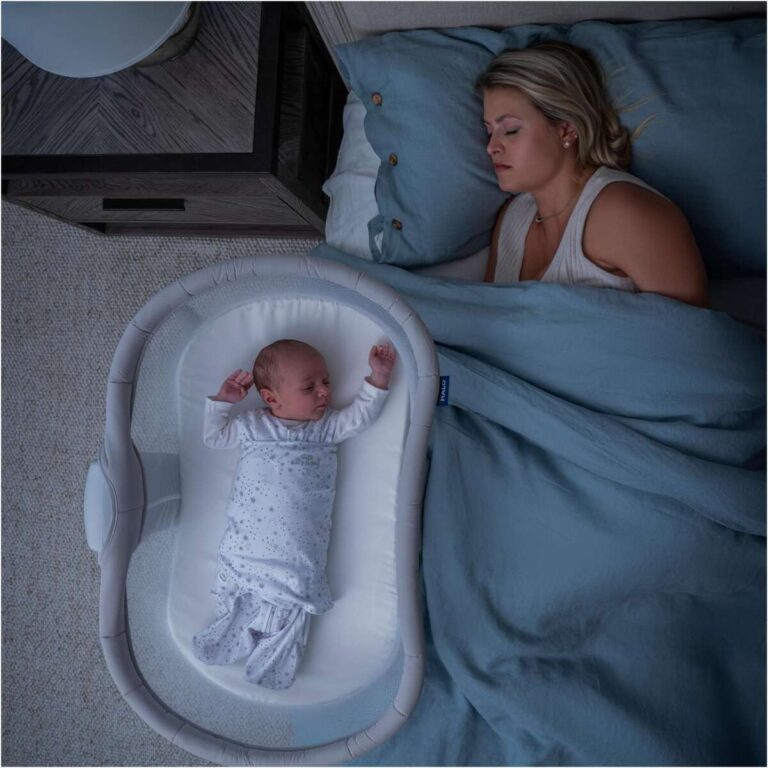
A bassinet does not need to touch your bed, but it should be close enough that you can easily see and reach your baby from your own bed. In the United States, the American Academy of Pediatrics (AAP) recommends room sharing without bed sharing, ideally for at least the first 6 months and preferably the first year.
Place the bassinet on a firm, flat surface in your bedroom. Keep your baby on their back, use only a fitted sheet, and leave the bassinet free of pillows, blankets, bumpers, toys, and positioners.
The goal is simple: keep your baby close while giving them a separate, safe sleep space.

How Close Should a Bassinet Be to the Bed?
The best location is within arm’s reach of your bed, but the bassinet does not have to be pressed against the mattress. You should be able to check your baby and lift them out without getting up or walking across the room.
A practical setup may place the bassinet:
- Beside the bed
- At the foot of the bed
- A short distance from the bed if the room is small or the layout requires it
- On the parent’s side of the room for easier nighttime care
The exact distance matters less than safe access and room sharing. A bassinet across the room may still be in the same room, but keeping it close can make feeding, checking, and responding to your baby easier.
Do not place the bassinet on the bed
A bassinet should sit on its own stable frame or base. Do not place it on:
- Your mattress
- A sofa
- A recliner
- A chair
- An adult bed tray
- An unstable table or stand
An adult bed is not designed to hold a baby’s sleep surface. Pillows, blankets, soft mattresses, gaps, and the risk of an adult rolling over can cause suffocation or entrapment.
Is a bedside sleeper different from a bassinet?
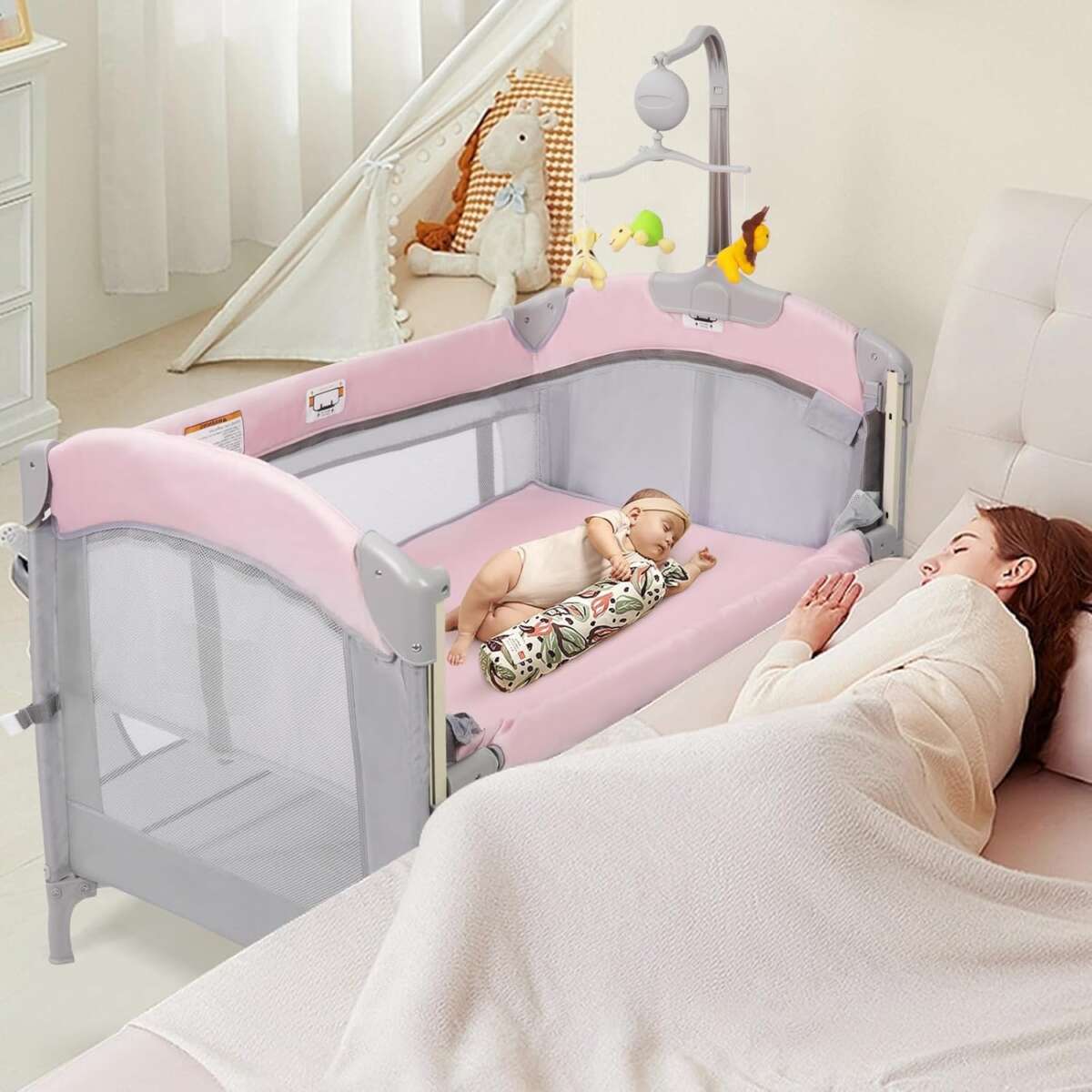
A bedside sleeper is a type of infant sleep product designed to sit next to an adult bed. Some have a fixed side, while others have a side that lowers or opens according to the manufacturer’s instructions.
A bedside sleeper is not automatically safer than a standard bassinet. Its safety depends on:
- The product meeting applicable U.S. safety requirements
- Correct assembly
- A secure connection or stable base
- The correct mattress and fitted sheet
- Proper use of any adjustable or lowered side
- Following the product manual every time
If the product attaches to your bed, check for gaps between the sleeper and mattress. A baby can become trapped in even a small opening.

Why Room Sharing Is Recommended for Babies
Room sharing lets a baby sleep in the same room as a parent or caregiver while remaining on a separate sleep surface. The AAP recommends this arrangement because it may lower the risk of sleep-related infant death and makes it easier for caregivers to notice and respond to the baby.
Room sharing is different from bed sharing:
- Room sharing: The baby sleeps in the same room but on a separate bassinet, crib, or portable play yard.
- Bed sharing: The baby sleeps on the same surface as an adult or another child.
The AAP recommends room sharing without bed sharing. The U.S. Centers for Disease Control and Prevention (CDC) also advises placing babies on a separate, firm sleep surface designed for infants.
A bassinet beside your bed supports this arrangement. However, the bassinet is not safe simply because it is nearby. The sleep surface and the way you use it still matter.
Safe sleep basics in the United States
For every sleep, place your baby:
- On their back
- On a firm, flat, level surface
- In a bassinet, crib, or portable play yard intended for infant sleep
- With only a fitted sheet made for that product
Keep the following out of the bassinet:
- Loose blankets
- Pillows
- Quilts
- Comforters
- Stuffed animals
- Crib bumpers
- Sleep positioners
- Wedges
- Nursing pillows
- Weighted sleep products unless your pediatrician gives specific guidance and the product is approved for the intended use
If your baby needs warmth, use a properly sized wearable blanket or sleep sack instead of loose bedding. Do not swaddle a baby who shows signs of rolling. Once rolling begins, stop swaddling and use an appropriate sleep sack with the arms free.

Where Should You Put the Bassinet?
Put the bassinet on a clear, level area where nothing can fall into it or pull against it. The safest location is usually beside the bed, away from windows, cords, shelves, lamps, and other furniture.
Before setting it up, check the room for these hazards:
Cords and strings
Keep monitor cords, lamp cords, phone chargers, blinds, and curtain cords away from the bassinet. A cord should never hang into or across the baby’s sleep space.
If you use a baby monitor, follow the manufacturer’s placement instructions. The U.S. Consumer Product Safety Commission recommends keeping monitor cords at least 3 feet from the crib, bassinet, or play yard.
Gaps and nearby furniture
Do not place the bassinet where it can slide against a wall, bed frame, nightstand, or other object and create a gap. Make sure the base cannot tip, fold, or move during normal use.
Keep the bassinet away from:
- Windows
- Radiators and heaters
- Fireplaces
- Tall furniture
- Hanging decorations
- Shelves
- Pets that could enter the sleep area
- Items that a baby may later pull down
Air flow and temperature
Avoid placing the bassinet directly beside a heater or air-conditioning vent. Overheating is associated with a higher risk of sleep-related infant death, so dress your baby for the room rather than piling on blankets.
The National Institutes of Health’s Safe to Sleep program advises keeping the baby’s head and face uncovered during sleep. A hat is not needed indoors for routine sleep unless a health professional gives different instructions.
Can a Bassinet Be a Few Feet From the Bed?
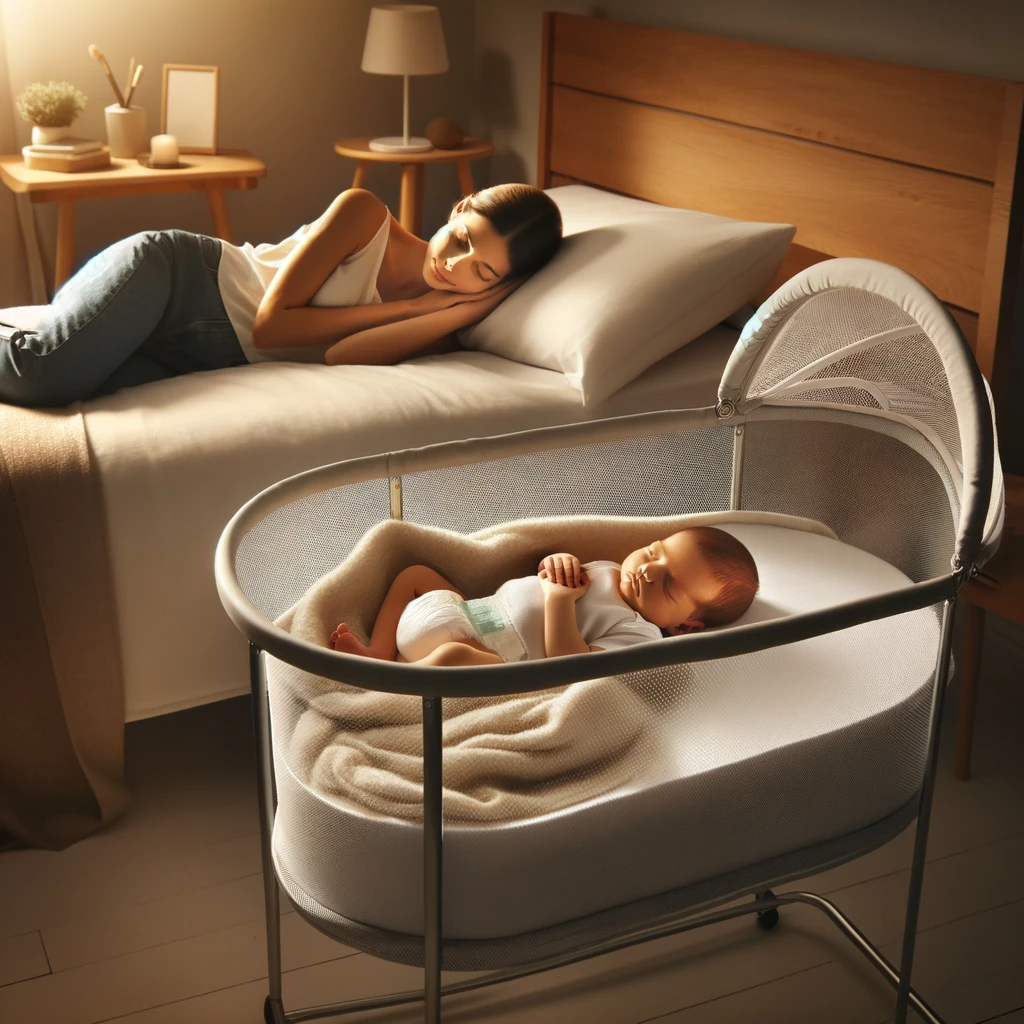
Yes. A bassinet can be a few feet from the bed if it remains in the same room and you can reach it safely. There is no universal rule that says the bassinet must be touching the bed or sit at a specific number of inches away.
Use this simple test:
- Can you see your baby from the bed?
- Can you reach the bassinet without climbing over furniture?
- Is the bassinet stable and fully assembled?
- Is there no gap between the bassinet and nearby objects?
- Are cords, blankets, and other hazards out of reach?
- Can you get in and out of bed without striking or shifting it?
If the answer is yes, the setup may be practical. If you must walk into another room to check your baby, the arrangement no longer provides the main benefit of room sharing.
A larger room may require the bassinet to sit several feet away. That is acceptable when the baby remains in the same room and the sleep environment follows safe sleep guidance.

When Should You Move a Baby From a Bassinet?
Move your baby from the bassinet when the product’s instructions say to stop using it. Common limits include:
- The baby reaches the stated weight limit
- The baby reaches the stated length limit
- The baby can push up on their hands and knees
- The baby can roll or shows signs of trying to roll
- The baby can sit up
- The baby can pull up
- The baby can climb or lean over the side
- The bassinet becomes damaged or unstable
The correct limit depends on the specific product. Read the manual instead of relying only on the baby’s age.
Many bassinets are designed for newborns and younger infants, not for a mobile baby. A baby may outgrow a bassinet before reaching a particular age. When that happens, use a properly assembled crib or portable play yard with a firm, flat mattress.
What if your baby rolls in the bassinet?
Stop swaddling as soon as your baby shows signs of rolling. Continue placing the baby on their back at the start of sleep, but do not repeatedly reposition a baby who can roll from back to front and front to back unless your pediatrician advises otherwise.
Remove any product that limits movement, such as a positioner or anti-roll device. These products can create suffocation or entrapment risks.

Common Bassinet Placement Mistakes
The most common errors involve the area around the bassinet, not just the bassinet itself. Avoid these mistakes:
Putting the bassinet partly on the adult bed
Even if one end seems stable, the bassinet can shift or tilt. Use only the base and mattress system supplied or approved by the manufacturer.
Leaving the side lowered
Some bedside sleepers allow a side to lower. Use that feature only as the manual describes. A lowered side may create a fall or entrapment hazard if the product is not properly attached or if the baby is left unattended.
Adding a mattress topper
Do not add foam, padding, towels, blankets, or a second mattress. A softer or thicker surface may cause a baby’s face to become covered or pressed into the material.
Using a sleep positioner
Positioners claim to keep babies in place, but they can restrict movement and create a suffocation hazard. Healthy babies should sleep on a clear, flat surface without positioning aids.
Bringing the baby into the adult bed to feed
Night feeding can make a parent very tired. If you bring your baby into bed to feed or comfort them, move the baby back to their bassinet before you return to sleep. Never feed a baby on a couch or recliner if you may fall asleep.
Relying on an inclined sleeper
A bassinet should provide a flat sleep surface. Do not use an inclined sleeper, car seat, swing, or bouncer for routine sleep. If your baby falls asleep in one of these products, move them to a firm, flat sleep surface as soon as practical.

How to Set Up a Bassinet Safely
Follow these steps before your baby’s first sleep in the bassinet.
- Read the product manual. Check the weight, height, mobility, and age limits.
- Inspect the parts. Look for missing hardware, loose fabric, broken locks, and damaged mesh.
- Assemble the bassinet fully. Do not skip fasteners or use substitute parts.
- Place it near your bed. Keep it within easy reach while leaving enough room to move safely.
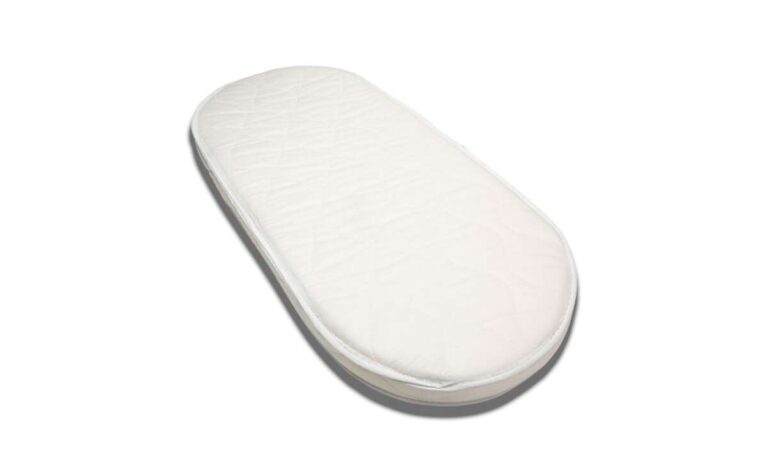
- Check the mattress. It should be firm, flat, level, and made for that product.
- Use one fitted sheet. Confirm that it fits tightly and cannot bunch up.
- Remove all loose items. Keep the sleep space empty except for the baby.
- Secure nearby cords. Keep monitors, chargers, and window cords out of reach and away from the bassinet.
- Check the base. Make sure the bassinet does not rock, fold, or slide during normal use.
- Recheck it often. Hardware can loosen, and your baby’s mobility can change quickly.
The setup is successful when your baby has a separate, empty, firm sleep space and you can reach that space without creating a new hazard.

What If Your Bedroom Cannot Fit a Bassinet Beside the Bed?
If space is tight, place the bassinet anywhere safe in the same room. The baby does not need to sleep directly beside the parent’s head or within a specific measured distance.
Consider these options:
- Move a nightstand temporarily.
- Place the bassinet near the foot of the bed.
- Use a smaller approved bassinet that fits the room.
- Move cords and lamps before bringing in the bassinet.
- Keep a clear path between the bed and bassinet.
- Use a crib or portable play yard if a bassinet cannot fit safely.
Do not solve a space problem by placing the bassinet on a raised surface or by wedging it between furniture. If the room cannot hold a safe infant sleep product, the room may need to be rearranged before the baby sleeps there.
If your baby has a medical condition, was born premature, or has unusual breathing or feeding concerns, ask the baby’s pediatrician for individualized advice. General safe sleep guidance still applies, but medical care may add specific instructions.

Key Takeaways
- A bassinet does not need to touch your bed.
- Keep it in the same room, ideally within arm’s reach.
- Use a separate, firm, flat, level sleep surface.
- Put your baby on their back for every sleep.
- Keep the bassinet empty except for the baby and a fitted sheet.
- Never place a bassinet on an adult bed, couch, chair, or unstable table.
- Follow the product manual and stop using the bassinet when your baby reaches its limits.
- Move cords, furniture, blankets, pillows, and other hazards away from the sleep area.
Frequently Asked Questions
Does a bassinet have to be directly beside the bed?
No. It should be close and in the same room, but it does not have to touch the bed. Place it where you can see and reach your baby easily without creating gaps or blocking a safe walkway.
Is it safe to put a bassinet next to the bed?
Yes, when the bassinet is stable, fully assembled, and used according to its instructions. Keep the bassinet on its own base, not on the adult mattress, and make sure there is no gap between the bassinet and nearby furniture.
Can a baby sleep in a bassinet across the room?
Yes, if the bassinet remains in the same room and meets safe sleep requirements. Keeping it close is helpful for nighttime care, but no fixed distance applies to every bedroom.
Should the bassinet be on the parent’s side of the bed?
It can be. The parent’s side may make nighttime feeding and checks easier, but the safest side is the one that allows stable placement, clear access, and no nearby hazards.
When should a baby stop sleeping in a bassinet?
Stop when the baby reaches the product’s weight, height, mobility, or age limit. Also stop if the baby can push up, roll, sit, pull up, or climb against the side. Check the manual for the exact limits.
Is a bedside sleeper safer than a regular bassinet?
Not automatically. Both can provide a safe sleep space when they meet applicable standards and are used correctly. A bedside sleeper may offer easier access, but it still requires a firm, flat surface, proper assembly, and careful gap prevention.
Conclusion
Your baby’s bassinet does not need to be pressed against your bed. The safest and most practical arrangement is a stable bassinet in your bedroom, close enough to see and reach, but separate from the adult bed.
Before bedtime, check three things: the bassinet is on a firm, flat surface; the sleep space is empty except for a fitted sheet; and the area is free of cords, gaps, and loose items. Then follow the manufacturer’s instructions and move your baby to a crib or other approved sleep space when the bassinet’s limits are reached.
Sources and Evidence
- American Academy of Pediatrics: Safe Sleep and Skin-to-Skin Care in the Neonatal Period
- American Academy of Pediatrics: How to Keep Your Sleeping Baby Safe
- CDC: About Sleep and Sleep-Related Infant Deaths
- NIH Safe to Sleep: Ways to Reduce Baby’s Risk
- U.S. Consumer Product Safety Commission: Cribs and Infant Sleep Products