
Yes. In the United States, a newborn can sleep in a crib from the first night home—as long as the crib meets current federal safety standards and has a firm, flat mattress with only a fitted sheet. A bassinet is not required for safe sleep.
The American Academy of Pediatrics (AAP) recommends placing babies on their backs for every sleep, in their own sleep space, with no loose blankets, pillows, bumpers, toys, or other soft items. A full-size crib, portable crib, or play yard can meet this need when used correctly.
The main trade-off is convenience. A bassinet may fit better beside your bed, while a crib usually gives your baby more room and can last much longer.

Crib vs. Bassinet: What Is the Difference?
A crib is a larger infant sleep space designed for long-term use. A standard full-size crib usually has fixed sides and a mattress that can be lowered as the baby grows.


A bassinet is a smaller sleep space made for young infants. Some bassinets have weight limits, age limits, or restrictions on use once a baby can roll, push up, or sit.
Both can be safe. The product type matters less than the sleep surface, the setup, and how you use it.
| Feature | Crib | Bassinet |
|---|---|---|
| Safe from birth? | Yes, if it meets U.S. safety rules | Yes, if it meets U.S. safety rules |
| Sleep space | Larger | Smaller |
| Typical use | Often lasts for years | Usually used for the first weeks or months |
| Near-bed use | May not fit beside the bed | Often designed for bedside use |
| Main limit | Must have the correct mattress and setup | Often has lower weight or movement limits |
The U.S. Consumer Product Safety Commission (CPSC) sets safety requirements for full-size and non-full-size cribs, bassinets, cradles, and other infant sleep products. Check the product manual and the manufacturer’s limits before use.

When Is a Crib Safe for a Newborn?
A crib is safe for a newborn when all of these conditions are met:
- The crib is made for infant sleep.
- It meets current U.S. safety requirements.
- The mattress fits tightly.
- The mattress is firm and flat.
- Only a fitted sheet is on the mattress.
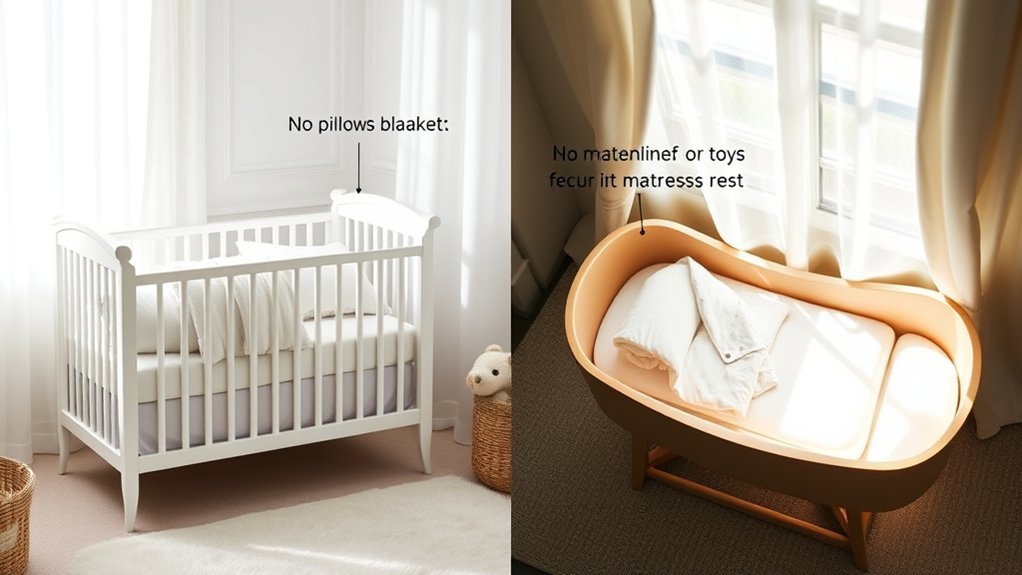
- The crib is free of pillows, blankets, toys, bumpers, and positioners.
- The baby is placed on their back for every sleep.
A crib should not have an added pad, topper, wedge, nest, or cushion. Even if a product is marketed as comfortable or protective, it can create a soft or uneven surface.
Use the mattress made for the crib
Use the mattress listed or approved by the crib maker. The mattress should fit snugly, with no large gaps between the mattress and the crib sides.
A practical check is to press the mattress against the crib frame. If you can fit more than two adult fingers between the mattress and the frame, stop using the setup until you confirm that the mattress is the correct size.
Do not place a standard crib mattress in a bassinet. Do not use a bassinet mattress in a full-size crib unless the crib maker specifically approves it.
Check the crib’s condition
Before placing a newborn in a crib:
- Read the assembly instructions.
- Confirm that every screw, bolt, and support is secure.
- Check for broken, loose, or missing parts.
- Look for a CPSC recall.
- Avoid cribs with drop sides.
- Avoid modified, homemade, or antique cribs unless a qualified person confirms that they meet current safety rules.


A used crib may be safe, but its age and history matter. Missing hardware, prior repairs, and unknown recalls can create risks that are hard to see.
How to Set Up a Crib for a Newborn
Set up the crib before the baby arrives if possible. This gives you time to check the mattress, read the manual, and remove unsafe items.
1. Place the crib in your room
The AAP recommends room-sharing without bed-sharing. Keep the baby’s crib, portable crib, or bassinet near your bed, but give the baby a separate sleep surface.
The AAP recommends room-sharing ideally for at least the first six months, and preferably for the first year. This arrangement can make feeding and checking on the baby easier while avoiding the hazards of sharing an adult bed.
2. Use a firm, flat mattress
The mattress should not sag when you press on it. It should remain level and should not be raised at one end.
Do not use an inclined sleeper, sleep positioner, or wedge in the crib. Babies can slide into a position that makes breathing difficult.
3. Add only a fitted sheet
The safest crib is a simple crib. Use one fitted sheet that fits the mattress and stays in place.
Keep these items out of the sleep area:
- Loose blankets
- Quilts
- Pillows
- Stuffed animals
- Crib bumpers
- Mattress toppers
- Sleep positioners
- Nursing pillows
- Decorative cushions
- Weighted sleep products
If your newborn needs warmth, dress the baby in clothing or a wearable blanket that fits well. Do not use loose bedding.
4. Place the baby on their back
Place your baby on their back for naps and nighttime sleep. This applies even if your baby spits up or has reflux. Healthy babies do not usually choke more easily when sleeping on their backs.
If your baby has a medical condition, ask the child’s pediatrician for individual instructions. Do not place a baby on the stomach or side unless a medical professional gives specific guidance.
5. Keep the crib smoke-free
Do not smoke or vape near the baby or inside the home or car. Keep the sleep area away from smoke, including smoke from other people’s clothing or belongings when possible.
Can a Newborn Sleep in a Full-Size Crib?
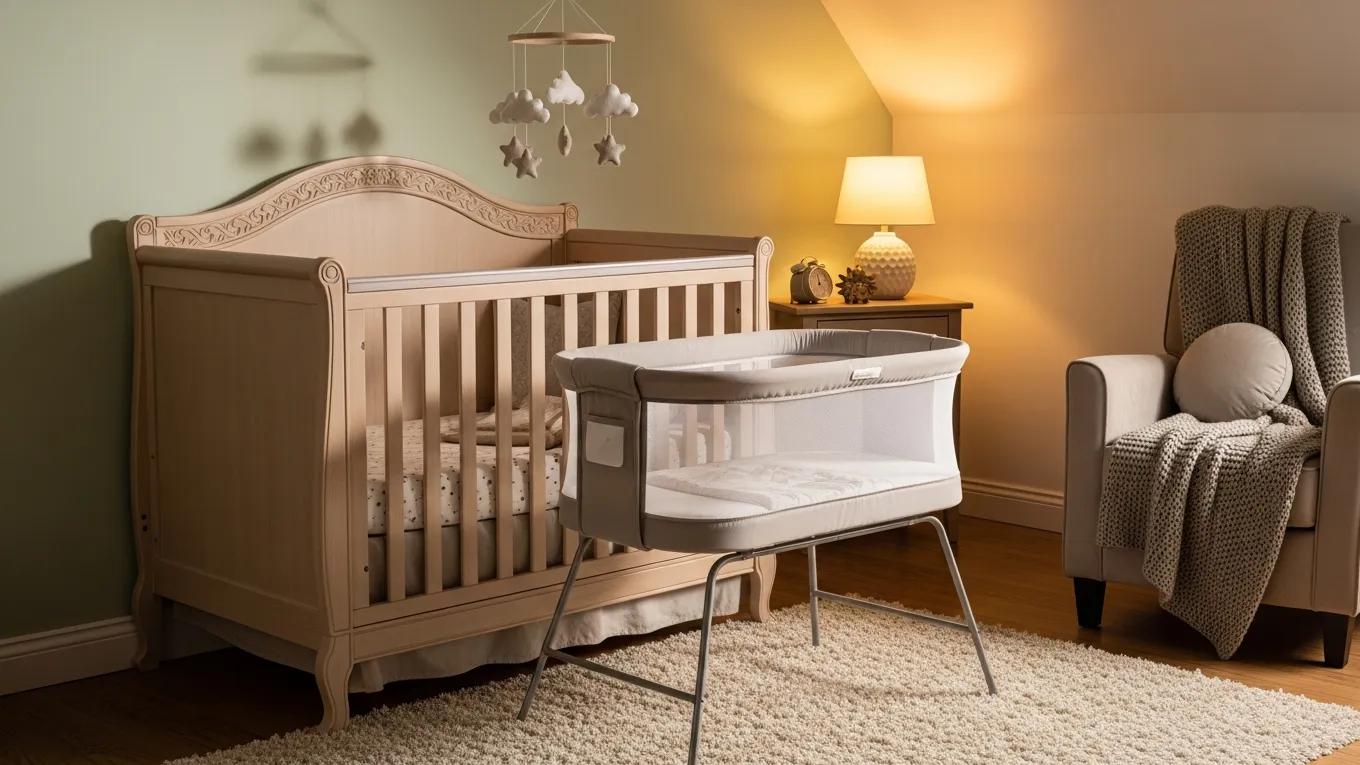
Yes. A full-size crib can be used from birth if the mattress is set at the highest position allowed for a newborn and the crib is used according to its instructions.
The higher mattress setting can make it easier to lift a small baby. Lower the mattress before your baby can sit or pull up. Your crib manual should state when to lower it.


Do not add a mesh liner, padded insert, or extra mattress to make the crib “cozier.” The larger space does not make the crib unsafe. The problem is adding items that can cover the baby’s face or create a soft surface.
A full-size crib may be a good choice if:
- You want one sleep space that can last for years.
- You have room for a crib near your bed.
- You prefer not to buy a bassinet that the baby may outgrow quickly.
- You want a stable sleep space with a standard mattress.
A bassinet may be more practical if:
- Your bedroom is small.
- You need to move the sleep space often.
- The crib will not fit safely near your bed.
- The bassinet has a clear, level, firm surface and is still within its limits.
The deciding factor is not size alone. Safe use depends on the product’s design and condition.

Is a Crib Safer Than a Bassinet?
Neither is automatically safer. A properly used crib and a properly used bassinet can both provide a safe sleep space.
A crib may have practical advantages. It often has a longer useful life, a larger sleep surface, and a clear mattress design. A bassinet may make room-sharing easier because it is smaller and often easier to place beside the bed.
Risk increases when parents add products or use a sleep space after the baby has outgrown it. For example, a bassinet can become unsafe when a baby begins to roll, push up, sit, or reaches the product’s weight limit.
Follow the product’s stop-use rules, even if your baby still appears comfortable. If the manual says to stop using the bassinet when the baby can roll, stop at that point.
What Should a Newborn Wear in a Crib?
A newborn can wear a fitted sleeper or a properly sized wearable blanket. The clothing should keep the baby warm without overheating.
If you swaddle:
- Place the baby on their back.
- Keep the swaddle snug around the chest but loose around the hips.
- Keep the swaddle below the neck.
- Use a lightweight material.
- Stop swaddling as soon as the baby shows signs of trying to roll.
Never use a weighted swaddle or weighted sleep sack for a newborn. Avoid hats indoors during sleep unless a medical professional gives a specific reason. Babies release heat through their heads, and overheating is a concern.
Signs that a baby may be too warm include sweating, a hot chest, flushed skin, or damp hair. A cool hand or foot alone does not necessarily mean the baby is cold.

Common Mistakes to Avoid
The most common crib mistakes involve soft items, incorrect products, or delayed changes.


Using a crib bumper
Traditional and mesh crib bumpers are not needed for safe sleep. They can create hazards and may reduce airflow. The AAP recommends keeping bumpers out of the crib.
Adding a sleep positioner
Positioners and anti-roll devices can trap a baby or cover the face. Do not use them unless a medical professional specifically directs you to use a medical device.
Letting the baby sleep in a sitting product
Car seats, swings, bouncers, and inclined sleepers are not substitutes for a crib. If a baby falls asleep in a car seat while traveling, move the baby to a firm, flat sleep surface when you reach your destination.
Using a family bed for convenience
Exhausted parents may fall asleep while feeding or soothing a baby. An adult bed, sofa, or recliner has soft surfaces and gaps that can increase the risk of suffocation and entrapment.
Plan a safer feeding routine before the baby arrives. If you bring the baby into bed to feed, move the baby back to their own crib before you go to sleep.
Keeping the mattress too high
Lower the crib mattress before your baby can sit or pull up. A baby’s new skill can appear quickly, so check the crib setup often.
Assuming “breathable” means risk-free
Mesh fabric and marketing terms do not make a product safe in every situation. A product can still be unsafe if it changes the sleep surface, covers the baby, or does not follow the crib maker’s instructions.

Quick Decision Guide
Use this checklist if you are deciding whether to start with a crib:
| Question | If the answer is yes |
|---|---|
| Is the crib intended for infant sleep? | Continue checking the setup |
| Is it free of recalls and damage? | Continue checking the setup |
| Does the mattress fit tightly? | Continue checking the setup |
| Is the mattress firm, flat, and level? | Continue checking the setup |
| Is there only a fitted sheet? | The sleep area is appropriately simple |
| Can you place the baby on their back? | Follow the back-sleep position every time |
| Can the crib stay near your bed? | It supports room-sharing guidance |
| Will you lower the mattress as the baby develops? | Recheck the setup as skills change |
If any answer is no, fix that issue before using the crib.
When Should You Ask the Pediatrician?
Contact your baby’s pediatrician if you have questions about sleep position because of reflux, breathing problems, a developmental condition, or another medical issue.
Ask for help if:
- Your baby has trouble breathing during sleep.
- Your baby frequently turns blue, gray, or unusually pale.
- Your baby is difficult to wake.
- Your baby cannot feed well or seems unusually weak.
- You are unsure whether a medical device is safe for sleep.
- You are struggling to stay awake during nighttime feeds.
- You are worried about swaddling or rolling.
For severe breathing trouble, unresponsiveness, or blue or gray skin, call 911 in the United States.

Frequently Asked Questions
Can a newborn sleep in a crib on the first night home?
Yes. A newborn can sleep in a compliant crib on the first night home. Use a firm, flat mattress, a fitted sheet, and no other items in the crib. Place the baby on their back.
Does a newborn need a bassinet?
No. A bassinet is optional. It can be useful when space is limited or when you want a smaller sleep space near your bed, but it is not required for safe sleep.
Can a newborn sleep in a crib with a blanket?
The safest choice is no loose blanket. Dress the baby in a fitted sleeper or wearable blanket instead. Loose bedding can cover the baby’s face or create an entrapment risk.


Can a newborn sleep in a crib with a pacifier?
Yes. The AAP says offering a pacifier at naps and bedtime may reduce the risk of sudden infant death syndrome (SIDS). Do not attach the pacifier to clothing with a cord or clip during sleep. If breastfeeding, many parents wait until feeding is well established before offering one, but ask your pediatrician if you need help.
Can a newborn sleep in a crib in their own room?
The AAP recommends room-sharing without bed-sharing, ideally for at least six months and preferably for the first year. A crib in the parents’ room is recommended over placing the newborn in a separate room.
What if my newborn only sleeps when held?
Many newborns settle more easily when held. Keep working toward placing the baby in their own crib for sleep. If you feel yourself becoming sleepy, put the baby in the crib before you fall asleep. Never use a couch or recliner as a planned sleep space.
Conclusion: A Crib Can Be a Safe First Sleep Space
A newborn does not need to sleep in a bassinet. A properly assembled crib can be used from birth and may be the simplest long-term option.
Before the first sleep, confirm that the crib is not recalled or damaged, use the correct firm mattress, add only a fitted sheet, and keep the baby on their back. Keep the crib near your bed, and remove every soft or loose item.
For current U.S. guidance, review the AAP safe sleep recommendations and the CPSC crib and infant sleep product guidance.
