
Introduction
Most babies can ride in a regular upright stroller at about 6 months, but age alone does not decide when it is safe. Your baby should also have good head and neck control, sit with little help, and meet the stroller’s weight and age rules.
Some strollers are made for newborns. These may include a fully flat bassinet, a newborn insert approved by the maker, or a compatible infant car seat. A standard seat that keeps a baby upright is usually not right for a newborn.
Always check the stroller manual first. The model’s design, recline angle, harness, and weight limits matter more than a general age guide.
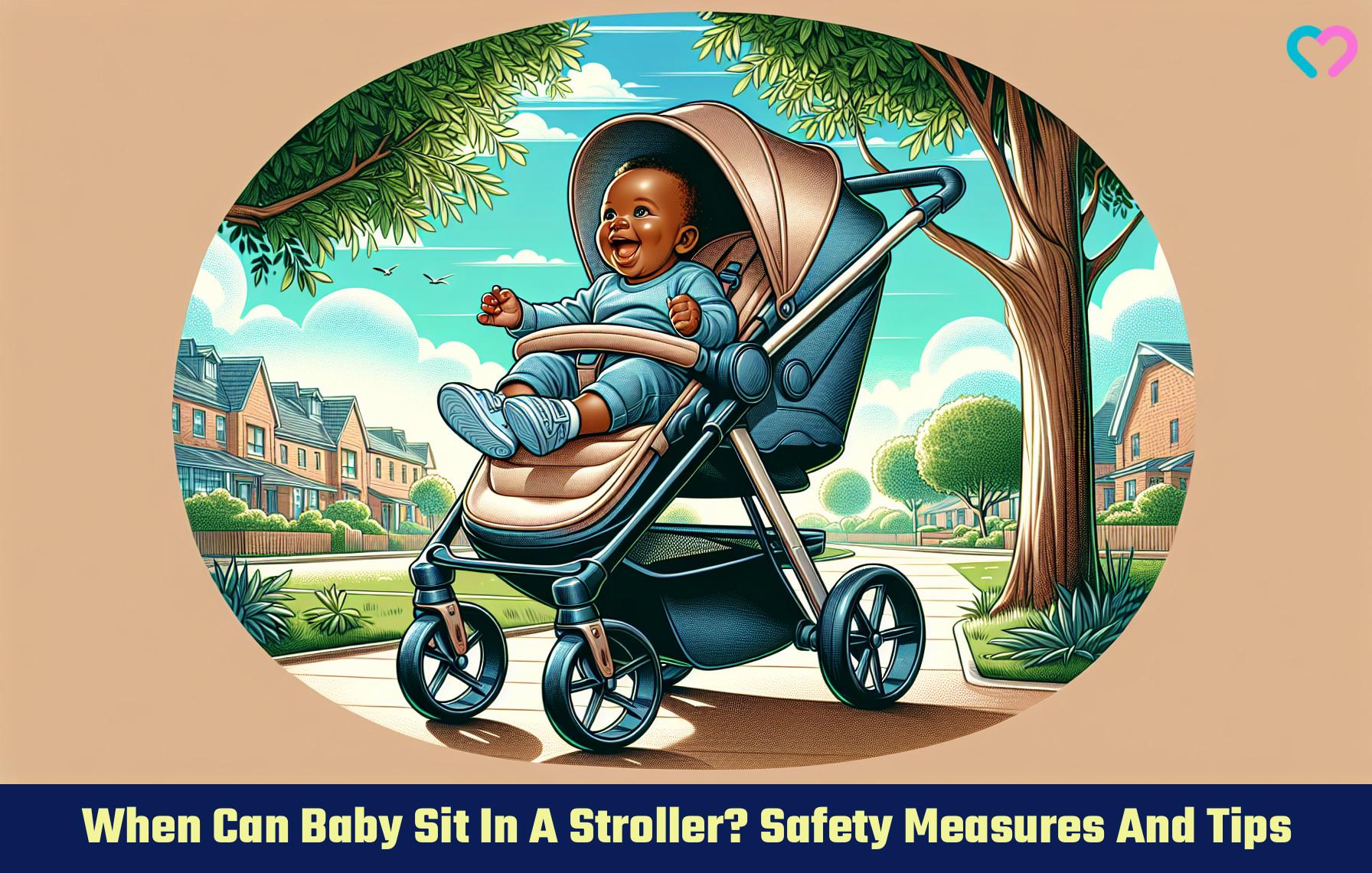
The quick answer: When can a baby sit in a stroller?
A baby can usually sit in an upright stroller seat around 6 months, when the baby can:


- Hold their head steady.
- Keep their neck from flopping forward.
- Sit upright with little or no support.
- Fit safely within the stroller’s harness.
- Stay within the stroller’s height and weight limits.
This is a general guide, not a fixed rule. Some babies reach these skills before 6 months. Others need more time. The Centers for Disease Control and Prevention lists sitting without support as a developmental milestone that many babies reach by about 9 months, while many babies can sit with support earlier.
The key difference is between sitting with support and sitting safely in a stroller. A stroller seat adds movement, bumps, turns, and changes in balance. A baby who can sit briefly on the floor may still need a more reclined stroller position.
What the stroller manual may allow
Read the manual for these terms:
- “From birth”
- “Newborn mode”
- “Fully reclined”
- “Bassinet”
- “Infant car seat compatible”
- “Minimum age”
- “Minimum weight”
- “Maximum weight”
- “Maximum height”
A stroller may be suitable from birth only when it has a setup designed for a newborn. A seat that reclines does not always provide a safe newborn position. If the manual does not clearly approve newborn use, do not assume that a deep recline is enough.

How to tell if your baby is ready
Your baby is more likely to be ready for an upright stroller when they pass a simple readiness check. Look for all of the following signs.
1. Your baby has steady head control
Your baby should keep their head upright during normal movement. The head should not repeatedly fall forward, to the side, or against the chest.
Poor head control can narrow the airway. This is especially risky when a baby slumps in a seated device.
2. Your baby can sit with little help
Your baby does not need to sit perfectly alone for a long time. However, they should be able to stay upright with light support and without folding forward.
If your baby still needs firm support around the trunk, use the stroller only in the position approved for younger babies. If no such position exists, wait.


3. Your baby fits the harness
The harness should rest on the body as the manufacturer shows. It should not sit near the neck, slide off the shoulders, or leave a large gap around the hips.
Do not add a head pillow, cushion, or aftermarket insert unless the stroller maker approves it. Extra padding can change the harness fit and may push the baby’s head forward.
4. Your baby stays upright during movement
Test the stroller indoors while you keep one hand on it. Watch your baby as you move slowly over a smooth floor.
Stop if your baby:
- Slumps forward.
- Slides down.
- Leans sharply to one side.
- Lets the chin fall toward the chest.
- Looks unable to breathe freely.
- Seems unable to stay within the harness.
These signs mean your baby may need more time or a more supportive setup.

Stroller options for newborns and young babies
A newborn should not ride in a standard upright stroller seat unless the manufacturer specifically approves that use. Newborn babies have limited head, neck, and trunk control.
Flat stroller bassinet
A bassinet keeps a baby on a flat or near-flat surface. It is often designed for newborn use, but age and weight limits vary by model.
A bassinet may be useful for walks because it gives a young baby more room to lie down. Still, follow the manual for harness use, padding, and when to stop using the bassinet.
Infant car seat attached to a stroller
Many U.S. travel systems let an infant car seat attach to a stroller frame. This can be useful for short transfers, such as moving a sleeping baby from the car to a store.
An infant car seat is made for travel in a vehicle. It is not a routine sleep space outside the vehicle. The American Academy of Pediatrics advises moving a sleeping baby from a sitting device to a firm, flat sleep surface as soon as practical.
Do not use a car seat on top of a shopping cart. Do not place it on a bed, couch, table, or other raised surface where it can fall or tip.
Fully reclining stroller seat
Some strollers have a seat that reclines almost flat and is approved for newborns. Others only permit use once the baby reaches a certain age or developmental stage.
“Fully reclining” does not always mean “safe from birth.” Check the exact manual for your model.
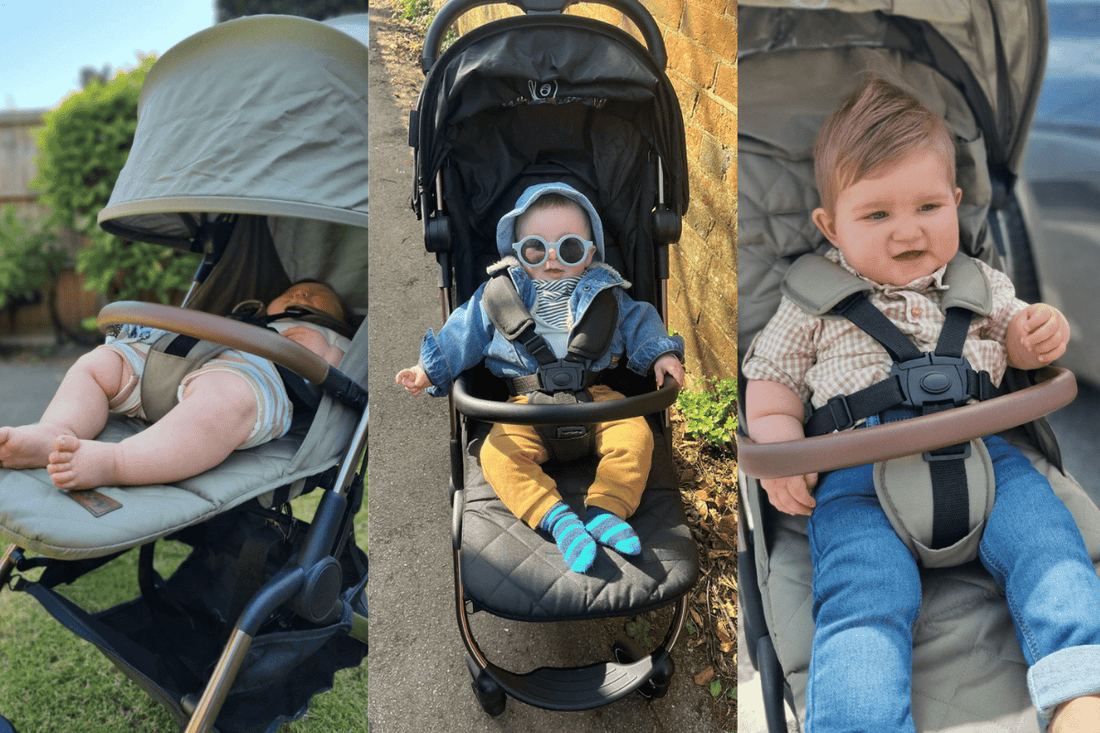
How to use a stroller safely once your baby is ready
Follow these steps each time you use the stroller.
Step 1: Check the stroller before placing your baby inside
Look for:


- A working five-point harness.
- Locked wheels and frame joints.
- No loose fabric or broken parts.
- A seat that locks in the chosen position.
- A working brake.
- A basket that does not interfere with the wheels.
- No recall notice for the model.
In the United States, check the U.S. Consumer Product Safety Commission recall database if you are using a secondhand stroller.
Step 2: Use the harness every time
Fasten the harness snugly. The straps should hold your baby in place without pressing into the neck.
The harness is not a reason to use an upright seat too early. It helps prevent falls, but it cannot provide the head and trunk support that a young baby lacks.
Step 3: Start with short, smooth trips
For the first few rides, stay on level ground. Avoid rough paths, steep hills, and long trips.
Watch your baby’s posture. A stroller can look comfortable when empty but become less supportive once it moves. Stop and adjust the seat if your baby slides or slumps.
Step 4: Keep the stroller within sight and reach
Do not leave your baby alone in the stroller. Set the brake whenever you stop.
Keep bags and heavy items low and within the approved storage area. Hanging a heavy bag from the handle can make the stroller tip backward.
Step 5: Keep hands, straps, and blankets in safe positions
Keep blankets away from your baby’s face. Do not cover the stroller with a blanket to block the sun, since this can reduce airflow and cause overheating.
Use the stroller’s canopy or a shade product approved for that model. Never attach cords or loose items near the baby’s neck.

Can a baby sleep in a stroller?
A baby may fall asleep in a stroller, but a stroller is not the preferred place for routine sleep. The safest planned sleep space is a firm, flat, separate surface made for infant sleep, with no loose bedding, pillows, or soft items.
The AAP recommends moving a baby who falls asleep in a stroller, car seat, swing, or sling to a firm sleep surface on their back as soon as practical. This matters because sitting positions can allow the head to fall forward and restrict breathing.
If your baby falls asleep during a walk:
- Keep the stroller close and supervised.
- Check that the baby’s face is clear.
- Do not cover the stroller with a blanket.
- Move the baby to an approved flat sleep space when you can.
- Do not treat a stroller bassinet as a sleep product unless the manufacturer clearly states that it is approved for sleep and explains how to use it.
A stroller ride and a nap are different activities. The safer plan is to use the stroller for transport and use a crib, bassinet, or play yard for sleep.


What if your baby was premature or has a medical condition?
Ask your child’s pediatrician before using an upright stroller if your baby was born premature or has problems with muscle tone, breathing, swallowing, reflux, or head control.
Premature babies may reach sitting skills based on corrected age rather than birth age. A pediatrician can help you judge readiness and may suggest a more supportive position.
Seek urgent medical help if your baby has trouble breathing, turns blue or gray, becomes unusually limp, or cannot be roused normally. Remove the baby from the stroller only if you can do so safely, and call emergency services when needed.
This article gives general safety information. It cannot replace advice for a baby with a health condition or special positioning needs.

Common mistakes parents make
Using age as the only test
“Six months” is a useful estimate, not a green light by itself. Development and stroller design both matter.
Using a regular seat for a newborn
A seat that reclines partway may still leave a newborn folded or unsupported. Use only a newborn-approved mode.
Adding an unapproved cushion
A soft insert may seem helpful, but it can change the harness position or push the baby’s head forward. Use only parts approved by the stroller manufacturer.
Letting the baby sleep there for a long time
A stroller is for movement and transport. Move a sleeping baby to a firm, flat sleep surface when possible.
Skipping the harness for a quick trip
A short walk can still include a curb, sudden stop, or uneven ground. Use the harness on every ride.
Hanging a heavy diaper bag from the handle
This can shift the stroller’s center of gravity and increase the risk of tipping. Use the storage basket and follow the weight limit.
Buying a used stroller without checking its history
Avoid a stroller with missing instructions, broken parts, homemade repairs, or an unknown recall status. If you cannot identify the model, it is harder to confirm safe use.

A simple decision table
Use this table as a starting point, then confirm the exact stroller manual.
| Baby’s situation | Usual stroller choice | What to check |
|---|---|---|
| Newborn with limited head control | Bassinet, approved flat mode, or compatible infant car seat | Newborn approval and weight limits |
| Baby can hold head steady but cannot sit well | Reclined mode only if the manual allows it | Head position and no slumping |
| Baby sits with little support | Upright seat may be suitable | Harness fit and seat age rules |
| Baby sits independently and stays upright | Upright seat is often suitable | Weight, height, and harness limits |
| Baby falls asleep while riding | Supervise and move to a flat sleep surface | Clear face and open airflow |
| Baby was premature or has a medical concern | Ask the pediatrician | Corrected age and posture needs |
The deciding factor is not one milestone. It is the combination of developmental readiness, correct stroller mode, proper fit, and active supervision.

Frequently asked questions
Can a 4-month-old sit in a stroller?
Only if the stroller has a mode approved for that age and your baby can maintain a safe head and neck position. Many 4-month-olds are not ready for a standard upright seat. Use a bassinet, approved newborn setup, or properly installed infant car seat when allowed by the manufacturer.
Can a 5-month-old sit in a stroller?
Possibly. Check whether your baby has steady head control and can remain supported without slumping. Also check the stroller’s minimum age and weight rules.
If your baby’s head falls forward or the body slides down, wait.

Can a 6-month-old sit in a stroller?
Many babies can begin using an upright stroller around 6 months, but readiness varies. Your baby should have strong head control, sit with little help, fit the harness, and remain upright while the stroller moves.
How long can a baby stay in a stroller?
There is no single time limit that fits every stroller and baby. Take breaks, watch posture, avoid overheating, and do not use the stroller as a regular sleep space. Follow the manual and move a sleeping baby to a safe sleep surface.
Should I use a stroller fan?
A fan may improve airflow, but it does not make it safe to cover the stroller or leave a baby unattended. Keep the fan secure, away from the baby’s reach, and check the baby often for heat or discomfort.
When should a baby face forward in a stroller?
A baby can face forward when the stroller allows that position and the baby meets the seat’s readiness rules. Some parents prefer a parent-facing position for younger babies because it makes monitoring easier. The manual’s approved positions come first.
Conclusion
Most babies can use a standard upright stroller seat at about 6 months, but the better test is readiness. Your baby should have steady head control, sit with little help, stay upright during movement, and fit the stroller’s harness.
For younger babies, use only a manufacturer-approved bassinet, newborn mode, fully flat seat, or compatible infant car seat. Use the harness, avoid unapproved cushions, check recalls, and move a sleeping baby to a firm, flat sleep surface as soon as practical.
Before the next ride, read the stroller manual, test the fit indoors, and watch your baby’s head and body position.
