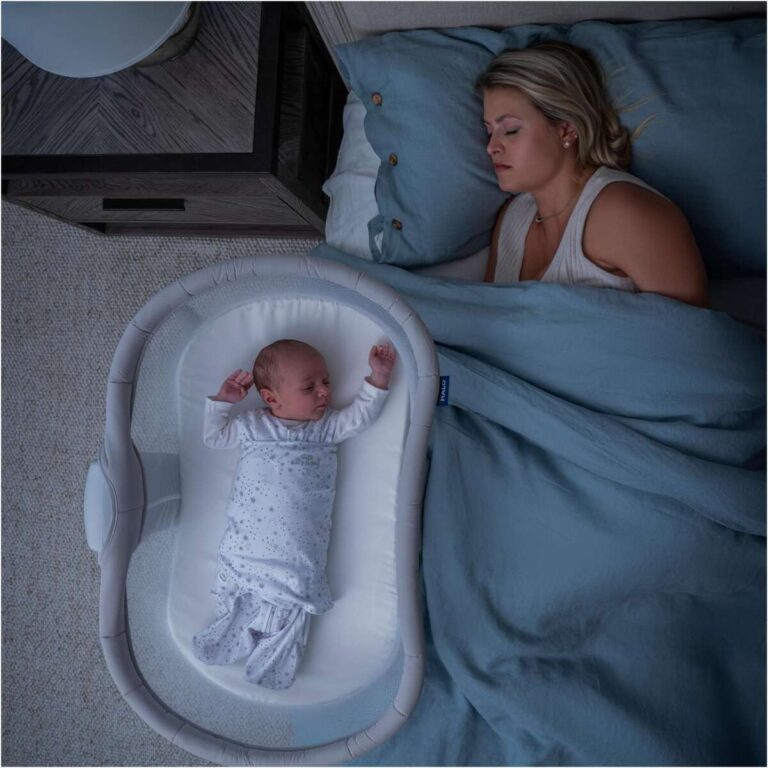
The American Academy of Pediatrics (AAP) recommends that babies sleep in the same room as their parents, but on a separate sleep surface, for at least the first six months. Sharing a room for the first year may offer more protection against sleep-related infant deaths.
There is no single perfect age to move a baby to their own room. After six months, the right time depends on your baby’s health, sleep habits, your home setup, and your family’s needs. Safety matters more than a specific birthday.
This guide explains when to move your baby to their own room, how to prepare the space, and what to do if the transition does not go well.
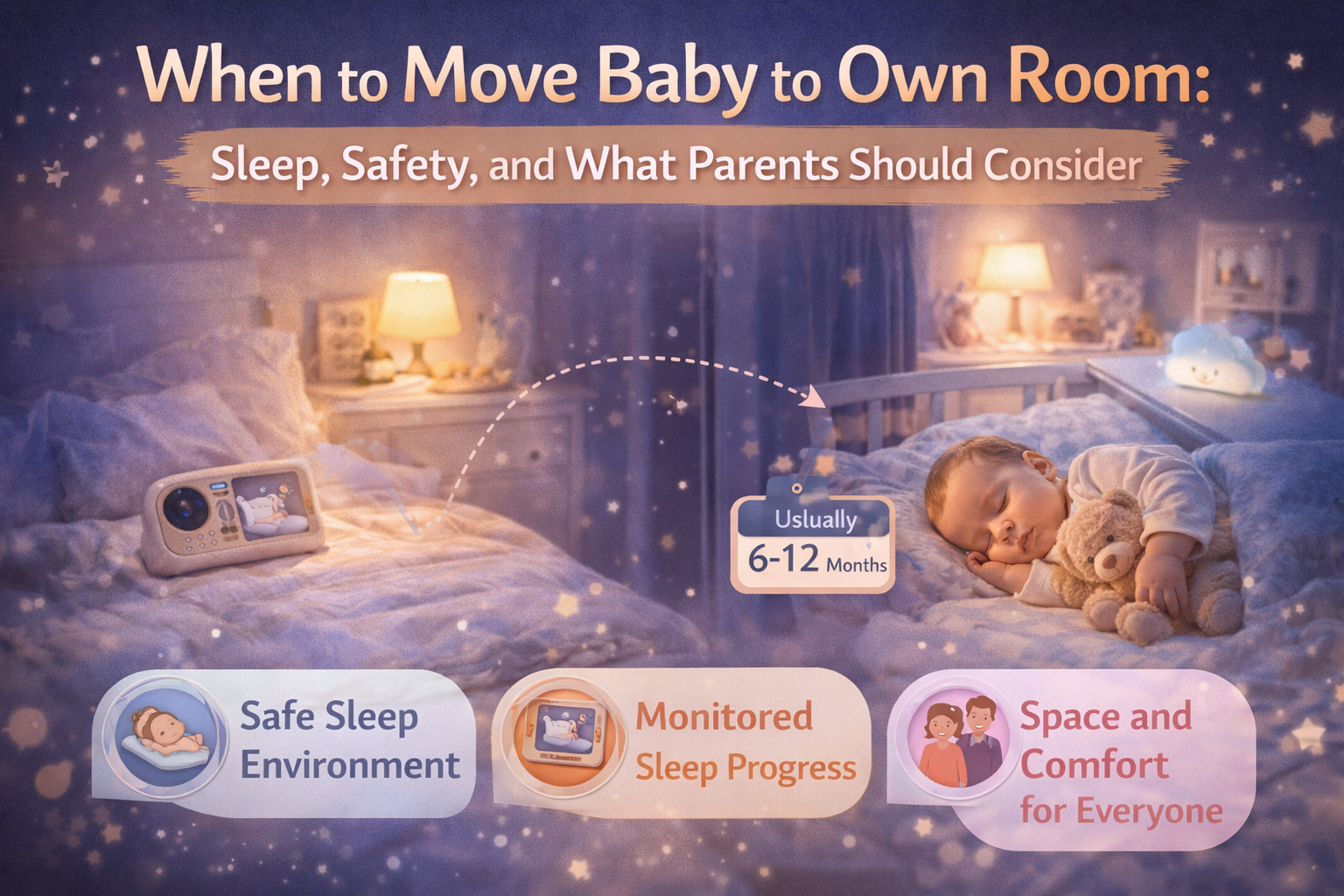
What age is best for moving a baby to their own room?
For most healthy, full-term babies, six months is a reasonable point to consider moving them to their own room. However, the AAP says room sharing without bed sharing is ideally continued for the first year when possible.
The AAP’s guidance is based on the lower risk of sleep-related infant death when a baby sleeps near a parent but on a separate surface. Room sharing may also make it easier to notice and respond to a baby during the night.
That does not mean every family must keep a baby in the parents’ room for 12 months. If room sharing is causing very poor sleep, or if the arrangement is not working safely, talk with your baby’s pediatrician about your options.
A simple age guide
| Baby’s age | General U.S. safety guidance |
|---|---|
| Birth to 3 months | Room share and use a separate crib, bassinet, or play yard near the parent’s bed |
| 4 to 5 months | Continue room sharing when possible; begin planning if you want to move the baby at six months |
| 6 to 11 months | Moving to a separate room may be reasonable for a healthy baby if the sleep space is safe |
| 12 months and older | The increased risk of sleep-related infant death is lower, but safe sleep habits still matter |
Age is only one part of the decision. A baby born early, a baby with breathing problems, or a baby with another medical condition may need a more personal plan.
Why room sharing is recommended
Room sharing may lower the risk of sleep-related infant death, including sudden infant death syndrome, or SIDS. The protective effect is not the same as bed sharing. A baby should sleep in their own approved sleep space, not in an adult bed.
The AAP recommends placing a baby:
- On their back for every sleep
- On a firm, flat, noninclined surface
- In a crib, bassinet, portable crib, or play yard that meets current U.S. safety standards
- With only a fitted sheet made for that sleep surface
- Away from pillows, blankets, bumpers, stuffed toys, and other soft items
Keep the baby’s sleep area in the parents’ room rather than placing the baby in an adult bed, recliner, or couch. The AAP safe sleep policy provides the main U.S. medical guidance.
Room sharing does not require constant monitoring. Consumer heart-rate and oxygen monitors have not been proven to prevent SIDS. They should not replace safe sleep practices or medical care.
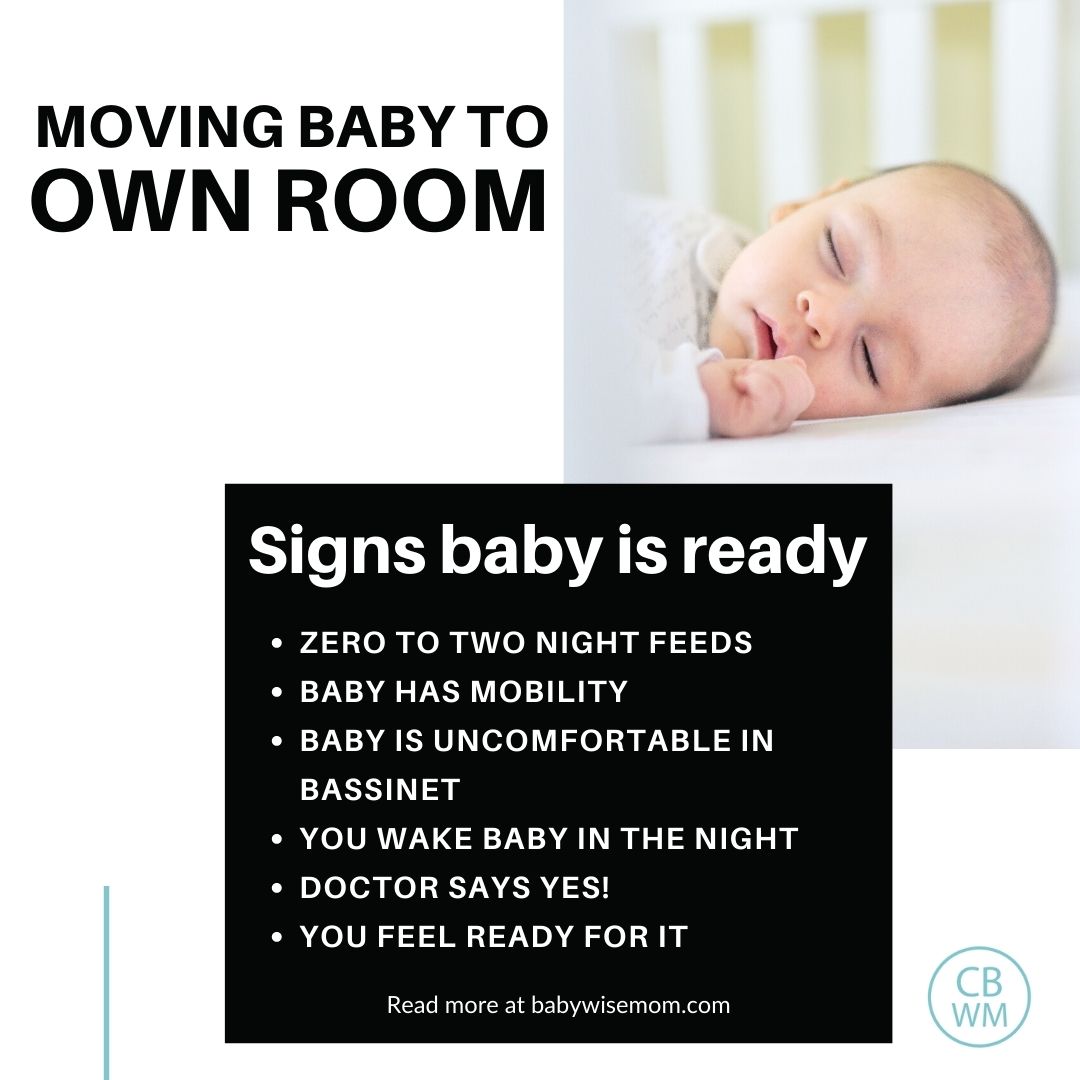
Signs your baby may be ready for a room transition
A baby does not need to “sleep through the night” before moving to another room. Most babies still wake at night for feeding, comfort, or help with sleep.
Your baby may be ready when:
- They are at least six months old and healthy
- They sleep in a safe crib or other approved sleep space
- They can settle for at least some sleep periods without constant hands-on help
- Their sleep space is ready and close enough for you to respond
- Your family can follow the same safe sleep rules in the new room
- You feel able to check on and feed the baby as needed
Parents may also be ready before the baby is. A baby who wakes often can keep everyone awake when sleeping nearby. Moving the baby may help some families sleep better, but it is not a guaranteed fix.
Signs to wait or ask the pediatrician first
Speak with your baby’s health care professional before changing rooms if your baby:
- Was born very early or had a low birth weight
- Has a breathing disorder or frequent breathing concerns
- Has a heart, nerve, or muscle condition
- Has poor weight gain or feeding problems
- Needs medical equipment during sleep
- Has unusual color changes, pauses in breathing, or repeated choking
Call 911 for a baby who is not breathing normally, turns blue or gray, cannot be awakened, or has another emergency sign. A room change is not a treatment for breathing problems.
How to move your baby to their own room safely
The safest transition starts with the sleep space, not with a sleep-training method.
1. Set up the room before the first night
Use a crib, bassinet, portable crib, or play yard that is made for infant sleep. Check the product instructions and avoid recalled items. The U.S. Consumer Product Safety Commission provides current crib and infant sleep product safety information.
Keep the crib away from:
- Window cords and blind cords
- Cords from lamps, monitors, or chargers
- Heaters and radiators
- Shelves or furniture that could fall
- Wall decorations within the baby’s reach
- Smoke, vaping, and strong fragrances
Do not use a sleep positioner, wedge, inclined sleeper, crib bumper, or weighted sleep product. These items can create an unsafe position or restrict movement.
2. Use the same safe sleep routine
Begin with a short, calm routine. For example:
- Feed the baby.
- Change the diaper.
- Dim the lights.
- Read or sing quietly.
- Place the baby on their back in the crib.
A routine gives the baby familiar cues even though the room has changed. It does not need to be long or strict.
3. Start with one sleep period
Some families begin with a nap. Others start with nighttime sleep because the room is dark and quiet. Either approach can work.
If naps become very hard, return to the old arrangement for a few days and try again. A slow start is not a failure. It gives you information about what your baby can handle.
4. Keep nighttime care boring and calm
When the baby wakes, use low light and a quiet voice. Feed or comfort the baby as needed. Then return the baby to the crib on their back.
Avoid bringing the baby into an adult bed if you may fall asleep. If you feed or comfort your baby in bed, move the baby back to their own sleep space before you go to sleep.
5. Check the room without creating new risks
A baby monitor can help you hear the baby, but place it well away from the crib. Keep the camera and cord out of reach. Do not use a monitor as a reason to add pillows, blankets, positioners, or other products.
The goal is not to watch every breath. The goal is a safe sleep space that lets you respond when your baby needs you.
Safe sleep rules after the move
Moving a baby to a new room does not change the basic safe sleep rules.
Always:
- Put the baby on their back for every nap and night sleep.
- Use a firm, flat, noninclined mattress.
- Keep the crib empty except for the fitted sheet.
- Stop swaddling when the baby shows signs of trying to roll.
- Use a wearable blanket if the room is cool, but choose one that fits correctly.
- Keep the baby away from smoke and nicotine before and after birth.
- Share a room without sharing a bed whenever possible.
Once a baby can roll from back to stomach and stomach to back, you do not need to keep turning them back. Still, always place the baby on their back at the start of sleep, and keep the crib clear.
Do not use weighted swaddles or weighted sleep sacks for infants. Also avoid hats indoors during sleep unless a medical professional gives specific instructions. Overheating may increase sleep risk.
What if the baby rolls or sits up?
If your baby can roll, stop using a swaddle that restricts the arms. A loose blanket should not replace a swaddle. Use a properly fitted, nonweighted sleep sack if needed.
If your baby sits or pulls up, check that the crib mattress is at the correct height. Lower it according to the crib instructions before the baby can climb out.
What if the baby falls asleep during feeding?
Move the baby to the crib as soon as you wake or finish feeding. Couches and recliners are especially dangerous places to sleep with a baby.
If you think you may fall asleep while feeding, remove pillows, blankets, and other soft items from the area first. Then place the baby back in the crib when you wake.

Should you move the baby before or after sleep training?
You can move a baby before, during, or after sleep training. There is no medical rule that requires one order.
Some parents prefer to change one thing at a time. They move the baby first, allow several nights to adjust, and then work on sleep habits. Others make both changes together because they want a clear break from the old routine.
Changing both at once may lead to more crying or disrupted sleep for a few nights. Changing one thing at a time may feel slower but can make it easier to identify the cause of a problem.
Sleep training is not required for a safe room transition. If you use a sleep-training method, choose an approach that fits your values and your pediatrician’s advice. Continue to respond to hunger, illness, pain, and other needs.
Common problems after moving a baby
Most room changes cause some adjustment. Look for the likely cause before changing several things at once.
The baby wakes more often
Possible causes include:
- A new room, sound, or light pattern
- Hunger or a growth period
- Teething or illness
- A room that is too hot or cold
- A sleep schedule that does not fit the baby’s age
- A sleep association that changed suddenly
Check the room and the baby’s health first. Keep the bedtime routine steady for several nights before deciding that the move failed.
The baby cries as soon as you leave
The baby may be reacting to separation, a new view, or a changed routine. Offer brief comfort, keep the room calm, and repeat the same steps. You can also practice short periods in the room during the day.
If the crying is sudden, intense, or different from usual, check for illness or pain.
The baby wakes when the parent enters
This can happen when a light turns on, the floor creaks, or the parent speaks. Use a dim light, move slowly, and keep the interaction quiet. A monitor may help you decide whether the baby needs immediate attention, but it should not replace direct care when the baby is distressed.
The baby sleeps better in the parents’ room
That is common. A room transition does not have to happen all at once. Try one nap, the first part of the night, or a few practice periods. If the new room remains difficult, ask the pediatrician whether there is a health or sleep issue to address.
When to move the crib out of the parents’ room
There is no need to move a baby at a specific week or month. Consider moving the crib when:
- The baby is at least six months old
- The sleep space meets current safety rules
- You can hear or check the baby promptly
- Your baby’s medical needs are understood
- You have a plan for nighttime feeding and comfort
- The change will improve or protect the family’s sleep without adding unsafe practices
If your home has more than one caregiver, agree on the plan before the first night. Decide who will respond, where feeding will happen, and how the baby will return to the crib.
For families who cannot safely use a separate room, continue room sharing as long as it works. The safest arrangement is one that keeps the baby in an approved sleep space and prevents accidental sleep on a couch, chair, or adult bed.
Questions to ask your baby’s pediatrician
Bring these questions to a well-child visit:
- Is my baby healthy enough to sleep in a separate room?
- Does my baby’s birth history change the recommendation?
- Does my baby need nighttime feeds?
- Are my baby’s breathing sounds or movements normal?
- Is the sleep sack or swaddle we use safe?
- What should I do if my baby rolls, crawls, or pulls up?
- Could reflux, eczema, allergies, or another condition be affecting sleep?
The pediatrician can give advice based on your baby’s growth, birth history, medical needs, and feeding plan.

FAQs about moving a baby to their own room
Is 4 months too early to move a baby to their own room?
The AAP recommends room sharing for at least six months, so four months is earlier than its preferred minimum. If you are considering an earlier move because of severe sleep problems or an unsafe room-sharing setup, speak with your pediatrician first.
Is it safer to move a baby to their own room after 6 months?
The risk of sleep-related infant death falls as babies grow, and moving after six months may be reasonable for a healthy baby. However, room sharing through the first year may provide added protection. Continue all other safe sleep practices wherever the baby sleeps.
Can a baby sleep in their own room at 3 months?
Some babies do sleep in a separate room at three months, but this is earlier than the AAP’s recommended room-sharing period. Discuss the decision with your pediatrician, especially if the baby was premature or has a medical condition.
Should the baby’s room be completely dark?
A dark room may help sleep, but complete darkness is not required for safety. Use a dim night-light if needed. Keep it away from the crib, and avoid bright screens during nighttime care.
Can I use a blanket when my baby moves to their own room?
Loose blankets should not be used in an infant’s sleep space. If your baby is cold, use clothing or a properly fitted, nonweighted wearable blanket. Stop swaddling when the baby shows signs of rolling.
Conclusion
For most healthy babies, six months is a practical time to consider moving to a separate room, while room sharing through the first year may offer more protection. The decision should also reflect your baby’s health, your home, and whether the current setup allows everyone to sleep safely.
Prepare the new room first. Use a firm, flat sleep surface with no loose items. Keep the same calm routine, start gradually if needed, and ask your pediatrician about any medical concerns.
Your next step is simple: check the crib, remove unsafe items, and discuss the timing at your baby’s next U.S. pediatric visit.