Yes, babies can eat corn from about 6 months when it is cooked, soft, and served in a safe form.
Corn can be a healthy part of infant feeding, but its shape and texture matter more than the food itself. This guide explains when babies can eat corn, how to prepare it by age, which forms may cause choking, and how to serve fresh, frozen, or canned corn with confidence.

Can babies eat corn safely?
Yes, babies can eat corn once they are ready for solid foods, usually around 6 months. Readiness matters more than a specific date. Your baby should sit upright with little help, control their head, reach for food, and swallow food instead of pushing it out with their tongue.
Corn contains fiber, carbohydrates, vitamin C, folate, and small amounts of other nutrients. It can add flavor and texture to your baby’s meals. Still, corn should be part of a varied diet that also includes iron-rich foods, vegetables, fruit, grains, eggs, meat, beans, and safe nut products.
The main concern is not toxicity. The main concern is choking. Whole corn kernels are round, firm, and difficult for young babies to manage. Babies can eat corn safely when you change its texture and stay close during every meal.

When can babies eat corn?
Most babies can try soft, well-cooked corn at about 6 months. Some babies may need more time to develop the skills needed for textured foods. If your baby was born early, ask a pediatrician when to begin solids.
Look for these signs of readiness:
• Your baby can sit upright and keep their head steady.
• Your baby opens their mouth when food comes near.
• Your baby can bring toys and food to their mouth.
• Your baby can move food from the front of the mouth toward the back.
• Your baby no longer pushes most food out with their tongue.
There is no need to delay common allergenic foods without medical advice. Corn is not among the most common food allergens, but any food can cause a reaction. Introduce one new food at a time if you want to track possible symptoms more easily.
How to prepare corn for babies
The safest way to serve corn depends on your baby’s age, eating skills, and ability to manage texture. Always cook corn until it is very soft. Raw corn is firm and can be hard for a baby to bite or gum.
Corn for babies around 6 months
At this stage, offer smooth or very soft textures.
• Blend cooked corn with breast milk, formula, water, or a soft vegetable puree.
• Mash cooked corn until few or no firm pieces remain.
• Strain the puree if the skins feel tough.
• Mix corn with mashed avocado, potato, beans, carrots, or plain yogurt.
A smooth corn puree can taste slightly sweet, which may help babies accept a new vegetable. Serve a small amount at first, such as 1 or 2 teaspoons, and follow your baby’s hunger cues.
Corn for babies around 8 to 9 months
Many babies can handle thicker textures and soft lumps by this age.
• Mash cooked corn with a fork.
• Flatten individual kernels between your fingers before serving.
• Mix a small amount into soft rice, quinoa, beans, or scrambled egg.
• Spread mashed corn thinly on a strip of soft toast if your baby manages finger foods.
Stay nearby during the meal. Babies may gag, cough, or make loud sounds as they learn. Gagging is usually noisy. Choking is often quiet and requires immediate action, so learn infant choking first aid before offering finger foods.
Corn for babies 12 months and older
Older babies may manage soft corn in more forms, but whole kernels can still be risky. Continue to cook the corn well and consider cutting or crushing the kernels.
You can serve:
• Soft corn mixed into a vegetable fritter with no added salt.
• Corn and bean mash.
• Soft corn cakes cut into thin strips.
• Corn stirred into soup after cooling it to a safe temperature.
Never let a baby eat while lying down, walking, playing, or riding in a car. A seated, upright position helps the baby control food more safely.

Is corn on the cob safe for babies?
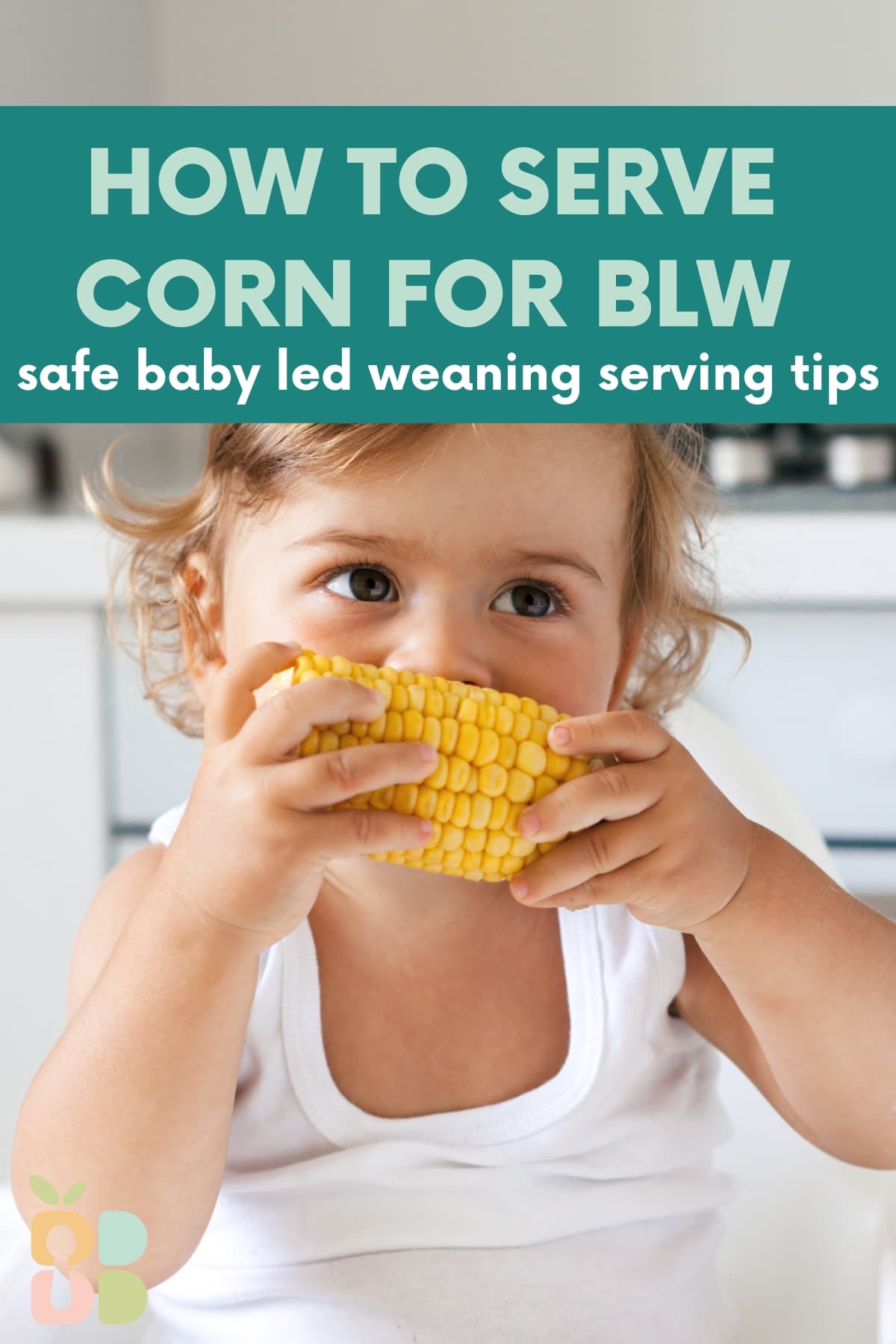
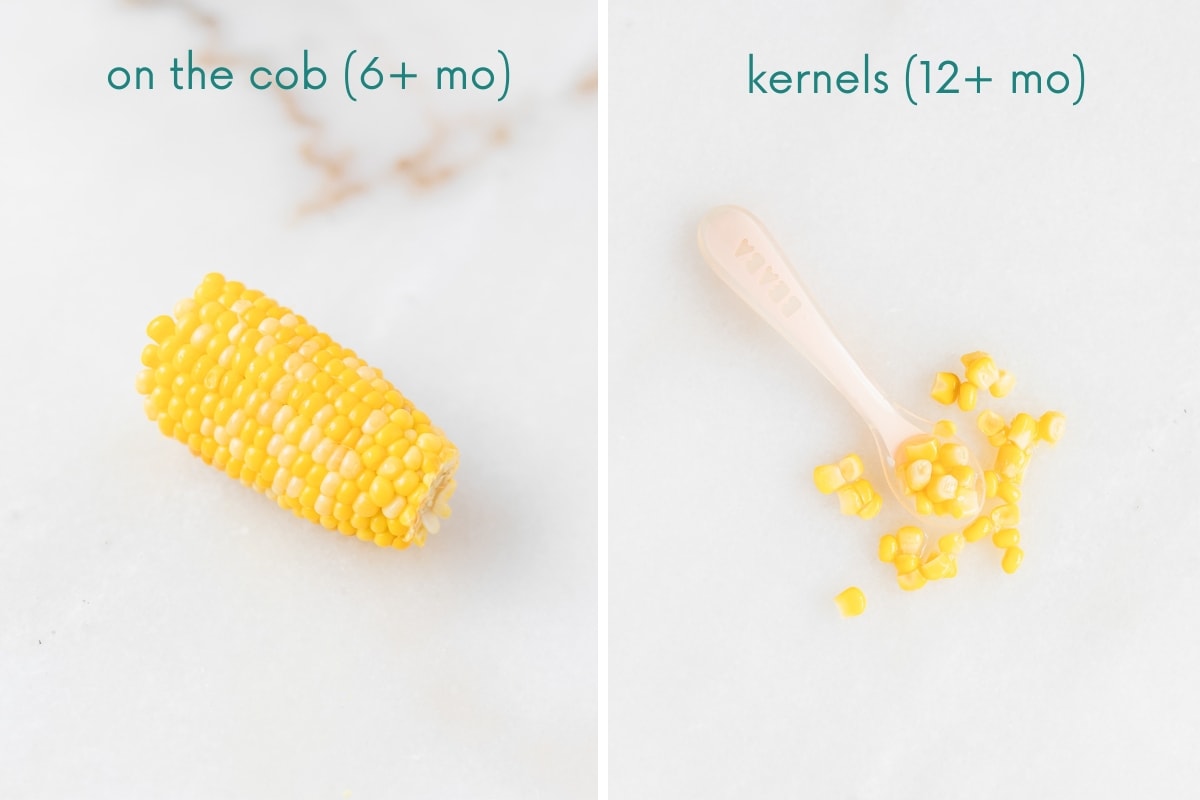
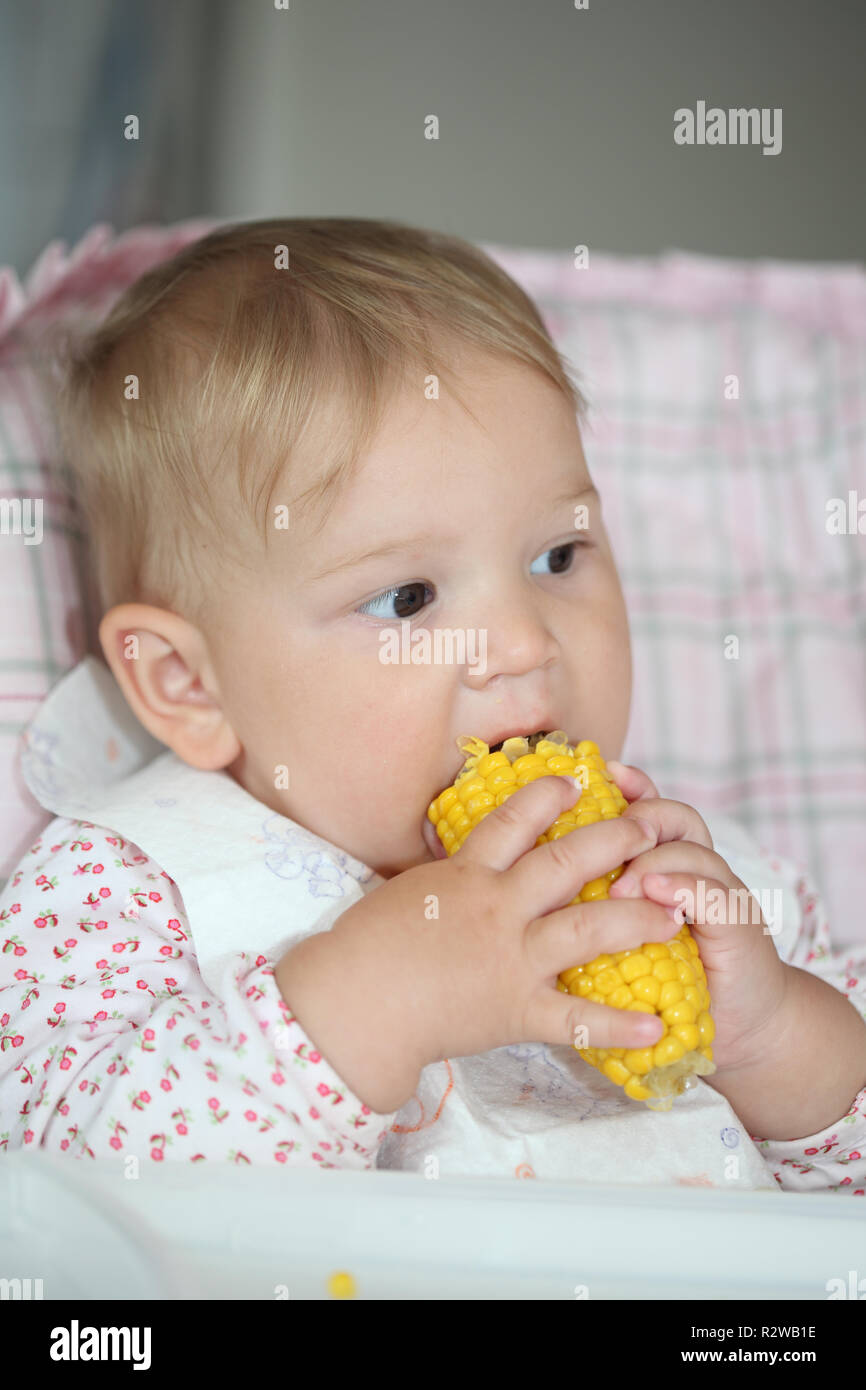
Corn on the cob can be difficult to judge. Some babies can gnaw on a large, soft cob under close supervision, but loose kernels may break off. A cob can also become slippery, and small pieces may detach.
For young babies, mashed or pureed corn is the simpler choice. If you offer a large piece of cooked cob to an older baby, remove loose kernels first, check that the cob is soft, and watch your baby the entire time.
Do not give a baby a small piece of cob. Small, hard, or broken pieces can become choking hazards. Avoid grilled corn that is dry, tough, heavily seasoned, or coated with butter and salt.
Can babies eat canned, frozen, or fresh corn?
Babies can eat fresh, frozen, or canned corn if you prepare it correctly.
Fresh corn
Fresh corn should be cooked until tender. Remove the kernels from the cob, then mash, blend, or soften them based on your baby’s feeding stage.
Frozen corn
Frozen corn is often convenient and can provide good nutrition. Cook it fully, let it cool, and mash or blend it before serving. Check the texture because some frozen kernels remain firm after heating.
Canned corn
Choose canned corn with no added salt when possible. Drain and rinse regular canned corn to reduce some of the sodium, then cook and soften it further if needed.
Avoid canned corn in sauces, cream, spicy mixes, or products with added sugar. Babies do not need added salt or sugar, and salty foods can take up space that would otherwise go to more nutritious foods.

Corn nutrition for babies
Corn can support a balanced diet, but it is not a complete meal. It mainly provides carbohydrates and fiber. It also offers vitamin C, folate, and plant compounds that support general health.
One important point is iron. Corn is not a strong source of iron, and iron needs rise during the second half of the first year. Pair corn with iron-rich foods such as:
• Pureed beef, chicken, turkey, or fish.
• Mashed beans or lentils.
• Iron-fortified infant cereal.
• Well-cooked egg.
• Smooth peanut or other nut butter thinned with water, breast milk, or formula.
Corn can also add moisture and flavor to foods that may otherwise seem bland. For example, mashed corn with beans creates a soft meal with more fiber and plant protein than corn alone.
Some parents notice pieces of corn in a baby’s diaper. This can happen because the outer skin is not fully broken down during digestion. It does not usually mean the baby is sick or failing to absorb all the food’s nutrients.
Corn safety risks parents should know
Choking
Whole corn kernels are the biggest concern. Their size, shape, and firm skin can make them hard for a baby to chew or move safely.
Reduce the risk by:
• Cooking corn until soft.
• Mashing, blending, or flattening kernels.
• Keeping your baby seated upright.
• Removing distractions during meals.
• Staying within arm’s reach.
• Learning infant CPR and choking first aid.
The Centers for Disease Control and Prevention lists whole corn kernels among foods that can pose choking risks for young children. Texture changes are a key part of safe feeding.
Added salt and sugar
Many corn dishes contain salt, butter, cheese, or sugar. Babies have small bodies, so foods high in sodium can add a large amount of salt to their diet quickly.
Offer plain corn most of the time. Flavor it with soft vegetables, herbs, beans, or a small amount of unsalted yogurt instead.
Allergic reactions
Corn allergy is uncommon but possible. Watch for hives, swelling, repeated vomiting, coughing, wheezing, trouble breathing, or unusual sleepiness after eating corn.
Seek emergency help for breathing trouble, swelling of the lips or tongue, or signs of a severe reaction. Contact your child’s health care provider for milder symptoms or concerns.
Digestive discomfort
Corn contains fiber. A sudden large serving may cause gas or loose stools in some babies. Start with a small amount and increase slowly as your baby adjusts.
Corn products babies should avoid
Corn itself can be safe, but many corn-based products are not suitable for babies.
Avoid or limit:
• Popcorn, which is a serious choking hazard.
• Corn chips and tortilla chips, which are hard, salty, and easy to break into sharp pieces.
• Raw corn kernels.
• Whole, firm kernels for babies who cannot manage them.
• Sweet corn desserts and sugary corn cereals.
• Corn dogs and processed foods high in sodium.
• Spicy corn dishes that may irritate the mouth.
• Corn nuts, which are hard and unsafe for young children.
Cornmeal and polenta can be safe when cooked into a soft porridge. Let them cool before serving, and check for clumps or firm pieces.
Easy corn recipes for babies
Simple corn puree
-
Cook fresh or frozen corn until very soft.
-
Blend it with a little water, breast milk, or formula.
-
Add more liquid until the texture suits your baby.
-
Let it cool before serving.
Do not add honey to any food for a baby younger than 12 months. Honey can expose infants to bacteria that may cause infant botulism.
Corn and avocado mash
Mash soft corn with ripe avocado. This creates a smooth, energy-rich food with a soft texture. You can add a little plain yogurt if your baby has already tried dairy.
Corn and bean mash
Blend cooked corn with soft black beans, pinto beans, or lentils. Remove whole bean skins or blend well for younger babies. This pairing adds more protein and iron than corn alone.
Soft corn polenta
Cook cornmeal with water until it becomes very soft. Stir in mashed vegetables or finely blended meat, then cool it to a safe temperature before serving.
Always test the food with your fingers. If you cannot easily mash it, it may be too firm for a young baby.
A practical feeding approach
A useful lesson from infant feeding is that the same food can be safe or unsafe depending on how it is served. Corn puree may be easy for a beginner, while a bowl of whole kernels may be unsafe for that same baby.
Use this simple routine:
-
Wash your hands and clean the cooking area.
-
Cook the corn until soft.
-
Change the texture to match your baby’s skills.
-
Serve a small portion while your baby sits upright.
-
Watch for gagging, choking, allergy signs, or stomach upset.
-
Store leftovers safely and reheat them only once.
Do not pressure your baby to finish. Babies often need to see and taste a food many times before they accept it. Mealtime should feel like practice, not a test.
Frequently Asked Questions About Can Babies Eat Corn
Can babies eat corn at 6 months?
Yes, babies can eat corn at about 6 months if they show signs of readiness for solid foods. Serve it cooked, soft, and mashed or blended rather than as whole kernels.
Can babies eat whole corn kernels?
Young babies should not eat whole corn kernels because they can be a choking hazard. Flatten, mash, or blend the kernels until your child can manage more advanced textures.
Can babies eat corn on the cob?
Some older babies may gnaw on a large, soft piece of corn on the cob with close supervision. For younger babies, mashed or pureed corn is easier to manage and has fewer texture concerns.
Can babies eat canned corn?
Yes, but choose no-salt-added canned corn when possible. Drain and rinse it, then cook and soften it before mashing or serving.
Can babies eat popcorn?
No. Popcorn is a choking hazard for babies and young children. Avoid it until your child is old enough to chew it safely, based on pediatric guidance.
Does corn cause constipation in babies?
Corn does not usually cause constipation, and its fiber may support regular bowel movements. However, every baby responds differently, so offer water with meals when developmentally appropriate and include other fruits and vegetables.
Can babies be allergic to corn?
Yes, although corn allergy is not common. Stop feeding corn and contact a health professional if your baby develops hives, repeated vomiting, swelling, coughing, wheezing, or other concerning symptoms.
Conclusion
Babies can eat corn from around 6 months when they are ready for solids and the corn is cooked, soft, and served in a safe texture. Begin with puree or mashed corn, avoid whole kernels and popcorn, and choose plain fresh, frozen, or low-sodium canned corn.
Pair corn with iron-rich foods, watch your baby closely, and follow their hunger and fullness cues. With the right preparation, corn can be a simple and tasty part of family meals. Explore more safe infant-feeding guidance, and share your baby’s favorite corn recipe in the comments.