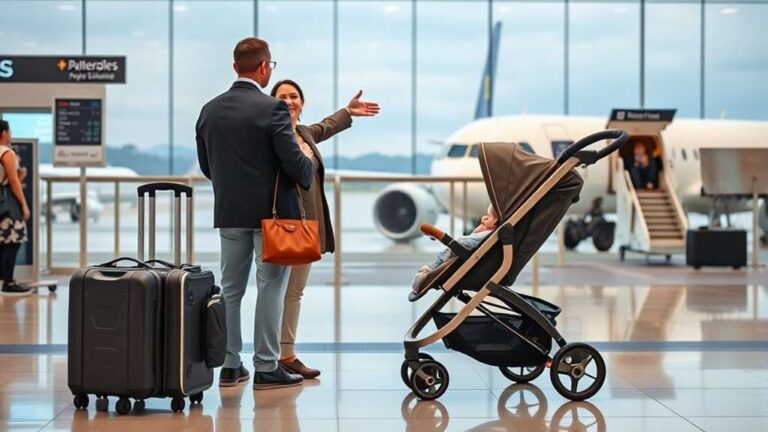
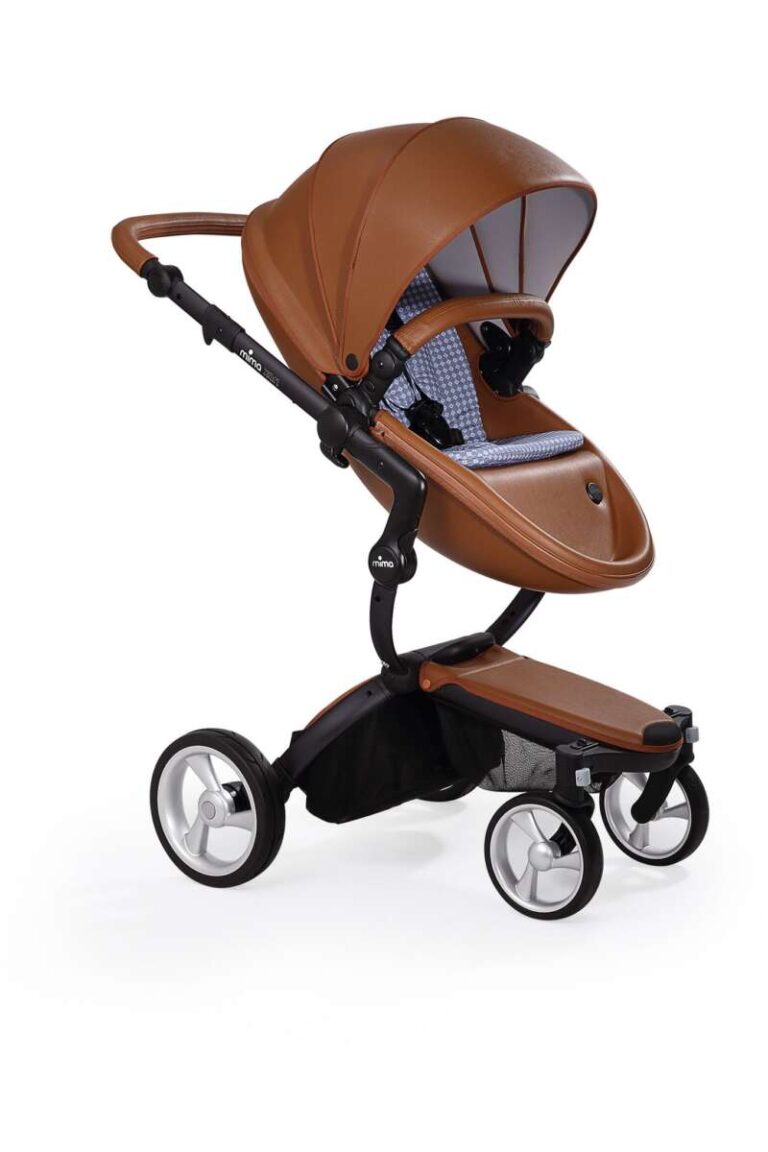
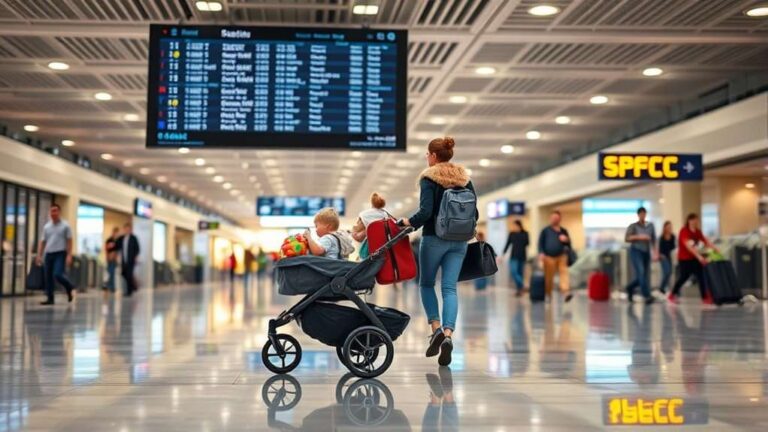
Travel with a stroller and car seat by planning airline rules, using protective bags, and keeping safety gear easy to reach.
Learning how to travel with a stroller and carseat can make a family trip far less stressful. The right setup depends on your child’s age, your airline, your destination, and whether you will use a car after landing. This guide shares practical steps, safety advice, and lessons learned from real family travel situations.
Plan Your Travel Gear Before You Leave
The best way to travel with a stroller and carseat is to decide how each item will be used at every stage of the trip. Think through the trip like a relay race: home to airport, airport to gate, gate to aircraft, baggage claim, and finally your car or hotel.
First, check your airline’s current rules. Policies can vary by airline, aircraft, airport, and ticket type. Confirm the following details before packing:
• Whether your stroller can be gate checked
• Whether the car seat can be used on board
• The size and weight limits for checked baby gear
• Whether a stroller and car seat count as free child equipment
• Where gate-checked items will be returned after landing
• Whether a protective bag is required
A lightweight travel stroller and an FAA-approved car seat often make the journey easier. However, the lightest option is not always the safest or most useful one. Choose equipment that fits your child, your vehicle, and your travel plans.

Choose the Right Stroller and Car Seat Setup
There are several ways to travel with a stroller and carseat. Each option has benefits and limits.
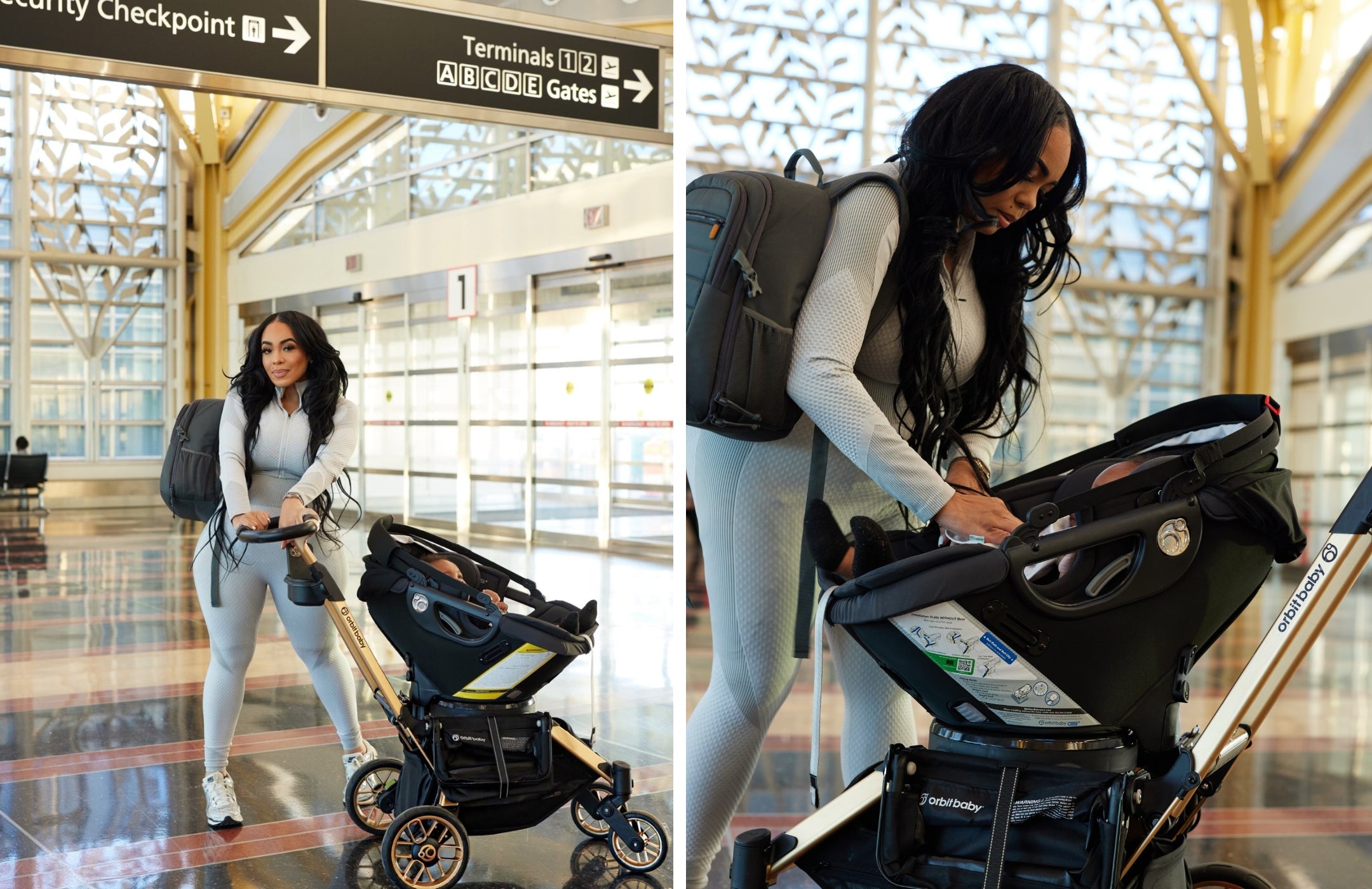
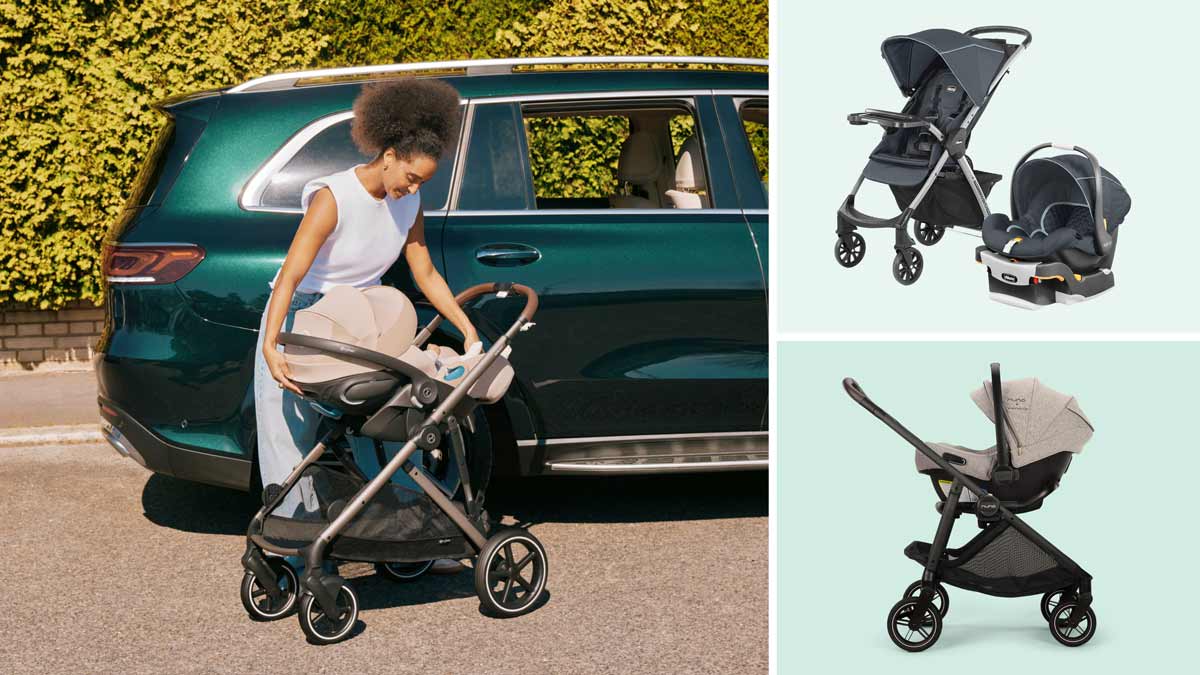
Option 1: Use a travel system
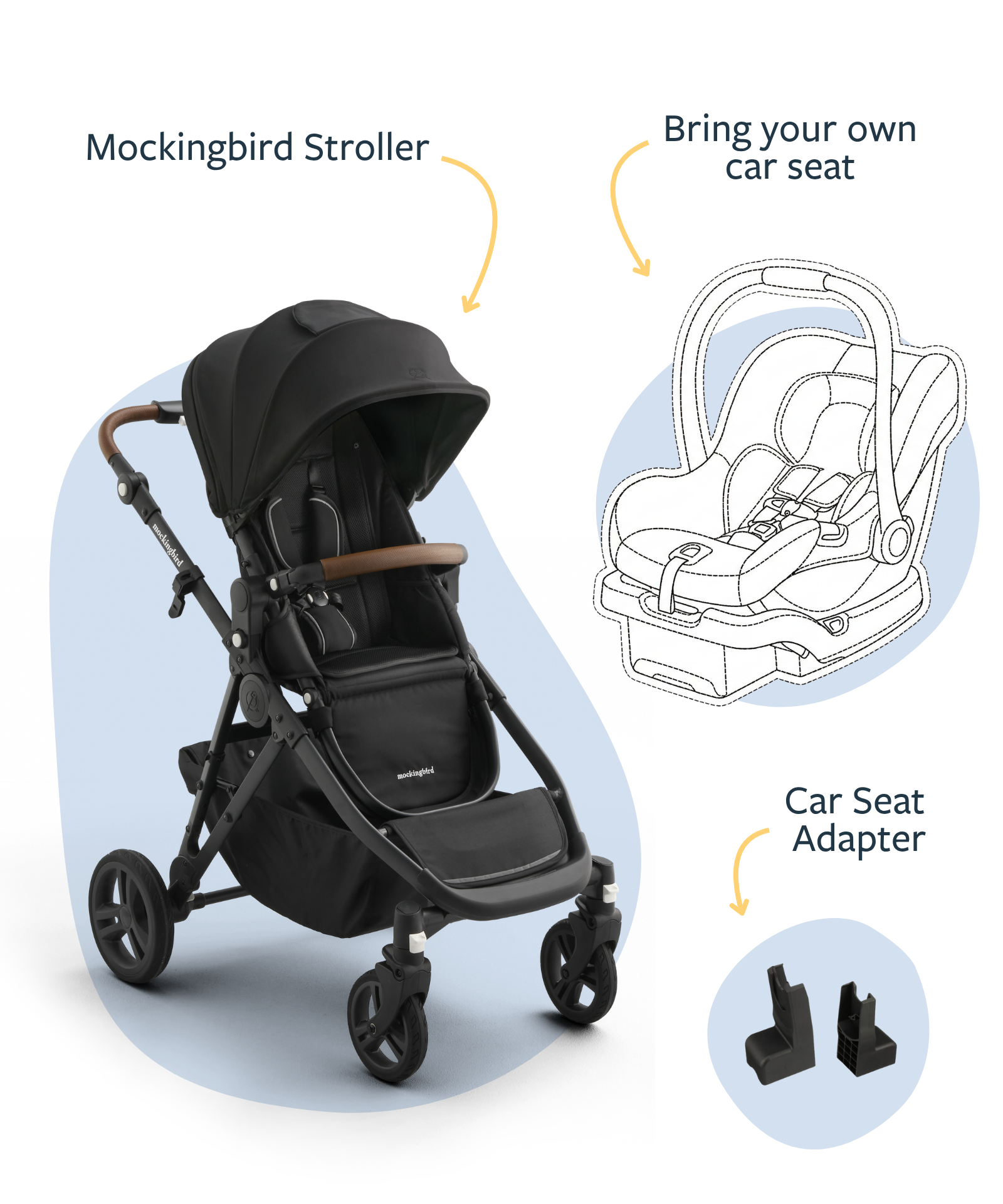
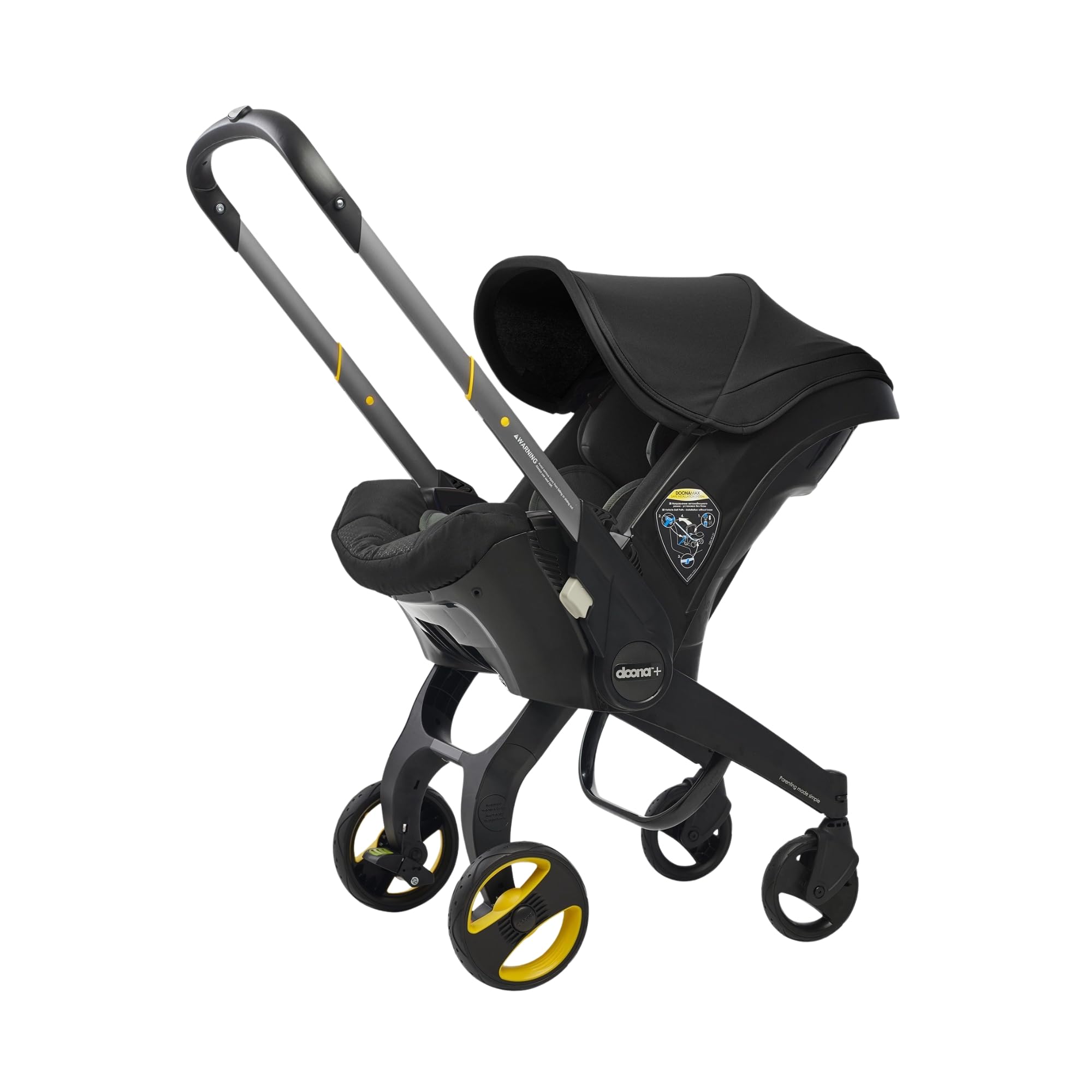
A travel system lets an infant car seat attach to a compatible stroller. This is convenient for babies who often sleep during travel. You can move the car seat without lifting your baby out.
This setup works best when the stroller folds easily and the car seat clicks in securely. Always use the manufacturer’s adapters. Do not rely on universal straps unless the manufacturer approves them for your exact model.
Option 2: Bring a compact stroller and separate car seat
A compact stroller is easy to carry through an airport. The car seat can be checked, carried on board, or placed on a luggage cart made for car seats.
This option gives you more flexibility for older babies and toddlers. It may also work better when your car seat is too large to fit safely on the stroller.
Option 3: Use a car seat travel cart
A car seat travel cart lets you roll your child through the airport while the child remains in the car seat. The cart must be approved for your car seat model and used as directed.
A cart does not automatically make a car seat safe for aircraft use. You still need to follow the airline’s instructions and the car seat’s approval label.
Option 4: Rent equipment at your destination
Renting a stroller or car seat may reduce the amount you carry. Yet rental equipment can have unknown cleaning, storage, and safety histories.
For car seats, bringing your own is usually the safer choice. You know its age, crash history, fit, and condition. The National Highway Traffic Safety Administration recommends replacing a car seat after a moderate or severe crash, even when damage is not easy to see.
Prepare the Car Seat for Air Travel
Before you travel with a stroller and carseat, inspect the car seat carefully. Look for the label that states the seat meets applicable motor vehicle safety standards and is certified for use in aircraft, when applicable.
A car seat used on an airplane should generally be placed in a window seat. This keeps it from blocking another passenger’s exit. Airlines may restrict car seats from aisle seats or emergency exit rows.
Check these points before your flight:
• Read the car seat manual and airline policy
• Confirm the seat fits the aircraft seat width
• Bring the approval label or manual if the label is hard to find
• Know how to install the seat with the aircraft lap belt
• Remove toys, loose covers, and accessories that could fall off
• Avoid using the car seat on an aircraft if it is damaged or expired
Do not assume a booster seat is suitable for a young child on an airplane. Many belt-positioning boosters need a shoulder belt, while aircraft seats usually have only a lap belt. A harnessed car seat is often a better option for children who need a restraint on board.
The Federal Aviation Administration encourages children to travel in an approved child restraint system when possible. A lap-held infant may be allowed by the airline, but holding a baby during turbulence is not as secure as using an approved restraint.
Decide Whether to Use the Car Seat on the Plane
Using the car seat on board provides a familiar, secure seat for your child. It can also help a young child sleep and gives parents a clear place to keep the child during the flight.
The main drawback is weight. You must carry the car seat through the airport and install it correctly in the aircraft seat. A wide or heavy seat may be difficult to manage in a narrow airplane row.
When deciding whether to use the car seat on board, consider:
• Your child’s age, size, and comfort
• The length of the flight
• Whether you purchased a seat for your child
• The car seat’s aircraft approval
• The seat’s width and installation method
• Your ability to carry the seat through the airport
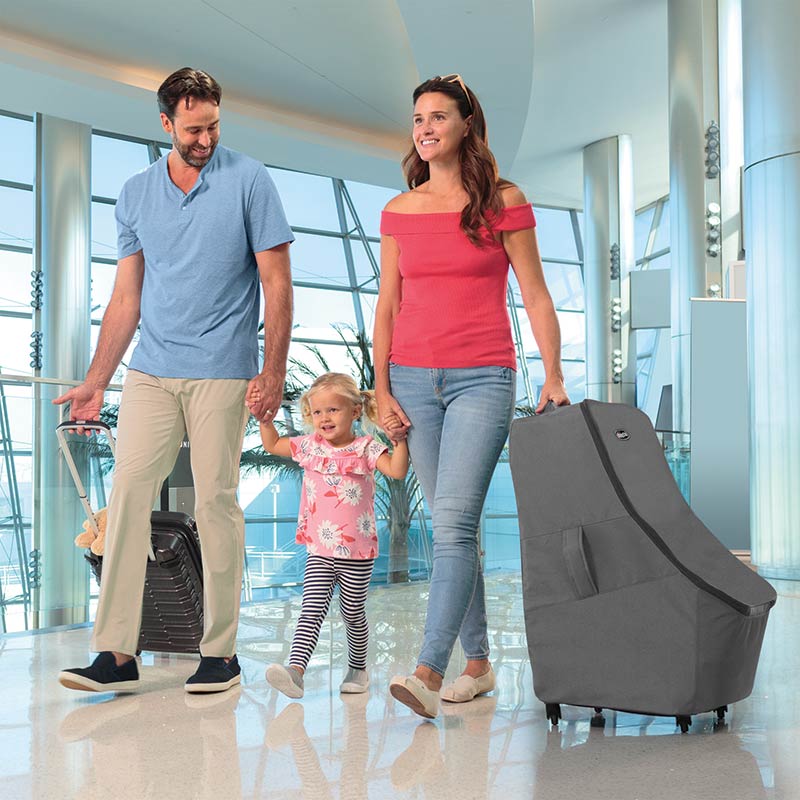
If you do not use the car seat on the plane, place it in a strong padded travel bag. A bright tag with your name and phone number can help identify it at baggage claim.
Never check a car seat loose. Conveyor belts can cause scratches, dirt, broken parts, or hidden damage. A padded bag will not guarantee protection, but it is much better than leaving the seat uncovered.
Get Through the Airport With Less Stress
Airports are easier when each item has a job. Use the stroller for your child, the car seat for safe transport, and your carry-on bag for documents and essentials.
If you travel with a stroller and carseat, arrive early. Families often need extra time for security screening, stroller folding, gate-check tags, and car seat installation.
At the security checkpoint:
• Tell the officer that you have a stroller and car seat
• Remove your child when asked
• Fold the stroller if required
• Place loose items in a bin
• Keep medication, formula, and documents easy to reach
• Ask for help if the stroller or car seat is difficult to lift
In the United States, Transportation Security Administration officers decide how equipment is screened. Rules can vary by airport and security setup. Give yourself time and follow the officer’s instructions.
A soft baby carrier can also help. It lets you keep your hands free while folding the stroller or carrying a small bag. Check the carrier’s instructions, and never use it as a substitute for an approved car seat in a vehicle or aircraft.

Gate Check the Stroller and Car Seat Correctly
Gate checking means you use the equipment until you reach the aircraft door. Staff then place it in the cargo hold, and the items may be returned at the gate after landing.
This is often the easiest way to travel with a stroller and carseat when you need the stroller inside the airport. Still, gate delivery is not guaranteed at every airport. Ask the gate agent where the items will be returned.
Before gate checking:
• Remove all toys, cups, and loose accessories
• Fold the stroller fully
• Lock the stroller if it has a folding latch
• Attach the gate-check tag where staff can see it
• Put the stroller in a travel bag if the manufacturer recommends one
• Take photos of the equipment before handing it over
• Keep the car seat manual and important parts in your carry-on
Avoid placing passports, diapers, medication, or other valuables in the stroller basket. Those items may be difficult to recover if the stroller is sent to baggage claim.
Some airlines require large strollers to be checked at the ticket counter. A compact stroller may be accepted at the gate, but policies differ. Confirm the rule before you arrive at the airport.

Protect Your Gear During the Trip
A stroller bag can protect against dirt and light handling damage. A car seat bag can also make the seat easier for baggage staff to identify.
Choose a bag with:
• Strong seams
• A clear name tag
• A wide opening
• Backpack straps or wheels, if useful
• Enough space for the car seat without forcing it inside
Do not pack heavy items inside a car seat bag. Extra weight can increase damage during handling. You can place a small diaper pouch or lightweight blanket in the bag only if the airline allows it and the items do not crush the seat.
After retrieving the car seat, inspect it before using it in a vehicle. Check the shell, harness, buckle, padding, base, and adjustment system. If anything is cracked, bent, missing, or difficult to operate, do not use the seat until a qualified technician or the manufacturer provides guidance.
A small scratch may be cosmetic, but hidden damage can be harder to identify. When in doubt, contact the car seat manufacturer and explain what happened.
Install the Car Seat Safely at Your Destination
A car seat that fits one vehicle may not fit another. Rental cars can have different seat shapes, buckle lengths, headrests, and lower anchor locations.
Before driving away:
-
Read the car seat manual and vehicle manual.
-
Choose the correct seating position.
-
Install the seat using either the seat belt or lower anchors, unless both methods are approved.
-
Remove excessive slack from the belt or lower anchor strap.
-
Test the seat at the belt path.
-
Check that the seat moves no more than one inch from side to side or front to back at the belt path.
-
Adjust the harness so it fits snugly over your child.
-
Remove bulky coats before buckling your child.
Many communities offer car seat inspection stations. A certified child passenger safety technician can check the installation and teach you how to repeat it. This is especially helpful when using a rental vehicle.
Never use a rear-facing seat in front of an active air bag. Follow the car seat’s height, weight, and recline rules rather than relying only on your child’s age.

Pack a Practical Travel Kit
The best travel kit is small, organized, and easy to reach. Keep important items in your personal carry-on instead of the stroller or car seat bag.
Pack:
• Diapers and wipes
• A change of clothes
• Snacks and bottles
• Formula or breast milk, if needed
• Medication
• Plastic bags for wet clothing
• A small blanket
• Car seat instructions
• Stroller instructions
• Identification and travel documents
• A portable phone charger
• Cleaning wipes
Do not place loose blankets, pillows, or stuffed toys around a sleeping infant in the car seat. The American Academy of Pediatrics recommends keeping the child’s sleep space free from soft objects and loose bedding.
During a long journey, dress your child in thin layers. Bulky clothing can create space beneath the harness and reduce its effectiveness. Add a blanket over the secured harness instead.
Handle Common Travel Problems
Even careful planning cannot prevent every problem. Flights may change, gates may move, and equipment may arrive late.
If your stroller does not appear at the aircraft door, ask the airline staff whether it was sent to oversized baggage or the main carousel. Keep the gate-check receipt until you have the stroller in hand.
If your car seat is damaged, photograph the damage before leaving the airport. Report it to the airline’s baggage service office and contact the manufacturer. Do not use a visibly damaged seat simply because you need to get home.
If you miss a connection, ask the airline about stroller access and child seating on the next flight. Keep the car seat with you if your child has a purchased seat and you plan to use the restraint on board.
One lesson many parents learn the hard way is to avoid packing at the last minute. A missing adapter, loose buckle, or forgotten gate tag can turn a simple trip into a long day. A short practice run at home can expose these problems early.
Common Mistakes to Avoid
Small mistakes can create large problems when you travel with a stroller and carseat. Review this list before leaving home.
• Assuming every airline has the same stroller policy
• Checking a car seat without a protective bag
• Forgetting to remove accessories before gate checking
• Using an unapproved strap or adapter
• Carrying a car seat without checking its aircraft approval
• Installing the seat without reading the rental car manual
• Leaving medication or documents in the stroller
• Buckling a child in a bulky winter coat
• Using a used rental car seat without checking its condition
• Waiting until boarding begins to ask about car seat placement
• Forgetting to measure a wide car seat against airline seat dimensions
Your goal is not to carry the most equipment. Your goal is to carry the equipment that keeps your child safe and helps your family move through the trip with fewer surprises.
Tips for International Travel
International trips may involve different aircraft, local laws, and vehicle standards. A car seat approved in the United States may not meet every country’s rules for road travel.
Before an international trip, research:
• Child restraint laws at your destination
• Whether taxis require or allow car seats
• Rental car seat availability
• Airline rules for foreign and connecting flights
• Electrical needs for electric travel equipment
• Customs rules for food, formula, and medication
If you plan to use taxis, consider booking a vehicle with a child seat or bringing a lightweight approved seat. Do not assume a driver will provide the correct seat or install it properly.
Keep the car seat manual with you. If the manual is available online, download a copy before leaving. Internet access may be limited during a connection or after landing.
Frequently Asked Questions About How to Travel With a Stroller and Carseat
Can I bring a stroller and car seat on a plane?
Most airlines allow parents to check a stroller and car seat, often without charging the standard baggage fee. The exact rule varies, so confirm the policy with your airline before the trip.
Is it better to gate check a stroller?
Gate checking lets you use the stroller through much of the airport. It is often convenient, but the stroller may be returned at the aircraft door or sent to baggage claim, depending on the airport and airline.
Can my child sit in a car seat on the airplane?
Yes, if the child has a purchased seat and the car seat is approved for aircraft use. Follow the airline’s seating rules and install the seat with the aircraft lap belt according to the manual.
Should I put my car seat in a travel bag?
Yes. A padded travel bag can reduce exposure to dirt, scratches, and rough handling. It cannot prevent all damage, so inspect the car seat carefully after transportation.
Can I use a stroller car seat attachment?
Use an attachment only when it is approved by the stroller or car seat manufacturer for your specific models. Improvised straps or poorly fitting adapters can create a fall or tip-over risk.
Can I take a car seat through airport security?
Yes, but security staff may ask you to remove your child and place the equipment through screening or inspect it separately. Arrive early and follow the instructions at that airport.
Is a rental car seat safe?
A rental car seat may be safe if it is the correct size, undamaged, within its usable life, and installed properly. Because you may not know its history, many families prefer to bring their own car seat.
Conclusion
Traveling with a stroller and carseat becomes easier when you plan the airline rules, choose compatible equipment, protect the gear, and practice installation before the trip. Use the stroller only when it helps, keep essential items in your carry-on, and inspect the car seat after every flight or transfer.
A calm travel day usually comes from simple preparation rather than expensive gear. Check your airline’s current policy, label your equipment, and make a clear plan for each part of the journey. Use these steps on your next trip, and share your own stroller and car seat travel tips with other parents.