
Most babies start standing with support between 8 and 12 months, then stand alone around 12 to 15 months.
Wondering when do babies start standing is common, especially when your baby begins pulling up on the couch or crib. As a child development milestone, standing grows from months of practice with sitting, crawling, balance, and leg strength. This guide explains what to expect, how to help safely, and when to ask your pediatrician for advice.

When do babies start standing?
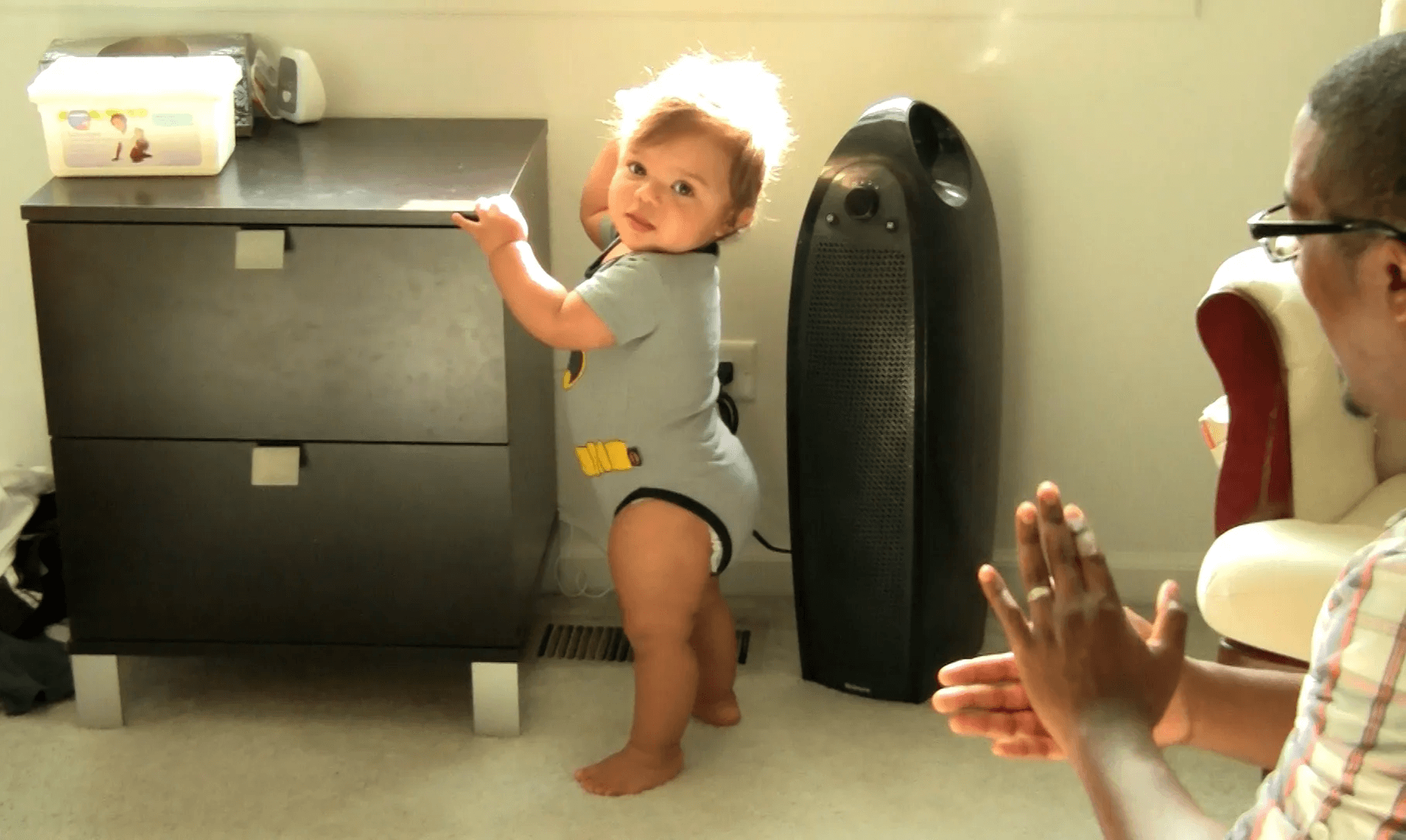
Most babies start standing with support between 8 and 12 months. They may pull up on furniture, hold an adult’s hands, or lean against a sturdy toy. Some babies stand earlier, while others take more time.
Standing alone often comes later. Many babies briefly let go and stand for a few seconds between 10 and 14 months. By about 12 to 15 months, some can stand without help for longer periods.
The answer to when do babies start standing is not one exact age. Babies follow a wide range of healthy development. A baby who stands at 9 months and a baby who stands at 14 months may both be developing normally.
The Centers for Disease Control and Prevention lists pulling up to stand and walking while holding furniture as common 12-month milestones. These milestones describe what most children can do by a certain age. They are not strict deadlines.
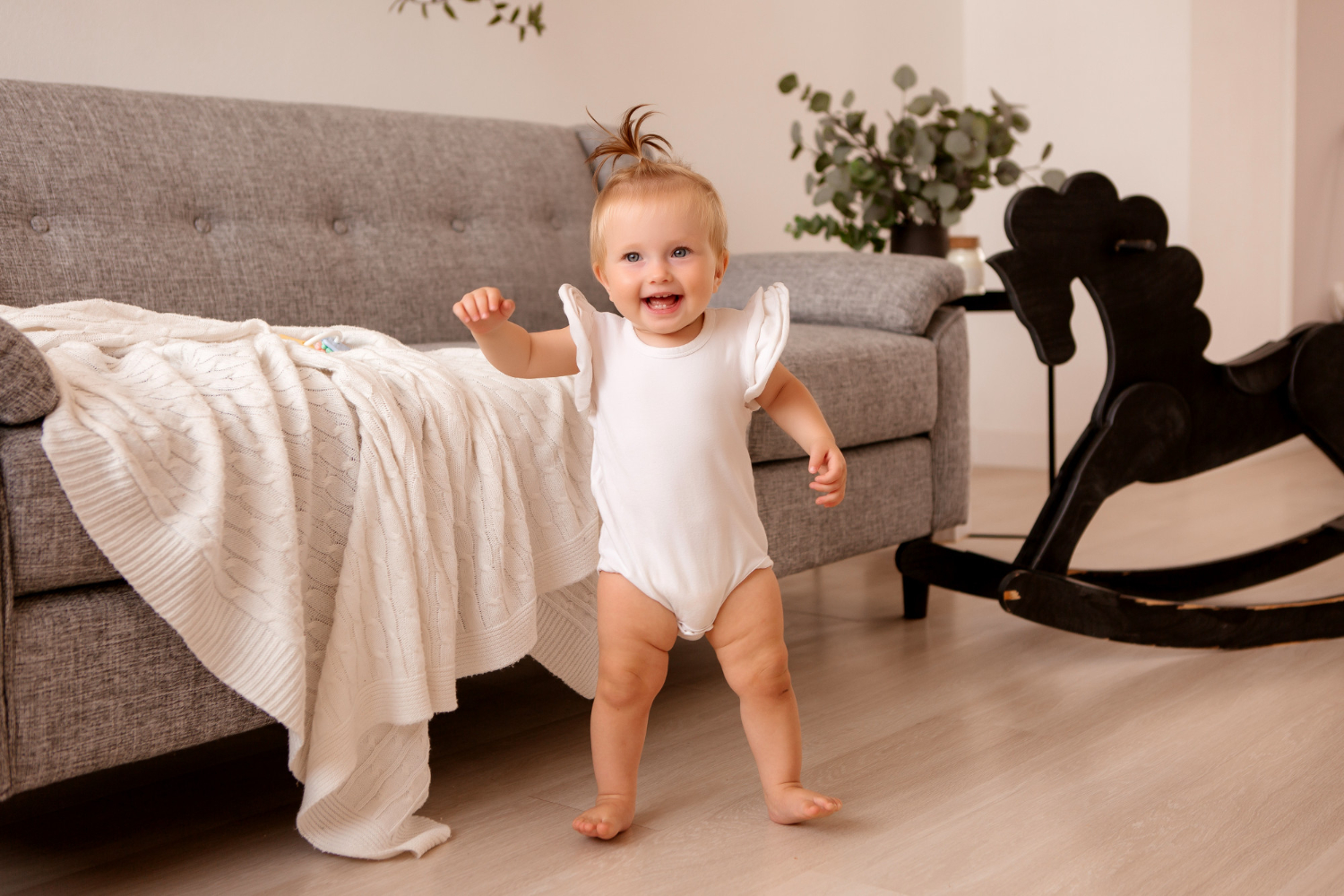
Typical standing milestones by age
Development often happens in small steps. Your baby may repeat one step for weeks before moving to the next.
Around 6 to 9 months
Many babies are building the strength needed for standing. They may:
• Sit without support
• Bounce when held upright
• Push down with their feet
• Bear some weight through their legs
• Reach for toys while sitting
• Move from sitting toward crawling
Some babies pull up near the end of this stage. Others focus on crawling, rolling, or sitting first.
Around 8 to 12 months
This is a common time for supported standing. Your baby may:
• Pull up on a sofa or low table
• Kneel while holding furniture
• Stand while holding your hands
• Move sideways along furniture
• Lower back down with little control at first
The first pull to stand can look surprising. Babies often use their arms more than their legs. They may pull hard, wobble, and then sit down suddenly.
Around 10 to 15 months
Many babies begin to test standing without support. They may:
• Let go of furniture for a moment
• Stand from the floor with help
• Squat to pick up a toy
• Cruise from one piece of furniture to another
• Take one or two independent steps
Around 12 to 18 months
Independent walking often develops during this period. Some babies walk soon after standing alone. Others spend weeks cruising and practicing balance first.
Knowing when do babies start standing can help you prepare, but it should not turn into a race. Walking and standing skills develop at different speeds.

What helps a baby learn to stand?
Standing depends on more than strong legs. Babies also need balance, body awareness, coordination, and confidence. Think of the process as building a small bridge: each skill supports the next one.
Helpful activities include:
• Give your baby plenty of supervised floor time.
• Place favorite toys on a low, stable surface.
• Let your baby play barefoot indoors on a safe floor.
• Put toys slightly out of reach to encourage movement.
• Offer your hands for balance without pulling your baby upward.
• Let your baby practice moving from sitting to kneeling.
• Praise effort instead of demanding a performance.
A firm couch, heavy activity table, or stable ottoman can provide a safe place to practice. Avoid light chairs, rolling tables, and objects that can tip.
One practical lesson many parents learn is that less help can be better. Holding a baby upright all day does not teach balance as well as allowing the baby to make small, safe adjustments on the floor.
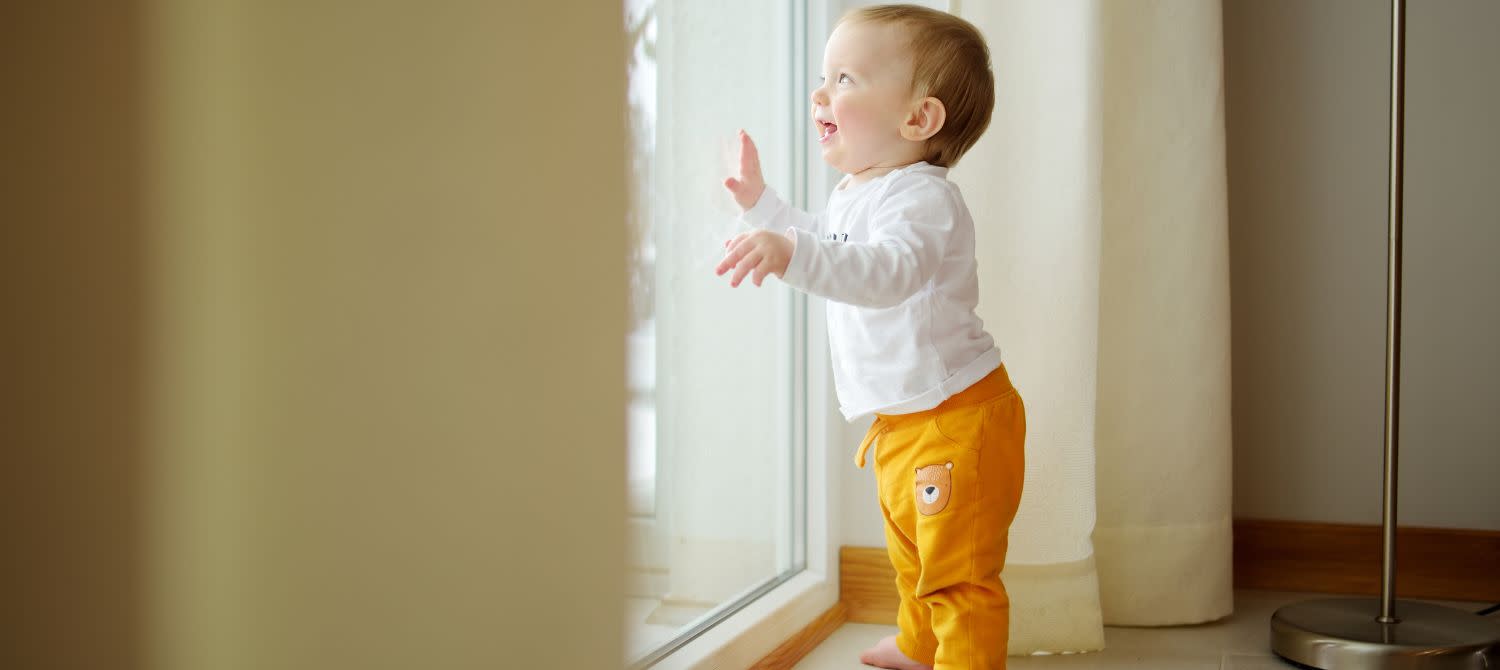
Should babies wear shoes while learning to stand?
Most babies do not need hard shoes indoors while learning to stand. Bare feet help them feel the floor and use their toes for balance.
Soft socks with grips may help on cold or smooth floors. For outdoor use, choose flexible shoes with a wide toe area and a soft, nonslip sole.
Avoid stiff, heavy shoes that limit foot movement. Shoes do not make babies stand sooner. They mainly protect the feet from heat, cold, sharp objects, and rough ground.
If your child has a foot or muscle concern, ask a pediatrician or pediatric physical therapist about footwear.
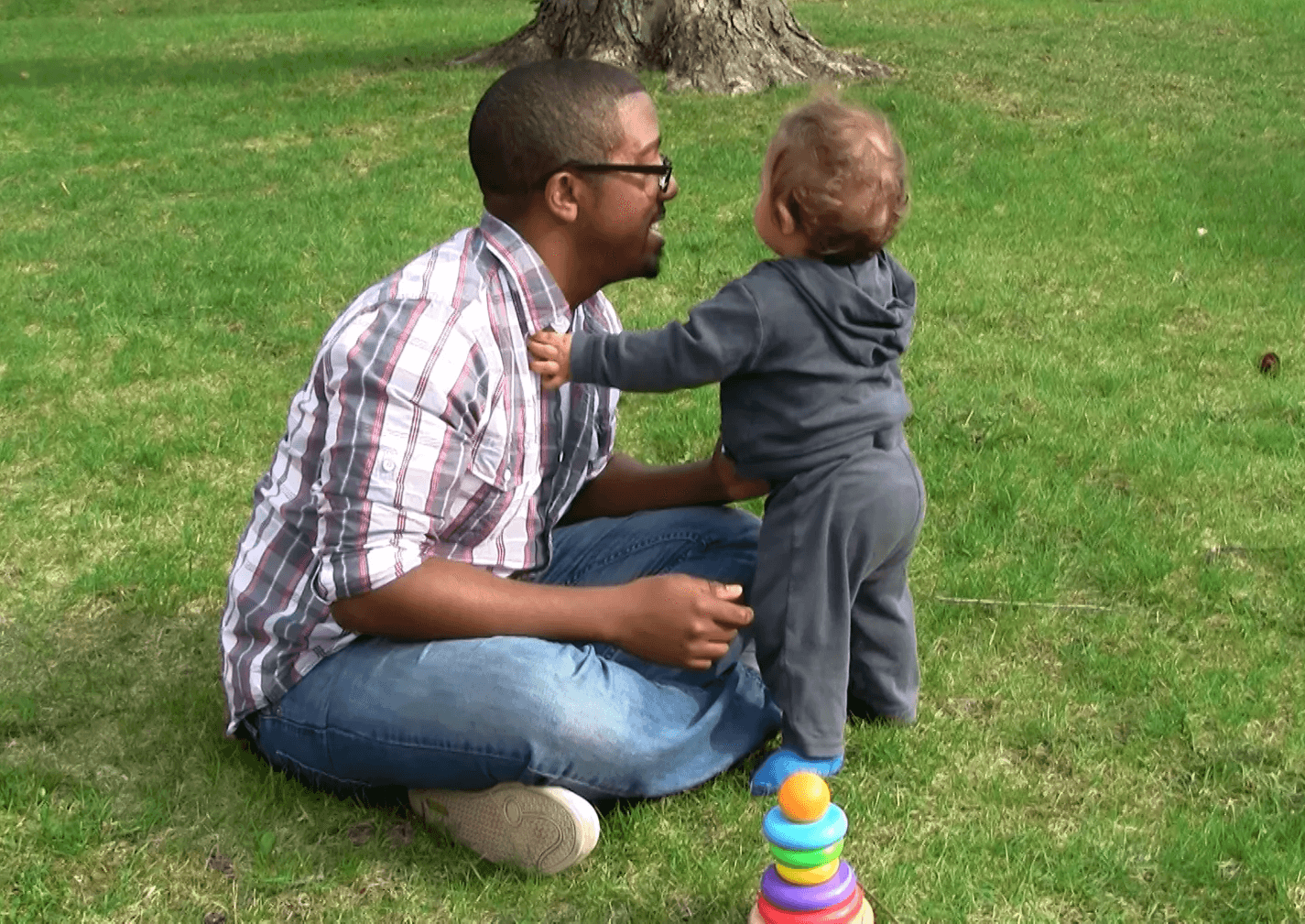
How to make standing safer
Once a baby can pull up, the whole room becomes an exercise area. A low table may become a climbing frame, and a phone charger may become a tempting toy.
Use these safety steps:
• Anchor bookcases, dressers, and televisions to the wall.
• Move cords, small objects, medicines, and cleaning products out of reach.
• Lock windows and use stair gates.
• Cover sharp furniture corners.
• Keep hot drinks away from table edges.
• Check that furniture cannot slide or tip.
• Lower the crib mattress when your baby starts pulling up.
• Use safety gates at the top and bottom of stairs.
• Keep babies away from fireplaces, heaters, and hot surfaces.
Falls are common during this stage. Supervision helps, but it cannot replace a safe environment. Do not rely on a baby walker. The American Academy of Pediatrics warns that wheeled baby walkers can cause falls and injuries, and they do not help babies learn to walk.
A stationary activity center may be safer than a wheeled walker, but floor play remains the best practice for natural movement.
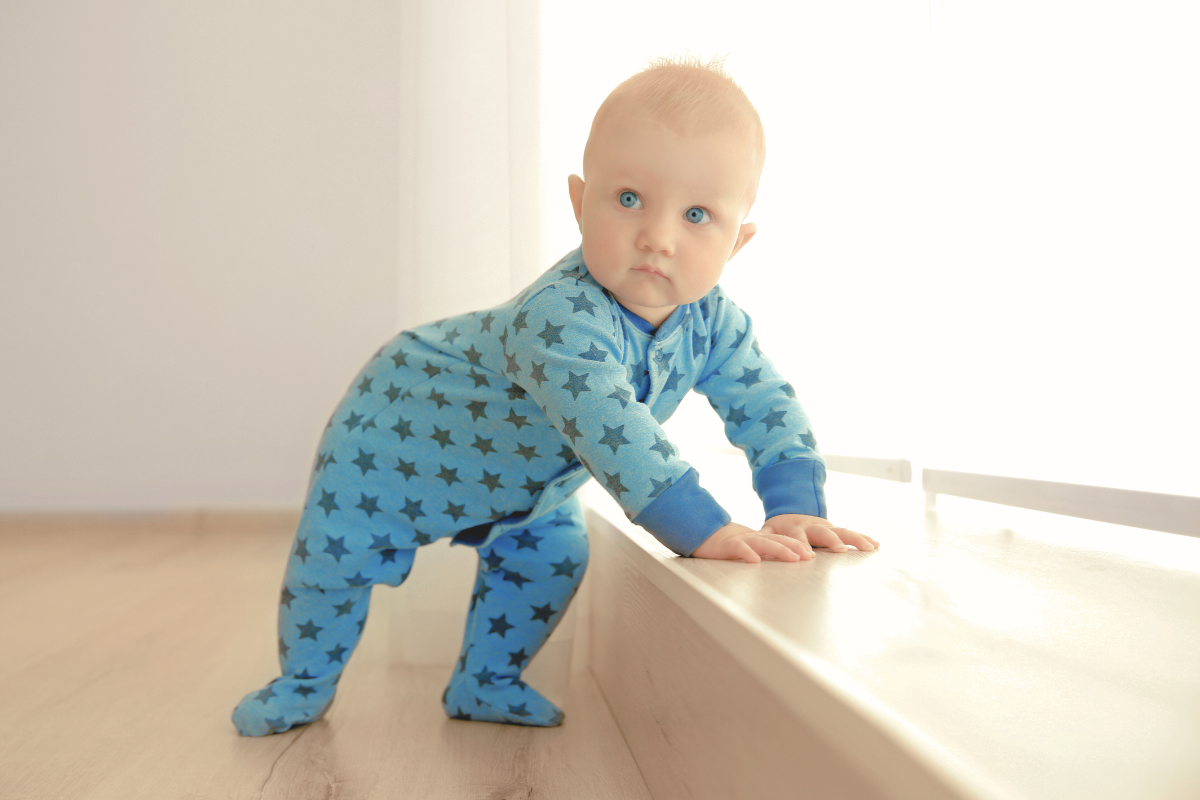
What if my baby stands on tiptoes?
Some babies rise onto their toes when they first stand. This can happen because they are excited, exploring movement, or trying to reach higher.
Occasional toe standing is usually not a concern. Give your baby time to play barefoot and shift weight in different ways.
Talk with your pediatrician if your baby always stands on tiptoes, cannot place the heels down, seems stiff, uses one side much more than the other, or loses a skill. A health professional can check muscle tone, joint movement, and overall development.
When should parents worry about standing development?
A late standing milestone does not always mean there is a problem. Babies born early may reach milestones based on their corrected age, which adjusts for prematurity.
Still, contact your pediatrician if your baby:
• Does not bear weight through the legs by around 9 months
• Shows no effort to pull up by around 12 months
• Seems very stiff or very floppy
• Uses one side of the body much more than the other
• Cannot sit without support by about 9 months
• Stops doing a skill they previously had
• Does not walk independently by 18 months
These time points are general guidance, not a diagnosis. Your pediatrician may recommend observation, screening, or an evaluation by an early intervention team or physical therapist.
Early support can be useful. It does not mean you caused a delay or that your child will have lasting problems. It simply gives your baby more tools to build movement skills.

Standing differences in premature babies
Premature babies may reach standing milestones later than babies born at full term. Doctors often use corrected age during the first two years.
For example, if a baby was born two months early, the doctor may compare development with a baby who is two months younger. This offers a fairer view of progress.
Not every premature baby needs extra time, and not every full-term baby follows the same schedule. Ask your child’s pediatrician how to track milestones based on birth history and medical needs.
Common mistakes to avoid
Parents often feel pressure when they see another baby standing or walking. Comparing babies can create stress without giving useful answers.
Try to avoid these common mistakes:
• Do not force your baby to stand before they are ready.
• Do not pull a baby up by the arms.
• Do not leave a standing baby alone on a bed or sofa.
• Do not use a wheeled walker to speed up walking.
• Do not keep your baby in restrictive seats for long periods.
• Do not treat one missed milestone as proof of a disorder.
• Do not ignore a clear loss of skills.
A better approach is to watch the pattern over time. Is your baby gaining strength, trying new movements, and using both sides of the body? Progress matters more than a single date.
Does standing help babies walk?
Standing helps babies practice balance and leg control, but it does not guarantee that walking will happen right away. Some babies stand for several weeks before taking steps.
Cruising along furniture teaches weight shifting. Sitting down teaches control. Squatting helps strengthen the hips and legs. Each movement adds another piece to the walking skill.
When do babies start standing and when do babies start walking are related questions, but they have different answers. Many children take independent steps between 9 and 18 months, with a broad range of typical development.
How parents can support confidence
Your response can make practice feel safe. Stay close, smile, and use a calm voice when your baby wobbles. If your baby falls onto a safe surface, offer comfort without making the fall feel frightening.
Place a favorite toy on a stable surface at chest height. Start with short practice periods when your baby is rested and alert. Stop when your baby becomes tired or frustrated.
A simple routine can help:
Clear a safe floor area.
Place a sturdy surface nearby.
Put one interesting toy on the surface.
Let your baby move toward it without lifting them into position.
Stay close and allow breaks.
This gentle practice supports movement without turning development into a test.
Frequently Asked Questions About When Do Babies Start Standing
When do babies start standing without support?
Many babies stand alone between 10 and 15 months. A brief stand may come before they can rise to standing or walk independently.
Is it normal for a 9-month-old to stand?
Yes. Some 9-month-old babies pull up and stand while holding furniture. Standing early is usually fine if the baby moves comfortably and uses both sides of the body.
Is it normal if my 12-month-old is not standing?
It can be normal, especially if your baby is making steady progress with sitting, crawling, kneeling, or pulling up. Speak with your pediatrician if your baby shows no effort to bear weight or pull up by about 12 months.
Should I help my baby stand?
You can offer your hands or place toys on a stable surface, but do not pull your baby up by the arms. Let your baby start and stop the activity so they can build balance and control.
Do babies crawl before they stand?
Many babies crawl before standing, but not all do. Some bottom-scoot, roll, or move in other ways before pulling up.
Does standing early mean a baby will walk early?
Not always. A baby may stand early and take months to walk, while another may move from standing to walking quickly. Each skill develops at its own pace.
When should I call a doctor about standing?
Call your pediatrician if your baby is not bearing weight, seems unusually stiff or floppy, uses one side much more, loses a skill, or is not walking by 18 months. Your doctor can assess the full developmental picture.
Conclusion
Most babies start standing with support between 8 and 12 months and begin standing alone around 12 to 15 months. The normal range is wide, and steady progress matters more than reaching a milestone on one exact date.
Give your baby safe floor time, stable furniture, bare feet indoors, and plenty of encouragement. Avoid walkers, pressure, and comparisons. If you notice limited movement, unusual stiffness, loss of skills, or no progress, contact your pediatrician.
Keep watching, cheering, and learning with your baby. For more trusted child development guidance, explore resources from your pediatrician and national child health organizations, and share your experience in the comments.