Silent reflux in babies is stomach contents flowing back up without obvious spit-up or vomiting.
Many parents wonder what is silent reflux in babies when their child seems uncomfortable but does not bring milk back up. Silent reflux can look like fussiness, gulping, coughing, noisy breathing, or feeding trouble. Yet these signs can have many causes, so careful observation and a pediatric checkup matter. This guide explains the symptoms, causes, treatment options, warning signs, and safe steps you can take at home.
What is silent reflux in babies?
Silent reflux in babies happens when milk and stomach acid move from the stomach into the esophagus, throat, or mouth but are swallowed again. Because the milk does not always come out, parents may not see classic spit-up.
Doctors often use the terms gastroesophageal reflux, or GER, and gastroesophageal reflux disease, or GERD. “Silent reflux” is a common parent term, but it is not a precise medical diagnosis.
Most babies have some reflux because:
• Their lower esophageal sphincter is still developing. This muscle helps keep stomach contents down.
• They spend much of the day lying flat.
• They drink liquid meals.
• Their stomachs are small and fill quickly.
Simple reflux is often harmless and improves as a baby grows. GERD is more serious because reflux causes pain, feeding problems, poor growth, or breathing symptoms.

Silent reflux symptoms in babies
Silent reflux in babies can be hard to spot. The signs may happen during a feed, soon after a feed, or when your baby lies down.
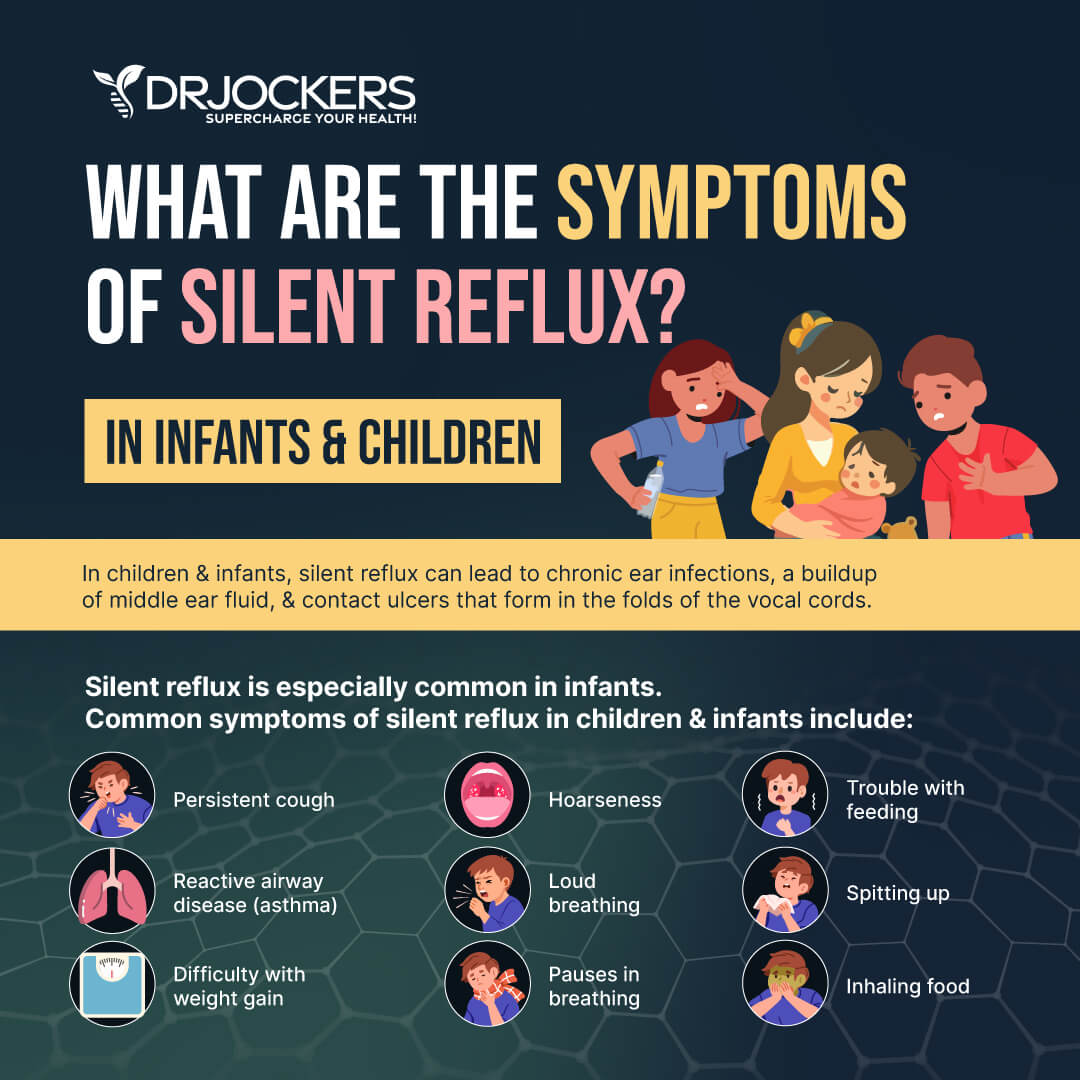
Common symptoms include:
• Frequent swallowing or gulping
• Wet or gurgly sounds after feeding
• Coughing, choking, or gagging
• Hiccups that occur often
• Crying or arching the back during feeds
• Pulling away from the bottle or breast
• Trouble settling after eating
• Hoarse crying or a raspy voice
• Bad breath or sour-smelling breath
• Repeated throat clearing
• Noisy breathing
• Poor sleep, especially after feeds
• Short feeds or refusing to eat
A baby may also show no clear signs between feeds. That can make silent reflux feel like a puzzle.
Still, these symptoms do not prove reflux. Cow’s milk protein allergy, a fast milk flow, an overly large nipple opening, nasal congestion, infection, and normal infant behavior can look similar.
What causes silent reflux in babies?
The main cause is an immature digestive system. The valve between the esophagus and stomach may open at the wrong time. This allows milk to travel upward.
Other factors may raise the chance of reflux symptoms:
• Overfeeding or feeding too quickly
• Swallowing a lot of air
• A fast breast milk flow
• A bottle nipple with a flow that is too fast
• Lying down soon after a feed
• Constipation or pressure in the belly
• Premature birth
• Certain muscle or nerve conditions
• A food protein allergy in some babies
A food allergy is not the same as silent reflux in babies. However, an allergy can irritate the digestive tract and create symptoms that resemble reflux. Blood or mucus in the stool, eczema, wheezing, or strong family allergy history may point to another problem.

Silent reflux versus normal spit-up
Spit-up is common in healthy babies. It usually looks like a small amount of milk flowing out of the mouth without pain or distress. The baby often remains happy and continues to gain weight.
Silent reflux in babies may cause discomfort without visible milk. However, a quiet baby is not always a baby with reflux. Some babies grunt, squirm, or make faces because their digestive systems are still learning how to work.
Normal reflux often:
• Starts in the first weeks of life
• Peaks around 4 months
• Improves between 6 and 12 months
• Does not affect growth
• Does not cause major feeding distress
GERD may be more likely when a baby has poor weight gain, repeated feeding refusal, breathing problems, pain, or frequent distress.
How doctors diagnose silent reflux in babies
There is no single symptom that confirms silent reflux in babies. A pediatrician will usually begin with a detailed history and physical exam.
Expect questions about:
• Feeding times and amounts
• Breastfeeding or formula feeding
• Crying during and after feeds
• Burping and spit-up patterns
• Stool changes
• Sleep and breathing
• Wet diapers
• Weight gain
A feeding assessment can be very helpful. A doctor, nurse, lactation consultant, or feeding therapist may watch how your baby latches, swallows, and breathes.
Testing is not needed for most babies. In complex cases, a specialist may consider tests such as:
• Esophageal pH monitoring
• Multichannel intraluminal impedance testing
• An upper gastrointestinal study
• Endoscopy
These tests have limits. A test may detect reflux but cannot always prove that reflux caused every symptom. For this reason, treatment decisions should focus on the whole picture.

Safe ways to help a baby with reflux symptoms
Small feeding changes may help some babies. Speak with your pediatrician before making major changes, especially if your baby is young, premature, or not gaining weight.
Try these practical steps:
-
Offer smaller, more frequent feeds if your doctor agrees.
-
Keep your baby upright in your arms for about 20 to 30 minutes after feeding.
-
Pause to burp during and after the feed.
-
Check that the bottle nipple flow is not too fast.
-
Avoid bouncing, tight waistbands, or tummy pressure after feeds.
-
Ask a breastfeeding professional to assess latch and milk flow.
-
Track feeds, symptoms, wet diapers, and stools for several days.
A simple record may reveal a pattern. For example, symptoms may increase after large feeds or when a baby drinks too quickly.
One common mistake is changing several things at once. If you alter the formula, feeding schedule, bottle, and sleep routine together, it becomes difficult to know what helped. Make one safe change at a time and discuss it with your baby’s clinician.
Safe sleep and silent reflux
Even when silent reflux in babies seems worse at night, safe sleep rules do not change. Place your baby:
• On their back for every sleep
• On a firm, flat mattress
• In a crib, bassinet, or play yard
• Without pillows, wedges, loose blankets, or positioners
Do not place a baby to sleep on the stomach or side to treat reflux. Do not raise the crib mattress. Inclined sleep products can allow a baby’s head to fall forward and make breathing harder.
Holding a baby upright while awake is different from allowing a baby to sleep in a seated device. If your baby falls asleep in a car seat, swing, or bouncer, move them to a firm, flat sleep surface as soon as practical.

Medical treatment for silent reflux in babies
Most babies with mild reflux do not need medicine. Acid-reducing drugs can have side effects and may not help symptoms that are not caused by acid.
A pediatrician may recommend medical treatment when there is strong evidence of GERD, such as:
• Esophageal irritation
• Significant pain
• Feeding refusal
• Poor weight gain
• Complications linked to reflux
Never give an infant an over-the-counter antacid, herbal product, or thickener without medical advice. “Natural” does not always mean safe for babies.
A clinician may also review formula choice or suggest a short, supervised trial for a suspected milk protein allergy. Do not remove dairy or switch formulas repeatedly without guidance. These changes can affect nutrition and make the cause harder to identify.
Thickened feeds may help some babies with visible regurgitation. They are not right for every infant and should be planned with a healthcare professional. Rice cereal may add arsenic exposure and extra calories, so parents should not add it casually.
When to call the pediatrician
Contact your baby’s healthcare professional if symptoms continue, worsen, or interfere with feeding. Arrange a visit if your baby:
• Often cries or arches during feeds
• Refuses the breast or bottle
• Has frequent coughing or choking
• Takes much longer to feed
• Has fewer wet diapers
• Is not gaining weight well
• Has repeated wheezing or noisy breathing
• Seems tired or uncomfortable most of the day
Keep notes about symptoms. The timing, amount of milk, position, and behavior can help the clinician find the cause.
Emergency signs to take seriously
Some symptoms need urgent medical care. Seek emergency help if your baby:
• Has blue, gray, or pale skin
• Stops breathing or struggles to breathe
• Becomes limp or difficult to wake
• Vomits green or yellow fluid
• Vomits blood or material that looks like coffee grounds
• Has forceful, repeated vomiting
• Has blood in the stool
• Shows signs of severe dehydration
• Has a swollen or very painful belly
Projectile vomiting in a young baby deserves prompt medical evaluation. It can signal a condition such as pyloric stenosis, which is different from silent reflux in babies and requires medical treatment.
Trust your instincts. A sudden change in feeding, breathing, alertness, or color is more important than trying to identify reflux at home.
How long does silent reflux last?
For many infants, reflux improves as the digestive system matures. Sitting upright, eating solid foods when developmentally ready, and growing larger can reduce episodes.
Many babies improve during the second half of the first year. Some continue to have symptoms beyond 12 months, especially when they have underlying medical conditions or true GERD.
There is no exact timeline for every child. Progress should be judged by comfort, feeding, breathing, and growth rather than by spit-up alone.
A useful lesson for parents is to watch the baby, not just the laundry. A large spit-up can look dramatic but cause no harm. A baby who rarely spits up but struggles to breathe or feed needs more attention.

Frequently Asked Questions About Silent Reflux in Babies
Is silent reflux in babies painful?
It can be painful when stomach contents irritate the esophagus or throat. However, fussiness alone does not prove that reflux is causing pain.
How can I tell if my baby has silent reflux?
Look for patterns such as gulping, coughing, back arching, feeding refusal, or distress after feeds without obvious spit-up. A pediatrician must assess these signs because allergies, swallowing problems, and infections can cause similar symptoms.
Can silent reflux cause coughing or choking?
Reflux may be linked with coughing or choking in some babies, but these symptoms can also come from fast milk flow, congestion, infection, or a swallowing disorder. Frequent or severe breathing symptoms need medical evaluation.
Should I elevate my baby’s mattress for reflux?
No. Elevating a crib mattress is not considered safe sleep practice and may increase the risk of sliding or breathing problems. Always place your baby flat on their back on a firm sleep surface.
Do babies outgrow silent reflux?
Many babies outgrow normal reflux as their muscles and digestive systems mature. Symptoms that continue, affect growth, or cause feeding problems may represent GERD and need medical review.
Do reflux medicines help every baby?
No. Acid medicines help only in selected cases and may not improve crying or feeding problems caused by other conditions. Use them only when prescribed or recommended by your baby’s healthcare professional.
Is silent reflux the same as colic?
No. Colic describes frequent crying in an otherwise healthy young baby, while silent reflux refers to the backward movement of stomach contents without clear spit-up. A baby can have one, both, or neither.
Can breastfeeding babies have silent reflux?
Yes. Breastfed babies can have reflux just as formula-fed babies can. Feeding position, milk flow, overfeeding, and the baby’s developing digestive system may all play a role.
Conclusion
Silent reflux in babies means stomach contents move upward without obvious spit-up. It may cause gulping, coughing, back arching, feeding trouble, or irritability, but these signs can have many causes. Most mild reflux improves with time, while breathing problems, poor growth, severe vomiting, or feeding refusal require medical care.
Keep your baby’s sleep space flat and safe, avoid unapproved medicines and thickening products, and track feeding patterns before your appointment. If your baby seems uncomfortable or your concern continues, contact a pediatrician for personalized advice. Explore trusted infant feeding resources, and share your questions with a qualified healthcare professional.