
Introduction
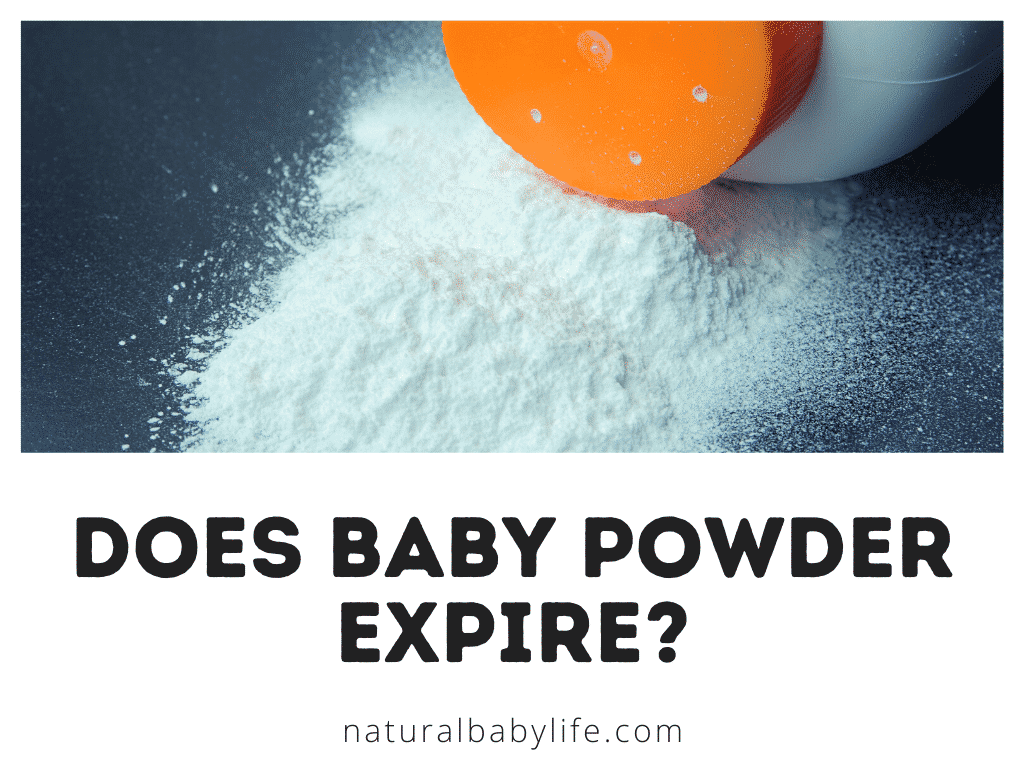
Baby powder can expire in practice, even when the container has no printed expiration date. In the United States, most nonmedicated baby powders are sold as cosmetics. U.S. law does not require a universal expiration date on cosmetic products, but the powder can still become damp, contaminated, clumpy, or unpleasant to use over time.
Check the label first. If the product is medicated, such as an antifungal or zinc oxide powder, follow its printed expiration date. When the date is missing, use the product’s smell, texture, packaging, storage history, and intended use to decide whether to keep it.
For infants, safety matters more than saving an old container. Baby powder can become airborne and may irritate or harm the lungs if a child inhales it. The American Academy of Pediatrics and poison-control guidance recommend avoiding loose powder around a baby’s face and using a cream or ointment for diaper-area care instead.


Does baby powder have an expiration date?
Most plain baby powders do not have a required expiration date in the United States. The U.S. Food and Drug Administration says cosmetic products generally do not have to carry expiration dates, although the manufacturer remains responsible for product safety.
That does not mean the product stays fresh forever. A sealed container may last longer than an opened one, but age alone does not prove that a powder is safe or unsafe. Storage conditions often matter more than the calendar.
Baby powder usually contains one of two main powder bases:
- Talc, a mineral used for its smooth feel and moisture absorption.
- Cornstarch, a plant-based powder used to reduce friction and absorb moisture.
Some products also contain fragrance, preservatives, skin conditioners, or other ingredients. Each ingredient can age differently. Fragrance may fade or smell sour, while moisture can cause a powder to clump.
Cosmetic powder versus medicated powder
The product’s legal category changes the answer.
| Product type | Common use | Expiration rule in the U.S. | What to do |
|---|---|---|---|
| Plain talc or cornstarch baby powder | Moisture and friction control | May not have a required date | Inspect it before use and replace it if its condition has changed |
| Fragranced baby powder | Skin-feel and scent | May not have a required date | Discard it if the scent changes or the product irritates skin |
| Antifungal powder | Treats a fungal infection | Usually has a printed drug expiration date | Do not use after the date |
| Zinc oxide powder or other treatment powder | Treats or protects irritated skin | May be regulated as an over-the-counter drug | Follow the package date and directions |
| Prescription powder | Treats a diagnosed condition | Must follow the pharmacy or manufacturer instructions | Ask a pharmacist before using an old product |
A product that claims to treat a rash, infection, or other medical problem may be an over-the-counter drug rather than a simple cosmetic. Its expiration date matters more because the active ingredient may lose strength.
How long does baby powder last?
There is no single safe shelf-life number for every brand and formula. A sealed, dry container of plain powder may remain usable for years, but the manufacturer’s label is the best guide.
An opened container has more exposure to:
- Humidity
- Wet hands
- Diaper-area germs
- Dust and dirt
- Skin oils
- Bathroom steam
- Repeated contact with the cap or shaker holes
Do not use a fixed “two-year rule” as a guarantee. A powder kept in a dry bedroom may remain in good condition longer than one stored in a warm, steamy bathroom.


A practical age guide
Use this guide for plain, nonmedicated powder:
- Within the labeled date: Use it only if the package is intact and the powder looks and smells normal.
- Past the labeled date: Replace it, especially if it is medicated or intended for a newborn.
- No date, unopened, and stored well: Inspect the product carefully before deciding.
- Opened or poorly stored: Be more cautious. Replace it if you cannot confirm that it stayed dry and clean.
- Unknown age: Replacing it is usually the simplest and safest choice.
The cost of a new container is small compared with the possible cost of treating an irritated rash or responding to an inhalation problem.

Signs that baby powder has gone bad
The clearest signs are changes in texture, smell, color, packaging, or skin response. One warning sign may be enough to discard the product.
1. The powder is damp or clumpy
Fresh powder should flow freely. Discard it if it has:
- Hard lumps
- Sticky patches
- Wet spots
- A paste-like texture
- Powder stuck around the lid or shaker holes
Moisture can enter through a loose cap, a cracked seal, humid air, or wet hands. You cannot make a contaminated powder reliably safe by drying it out.
2. The smell has changed
A mild scent may fade with age. A sharp, sour, musty, rancid, or chemical odor is a reason to throw the product away.
Do not cover an unusual smell with another fragrance. A scent change can signal ingredient breakdown or contamination.
3. The color looks different
Plain powder is usually white or close to white, depending on the formula. Discard it if you see:
- Yellow or brown patches
- Gray or green areas
- Dark specks
- Mold-like growth
- Unusual streaks
Not every color change proves danger, but it removes the benefit of doubt for a product used on a baby’s skin.
4. The container is damaged
Replace the powder if the container has:
- A broken seal
- A cracked lid
- A loose closure
- Rust near the opening
- Water damage
- A missing label
- Signs of insects or dirt inside
A clean-looking powder in a damaged container may still have picked up moisture or debris.


5. It irritates the skin
Stop using the product if it causes redness, burning, itching, swelling, or a worsening rash. Wash the area gently with lukewarm water and avoid applying more powder.
Contact a child’s health care professional if the rash is severe, spreads, blisters, bleeds, looks infected, or does not improve. Seek urgent help for breathing trouble, facial swelling, or a serious allergic reaction.

Is expired baby powder dangerous?
Expired plain baby powder is not automatically poisonous, but it may no longer be clean, stable, or suitable for a baby’s skin. The greatest immediate concern is often not the date. It is inhalation of airborne powder.
Loose powder can rise into the air when shaken, poured, or brushed on. A baby can inhale it during application. Talc-containing powders have long raised concern because inhaled particles can irritate the lungs. Cornstarch powder can also become airborne and should not be treated as risk-free.
Keep powder away from the nose and mouth
Never shake baby powder directly onto a baby. Instead:
- Move the baby away from the container.
- Put a small amount into your hand.
- Rub or apply it carefully, away from the baby’s face.
- Keep the container closed and out of reach.
- Wash your hands after use.
Many U.S. pediatric sources recommend avoiding loose powder for routine diaper care. A fragrance-free barrier ointment or cream is often a better choice for protecting irritated skin because it does not create a cloud of particles.
What to do after inhalation
If a child inhales powder, move the child to fresh air and watch for coughing, wheezing, fast breathing, vomiting, or unusual sleepiness. Do not make the child vomit.
Call Poison Control at 1-800-222-1222 in the United States for immediate guidance. Call 911 for severe breathing problems, blue lips, collapse, or a child who cannot wake normally.
How to decide whether to keep or discard baby powder
Use a short inspection before every use, especially when the container is old or has been opened.
The four-step check
- Read the label. Look for an expiration date, drug facts panel, warnings, and storage directions.
- Check the container. Confirm that the seal, lid, and shaker openings are clean and intact.
- Inspect the powder. Look for clumps, dampness, color changes, debris, or mold-like spots.
- Smell it from a distance. If the odor is unusual, discard it. Do not put the powder near a baby’s nose to test it.
Decision table
| What you find | Best choice |
|---|---|
| Normal texture, normal smell, intact package, stored dry | May be usable if the label allows it |
| Past expiration date and labeled as a medication | Discard it |
| Unknown age or storage history | Replace it |
| Damp, clumpy, discolored, or contaminated | Discard it |
| New skin irritation after use | Stop using it |
| Powder released a visible cloud near a baby | Move the child to fresh air and monitor breathing |
| Product label is missing or unreadable | Replace it rather than guessing |
When in doubt, discard it. Do not mix old powder with a new container, and do not transfer it to an unlabeled jar. Transferring can hide the original expiration date and introduce contamination.

How should you store baby powder?
Store baby powder in a cool, dry place with the lid closed. A bedroom cabinet or high shelf is generally better than a bathroom, laundry room, or area beside a sink.
Follow these storage practices:
- Keep the container tightly closed.
- Keep it away from water, steam, and direct sunlight.
- Use clean, dry hands.
- Do not put a wet scoop into the container.
- Keep it out of a child’s reach.
- Do not store it beside medicines or food where a spill could cause confusion.
- Keep the original label and packaging.


A sealed package is not a guarantee of safety. If the seal is broken, the container is swollen, or the powder has been exposed to water, replace it.
Can you use baby powder on a diaper rash?
Loose powder is usually not the best first choice for diaper rash. It can become airborne, and it does not treat every cause of a rash.
For mild irritation, keep the skin clean and dry, allow brief diaper-free time when practical, and consider a barrier cream such as one recommended by a pediatric professional. If the rash has bright red edges, small spots beyond the main rash, open sores, pus, fever, or does not improve, ask a health care professional whether it may be a fungal infection or another condition.
Do not use an antifungal or medicated powder simply because it is old or because a past rash looked similar. Use treatment products only as directed.

Common mistakes to avoid
Assuming “no expiration date” means “never expires”
Cosmetic rules may not require a date, but products can still change. Treat the container’s condition and storage history as part of the safety check.
Using powder because it looks clean
Some contamination is not visible. If the powder was wet, stored open, or touched with dirty hands, its clean appearance is not enough.
Applying powder before fastening the diaper
Shaking powder over a diaper can create airborne dust close to the child’s face. If you use any powder, keep it away from the child and apply a small amount from your hand.
Using talc or cornstarch as interchangeable choices
They are different materials, but both can become airborne. A cornstarch label does not remove the need for careful handling.
Keeping an old medicated powder
A medicated powder is not the same as a cosmetic powder. Check the expiration date and active ingredient. Ask a pharmacist if the label is unclear.
Ignoring a rash that keeps returning
Powder may reduce moisture without fixing the cause. Repeated or severe rashes need a proper assessment rather than repeated use of an old product.

Frequently asked questions
Does unopened baby powder expire?
It can become unsuitable over time, even when unopened. If the package has an expiration date, follow it. If it has no date, inspect the seal, smell, color, texture, and storage conditions before use.
Can you use baby powder after the expiration date?
Avoid using expired medicated powder. For plain cosmetic powder, the date is still a strong reason to replace it, particularly if the product is for a newborn, has been opened, or was stored in humidity.
Does baby powder go bad in heat?
Heat alone may not immediately spoil a dry powder, but repeated heat and humidity can affect fragrance, packaging, and texture. Do not leave it in a hot car, near a radiator, or in a steamy bathroom.


Can old baby powder cause a rash?
It can contribute to irritation if it has changed, contains fragrance, carries contamination, or traps moisture against the skin. Stop using it if redness or itching begins.
Is talc-free baby powder safer?
“Talc-free” only describes the powder base. It does not mean the product is safe to inhale. Cornstarch and other powders can also become airborne, so avoid applying any loose powder near a baby’s face.
What is safer than baby powder for diaper care?
A clean, dry diaper area and a suitable barrier cream or ointment are common alternatives. If the rash is severe, persistent, or unusual, ask a pediatric clinician for advice.
Conclusion
Plain baby powder may not have a required expiration date in the United States, but it can still become damp, contaminated, or irritating. Replace it if it is expired, old with an unknown history, clumpy, discolored, foul-smelling, damaged, or linked to a skin reaction.
For babies, avoid creating airborne dust. Keep loose powder away from the face, use a barrier cream for routine diaper protection when appropriate, and contact Poison Control at 1-800-222-1222 after a concerning inhalation. The safest next step for an old or questionable container is simple: discard it and use a fresh, clearly labeled product—or choose a cream instead.
