
Most babies switch from a pram to a stroller around six months, once they can sit upright safely.
Knowing when to switch from pram to stroller is about more than your baby’s age. It also depends on head and trunk control, the stroller’s design, your child’s comfort, and the maker’s safety limits. This guide explains the signs to watch, common mistakes to avoid, and how to make the change smooth and safe.
Pram vs. stroller: What is the difference?
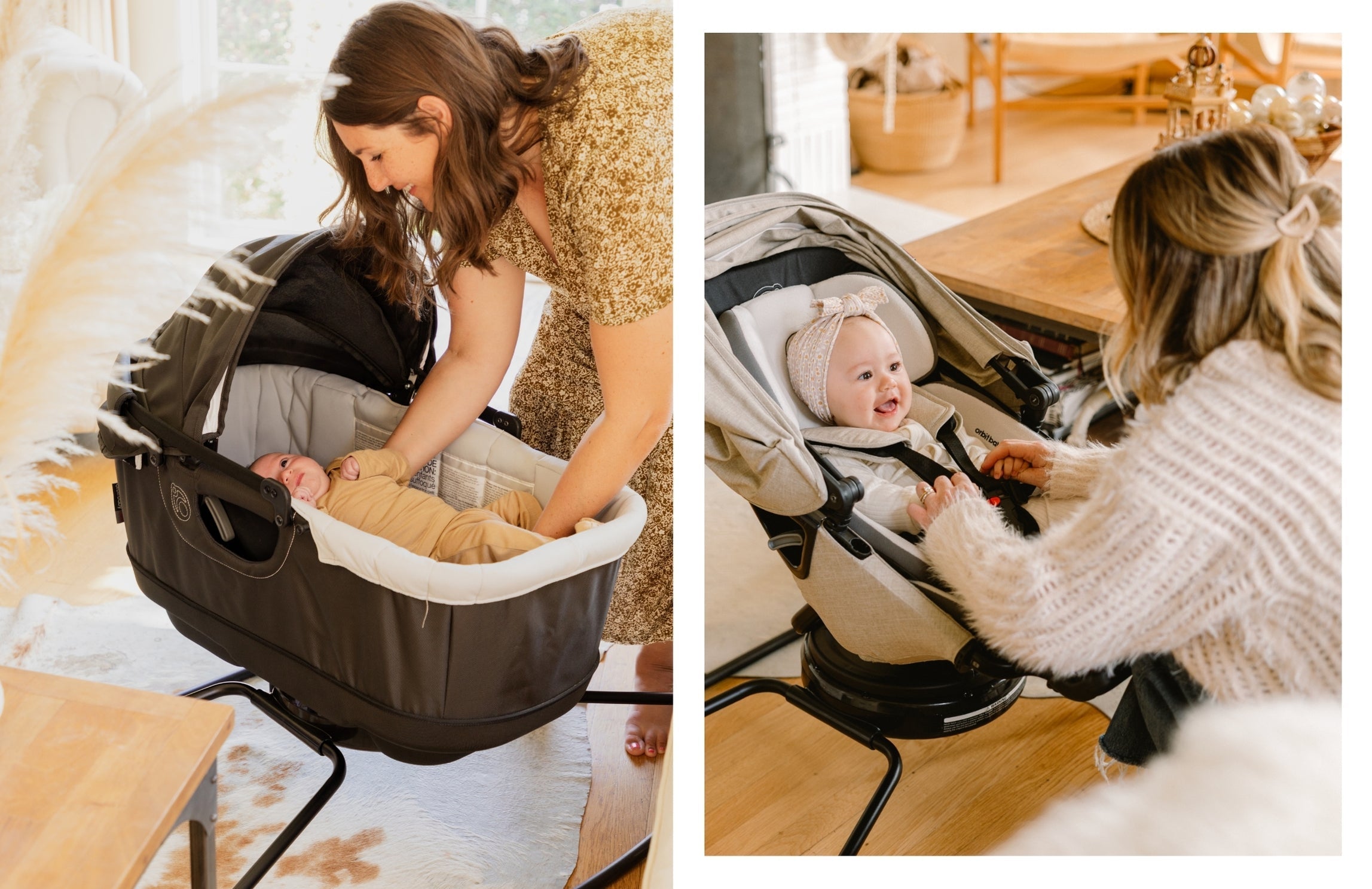
A pram usually has a deep, flat bed. It lets a young baby lie on their back while their neck, back, and hips develop. Many prams are also called bassinets, carrycots, or lie-flat prams.
A stroller often has a more upright seat. It may face forward, face the parent, or adjust between several recline levels. Some strollers are suitable from birth because they include a true flat bassinet or a fully approved lie-flat seat.
The words “pram” and “stroller” can mean different things in the United States and the United Kingdom. For this article, a pram means a flat newborn bed, while a stroller means a pushchair with a seated position.
When deciding when to switch from pram to stroller, check the product manual first. The manual may give a minimum age, weight limit, height limit, or developmental requirement.

When to switch from pram to stroller
Most babies are ready for a stroller seat at about six months. This is a guide, not a strict rule. Some babies are ready a little earlier, while others need more time.
The best time to switch from pram to stroller is when your baby can do most of the following:
• Sit upright with little help
• Hold their head steady
• Keep their upper body from falling to one side
• Show good control of their neck and back
• Fit safely within the stroller’s harness
• Stay comfortable in a supported seated position
Many stroller makers use six months as a starting point because babies often gain stronger head and trunk control by then. Still, age alone does not prove that a baby is ready.
A baby who was born early may reach these skills later than the age printed on the calendar. Ask your pediatrician if you are unsure, especially if your baby has low muscle tone, poor head control, or a medical condition.
When thinking about when to switch from pram to stroller, focus on development first and convenience second. A stroller may feel easier to use, but a flat pram is often more supportive for a young infant.
Signs your baby is ready
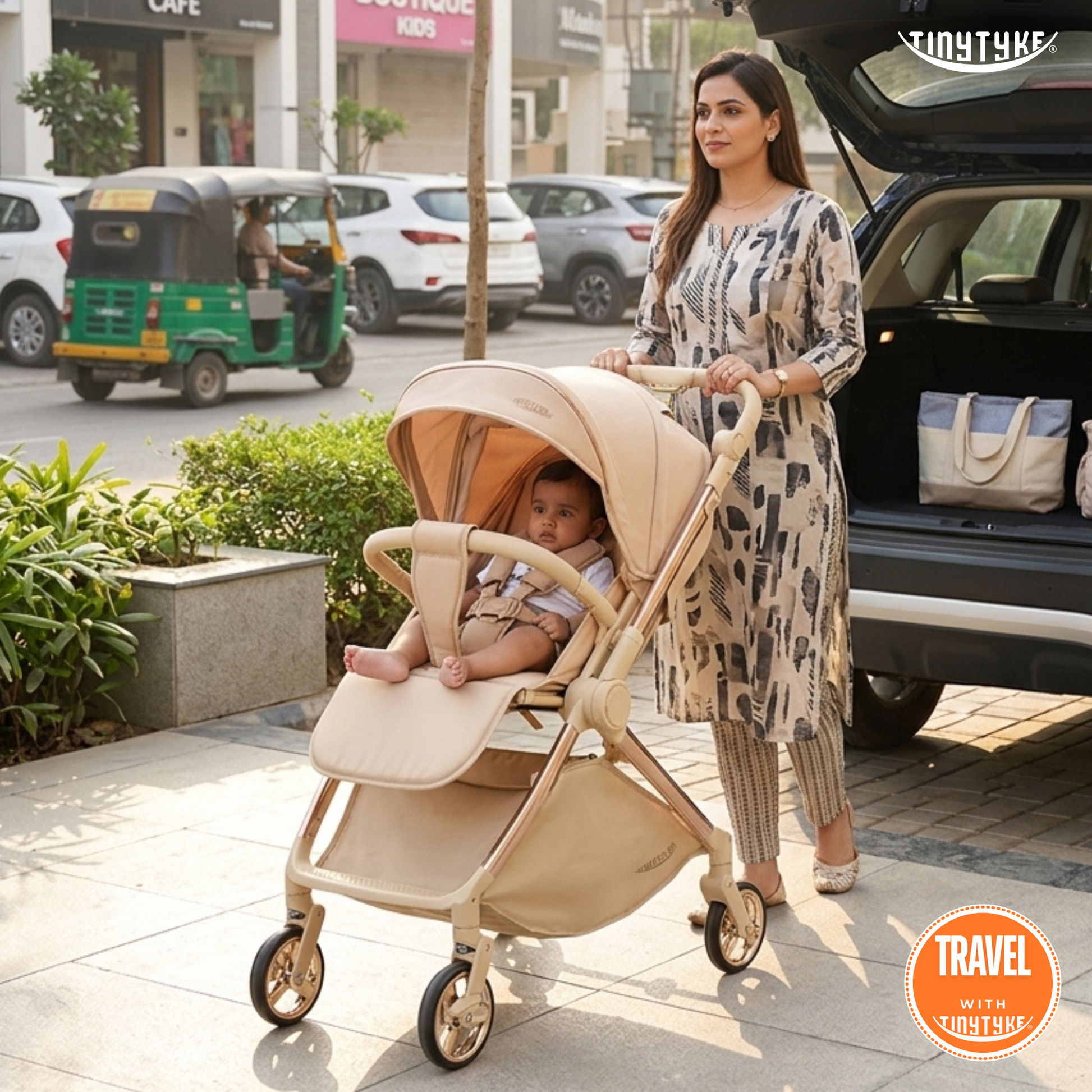
The clearest sign is stable head control. Your baby should not let their head flop forward, backward, or to the side when placed in the stroller seat.
Good trunk control matters, too. Your baby should be able to sit with support without folding forward like a soft toy. They do not need to sit perfectly alone, but they should hold a safe position with the seat and harness.
Other useful signs include:
• Your baby watches the world with interest from a supported seat
• Your baby can remain upright for short periods without slumping
• Your baby moves their arms and legs freely
• Your baby stays calm and comfortable in a semi-upright position
• The stroller provides a secure five-point harness
Remember that a baby may look ready for a few minutes but become tired after a longer walk. Start with short trips near home. Watch your baby’s posture, breathing, and comfort.
One lesson many parents learn is that readiness can change during the day. A baby may sit well after a nap but slump when tired. When deciding when to switch from pram to stroller, check your baby during both calm and tired moments.
Why the six-month guideline matters
Young infants have limited control of their head and torso. A slouched position can press the chin toward the chest. In some situations, this can make it harder for a baby to breathe freely.
A flat pram supports the baby’s body from head to toe. It also allows the baby to lie on their back, which is the recommended sleep position for infants. The American Academy of Pediatrics advises using a firm, flat sleep surface and moving a sleeping baby from sitting devices to a safe sleep space.
A stroller seat is not automatically a safe sleep space. If your baby falls asleep during a walk, follow the stroller maker’s instructions and move the baby to a firm, flat sleep surface when practical. Never add pillows, loose blankets, or aftermarket cushions to change the seat angle.
This does not mean every upright stroller is unsafe. It means the seat must match your baby’s development, and sleep safety rules still apply. Always follow both the stroller manual and current pediatric guidance.

How to check your stroller before making the switch
Before you switch from pram to stroller, inspect the stroller as carefully as you would check a car seat.
Look for these features:
• A five-point harness that fits snugly
• A buckle your baby cannot easily open
• A deep seat with strong side support
• A recline setting that suits your baby’s age
• A footrest that supports the legs
• A working brake on both rear wheels
• A canopy that protects from sun without blocking airflow
• No loose padding, broken straps, or sharp edges
Read the manual for the exact minimum age and weight. Some manufacturers approve the stroller from birth only when the seat is fully reclined. Others require a separate bassinet or infant insert made for that model.
Do not assume that a universal infant cushion makes an ordinary stroller safe for a newborn. Extra padding can change the harness fit and may create a breathing risk. Use only accessories approved by the stroller maker.
When deciding when to switch from pram to stroller, also check whether your baby’s head can move freely. The harness should hold your baby in place without pressing against the neck.

How to make the transition easier
The move from a pram to a stroller can feel strange to a baby who is used to lying flat. Make the change slowly instead of using the stroller for a full day at once.
Try this simple plan:
Set the stroller seat in its most reclined approved position.
Place your baby in it at home for a few minutes.
Fasten the harness snugly and check the fit.
Talk to your baby so they know you are close.
Take a short walk on a smooth path.
Increase the time only if your baby stays comfortable and well supported.
A parent-facing seat can make the first trips easier. Your baby can see you, and you can monitor their face and posture. A forward-facing seat may be useful later when your baby wants to watch people, trees, cars, and other sights.
One practical mistake is switching because the pram feels bulky, then using the stroller seat for long periods before the baby has enough control. Convenience should support readiness, not replace it.
When thinking about when to switch from pram to stroller, treat the first week as a trial. Keep the pram available for longer outings if your baby tires quickly.

Common mistakes to avoid
Parents often ask when to switch from pram to stroller because they see other babies sitting upright. Comparing babies can create pressure, but development does not follow one exact schedule.
Avoid these common errors:
• Switching only because your baby is six months old
• Keeping the seat too upright for a baby who still slumps
• Using a loose blanket to prop the body
• Adding an unapproved head support
• Ignoring the weight or height limit
• Leaving a baby unattended in the stroller
• Using a stroller as an overnight sleep space
• Hanging heavy bags from the handle
• Skipping the harness on a quick trip
Heavy bags can make a stroller tip backward. Place items in the basket and keep the total load within the maker’s limit.
Do not cover the canopy with a blanket to block the sun. This can trap heat and reduce airflow. Use the canopy, breathable clothing, shade, and a stroller fan only as directed by the maker.
The safest answer to when to switch from pram to stroller includes the whole setup, not only the seat. Your baby, the harness, the recline, the weather, and the surface all matter.
What if your baby is not ready at six months?
There is no need to rush. Keep using the pram if it remains within its weight and length limits and your baby can lie comfortably in it.
You can also use a stroller with a fully flat, manufacturer-approved position. The key question is not whether the product is called a pram or stroller. The key question is whether it supports your baby safely.
Speak with your pediatrician if your baby cannot hold their head steady, repeatedly slumps, seems weak, or has trouble breathing in a seated position. A health professional can assess development and suggest the right option.
For babies born early, use corrected age when discussing development with a pediatrician. The exact timing can vary based on birth history and muscle control.
When deciding when to switch from pram to stroller, waiting a little longer is usually better than placing a baby in a position they cannot manage.

Pram to stroller checklist
Use this quick checklist before the first proper outing:
• Your baby has steady head control
• Your baby can sit with support without sliding down
• The stroller meets the maker’s age and weight rules
• The seat reclines as needed
• The harness fits close to the body
• The buckle locks correctly
• The brakes work
• The wheels move smoothly
• The stroller has no damaged parts
• The weather is suitable
• You know where your baby will sleep after the walk
If you answer “no” to any safety question, wait or use the pram. Test the stroller indoors first. A few minutes of observation can reveal a poor fit before you are far from home.
It also helps to take a small cloth, water for yourself, and a sun hat that fits properly. Do not place a hat, blanket, or toy where it can cover your baby’s face.

How long can a baby stay in a stroller?
There is no single time limit for every healthy baby. The safe duration depends on the stroller position, your baby’s age, posture, temperature, and the length of the trip.
For early outings, choose a short walk and take regular breaks. Check that your baby’s chin is not pressed to the chest, the harness is secure, and the body is not slumped.
Long periods in a seated device can limit movement. Give your baby time to stretch, roll, and play on a safe floor when awake and supervised.
If your baby falls asleep, watch their position and move them to a firm, flat sleep surface when possible. A stroller nap should not become a routine substitute for a safe crib or bassinet.
This is another reason the answer to when to switch from pram to stroller should include your daily routine. A stroller may work well for short trips, while a pram may remain more comfortable for longer walks.
When should a baby face forward in a stroller?
Many babies can face forward once they have strong head and trunk control, often around six months or later. However, the stroller manual may recommend a specific position or minimum age.
Parent-facing mode can help you monitor your baby. It may also comfort babies who are still getting used to upright travel.
Forward-facing mode can give an older baby a wider view. Change the direction when your baby can sit securely and seems interested in looking around.
Do not turn the seat forward only because your baby seems bored. If your baby slumps, cries, or looks tired, use a more reclined or parent-facing position.
Frequently Asked Questions About When to Switch From Pram to Stroller
What age do babies usually switch from a pram to a stroller?
Many babies switch at about six months, but age is only a general guide. Your baby should also have steady head control, good trunk support, and a safe fit in the stroller seat.
Can a newborn use a stroller?
A newborn can use a stroller only if the maker approves it for newborns. The stroller must have a safe, flat bassinet or a fully reclined position designed for young infants.
Is a pram safer than a stroller for a newborn?
A properly used pram gives a newborn a flat, supportive surface. A regular seated stroller may not provide enough head and body support until the baby has better control.
How do I know if my baby is ready for a stroller seat?
Your baby should hold their head steady and sit with support without folding forward or sliding down. The harness should fit well, and your baby should remain comfortable during a short test.
Can my baby sleep in a stroller?
A stroller is not a replacement for a firm, flat infant sleep surface unless the product is specifically approved for sleep and used exactly as directed. Move a sleeping baby to a safe sleep space when practical.
Should my baby face me or face forward?
Parent-facing mode can help you watch a young baby and may make the transition easier. Forward-facing mode is often better once your baby has strong control and wants to see the surroundings.
What if my baby slumps in the stroller?
Stop the outing and adjust the recline, harness, or seat position. If your baby still slumps, return to the pram or ask your pediatrician for advice.
Conclusion
The best time to switch from pram to stroller is when your baby shows strong head and trunk control, fits the stroller safely, and stays comfortable in the seat. Six months is a common guide, but your baby’s development and the stroller’s manual matter more than a fixed date.
Start with short trips, use the harness every time, and keep the pram available if your baby still needs more support. Check current pediatric guidance and product instructions before making the change, then share your own transition tips or questions in the comments.