A newborn’s vision is checked first by a health professional, usually during the hospital newborn exam and later at the baby’s first visits with a pediatrician. At home, you can watch how your baby responds to light, faces, and movement—but home checks cannot replace an eye exam.
Most newborns see light, faces, and high-contrast shapes. Their vision is still developing, so brief eye crossing, poor tracking, and sleepy responses can be normal in the first weeks.

What can a newborn see?
Newborn vision is limited but useful. Many babies can focus best at about 8 to 12 inches, which is roughly the distance from your face during feeding.
A newborn may:
- Look briefly at a face
- Notice a bright light
- Blink when light changes
- Prefer black-and-white or high-contrast patterns
- Follow a slow-moving object for a short distance
- Turn toward a familiar voice while looking at a face
A baby does not need to track objects smoothly from side to side right away. Eye control often improves during the first two to three months.
It is also common for a newborn’s eyes to wander or cross from time to time. This should become less frequent as eye muscles and visual control mature. Constant eye crossing, one eye that always turns, or a new change after the first few months needs medical review.
Vision develops through both the eyes and the brain. If one eye sends a much blurrier image than the other, the brain may begin to rely on the stronger eye. Early care can help prevent long-term reduced vision, also called amblyopia.

How doctors check newborn vision
A newborn eye check is usually part of the routine physical exam. The clinician does not ask the baby to read letters or identify pictures. Instead, they look for signs that the eyes and visual system appear healthy.
1. The clinician checks the eyes and eyelids
The exam may include a look at:
- Eyelid position
- Eye size and shape
- The clear front surface of the eye
- The pupils
- Eye movement
- Swelling, discharge, or redness
The clinician may also check whether both eyes appear aligned.
2. The clinician checks the red reflex
The red reflex test uses a lighted instrument called an ophthalmoscope. The clinician shines the light toward each eye and looks for a red, orange, or yellow reflection from inside the eye.
A normal reflex is usually present in both eyes and looks similar on each side. An absent, white, very dark, or noticeably different reflex can signal a problem in the lens, retina, or other parts of the eye.
A concerning reflex does not always mean a serious disease. It does mean the baby needs prompt follow-up, often with a pediatric ophthalmologist.
3. The clinician observes visual behavior
The clinician may watch whether the baby:
- Opens the eyes normally
- Briefly fixes on a face or light
- Reacts to a bright light
- Moves the eyes together
- Shows equal responses from both eyes
A tired, hungry, or upset baby may not respond during the exam. The clinician considers the baby’s age, alertness, birth history, and overall health.
4. The clinician reviews risk factors
Some babies need more careful or earlier eye follow-up. Risk factors may include:
- Premature birth
- Low birth weight
- A long stay in a neonatal intensive care unit
- A family history of childhood eye disease
- Known genetic or developmental conditions
- Eye abnormalities noticed at birth
- Certain infections during pregnancy
- Brain or nerve conditions
- A parent or sibling with severe childhood vision loss
Very premature infants may need screening for retinopathy of prematurity, or ROP. ROP screening is based on factors such as gestational age, birth weight, and the baby’s clinical course. It is not a routine test for every full-term newborn.
Newborn hearing screening is different
Hospitals commonly perform hearing screening soon after birth. Hearing screening does not test vision. Your baby may pass a hearing screen and still need the normal eye checks done by the pediatrician.
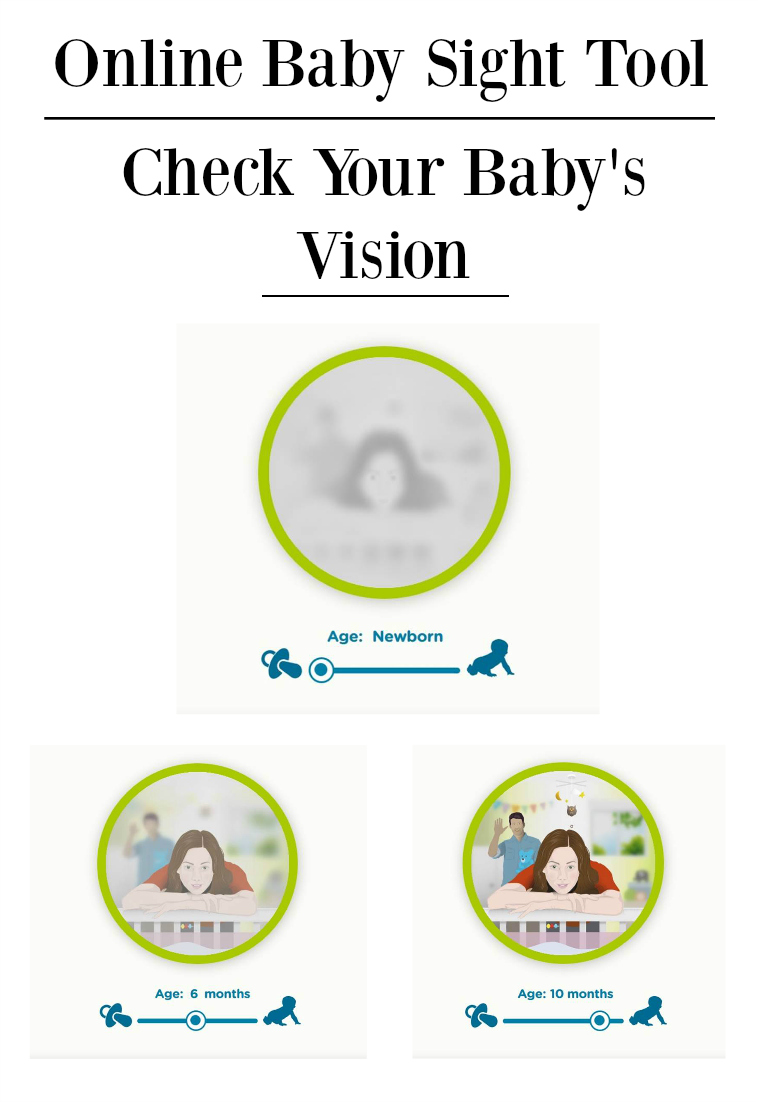
How to check newborn vision at home
A home check can help you notice changes between visits. It cannot confirm normal vision or rule out eye disease.
Try these simple observations when your baby is awake, calm, and fed:
- Look at your baby’s eyes. Check for unusual swelling, cloudiness, heavy discharge, or a pupil that looks white or gray.
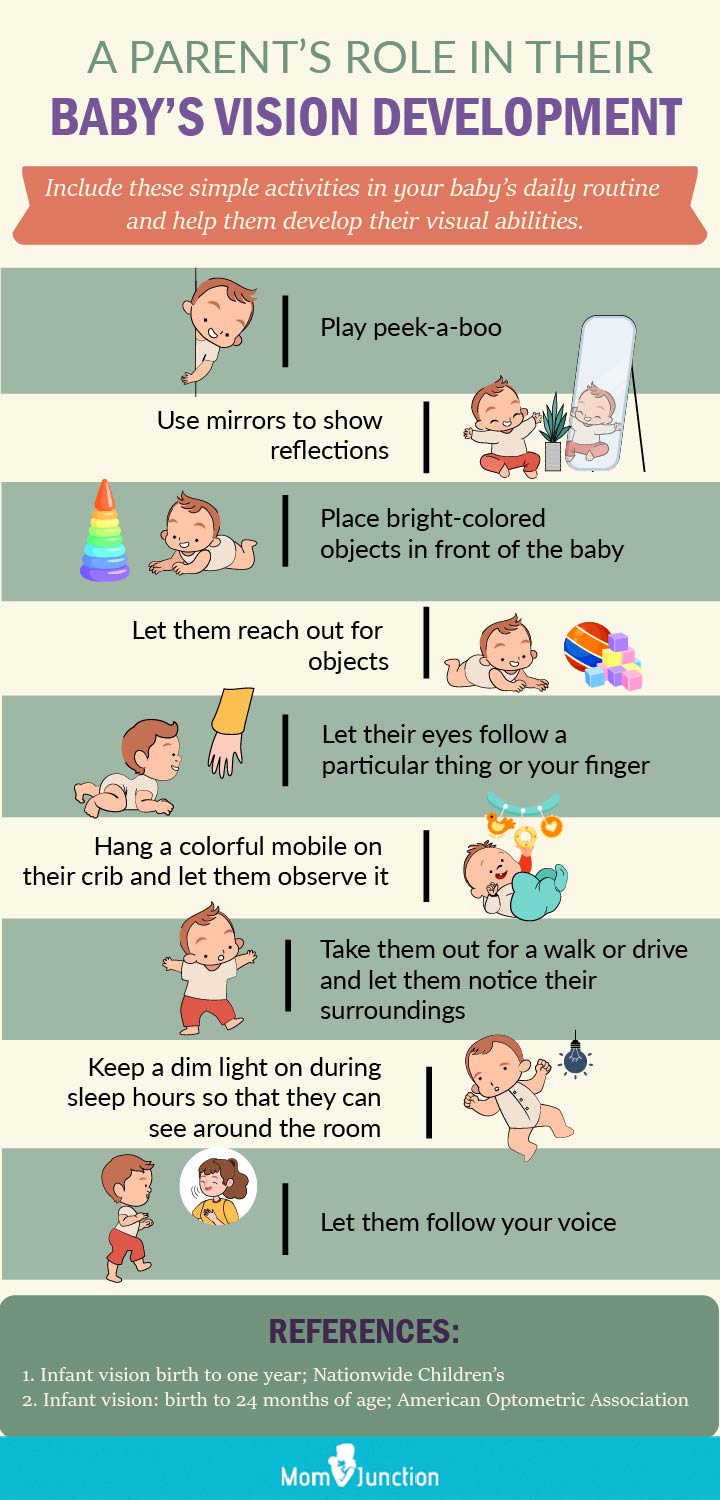
- Use your face first. Hold your face about 8 to 12 inches away and pause. Your baby may look at you for a few seconds.
- Try a high-contrast object. A black-and-white card or simple bold shape may be easier to notice than a pale toy.
- Move slowly. Move your face or object from the center toward one side. A newborn may follow only briefly.
- Compare the two eyes. Notice whether one eye always closes, wanders, or seems less active.
- Repeat on another day. One missed response is not a reliable test. Babies vary with sleep, hunger, and mood.
Stop if your baby becomes upset. Do not force the eyes open or hold a bright light close to the face.
What counts as a reassuring response?
A reassuring pattern may include brief eye contact, blinking to a bright change in light, and occasional attempts to follow a face or object. Responses may be slow and inconsistent in the first weeks.
The goal is not to obtain a “pass” at home. The goal is to notice a persistent difference or warning sign and share it with the baby’s clinician.
What not to do
Avoid these common home-testing mistakes:
- Do not shine a flashlight, laser, or phone light directly into the eyes.
- Do not use a camera flash repeatedly as a vision test.
- Do not cover one eye for a long time unless a clinician instructs you.
- Do not assume that a baby who looks at a light has normal vision.
- Do not wait for a routine visit if one pupil looks white or the eye looks cloudy.
- Do not use online vision tests for a newborn.
Photos can sometimes show a white pupil, but glare and camera effects can also change how an eye looks. A persistent white reflection in person or in repeated photos still deserves prompt medical advice.

Warning signs that need medical attention
Call your pediatrician or family doctor promptly if you notice:
- A white, gray, or unusual pupil
- A cloudy or enlarged-looking cornea
- One eye that stays turned in or out
- Eyes that do not move together
- Constant rapid eye movements
- One eye that never seems to open
- Marked light sensitivity
- Persistent redness or swelling
- Heavy yellow or green discharge
- A droopy eyelid that blocks the pupil
- No apparent reaction to bright light
- A baby who never appears to look at faces or lights as they become more alert
Some findings require urgent evaluation. A white pupil, a cloudy eye, severe swelling, or a painful-looking eye should not wait for the next well-child visit. Contact the child’s doctor the same day. If you cannot reach the doctor and the problem is severe or rapidly worsening, seek emergency care.
A brief period of crossed eyes, watery eyes after crying, or poor tracking while sleepy is usually less concerning. Persistent or worsening signs matter more than a single short episode.
When should a newborn have an eye exam?
Your baby should have the routine newborn eye check in the hospital or at the first pediatric visit. The American Academy of Pediatrics recommends eye assessment as part of ongoing preventive care.
Ask about a pediatric ophthalmology referral if:
- The newborn exam was abnormal
- The red reflex was not seen clearly
- Your baby has a known risk factor
- A close family member had serious childhood eye disease
- You continue to see an unusual pupil or eye movement
- You feel that one eye behaves differently from the other
A pediatric ophthalmologist is a medical doctor who specializes in children’s eye health. An optometrist may also provide certain types of eye care, but a baby with a suspected structural problem, abnormal red reflex, or serious visual concern may need a pediatric ophthalmologist.
Routine vision screening changes as children grow. Instrument-based screening is commonly used in young children when appropriate, while eye charts become useful when a child can identify or match symbols or letters. Newborn care focuses more on the eye exam, red reflex, visual behavior, and risk assessment.

What happens if a newborn does not pass an eye check?
An unusual result does not automatically mean that a baby has permanent vision loss. The next step is usually a repeat exam or referral, depending on the finding.
A specialist may:
- Examine the front and back of the eye
- Dilate the pupils with medicine
- Check the red reflex in more detail
- Assess eye alignment and movement
- Look for cataracts, retinal problems, or other conditions
- Decide whether treatment or monitoring is needed
Parents should ask what was abnormal, how soon follow-up is needed, and which office should arrange the appointment. Keep the referral even if your baby seems to see normally at home. Some eye conditions do not cause obvious symptoms at first.
Do not delay a referral because your baby can look at faces or lights. A baby can show some useful visual behavior while still having a condition that needs treatment.

Common questions about newborn vision
Can newborns see clearly?
No. Newborns can see light, faces, and some shapes, but vision is blurry compared with adult vision. Focus and eye control improve over the first months.
Is it normal for a newborn’s eyes to cross?
Occasional crossing or wandering can be normal early in life. Constant crossing, a single eye that always turns, or worsening misalignment should be checked by a clinician.
Should I test my newborn’s vision with a flashlight?
No. A bright light close to the eyes can upset your baby and does not provide a reliable home vision test. Let a clinician perform the red reflex and eye examination.
What does a white pupil mean?
A white pupil can have several causes, including a reflection from a photo or a medical problem inside the eye. A persistent white, gray, or unusual pupil needs prompt medical evaluation.
Can a newborn have cataracts?
Yes. Some babies are born with cataracts, which make the lens cloudy. A cataract may cause a white pupil or an abnormal red reflex. Early assessment matters because clear visual signals are important while the visual system develops.
Does premature birth affect newborn vision?
It can. Some premature infants are at risk for ROP and need a scheduled retinal exam. The timing depends on birth details and the baby’s medical history, so follow the neonatal team’s plan.
When do babies start tracking objects?
Many babies begin to follow faces or objects more consistently during the first two to three months. Tracking varies, so a newborn who does not follow every movement may still be developing normally.
Key takeaways
- Newborn vision is checked by a clinician through an eye exam, red reflex test, and observation of visual behavior.
- At home, watch for responses to faces, light, and high-contrast shapes, but do not treat this as a diagnostic test.
- Occasional eye wandering can be normal in the first weeks.
- A white pupil, cloudy eye, constant eye turn, or no response to light needs prompt medical advice.
- Premature infants and babies with risk factors may need specialized eye screening.
- Keep all recommended follow-up appointments, even if your baby seems to see normally.
Conclusion
The safest way to check newborn vision is to combine the routine U.S. newborn eye exam with simple observations at home. Your baby does not need to track perfectly or respond every time. Look for steady progress, compare the two eyes, and report persistent or unusual findings.
If you see a white pupil, cloudy eye, severe redness, or a constant eye turn, contact your baby’s doctor promptly rather than waiting for the next checkup.
Sources
- American Academy of Pediatrics, Bright Futures: Guidelines for Health Supervision of Infants, Children, and Adolescents: https://www.aap.org/en/practice-management/bright-futures/bright-futures-materials-and-tools/
- American Academy of Pediatrics, HealthyChildren.org, “Vision Screening”: https://www.healthychildren.org/English/health-issues/conditions/eyes/Pages/Vision-Screening.aspx
- American Association for Pediatric Ophthalmology and Strabismus, “Vision Screening Recommendations”: https://aapos.org/glossary/vision-screening-recommendations
- American Association for Pediatric Ophthalmology and Strabismus, “Red Reflex Examination”: https://aapos.org/glossary/red-reflex-examination
- National Eye Institute, “Amblyopia”: https://www.nei.nih.gov/learn-about-eye-health/eye-conditions-and-diseases/amblyopia
- National Eye Institute, “Retinopathy of Prematurity”: https://www.nei.nih.gov/learn-about-eye-health/eye-conditions-and-diseases/retinopathy-prematurity