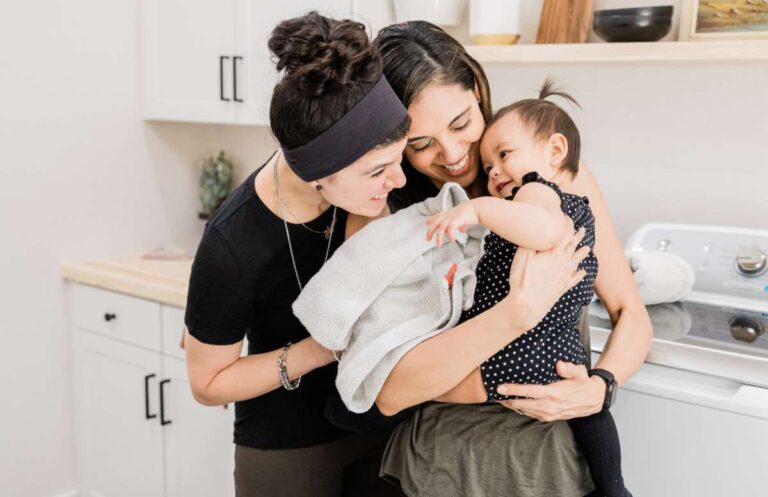
At 7 months, many babies cry when a parent leaves the room, cling during handoffs, or wake more often when they cannot see a familiar caregiver. This is usually a normal part of development, not a sign that you have caused a problem.
In the United States, the American Academy of Pediatrics (AAP) describes separation anxiety as a common stage that often starts in the second half of the first year. You can help by keeping departures calm, practicing short separations, and giving your baby steady, loving routines.

What separation anxiety looks like at 7 months
Separation anxiety happens when a baby becomes upset after a familiar person leaves. At this age, your baby is learning that you still exist even when you are out of sight. However, they may not yet understand when you will return.
Common signs include:
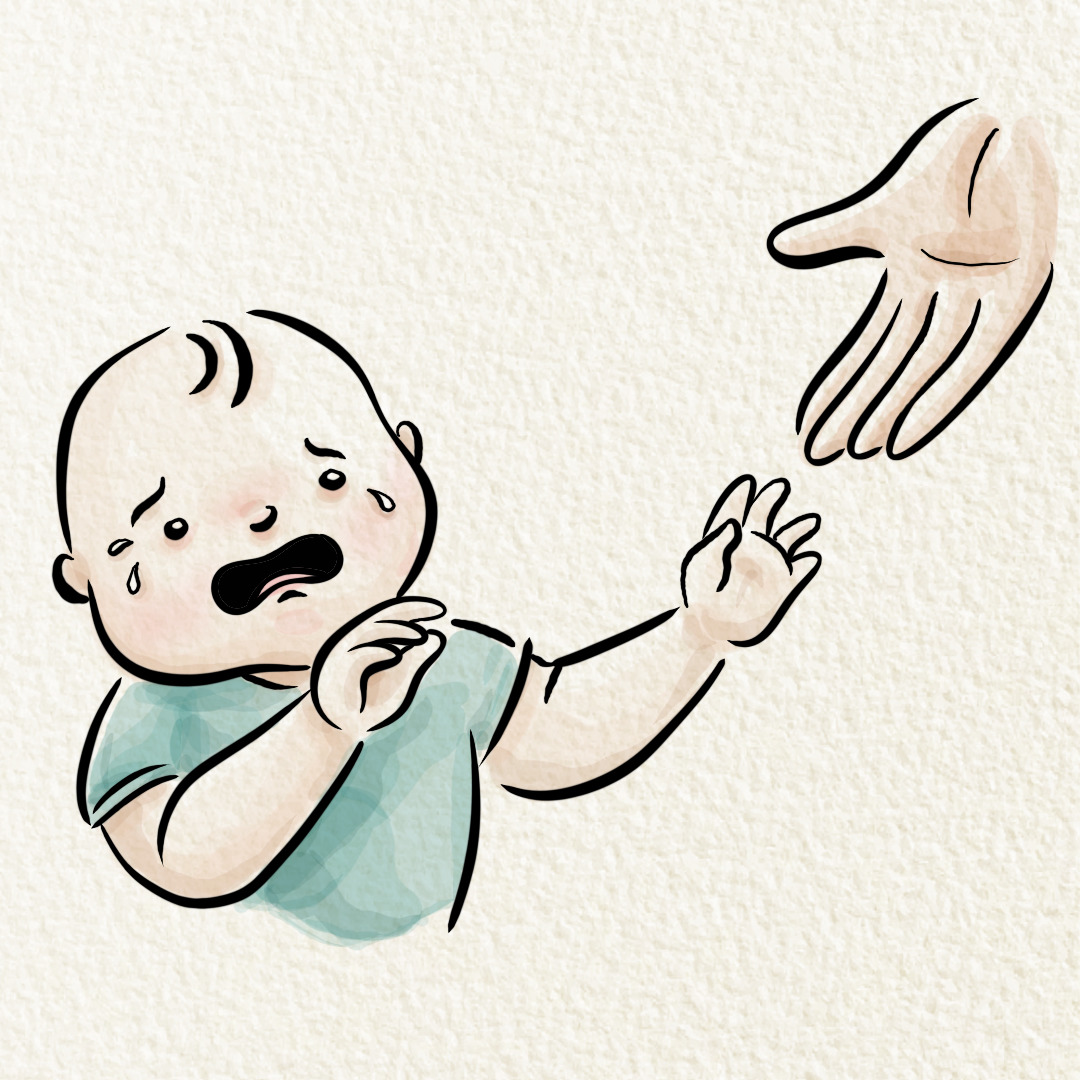
- Crying when you leave the room
- Reaching for you during handoffs
- Clinging more than usual
- Becoming upset with a new caregiver
- Waking and crying when you are not nearby
- Refusing comfort from someone else
- Watching the door after you leave
- Crying when you move out of sight, even for a short time
This phase can appear suddenly. A baby who was once happy with a grandparent may begin crying when that grandparent holds them. A baby who slept well may also wake more often and look for a parent.
These changes do not mean your baby is spoiled. They show that your baby has formed a strong attachment and is becoming more aware of people and places.
Separation anxiety may become stronger when your baby is:
- Tired
- Hungry
- Sick
- Teething
- In a new place
- Around unfamiliar people
- Adjusting to child care
- Experiencing a change in daily routine
The AAP notes that separation anxiety commonly increases between about 8 and 18 months, but it can begin earlier. A 7-month-old may be at the early edge of this normal stage.

Why does a 7-month-old develop separation anxiety?
Your baby’s brain is changing quickly. At around 7 months, many babies recognize familiar people, remember recent events, and respond differently to strangers. They may understand that you are still present when hidden, but they cannot yet judge how long you will be gone.
This creates a gap between memory and time. Your baby knows you matter. Your baby may also remember that you left before. But your baby cannot think, “Dad will be back after lunch.”
Crying is your baby’s main way to communicate fear, stress, or the need for help. It is not a planned attempt to control you.
Your response also shapes your baby’s sense of safety. A calm, steady response teaches, “My parent leaves, and my parent comes back.” That lesson builds over many small experiences.
The goal is not to prevent every tear. The goal is to help your baby cope with short periods apart while maintaining a safe and predictable relationship.

How to deal with 7-month-old separation anxiety
The most effective approach combines short practice separations, a predictable routine, and a calm return. Try the steps below and adjust them to your baby’s needs.
1. Practice very short separations
Start when your baby is fed, rested, and calm. Leave the room for 10 to 30 seconds while another trusted adult stays with your baby. Return before your baby becomes highly distressed when possible.
Then slowly increase the time. For example:
- Step into the next room for 10 seconds.
- Return and greet your baby calmly.
- Repeat the practice later.
- Try 30 seconds, then one minute.
- Build toward longer periods over several days.
This is not a strict training plan. Some babies need more time. If your baby becomes very upset, shorten the next practice session.
2. Use a clear goodbye
Say a short phrase such as, “I’m going to the kitchen. I’ll be back soon.” Use the same phrase each time.
A brief goodbye is usually better than a long, emotional farewell. Long goodbyes can increase tension because your baby senses that something difficult is happening.
Do not sneak away. A hidden departure may seem easier in the moment, but it can make your baby more watchful and fearful the next time you move away.
3. Make the return calm and warm
When you come back, smile, offer a hug, and use a calm voice. You do not need to act as if something terrible happened.
Try saying:
- “You missed me. I’m back.”
- “You were safe with Grandma.”
- “I came back, just like I said I would.”
Your baby may still cry when you return. That does not mean the practice failed. Some babies need time to settle after the stress of a separation.
4. Let another caregiver build a relationship
Have the new caregiver spend time with your baby while you remain nearby. Let them play, talk, feed, or read while your baby can still see you.
Then move farther away for short periods. This gives your baby a chance to learn that other trusted adults can also provide comfort.
Share useful details with the caregiver, such as:
- How your baby shows hunger
- Favorite songs or toys
- Usual nap times
- Comforting ways to hold your baby
- Signs that your baby is becoming overtired
A caregiver who knows your baby’s cues can respond sooner and with more confidence.
5. Keep daily routines predictable
A simple routine can lower stress. It does not need to run by the clock.
For example:
- Feed your baby
- Change the diaper
- Play for a short time
- Say the same goodbye
- Leave with the trusted caregiver
Use the same steps before child care, a babysitter’s visit, or a nap. Predictability helps your baby know what comes next.
6. Play games that teach “gone and back”
Peekaboo, hiding a toy under a cloth, and walking behind a doorway can help your baby practice separation in a playful way.
Keep the game fun. If your baby becomes upset, show the toy or your face right away. The purpose is to build confidence, not to test how long your baby can tolerate distress.
7. Offer comfort without creating unsafe sleep conditions
You can comfort your baby with your voice, touch, holding, rocking, or feeding. For sleep, follow AAP safe-sleep guidance:
- Place your baby on their back for every sleep.
- Use a firm, flat sleep surface.
- Keep the sleep area free of pillows, blankets, stuffed toys, and other soft items.
- Room-share without bed-sharing, ideally for at least the first 6 months.
Do not place a loose comfort object in your 7-month-old’s crib. A favorite toy may help during supervised play, but it should not replace safe sleep practices.
What to do when separation anxiety affects sleep
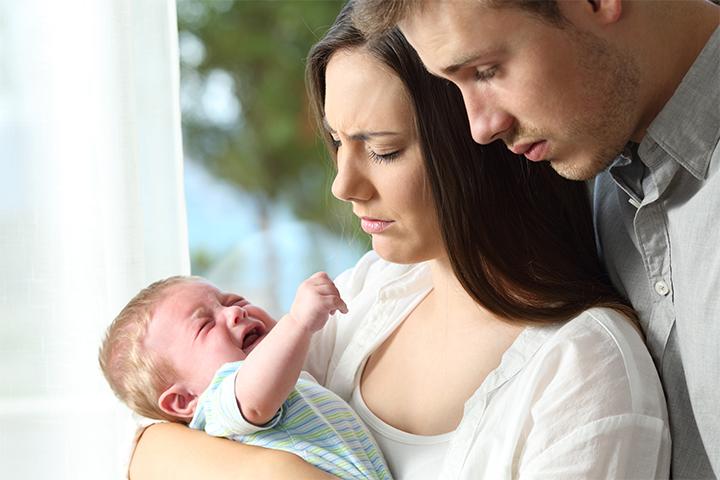
Separation anxiety can cause more night waking, crying at bedtime, or a strong need to be held. First, check for basic causes such as hunger, illness, pain, a wet diaper, overheating, or an unusual sleep schedule.
Keep the bedtime response quiet and boring. Use a low light, a calm voice, and the same short phrase. For example, say, “You are safe. It is sleep time.”
You may offer brief comfort and then place your baby back on their back in the crib. Avoid introducing unsafe sleep items or moving your baby to an adult bed because of a difficult night.
If your family is considering sleep training, discuss the plan with your pediatrician, especially if your baby was born early, has a medical condition, or has feeding or growth concerns. There is no single sleep method that fits every family.
A temporary sleep setback does not mean you have lost all progress. Illness, travel, teething, and developmental changes can affect sleep for a while.

What to do before daycare or a babysitter
A planned handoff often goes better than a rushed one. If possible, visit the child care setting with your baby before the first full day. Let your baby see you talk with the caregiver.
Before leaving:
- Feed and change your baby if needed.
- Give the caregiver your baby’s routine and contact information.
- Use one brief goodbye.
- Leave rather than returning several times.
- Ask the caregiver to send a short update if that helps you stay calm.
Your baby may cry after you leave and still settle soon afterward. Crying at the handoff alone does not show that the caregiver is unsafe or that your baby cannot adjust.
Choose care that follows safe sleep practices and has clear rules for feeding, supervision, emergency contact, and infant sleep. In the U.S., child care licensing rules vary by state, so parents can check their state’s child care licensing agency for inspection and safety information.

Common mistakes that can make separation harder
Some well-meant responses can increase stress. Try to avoid these patterns:
Sneaking away
Leaving without saying goodbye may reduce crying for a moment. It can also make your baby worry that you may disappear without warning.
Making goodbyes too long
Repeated hugs, returns, and changes of plan can make the departure feel more alarming. Use warmth, but keep the routine short.
Leaving when your baby is overtired
A tired baby has less ability to cope. When possible, schedule practice separations after sleep and feeding.
Passing your baby from person to person
Many new faces at once can overwhelm a 7-month-old. Let one calm caregiver take the lead.
Calling the behavior “bad”
Your baby is not misbehaving. Labeling normal fear as bad behavior can make adults respond with frustration rather than support.
Using unsafe sleep items
Do not place pillows, loose blankets, stuffed animals, or other soft objects in the crib to help your baby feel less alone.
Expecting quick results
Some babies adjust in days. Others need several weeks of small steps. Progress may look like crying for five minutes instead of 20, accepting comfort from another caregiver, or calming sooner after you leave.

When should you call your pediatrician?
Separation anxiety usually needs patience, not medical treatment. Still, call your child’s pediatrician if the distress is intense, sudden, or linked with other concerns.
Contact the pediatrician if your baby:
- Is difficult to console most of the day
- Stops feeding well
- Has fewer wet diapers
- Seems unusually sleepy or weak
- Has a fever or signs of illness
- Loses skills they previously had
- Cannot settle with any trusted caregiver
- Has severe sleep problems that affect feeding or safety
- Shows distress that does not improve after several weeks of steady support
Seek urgent medical help for trouble breathing, blue or gray lips, a seizure, serious injury, unresponsiveness, or signs of severe dehydration. Call 911 in the United States for an emergency.
Also pay attention to your own stress. If you feel angry or overwhelmed, place your baby on their back in a safe crib and step away for a few minutes. Call someone you trust. Never shake, hit, or forcefully handle a crying baby.

How long does separation anxiety last?
There is no exact timeline. Separation anxiety often comes and goes during the second half of the first year and may become stronger during the toddler years.
It may improve as your baby learns that:
- You return after leaving
- Other trusted adults can provide comfort
- Familiar routines are safe
- Short separations do not last forever
Illness, travel, a new caregiver, and developmental changes can cause a temporary return of stronger reactions. Focus on steady routines rather than a perfect day-to-day pattern.

A simple plan for the next seven days
Use this short plan as a starting point:
Days 1–2: Practice leaving the room for 10 to 30 seconds while a trusted adult stays with your baby.
Days 3–4: Repeat the practice and extend one separation to about one minute if your baby is coping well.
Days 5–6: Let the caregiver comfort, feed, or play with your baby while you step away for a few minutes.
Day 7: Try a short real-world separation, such as a brief walk or quick errand, if your baby is healthy and the caregiver is ready.
Keep notes on what affects your baby. You may find that separation goes better after a nap, with one caregiver, or after a familiar song. Use those patterns to plan future separations.
Signs of progress include faster calming, accepting comfort from another trusted adult, and returning to play after you leave.
FAQs about 7-month-old separation anxiety
Is separation anxiety normal at 7 months?
Yes. It can begin during the second half of the first year. Some babies show it earlier, while others show it later. A sudden increase in clinginess is often part of normal social and emotional development.
Should I let my 7-month-old cry when I leave?
You do not need to ignore your baby’s crying. Say goodbye, leave them with a trusted caregiver, and allow that caregiver to offer comfort. Short, planned separations can help your baby learn that you return.
Will picking up my baby make separation anxiety worse?
Responding with comfort does not spoil a baby. Holding, feeding, and speaking calmly can help your baby feel safe. You can also slowly help your baby accept comfort from another trusted adult.
Why does my baby cry with other people but not with me?
Your baby may prefer the caregiver they know best. This does not mean your baby dislikes other people. Allow relationships to grow through repeated, calm contact.
Can separation anxiety cause night waking?
Yes. A baby who is more aware of your absence may wake and seek you. Check for illness, hunger, pain, and other needs, then use a calm response and continue following safe-sleep guidance.
Should I use a stuffed animal or blanket for comfort?
Not in the crib at 7 months. The AAP recommends keeping loose objects and soft bedding out of an infant’s sleep space. Use supervised play, your voice, and caregiver routines for comfort instead.
Conclusion: Help your baby learn that you come back
The best way to deal with 7-month-old separation anxiety is to respond with calm, predictable care. Practice short separations, use a brief goodbye, prepare trusted caregivers, and return with warmth. Do not sneak away, shame your baby, or use unsafe sleep items.
If your baby seems ill, stops feeding, loses skills, or remains extremely distressed, contact your pediatrician. For most families, this stage slowly eases as the baby gains trust, memory, and confidence.