
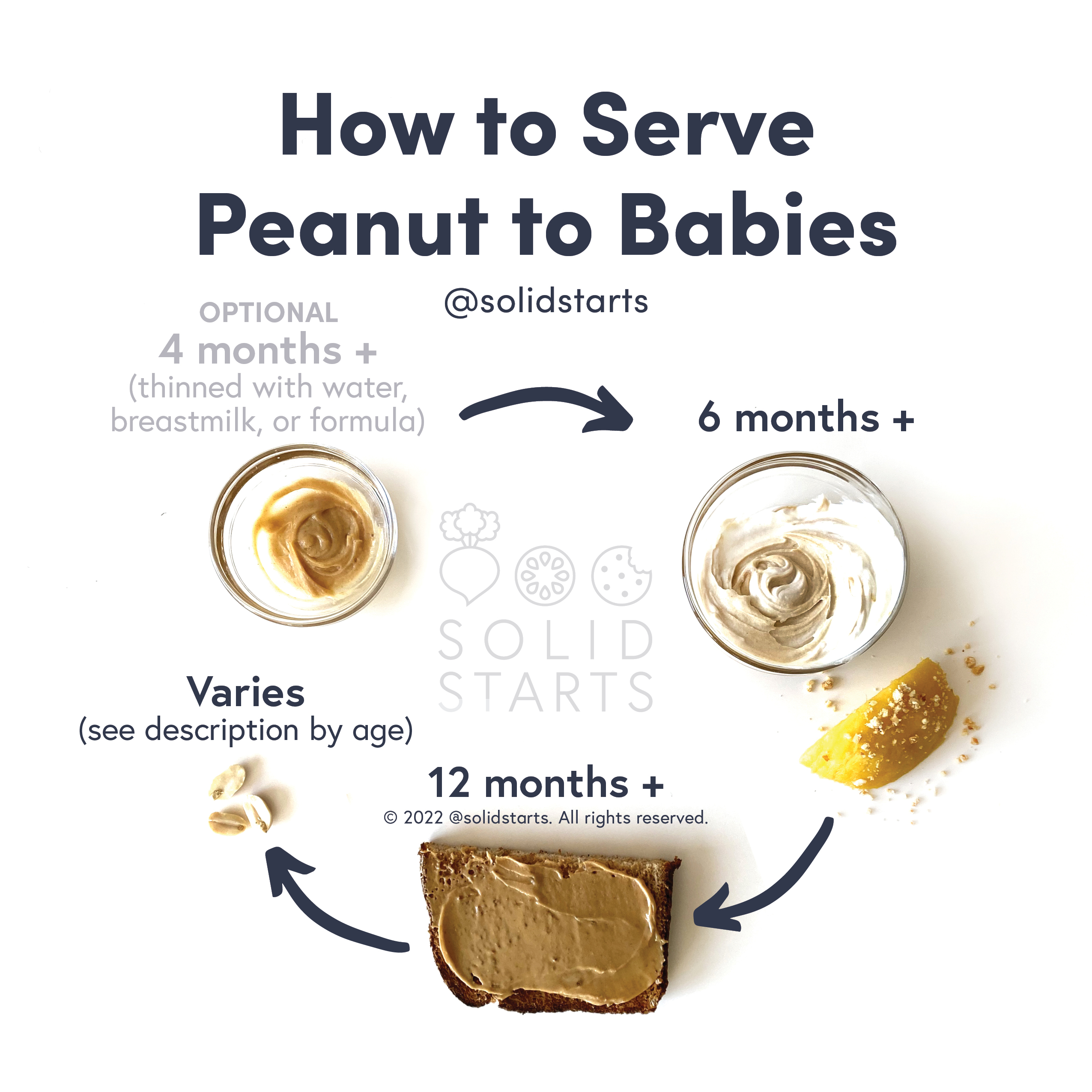
Most babies can try smooth, thinned peanut butter around 6 months, when they are ready for solid foods.
Knowing when to introduce peanut butter to baby can feel stressful, especially because peanut allergy can be serious. Current guidance supports early, safe introduction for most infants, rather than delaying peanuts for years. This guide explains the right age, signs of readiness, safe serving methods, allergy risks, and what to do if a reaction occurs.
When to Introduce Peanut Butter to Baby
For most babies, the best time to introduce peanut butter is around 6 months. Your baby should also be ready for solid foods and able to sit with support, control their head, and swallow food instead of pushing it out.
Do not give peanut butter to a baby younger than 4 months. Before this age, most babies are not ready for solids, and their swallowing skills are still developing.
When deciding when to introduce peanut butter to baby, look for these signs of readiness:
• Your baby can sit upright with little support.
• Your baby has steady head and neck control.
• Your baby opens their mouth when food comes near.
• Your baby can move food from the front of the mouth to the back.
• Your baby shows interest in food.
• Your baby no longer pushes most food out with their tongue.
The goal is not to rush. It is to introduce peanut in a safe window once your baby is ready. Delaying peanut products well beyond infancy may not lower allergy risk and may remove an important chance for early exposure.
Why Early Peanut Introduction Matters
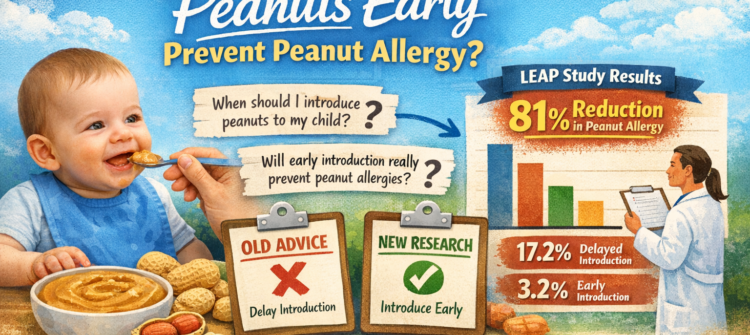
Peanut is one of the most common food allergens. In the past, many parents were told to avoid peanut during infancy. Newer research changed that advice.
A major clinical trial found that introducing peanut early to infants at high risk of allergy greatly reduced the chance of developing a peanut allergy. Based on this evidence, expert guidance now supports age appropriate peanut introduction during infancy.
The exact timing depends on your baby’s health:
• Babies with severe eczema or an egg allergy may need peanut introduction as early as 4 to 6 months, but only with medical guidance.
• Babies with mild or moderate eczema can often try peanut around 6 months after discussing the plan with their pediatrician.
• Babies without eczema or food allergy can usually try peanut at about 6 months, once they are ready for solids.
This does not mean every baby should eat peanut at the same age. When to introduce peanut butter to baby should be based on development, allergy risk, and advice from your child’s health professional.
Early introduction is not a guarantee that a child will never develop an allergy. It is one evidence based step that may help lower the risk.

Signs Your Baby May Have a Higher Allergy Risk
Some babies have a higher chance of developing a food allergy. Severe eczema is one of the strongest known risk factors in infancy. Egg allergy may also increase the risk of peanut allergy.
Talk with your pediatrician before introducing peanut if your baby has:
• Severe eczema that needs prescription treatment.
• A known egg allergy.
• A previous reaction to another food.
• A diagnosed food allergy.
• A history of wheezing or breathing problems after eating.
• A close family history of serious food allergy.
A doctor may suggest allergy testing or a supervised feeding visit. Testing is not needed for every baby, and home testing without medical advice can sometimes create confusion.
If your baby has severe eczema or an egg allergy, do not decide when to introduce peanut butter to baby by age alone. Ask your pediatrician for a clear plan.
How to Introduce Peanut Butter Safely
Plain peanut butter is thick and sticky. A spoonful can block a baby’s airway, so never give thick peanut butter by itself.
Use this simple process:
Choose smooth peanut butter with no whole nuts or large pieces.
Check the label for added ingredients and avoid products containing honey for babies under 12 months.
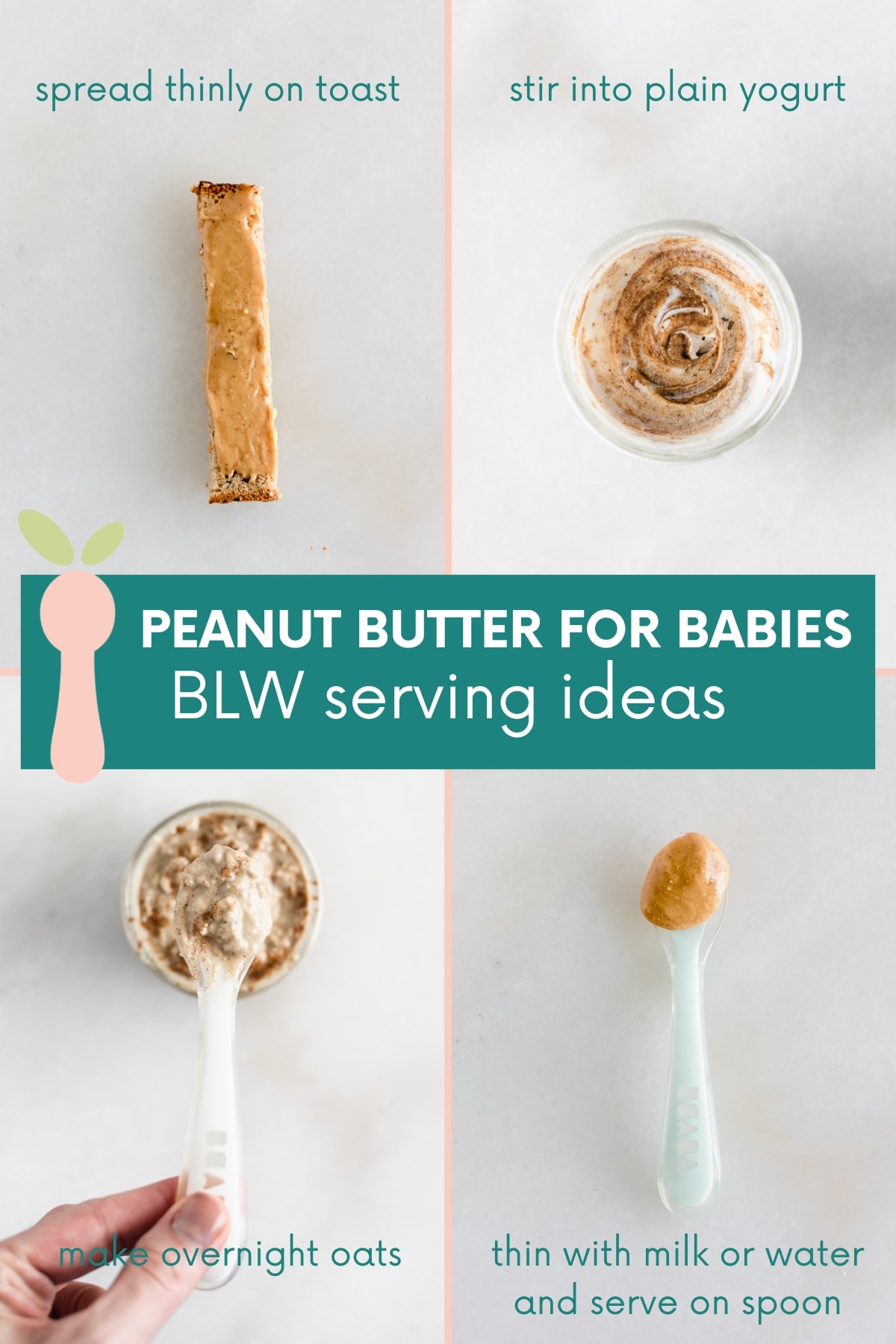
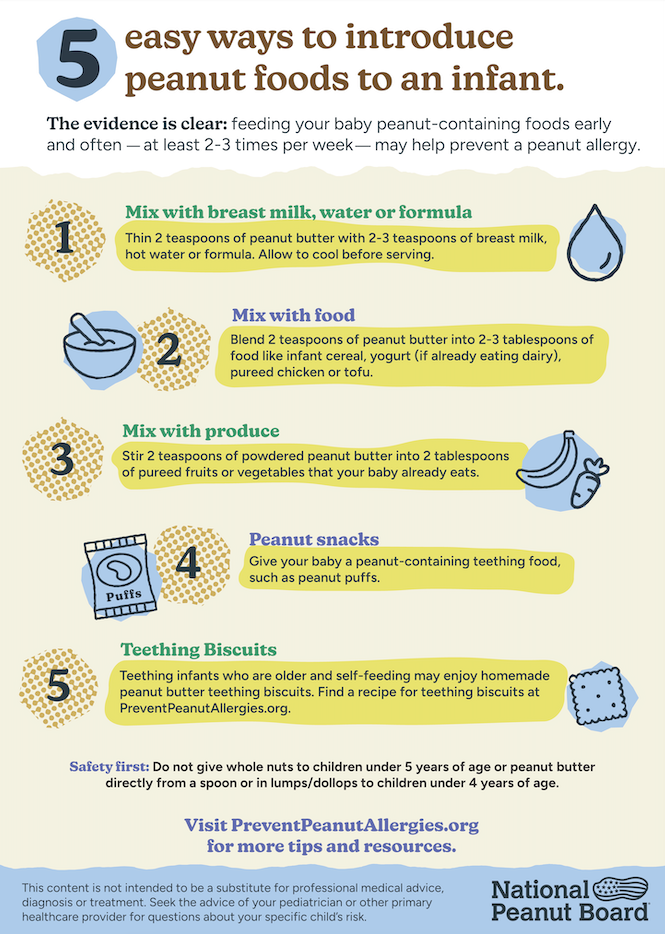
Mix a small amount with warm water, breast milk, formula, or smooth baby food.
Stir until the texture is thin and easy to swallow.
Offer a small amount on a spoon while your baby is sitting upright.
Watch your baby closely for at least two hours.
A useful first serving may be about two teaspoons of smooth peanut butter mixed into a thin puree. Some babies may start with less, especially if a doctor recommends a smaller amount.
Offer peanut at home during the day, not right before a nap or bedtime. Choose a time when another adult can help if needed. Also avoid introducing peanut for the first time when your baby is sick, very tired, or already has a rash.
When thinking about when to introduce peanut butter to baby, the setting matters as much as the calendar. A calm, alert baby is easier to observe.
Safe Peanut Butter Textures for Babies
Texture is one of the most important safety points. Babies can choke on thick, sticky foods even if they have no allergy.
Safe options include:
• Smooth peanut butter thinned with water, breast milk, or formula.
• Peanut butter mixed into oatmeal or a smooth fruit puree.
• A thin spread of peanut butter blended into yogurt, if dairy has already been introduced safely.
• Smooth peanut paste mixed into another soft food.
Avoid these foods:
• Whole peanuts.
• Chopped peanuts.
• Thick globs of peanut butter.
• Peanut butter on a spoon by itself.
• Cookies or candy with hard peanut pieces.
• Peanut butter spread on a thick, sticky lump of bread.
Keep your baby seated upright during feeding. Never feed peanut products while your baby is lying down, walking, playing, or riding in a car.
Think of peanut butter like glue: it sticks easily. Thinning it changes the texture and makes it easier for a young baby to manage.

How Much Peanut Butter Should a Baby Eat?
Start with a small taste. If your baby has no reaction, you can slowly offer more during the same feeding.
Many medical guidelines use about 2 grams of peanut protein per serving for babies at risk of peanut allergy. This amount is not the same as two grams of peanut butter. The peanut protein amount depends on the product.
For practical home feeding, parents often use a small amount of smooth peanut butter mixed into a thin puree. Your pediatrician can give exact instructions if your baby has eczema, an egg allergy, or another risk factor.
After peanut is introduced safely, keep offering it regularly. Some guidance suggests giving peanut several times each week. Regular exposure may help maintain tolerance, although the ideal schedule can vary.
Do not force your baby to eat. The first goal is safe exposure, not finishing a full serving. If your baby refuses the taste, try again on another day with a familiar puree.
Peanut Allergy Symptoms to Watch For
Most babies tolerate peanut without a problem. Still, allergic symptoms can appear within minutes or up to about two hours after eating.
Mild symptoms may include:
• Red spots or hives around the mouth or on the skin.
• Swelling of the lips, face, or eyelids.
• Vomiting.
• Sudden coughing.
• Itchy skin.
A small rash only where food touched the skin may be irritation rather than an allergy. However, it is wise to stop feeding and contact your pediatrician for advice, especially if symptoms spread or repeat.
Serious symptoms need emergency care. Call 911 if your baby has:
• Trouble breathing or noisy breathing.
• Swelling of the tongue or throat.
• Repeated vomiting with other symptoms.
• Pale, limp, faint, or unusually sleepy behavior.
• Widespread hives with breathing or circulation changes.
• A sudden combination of skin, stomach, and breathing symptoms.
If your baby has a prescribed epinephrine auto injector, use it as directed for a severe reaction and call 911. Do not wait to see if serious symptoms improve.
What to Do After a Mild Reaction
Stop feeding peanut and write down what your baby ate, how much they ate, and when symptoms began. Take a photo of any rash if you can do so without delaying care.
Call your pediatrician promptly for guidance. Do not try peanut again at home until a qualified medical professional tells you it is safe.
Parents sometimes make the mistake of assuming that a mild first reaction cannot become serious. Food reactions can vary, so a medical review is important. Your doctor may refer your baby to an allergist for testing or a supervised food challenge.
Also check the ingredient list of other foods. Peanut may appear in sauces, snack foods, baked goods, and some cultural dishes. Avoiding peanut after a possible reaction requires careful label reading.
Common Mistakes When Introducing Peanut Butter
Parents usually want to do the right thing, but a few common errors can make the first feeding less safe.
Waiting too long
Avoiding peanut until toddlerhood may not prevent allergy. For most babies, safe introduction around 6 months is more consistent with current guidance.
Offering a thick spoonful
Thick peanut butter is a choking hazard. Always thin it or mix it into a soft food.
Trying several new foods at once
If you introduce peanut, egg, dairy, and another new food on the same day, it becomes hard to identify the cause of a reaction. Introduce major allergens one at a time when possible.
Feeding during a busy moment
Do not offer peanut for the first time while traveling, at a crowded event, or just before sleep. Pick a calm time when you can watch your baby.
Confusing skin irritation with a definite allergy
Food that touches a baby’s skin can cause temporary redness. This may not be a true allergy, but spreading hives, swelling, vomiting, or breathing changes require medical attention.
Assuming peanut is the only allergen
Other common allergens include egg, milk, wheat, soy, tree nuts, fish, shellfish, and sesame. Each should be introduced in a safe, age appropriate form.
A Practical First Peanut Feeding Plan
Here is a simple plan for parents who have medical approval to introduce peanut at home:
Pick a morning or early afternoon when your baby is healthy and alert.
Prepare thin peanut butter mixed with a familiar puree.
Give a tiny taste.
Wait about 10 minutes and watch closely.
If there is no reaction, offer the rest of the small serving slowly.
Continue watching for about two hours.
Record the food, amount, time, and any symptoms.
If tolerated, ask your pediatrician how often to keep peanut in the diet.
This plan is not a substitute for medical care. Babies with severe eczema, egg allergy, or a previous food reaction may need their first serving in a clinic.
One practical lesson many parents learn is that preparation reduces fear. Have your pediatrician’s number nearby, know the signs of an allergic reaction, and keep feeding simple.
Peanut Butter Alternatives for Babies
If your family does not use peanut butter, or if your baby cannot eat peanut, ask a pediatrician or allergist about other options. Peanut is a legume, while tree nuts come from different plant families, so a peanut allergy does not automatically mean an allergy to every tree nut.
Safe textures may include:
• Smooth nut or seed butter thinned into puree, when medically appropriate.
• Finely ground nut powder mixed into oatmeal.
• Smooth hummus without large pieces, depending on ingredients and sodium.
• Pureed beans or lentils.
Never offer whole nuts or thick nut butter to a baby. If your baby has a known peanut allergy, do not substitute another nut product without professional advice. Cross contact can occur in homes and packaged foods.
When to Introduce Peanut Butter to Baby: A Simple Age Guide
Age alone does not determine readiness, but this guide can help:
• Before 4 months: Do not introduce peanut or other solid foods unless a medical professional gives specific instructions.
• Around 4 to 6 months: Babies with severe eczema or egg allergy may need supervised introduction during this period.
• Around 6 months: Most babies can try peanut when they show signs of readiness.
• After a safe first feeding: Continue offering peanut regularly as advised by your child’s doctor.
The key phrase is “developmentally ready.” A baby who is 6 months old but cannot sit with support may need more time. A baby close to 6 months with strong feeding skills may be ready after a pediatric check.
When in doubt about when to introduce peanut butter to baby, call your pediatrician. A short conversation can make the plan much clearer.
Frequently Asked Questions About When to Introduce Peanut Butter to Baby
Can a 4-month-old have peanut butter?
Most babies should not start peanut butter before 4 months. Babies with severe eczema or egg allergy may need a medically supervised introduction between 4 and 6 months.
Can I give my baby regular peanut butter?
You can usually use smooth peanut butter, but thin it with water, breast milk, formula, or puree. Never give a thick spoonful, whole peanuts, or peanut chunks because they can cause choking.
How do I know if my baby is ready for peanut butter?
Your baby should sit with support, control their head, show interest in food, and swallow purees without pushing them out. These readiness signs matter as much as the baby’s age.
What are the first signs of peanut allergy in a baby?
Early signs may include hives, facial swelling, vomiting, coughing, or sudden skin redness. Breathing trouble, tongue swelling, weakness, or repeated vomiting require emergency help.
Should babies eat peanut butter every day?
Babies do not usually need peanut every day. After a safe introduction, ask your pediatrician about offering it regularly, often several times each week.
Should I introduce peanut butter if my baby has eczema?
Babies with mild eczema may often try peanut around 6 months, while babies with severe eczema may need earlier supervised introduction. Speak with your pediatrician before feeding peanut if eczema is severe or difficult to control.
Can peanut butter prevent a peanut allergy?
Early introduction may lower the risk of peanut allergy, especially in infants at high risk, but it cannot guarantee prevention. Your baby’s doctor can help you choose the safest approach.
Conclusion
For most infants, the answer to when to introduce peanut butter to baby is around 6 months, once the baby is ready for solid foods. Babies with severe eczema or egg allergy may need a supervised introduction between 4 and 6 months.
Use smooth peanut butter thinned into a safe texture, watch your baby closely, and never offer whole peanuts or thick spoonfuls. If your baby has a reaction or a higher allergy risk, contact a pediatrician or allergist before trying peanut again. Discuss your baby’s feeding plan with a health professional, then take the next step with confidence and care.