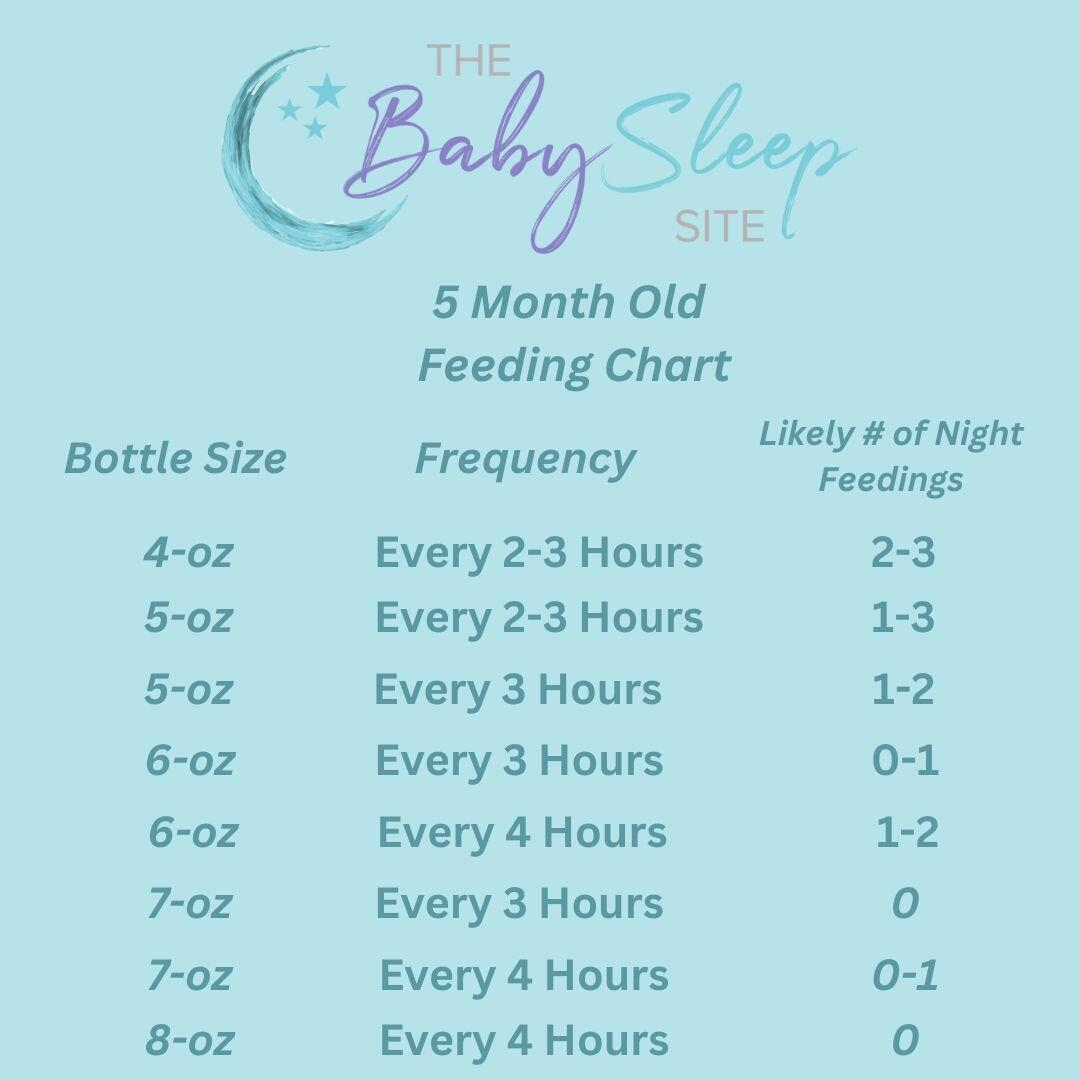
Quick answer: At 5 months, breast milk or infant formula should still provide nearly all of your baby’s nutrition. Many babies take about 24–32 ounces of formula in 24 hours, often split into 5–6 feeds. Breastfed babies should nurse when hungry. Most babies are not ready for solid food until about 6 months, although some may be ready near the end of the fifth month with approval from a pediatrician.
Introduction
If you live in the United States, the safest plan for most 5-month-olds is to keep breast milk or iron-fortified infant formula as the main food. The American Academy of Pediatrics (AAP) and the Centers for Disease Control and Prevention (CDC) advise starting solid foods at about 6 months, when a baby shows clear signs of readiness.
Every baby eats a little differently. Growth, activity, breast milk supply, feeding method, and health needs all affect how much your baby takes. Use the amounts below as a guide, not a strict rule.
How Much Formula Does a 5-Month-Old Need?
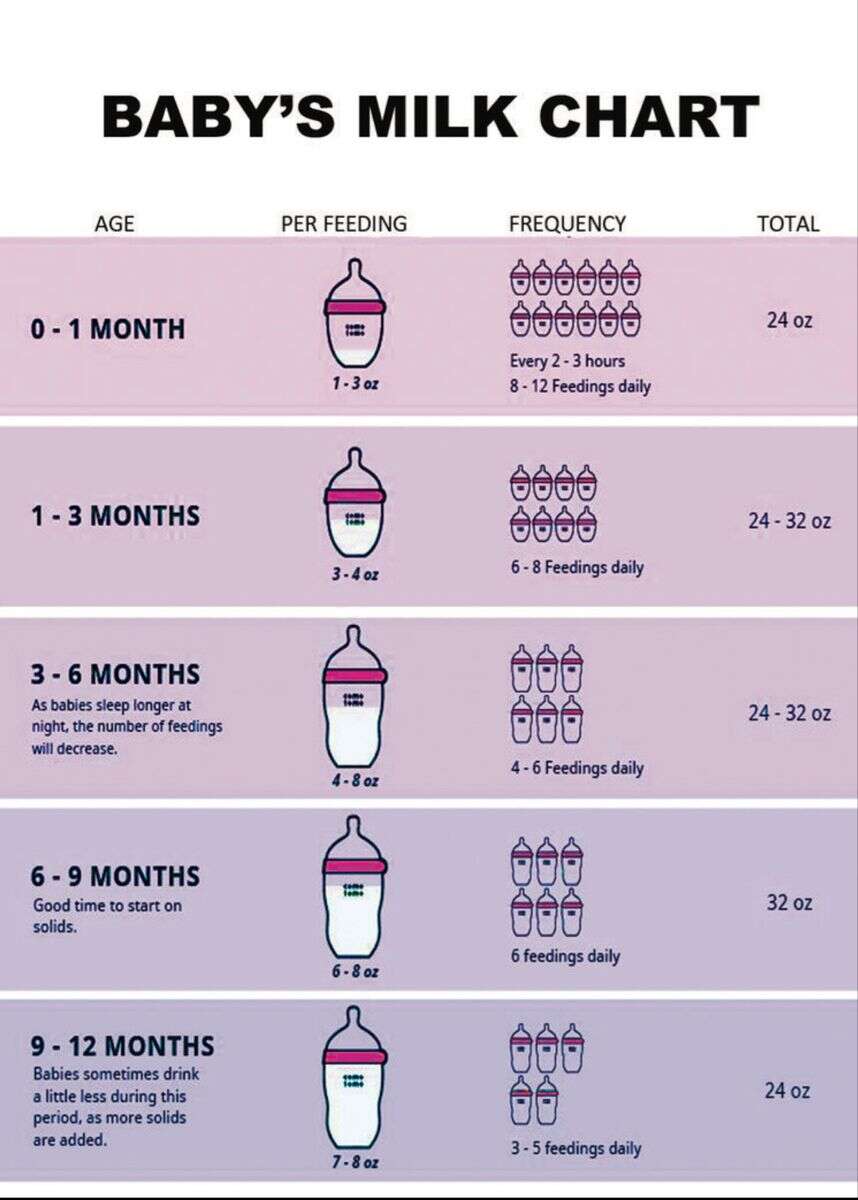
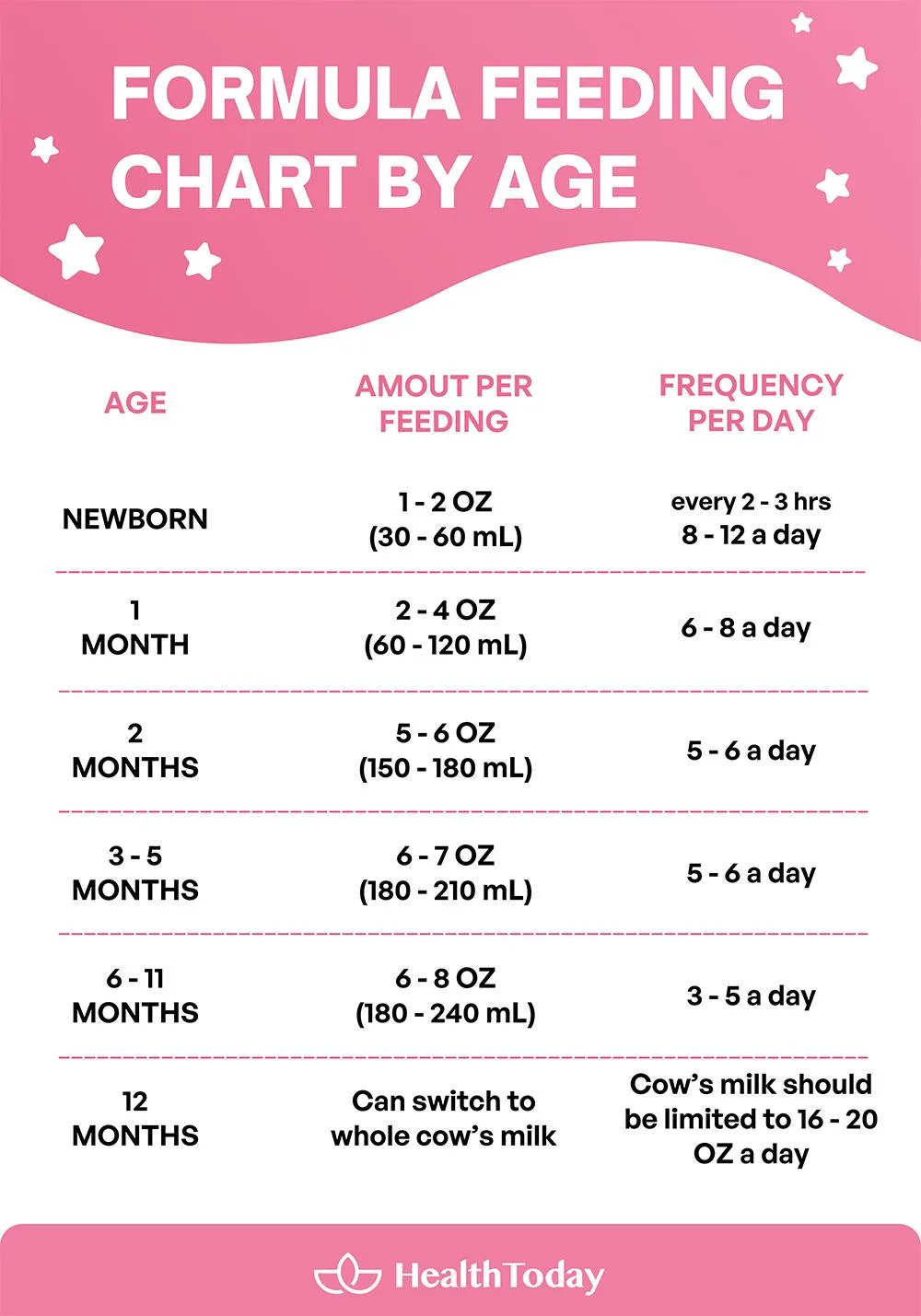
A 5-month-old who drinks formula often takes 4–6 ounces per feed, with about 5–6 feeds in 24 hours. This usually adds up to 24–32 ounces per day.
Some babies take less at each feed but eat more often. Others take larger feeds with longer breaks. Both patterns can be normal if your baby grows well and has regular wet diapers.
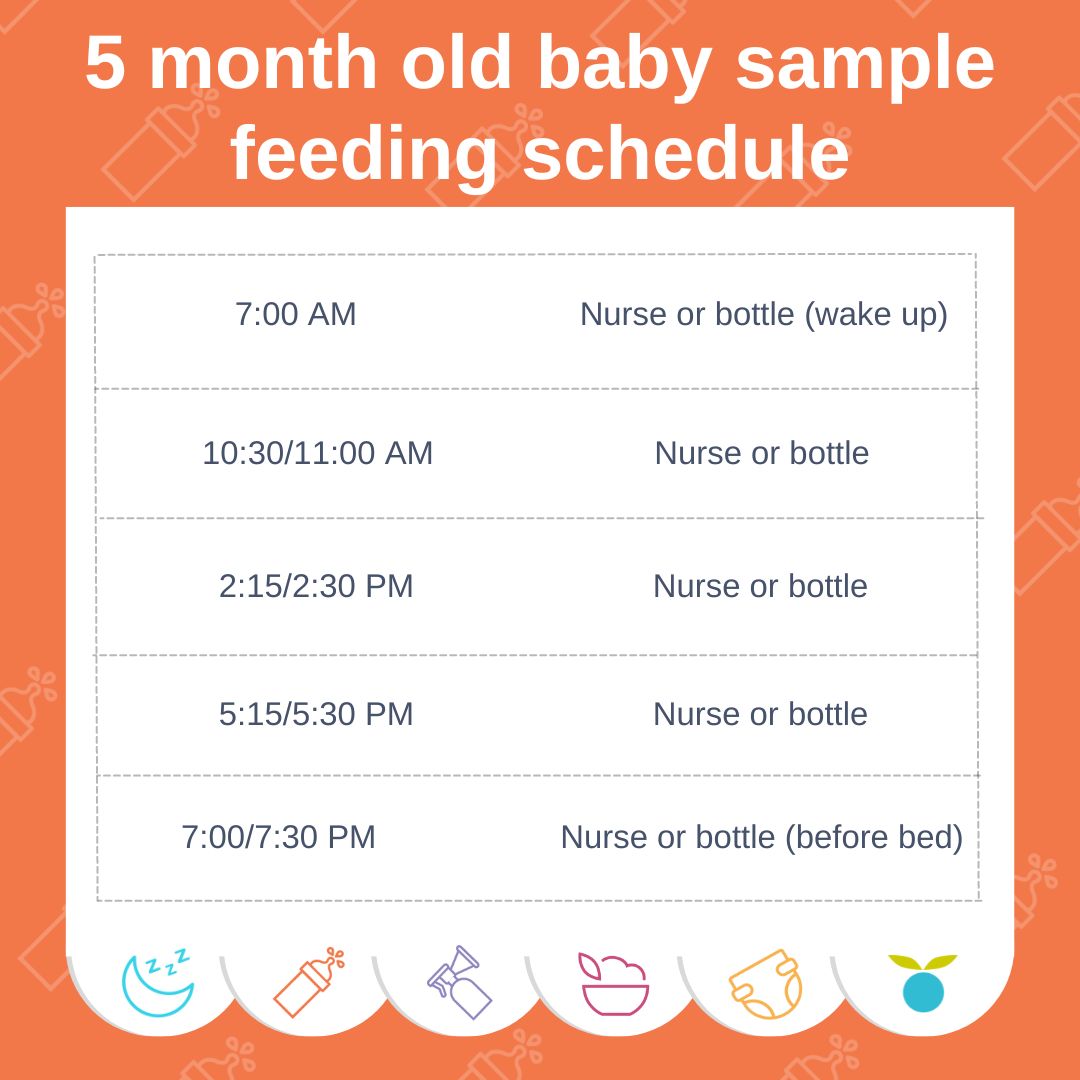
Sample formula schedule
This is only an example:
| Time | Amount |
|---|---|
| 7 a.m. | 5–6 ounces |
| 10:30 a.m. | 4–6 ounces |
| 2 p.m. | 5–6 ounces |
| 5:30 p.m. | 4–6 ounces |
| 8:30 p.m. | 5–6 ounces |
| Overnight, if needed | 2–4 ounces |
Your baby may need a different schedule. Feed by hunger and fullness cues rather than forcing a set amount.
A useful formula estimate
A common clinical estimate is about 2.5 ounces of formula per pound of body weight per day, with a usual upper limit near 32 ounces in 24 hours. This is only a rough guide.
For example, a 14-pound baby might need about:
14 pounds × 2.5 ounces = 35 ounces
Because 35 ounces is above the usual daily limit, do not use this formula to push your baby past 32 ounces. Ask your child’s pediatrician for advice if your baby regularly needs more than 32 ounces or seems hungry after most feeds.
Never dilute formula or add extra powder. Incorrect mixing can cause serious problems with hydration and nutrition. Follow the label on your specific formula container.
How Much Breast Milk Does a 5-Month-Old Need?
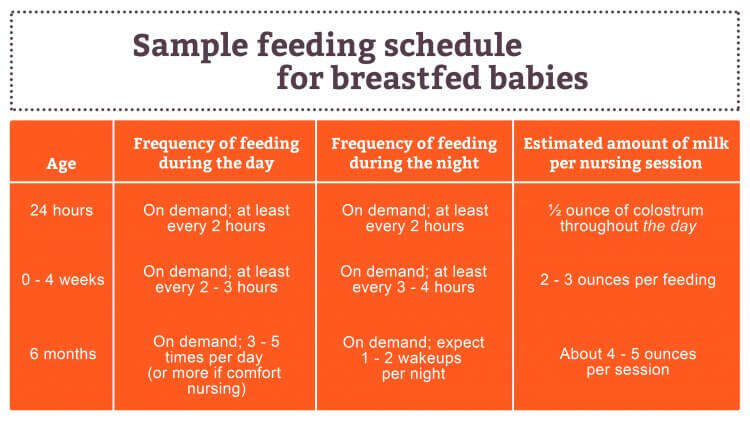
A breastfed 5-month-old should usually nurse when hungry, rather than follow a fixed ounce goal. Many babies feed about 5–8 times in 24 hours, but some nurse more or less often.
You cannot measure the exact amount your baby drinks at the breast during each feed. Instead, look at the whole picture:
- Your baby seems alert and satisfied after many feeds.
- Your baby has regular wet diapers.
- Your baby continues to gain weight along their growth curve.
- Your baby has periods of energy and normal activity.
- Your breasts feel softer after feeds, when that change is typical for you.
Pumping can give you an ounce estimate, but the amount you pump does not always show how much milk your baby can remove at the breast. Pump output also changes with the pump, time of day, stress, and how long it has been since the last feed.
If your baby receives both breast milk and formula, the total daily amount will vary. Offer breast milk first if that fits your feeding plan, then use formula as advised by your pediatrician or lactation professional.
Should a 5-Month-Old Eat Solid Food?
Most babies should begin solid foods at about 6 months, not simply because they reached 4 or 5 months. The CDC advises waiting until around 6 months and says babies should not start before 4 months.
A 5-month-old may be ready soon, but age alone is not enough. Your baby should show all or most of these signs:
- Sits upright with little help.
- Holds their head steady.
- Opens their mouth when food comes near.
- Brings objects to their mouth.
- Swallows food instead of pushing it back out with the tongue.
- Shows interest in food.
- Can turn away or close their mouth when full.
If your baby cannot sit with support or still has poor head control, wait and ask the pediatrician before starting.
Starting solids does not mean replacing breast milk or formula. At first, solids are practice with taste, texture, and eating skills. Milk remains the main source of calories and nutrients.

How Much Solid Food Should a 5-Month-Old Eat?
If your pediatrician says your baby is ready, begin with 1–2 teaspoons of a smooth food once a day. Slowly increase to 1–2 tablespoons as your baby learns to eat.
There is no need to make your baby finish a bowl. Stop when your baby:
- Turns away.
- Closes their mouth.
- Pushes food away.
- Loses interest.
- Becomes fussy or tired.
Start with one food at a time if you want to watch for a reaction. Good first foods include smooth textures such as:
- Iron-fortified infant cereal mixed with breast milk or formula.
- Pureed meat or beans.
- Mashed vegetables.
- Mashed fruit.
- Plain, smooth yogurt without added sugar, if tolerated.
Iron-rich foods matter because a baby’s iron stores begin to decline around this age. Infant cereal is not the only option. Pureed meat, beans, lentils, and iron-fortified foods can also provide iron.
Do not put cereal in a bottle unless your pediatrician gives you a specific medical reason. Cereal in a bottle may raise choking risk and can lead to overfeeding.

A Simple Feeding Plan for a 5-Month-Old
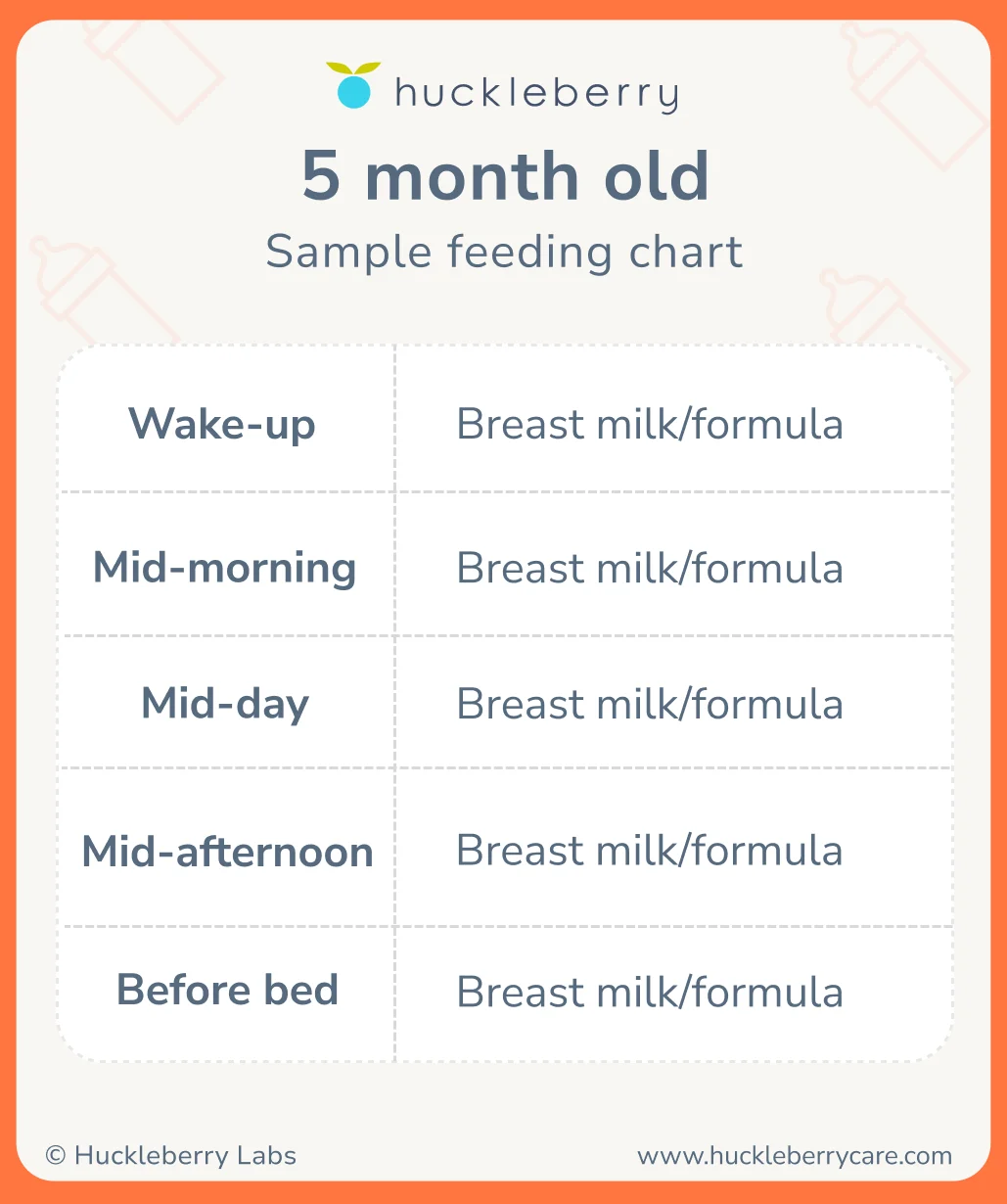
Keep milk feeds as the foundation. If your baby is ready for solids, offer a small amount once a day after a milk feed or between milk feeds.
A simple plan may look like this:
- Offer breast milk or formula.
- Wait until your baby is calm and alert.
- Offer 1–2 teaspoons of a smooth food.
- Let your baby set the pace.
- Stop at signs of fullness.
- Continue regular milk feeds.
Some parents offer solids before milk. Others offer them after milk. Offering milk first can help ensure that breast milk or formula remains the main source of nutrition during the early weeks of solid feeding.
At around 6 months, many babies gradually move toward two or three small solid-food times each day. The pace should depend on readiness, comfort, and advice from the child’s health care provider.

How to Know if Your Baby Is Eating Enough
The best signs are growth, wet diapers, behavior, and feeding quality—not one exact number.
Signs your baby may be getting enough
- At least several wet diapers each day.
- Regular bowel movements, although stool patterns can vary.
- Good energy when awake.
- A moist mouth and normal tears when crying.
- Satisfied periods after feeds.
- Weight gain that follows the baby’s personal growth pattern.
Your pediatrician can check weight and length on a growth chart. One single weight does not tell the whole story. The trend over time matters more.
Signs your baby may need help
Call your pediatrician if your baby:
- Has far fewer wet diapers than usual.
- Refuses several feeds in a row.
- Vomits repeatedly.
- Is hard to wake.
- Seems weak or unusually sleepy.
- Has a dry mouth or no tears.
- Is not gaining weight as expected.
- Regularly takes much more or much less milk than usual.
Seek urgent care for trouble breathing, blue lips, severe dehydration, unusual unresponsiveness, or signs of a serious allergic reaction.

Hunger and Fullness Cues at 5 Months
Feed when your baby shows hunger cues, and stop when your baby shows fullness cues. Crying is a late hunger cue, so try to respond earlier when possible.
Hunger cues
- Turns toward the breast or bottle.
- Opens the mouth.
- Brings hands to the mouth.
- Licks or smacks the lips.
- Becomes more alert.
- Makes sucking motions.
Fullness cues
- Slows down or stops sucking.
- Turns the head away.
- Closes the mouth.
- Relaxes the hands.
- Pushes the bottle or spoon away.
- Becomes calm or distracted.
Do not pressure your baby to finish a bottle or spoonful. Responsive feeding helps babies learn to notice hunger and fullness.
Never prop a bottle or leave your baby alone with a bottle. Hold your baby during bottle feeds, and keep the bottle angled so your baby controls the flow.

What Can a 5-Month-Old Drink?
For most healthy babies, the main drinks should be:
- Breast milk.
- Iron-fortified infant formula.
Do not give cow’s milk as a main drink before 12 months. It does not provide the right balance of nutrients for infants and may increase the risk of iron deficiency.
Do not give juice to a baby under 12 months unless a pediatrician specifically recommends it. Juice adds sugar without the benefits of whole foods.
Babies under 6 months generally do not need extra water. Too much water can disrupt the body’s salt balance. Once solid foods begin around 6 months, a pediatrician may suggest small sips of water from a cup.
Avoid honey before 12 months because it can cause infant botulism. This includes honey in foods, drinks, and homemade remedies.
Safe Foods and Choking Prevention
Food should be soft, smooth, or mashed when your baby is learning to eat. Always keep your baby seated upright and stay close during meals.
Avoid hard, round, sticky, or chunky foods that can block the airway. Examples include:
- Whole grapes.
- Raw carrot pieces.
- Nuts.
- Popcorn.
- Hot dog rounds.
- Chunks of meat.
- Large spoonfuls of nut butter.
- Hard candy.
- Raw apple pieces.
Prepare foods in a texture your baby can manage. As your baby develops better skills, textures can gradually become thicker and lumpier.
Learn infant choking first aid and infant CPR from a qualified U.S. organization, such as the American Red Cross or the American Heart Association. Gagging can be noisy and may happen as babies learn. Choking may be quiet and prevents normal breathing, so treat it as an emergency.

Introducing Common Allergens
Common allergens can usually be introduced when your baby is ready for solid food. These include peanut, egg, dairy, wheat, soy, sesame, fish, and tree nuts.
Use a safe form, such as:
- Smooth peanut butter thinned with breast milk, formula, or water.
- Well-cooked egg mashed smooth.
- Plain yogurt.
- Smooth hummus without large pieces.
- Pureed fish with bones removed.
Never give a spoonful of thick peanut butter by itself. It can stick in the throat.
Introduce one new allergen in a small amount when your baby is well. Watch for symptoms. A rash, facial swelling, repeated vomiting, coughing, wheezing, or trouble breathing may signal an allergic reaction.
For trouble breathing, swelling of the tongue or throat, pale or blue skin, or extreme weakness, call 911. Ask your pediatrician about an allergy plan if your baby has severe eczema, an existing food allergy, or another condition that raises concern.

Common Feeding Mistakes to Avoid
Focusing on one exact ounce number
Babies do not all need the same amount. Growth and hunger cues are more useful than a rigid schedule.
Replacing milk with solids too soon
Solid food starts as practice. Keep breast milk or formula as the main source of nutrition.
Pressuring your baby to eat
Pressure can make meals stressful. Offer food, then let your baby decide whether and how much to eat.
Adding cereal to a bottle
This does not reliably help babies sleep and may increase choking or overfeeding risks. Use a spoon unless a pediatrician gives different medical instructions.
Giving foods that are too hard or thick
Texture matters. A food can be nutritious and still be unsafe if it is hard, sticky, or too large.
Comparing your baby with another baby
Two healthy babies may have different feeding patterns. Compare your baby with their own growth, wet diapers, and behavior.

When to Call Your Baby’s Pediatrician
Ask your pediatrician before changing the feeding plan if your baby was born early, has trouble gaining weight, has swallowing problems, has frequent vomiting, or has a medical condition.
You should also ask for help if:
- Breastfeeding is painful or your baby cannot latch.
- Your baby coughs or chokes during most feeds.
- Formula feeds regularly take much longer than expected.
- Your baby cries in pain during or after feeds.
- Your baby has blood in the stool.
- Your baby has ongoing diarrhea or constipation.
- You are unsure whether your baby is ready for solids.
A pediatrician, lactation consultant, or registered dietitian can help create a plan based on your baby’s growth and health.

Frequently Asked Questions
How many ounces should a 5-month-old drink per feeding?
A formula-fed 5-month-old often drinks 4–6 ounces per feeding. Some babies take less or more. Breastfed babies should nurse based on hunger cues because the exact amount is difficult to measure.
Can a 5-month-old sleep through the night without eating?
Some babies can sleep for a long stretch at 5 months, while others still need one or more night feeds. Do not wake a healthy baby solely because of a schedule unless your pediatrician recommends it. Babies with poor weight gain or certain medical needs may need scheduled feeds.
Should I feed my 5-month-old on a schedule?
A flexible routine can help, but strict timing is not required. Offer milk when your baby shows hunger cues and stop when your baby shows fullness cues. A routine should support responsive feeding, not replace it.
Can I give my 5-month-old water?
Most babies under 6 months do not need extra water. Breast milk or formula supplies their fluid needs. Ask your pediatrician before giving water, especially if your baby is sick or has diarrhea.
What if my 5-month-old refuses solid food?
This is common. If your baby shows signs of stress or is not ready, stop and try again later. Continue breast milk or formula. If your baby is close to 6 months and still cannot sit with support, has trouble swallowing, or repeatedly coughs during feeds, ask the pediatrician for guidance.
Key Takeaways
- Breast milk or iron-fortified formula should remain the main food at 5 months.
- Many formula-fed babies take about 24–32 ounces per day, often in 4–6-ounce feeds.
- Breastfed babies should nurse on demand.
- Most babies start solids at about 6 months, when they show readiness signs.
- Begin solids with 1–2 teaspoons, then increase slowly.
- Never force a baby to finish a bottle or spoonful.
- Avoid honey, juice, cow’s milk as a drink, and choking hazards.
- Call your pediatrician about poor feeding, dehydration, repeated vomiting, breathing trouble, or poor weight gain.
Conclusion
For most 5-month-olds in the United States, the goal is simple: offer breast milk or formula based on hunger cues, watch for fullness, and treat solid food as a small learning experience when your baby is ready. There is no single perfect feeding schedule.
Your next step is to track feeds, wet diapers, and your baby’s cues for a day or two. Bring those notes to the pediatrician if you are unsure about amounts, growth, or starting solids.
U.S. guidance: CDC Infant and Toddler Nutrition, American Academy of Pediatrics—Starting Solid Foods, and U.S. Dietary Guidelines for Americans.