There is no fixed number of breastfeeding sessions a 14-month-old needs each day. Many toddlers breastfeed several times in 24 hours, often after waking, before naps or bed, and for comfort. Others nurse only once or twice. Both patterns can be normal if your child grows well, eats a varied diet, and has regular wet diapers.
In the United States, the American Academy of Pediatrics (AAP) recommends continuing breastfeeding with complementary foods for at least 2 years and beyond, as long as the parent and child both want to continue. The World Health Organization gives similar guidance.
At 14 months, breast milk still provides fluid, calories, protein, fat, and immune factors. However, solid food is now an important part of the diet. Breastfeeding should work alongside meals and snacks, not fully replace them.

How often should you breastfeed a 14-month-old?
A practical range is one to several nursing sessions per day, based on your toddler’s hunger, routine, comfort needs, and your family’s goals.
You can offer the breast:
- After waking
- Before or after meals
- Before a nap
- Before bedtime
- During the night, if your toddler still wakes to nurse
- When your child is sick, upset, teething, or needs comfort
- When you are reunited after work or child care
Some toddlers breastfeed three to six times a day. Some nurse more often during illness or growth spurts. Others nurse briefly in the morning and evening only.
The number of feeds matters less than the overall picture. A healthy 14-month-old should generally be active, show steady growth, eat a range of foods over time, and urinate regularly.
The AAP breastfeeding policy does not set a daily limit for breastfeeding sessions. It supports continued breastfeeding as long as it remains wanted by both parent and child.
A simple way to decide when to nurse
Use your toddler’s cues rather than a strict clock.
Offer breastfeeding when your child:
- Reaches for you or your shirt
- Points to the breast
- Makes sucking motions
- Becomes fussy near a usual nursing time
- Wants comfort or closeness
- Has not eaten well because of illness
You do not need to force a feed if your child turns away, closes their mouth, or becomes distracted. Toddlers often nurse for only a few minutes at this age.
What should a 14-month-old eat besides breast milk?
A 14-month-old should usually eat three meals and two or three small snacks, while continuing to breastfeed as desired. This pattern fits general U.S. toddler feeding guidance, but appetite can vary from day to day.
Offer foods from several groups:
- Vegetables and fruits
- Whole grains
- Beans, lentils, eggs, meat, poultry, fish, or other protein foods
- Full-fat yogurt and cheese
- Nut or seed butter in a safe form
- Water in a cup
Iron-rich foods deserve special attention because iron needs remain important during the toddler years. Good choices include meat, poultry, fish, beans, lentils, tofu, eggs, iron-fortified cereal, and dark leafy greens.
Pair plant sources of iron with foods rich in vitamin C. For example, serve beans with tomatoes, lentils with strawberries, or iron-fortified cereal with berries.
The CDC guidance for foods and drinks from 6 to 24 months advises offering a variety of nutrient-dense foods and avoiding foods that can cause choking.
Should breastfeeding happen before or after meals?
Either can work. The best order depends on your child and your feeding goals.
If your toddler fills up on breast milk and barely touches meals, try offering solid food first at one or two meals. You can breastfeed afterward. This helps create room for foods that provide iron, zinc, and other nutrients.
If your child is very hungry or upset, breastfeeding first may help them calm down. You can then offer a meal once they are settled.
There is no need to stop breastfeeding before meals altogether. The goal is to support both nursing and food exploration.
How much breast milk does a 14-month-old need?
There is no standard daily ounce target for breast milk at 14 months. Breastfeeding cannot be measured as easily as milk in a bottle or cup, and toddlers often take different amounts at each feed.
Instead, look at:
- Growth over time
- Energy and alertness
- Appetite for meals and snacks
- Wet diapers and urine color
- Ability to eat and drink other foods and fluids
If your toddler breastfeeds very frequently and rarely eats solids, discuss the pattern with a pediatrician or registered dietitian. The concern is not a particular number of nursing sessions. The concern is whether frequent nursing is limiting needed foods or causing a nutrition problem.
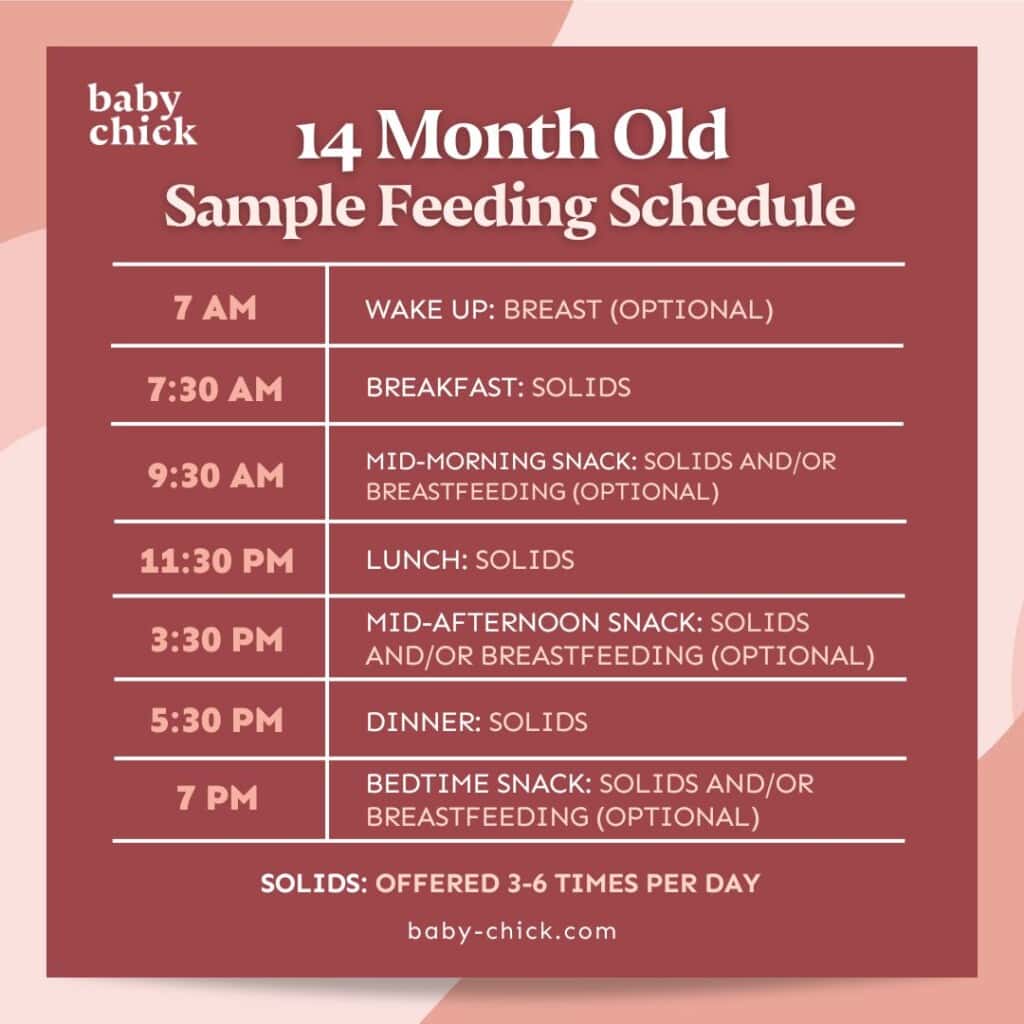
Sample breastfeeding schedule for a 14-month-old
A schedule can help, but it should remain flexible. The following is an example, not a required plan.
| Time | Example |
|---|---|
| 7:00 a.m. | Breastfeed after waking |
| 8:00 a.m. | Breakfast and water |
| 10:00 a.m. | Snack |
| 11:30 a.m. | Lunch |
| 1:00 p.m. | Breastfeed before nap |
| 3:00 p.m. | Snack and water |
| 5:30 p.m. | Dinner |
| 7:00 p.m. | Breastfeed before bed |
| Overnight | Breastfeed if your toddler wakes and you choose to continue |
Some children nurse before breakfast instead of after it. Others breastfeed at child care pickup, before a nap, or several times overnight.
A working parent may breastfeed in the morning and evening and pump or offer expressed milk during the day. A stay-at-home parent may nurse more often. Neither pattern is automatically better.
Example of a flexible day
A toddler might breastfeed at 7 a.m., eat breakfast, have a snack, eat lunch, nurse before a nap, eat an afternoon snack, have dinner, and nurse before bed.
Another toddler might nurse briefly after waking, skip the midday feed, and nurse twice overnight. If that child eats well and grows normally, the lower daytime frequency may be fine.
Think of the schedule as a framework, not a test your child must pass.

Is it normal for a 14-month-old to breastfeed at night?
Yes. Night nursing can still be normal at 14 months. Some toddlers wake because they are hungry, while others wake from habit, teething, illness, separation anxiety, or a need for comfort.
Continuing night feeds is a personal choice. You do not have to night-wean simply because your child turned 1. You can also reduce night feeds if they are exhausting, painful, or interfering with family sleep.
If you want to reduce night breastfeeding, make changes slowly:
- Choose one night feed to change first.
- Offer cuddling, rocking, a song, or water in a cup when appropriate.
- Shorten the nursing time by a minute or two every few nights.
- Ask another caregiver to comfort your toddler when possible.
- Keep the response calm and consistent.
- Pause the plan if your child is sick or going through a major change.
A 14-month-old should not be given a bottle in bed. Milk or formula left around the teeth for long periods can raise the risk of tooth decay. If your child nurses at night, clean the teeth twice daily with a small, soft toothbrush and fluoride toothpaste.
The American Academy of Pediatric Dentistry discusses the relationship between breastfeeding patterns and early childhood caries. Frequent or prolonged nighttime feeding after teeth erupt may increase risk, especially when oral hygiene is poor.

How breastfeeding frequency may change at 14 months
Breastfeeding often becomes less predictable during the second year. Your toddler may nurse more during some weeks and less during others.
Common reasons for increased nursing include:
- Teething
- A cold or stomach illness
- Travel
- A change in child care
- Separation from a parent
- A growth spurt
- Poor appetite
- Tiredness or overstimulation
Temporary increases are usually not a problem. During illness, breast milk can provide fluid and comfort when solid food intake drops.
You may notice less breastfeeding when your toddler:
- Eats more filling meals
- Becomes busy with play
- Drinks more water from a cup
- Sleeps longer
- Spends more time away from you
- Naturally loses interest in nursing
A gradual drop in feeds does not always mean your milk supply has suddenly failed. As children eat more food and nurse less, milk production commonly adjusts.
When frequent nursing may need attention
Frequent breastfeeding is worth discussing with a health professional if your toddler:
- Rarely eats solid food
- Has poor weight gain or weight loss
- Seems weak, pale, unusually tired, or less alert
- Has very few wet diapers
- Vomits often
- Has ongoing diarrhea
- Has difficulty chewing or swallowing
- Drinks breast milk almost constantly and cannot tolerate separation
- Has tooth pain, visible decay, or white or brown spots on the teeth
A pediatrician can assess growth and health. A lactation consultant can help with feeding patterns, weaning, pain, or milk supply. A registered dietitian can help when food intake, allergies, anemia, or growth is a concern.
Do not give an iron supplement unless your child’s clinician recommends it. Iron needs vary by diet, health, and blood test results.

Can a 14-month-old breastfeed too much?
A toddler can breastfeed so often that meals become difficult, but there is no universal number that counts as “too much.”
The key question is whether breastfeeding supports or disrupts nutrition, sleep, oral health, and family well-being. If your toddler eats a range of foods, grows as expected, and you are comfortable with the routine, frequent nursing may be fine.
Consider adjusting the routine if breastfeeding:
- Replaces most meals and snacks
- Makes it hard for your child to eat iron-rich foods
- Causes significant nipple pain
- Keeps you from sleeping or functioning
- Leads to distress when a feed is delayed
- Contributes to dental problems
You can set gentle limits without stopping completely. For example, you might offer nursing at home but not during every store trip, or keep breastfeeding before sleep while ending daytime comfort feeds.
Use a clear phrase such as, “Milk after lunch,” and offer a hug, water, or a snack in the meantime. Toddlers may protest at first. Consistent, calm limits usually work better than sudden changes.
Drinks and foods to limit after 12 months
Breast milk can remain part of the diet, but certain drinks and foods can crowd out meals or add choking and dental risks.
Cow’s milk
Children from 12 through 24 months may drink whole cow’s milk if it fits their diet and health needs. The American Academy of Pediatrics advises limiting cow’s milk to about 16 to 24 ounces per day, because large amounts can reduce appetite for iron-rich foods and may contribute to iron deficiency.
A breastfed toddler does not necessarily need cow’s milk if they receive enough calcium and vitamin D from other foods or a clinician-recommended supplement. Ask the pediatrician what fits your child’s diet.
Juice and sweet drinks
The AAP recommends avoiding juice before age 1 and limiting it after that. Whole fruit is a better choice because it provides fiber and takes longer to eat.
Avoid soda, sports drinks, sweet tea, flavored milk, and other sugary drinks. Offer water between meals and breastfeeding sessions.
Choking hazards
Avoid or modify foods that can block a toddler’s airway. Examples include whole grapes, whole nuts, popcorn, chunks of hot dog, hard raw vegetables, large pieces of meat, and spoonfuls of nut butter.
Cut food into small, soft pieces and have your toddler sit upright while eating. Stay close during meals.

What are signs that breastfeeding is going well?
Breastfeeding is generally going well when your 14-month-old:
- Has steady growth on their own growth curve
- Eats and drinks a variety of foods over time
- Has regular urine output
- Appears alert and active
- Can separate from you for reasonable periods
- Nurses without ongoing pain or injury to your nipples
- Has no signs of dehydration
- Is meeting expected developmental milestones or receiving care for known delays
Toddlers often eat very little at one meal and much more at another. Look at intake across several days, not one plate.
Milk transfer is also hard to judge by how full your breasts feel or how long a feed lasts. Short feeds can still provide milk, and long feeds may be mostly for comfort.
If you are unsure, bring a record of nursing times, meals, snacks, drinks, wet diapers, and symptoms to your child’s clinician. A short log can reveal whether the issue is frequent nursing, limited solid food, picky eating, illness, or something else.

Frequently asked questions
How many times a day should a 14-month-old breastfeed?
There is no required daily number. Many toddlers breastfeed several times a day, while others nurse once or twice. Follow your child’s cues and consider growth, solid food intake, wet diapers, and your family’s needs.
Should I breastfeed my 14-month-old before bed?
You may breastfeed before bed if it works for you and your child. Brush your toddler’s teeth afterward when possible, especially if your child has teeth and nurses frequently overnight.
Does a 14-month-old still need breast milk?
Breast milk can remain a valuable part of the diet, but it is not the only needed food. A 14-month-old also needs varied solid foods and age-appropriate fluids. The AAP supports breastfeeding through age 2 and beyond when mutually desired.
Can breastfeeding replace a meal for a 14-month-old?
An occasional skipped meal is usually not a concern, especially during teething or illness. If breast milk regularly replaces most meals, speak with your pediatrician because your toddler may need more iron-rich and energy-dense solid foods.
How do I know whether to offer breast milk or a snack?
Offer the breast when your child shows nursing cues or needs comfort. Offer a meal or snack when it is a scheduled eating time or your child seems hungry for food. You can also offer both, especially during illness or periods of low appetite.
When should I wean my 14-month-old?
There is no medical deadline to wean at 14 months. Weaning is a personal decision. You can continue, reduce feeds gradually, or stop based on your child’s needs, your health, and your preferences. Get help if weaning causes severe distress, breast pain, or feeding problems.
Key takeaways
- A 14-month-old may breastfeed once, several times, or more often during illness or teething.
- There is no standard number of daily nursing sessions.
- Continue offering three meals and two or three snacks.
- Include iron-rich foods, water, and safe textures.
- Limit cow’s milk to about 16–24 ounces daily if you offer it.
- Brush teeth twice a day and pay special attention to frequent nighttime feeding.
- Contact a pediatrician for poor growth, dehydration, feeding difficulty, persistent vomiting, or unusual tiredness.
Conclusion
The best breastfeeding schedule for a 14-month-old is one that supports nursing, solid foods, sleep, growth, and your family’s well-being. Breastfeed responsively, offer balanced meals and snacks, and adjust the routine when your child’s needs change.
If you are worried about intake, growth, night waking, or weaning, start by contacting your child’s pediatrician or a lactation professional.