Introduction
Most healthy, full-term newborns need a bottle about every 2 to 3 hours, or 8 to 12 times in 24 hours. Some babies feed more often. Others take smaller amounts and need another bottle sooner. In the United States, your baby’s hunger cues, wet diapers, weight gain, and pediatrician’s advice matter more than a strict clock.
This guide covers both infant formula and expressed breast milk. Feeding needs can change if your baby was born early, has trouble gaining weight, or has a medical condition.

How Often Should a Newborn Take a Bottle?
A newborn will usually take a bottle 8 to 12 times per day. That often means feeding every 2 to 3 hours, including during the night.
Some babies follow a loose pattern. Others feed in clusters, with several feeds close together. Both can be normal if your baby feeds well, has enough wet diapers, and gains weight as expected.
For the first few weeks, offer a bottle when your baby shows early signs of hunger. Do not wait until your baby is crying hard. Crying is a late hunger cue and can make feeding more difficult.
Typical newborn bottle-feeding pattern
| Baby’s age | Usual feeding pattern | Typical amount per feed |
|---|---|---|
| First 1–2 days | About 8–12 feeds in 24 hours | Often 0.5–1 ounce |
| Days 3–7 | About every 2–3 hours | Often 1–2 ounces |
| By the end of the first month | About 6–8 feeds in 24 hours | Often 2–4 ounces |
These are broad ranges, not rules. Some babies take less but feed more often. Others take more at some feeds and less at others.
The American Academy of Pediatrics notes that formula-fed newborns often start with small amounts and gradually increase over the first month. A pediatrician may suggest a different plan for a baby who was premature, small at birth, ill, or slow to gain weight.
Do newborns need to eat during the night?
Usually, yes. Newborns often need night feeds because their stomachs are small and they grow quickly.
Until your baby has regained birth weight and shows steady weight gain, ask your pediatrician how long your baby can sleep between feeds. Many newborns should not routinely go longer than about 3 to 4 hours without eating unless their clinician says it is safe.
Once a healthy baby has regained birth weight and is growing well, the pediatrician may allow a longer sleep stretch at night. Do not wake a sleeping newborn on your own schedule without considering the baby’s age, weight, health, and feeding history.
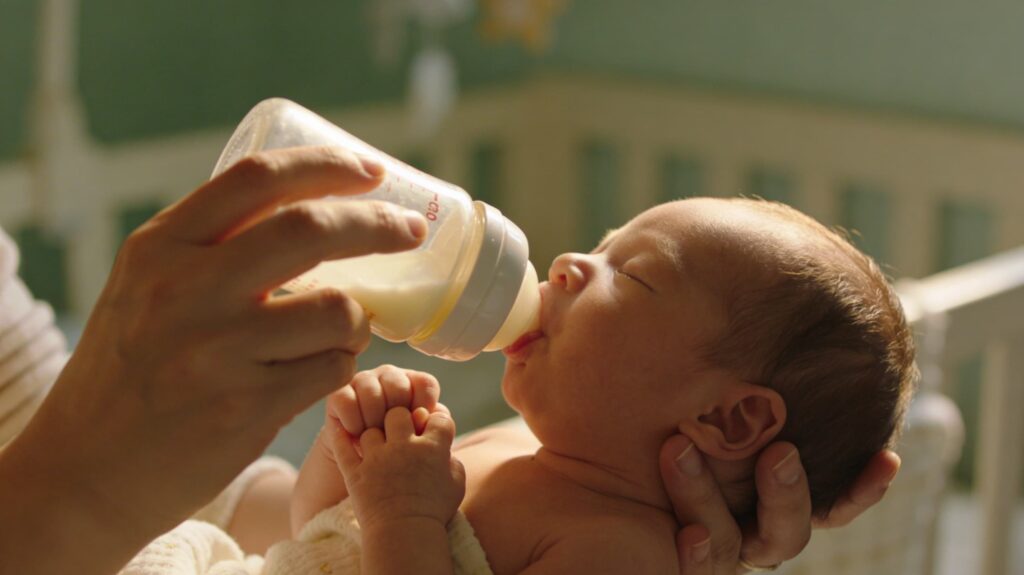
How Much Formula or Breast Milk Does a Newborn Need?
The right amount depends on the baby, the type of milk, and how often the baby feeds. A newborn’s intake can change from one bottle to the next.
Formula amounts
Many newborns take about 1 to 2 ounces of formula per feeding during the first days of life. By the end of the first month, many take about 2 to 4 ounces per feeding.
A common daily estimate for formula is about 2.5 ounces per pound of body weight per day, but this is only a general guide. It should not be used as a strict target.
For example, a 10-pound baby might take about 25 ounces in 24 hours under this estimate. That does not mean the baby must take the same amount at every feed. Your pediatrician may recommend a different volume.
Do not pressure a baby to finish a bottle. A baby may stop before the bottle is empty because they are full.
Expressed breast milk amounts
Bottle-fed breast milk does not follow the same volume pattern as formula. Many breastfed babies take smaller, more frequent feeds.
A newborn may take about 1 to 3 ounces of expressed breast milk per bottle, but the amount can vary. Use your baby’s hunger and fullness cues, rather than trying to match a formula-fed baby’s bottle size.
If you pump milk, record the total amount your baby takes over the day only when your health care provider asks you to do so. A single small bottle does not always mean that your baby is not getting enough.
A simple way to estimate a feeding schedule
Use this process:
- Start with the number of feeds your baby usually takes in 24 hours.
- Offer a small amount based on your baby’s age and prior feeds.
- Watch for hunger and fullness cues.
- Offer more if the baby still shows clear hunger cues.
- Stop when the baby shows signs of being full.
- Track wet diapers and follow-up weights.
The goal is steady growth and adequate hydration, not a perfect number of ounces.

How to Tell When a Newborn Is Hungry
Early hunger cues can help you feed your baby before they become upset.
Look for:
- Stirring or waking
- Turning the head toward touch
- Opening the mouth
- Licking or smacking the lips
- Bringing hands to the mouth
- Sucking on fingers
- Making soft sounds
Crying can mean hunger, but it can also mean tiredness, discomfort, a wet diaper, or the need to be held. Try to check the baby’s other needs before assuming that every cry means the baby needs more milk.
A newborn may also want to suck for comfort. If your baby has just taken a full feed and still sucks, check for other signs before offering more milk.
How to Tell When a Newborn Is Full
Stop the bottle when your baby shows signs of fullness, even if milk remains.
Common fullness cues include:
- Slowing down
- Relaxing the hands
- Turning away from the nipple
- Closing the mouth
- Pushing the nipple out
- Falling asleep in a relaxed way
- Letting milk spill from the mouth
Do not force the nipple back into the baby’s mouth. Pressuring a baby to finish can lead to overfeeding and may make it harder for the baby to respond to hunger and fullness signals.
A slow-flow nipple and paced bottle feeding can help. Hold the bottle more level than upright, give the baby brief pauses, and let the baby control the pace. If the baby coughs, gulps, or leaks milk often, pause and ask the pediatrician whether the nipple flow is too fast.

How to Know Whether Your Newborn Is Getting Enough
Wet diapers, stool patterns, feeding behavior, and weight checks give a better picture than bottle volume alone.
Wet diapers
In the first days, wet diapers often increase each day. A common pattern is:
- Day 1: At least 1 wet diaper
- Day 2: At least 2 wet diapers
- Day 3: At least 3 wet diapers
- Day 4: At least 4 wet diapers
- Day 5 and after: About 5 to 6 or more wet diapers each day
This is a general guide. Your pediatrician may give different instructions based on your baby’s health.
Weight gain
Most babies lose some weight after birth. The baby should then begin to regain weight. Your pediatrician will check this during early visits.
A newborn who feeds often but does not gain weight may need a feeding assessment. The issue could involve milk transfer, nipple flow, formula preparation, reflux, illness, or another problem.
Signs of a good feed
Your baby may be getting enough when they:
- Feed with a steady suck and swallow pattern
- Relax after feeding
- Have regular wet diapers
- Wake for some feeds
- Appear alert during parts of the day
- Gain weight at follow-up checks
No single sign proves that feeding is going well. Look at the whole pattern.

Safe Bottle-Feeding Practices in the United States
Safe preparation and handling matter as much as the feeding schedule.
Prepare formula exactly as directed
Use the water and powder amounts listed on the formula container. Do not add extra powder to help the baby gain weight. Do not dilute formula with extra water.
Too much water can reduce the nutrition in the feed and cause serious health problems. Too much powder can lead to dehydration and place stress on the baby’s kidneys.
For babies younger than 2 months, babies born prematurely, and babies with weakened immune systems, ask the pediatrician about the safest way to prepare powdered formula. Liquid ready-to-feed formula does not need water added.
Follow storage and discard rules
The Centers for Disease Control and Prevention recommends:
- Use prepared formula within 2 hours if it stays at room temperature.
- Once feeding begins, use formula within 1 hour.
- Refrigerate prepared formula that has not been used and use it within 24 hours.
- Throw away formula left in the bottle after a feeding.
Bacteria from the baby’s mouth can grow in leftover milk. Do not save that leftover bottle for later.
For expressed breast milk, follow current CDC storage guidance. Freshly pumped milk can generally stay at room temperature for up to 4 hours and in the refrigerator for up to 4 days under recommended conditions. If the milk has been warmed or partly used, follow the CDC’s specific discard guidance.
Avoid unsafe feeding methods
Never:
- Prop a bottle with a pillow or blanket
- Leave a baby alone with a bottle
- Put a baby to bed with a bottle
- Add cereal, medicine, or water to a bottle unless the clinician tells you to
- Heat milk in a microwave
- Force a baby to finish
- Change formula concentration without medical direction
Hold your baby during the feed. Keep the baby’s head raised slightly, and watch the baby’s breathing and swallowing.

What to Do If Your Newborn Wants to Feed Very Often
Frequent feeding does not always mean that something is wrong. Newborns may cluster-feed during growth spurts, and some babies naturally take small amounts at a time.
First, check whether the baby is showing true hunger cues. Also check the nipple flow, bottle position, burping needs, and whether the baby is becoming tired during the feed.
Call the pediatrician if your baby:
- Wants to feed almost constantly but remains unsatisfied
- Takes a long time to finish each bottle
- Falls asleep before taking enough milk
- Coughs, chokes, or breathes hard during feeds
- Vomits forcefully or repeatedly
- Has fewer wet diapers than expected
- Has blood in the stool
- Is difficult to wake for feeds
- Is not gaining weight
Do not respond to every feeding concern by increasing the bottle size. A baby may cry because of gas, reflux, overstimulation, or fatigue.
What to Do If Your Newborn Sleeps Through a Feeding
During the first weeks, a sleepy baby may need gentle help to wake for feeds. Try changing the diaper, removing a layer of clothing, holding the baby skin-to-skin, or rubbing the back or feet gently.
Do not shake, startle, or force-feed the baby.
If your newborn is hard to wake, misses several feeds, feeds weakly, or has fewer wet diapers, contact the pediatrician promptly. A newborn who is unusually sleepy can become dehydrated or may be ill.
For a baby younger than 3 months, a rectal temperature of 100.4°F (38°C) or higher needs urgent medical advice. Call the pediatrician or seek emergency care based on the instructions you receive.
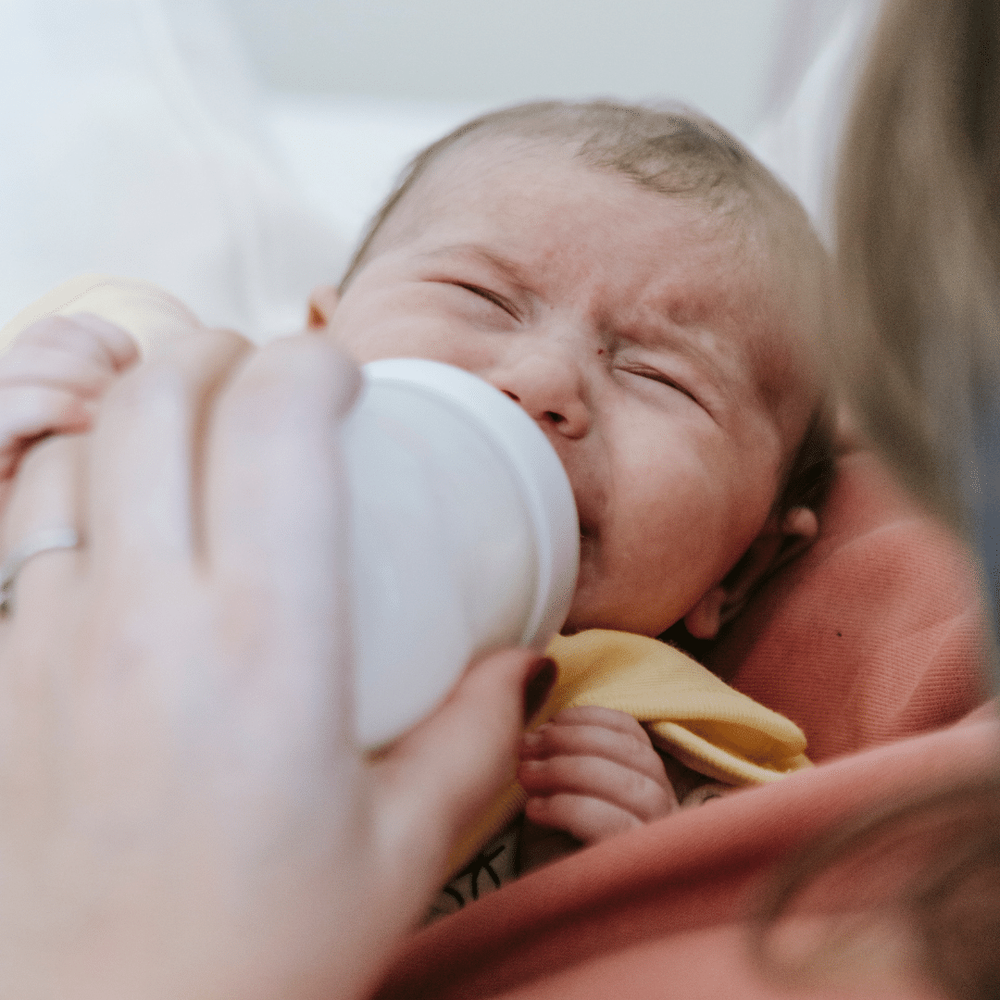
When to Call the Pediatrician About Bottle Feeding
Contact your baby’s health care provider if you are unsure how often to feed or how much to offer. This is especially important after a difficult birth, early delivery, jaundice, low birth weight, or a hospital stay.
Seek prompt medical help if your baby has:
- No urine or far fewer wet diapers than expected
- A very dry mouth
- No tears when crying after the first several weeks
- Repeated vomiting
- Blue, gray, or pale skin
- Trouble breathing during feeds
- Extreme sleepiness or poor response
- A fever of 100.4°F (38°C) or higher if younger than 3 months
- Poor weight gain
If your baby is choking, turning blue, limp, or not breathing normally, call 911.
Key Takeaways
- Most newborns need a bottle about every 2 to 3 hours, or 8 to 12 times in 24 hours.
- Feed by hunger cues, not only by the clock.
- Newborn formula feeds often start at 1 to 2 ounces and rise gradually.
- Expressed breast milk amounts may be smaller and more variable.
- Stop when your baby shows fullness cues.
- Track wet diapers and weight gain.
- Ask the pediatrician before letting a young newborn sleep for long stretches without feeding.
- Follow CDC rules for formula preparation, storage, and leftover milk.
- Get medical help for poor feeding, dehydration signs, breathing problems, unusual sleepiness, or fever.
Frequently Asked Questions
Should I wake my newborn to feed?
Often, yes, during the early weeks. Until your baby regains birth weight and gains steadily, ask the pediatrician how long the baby may sleep between feeds. Some babies need to be woken every 2 to 3 hours, while others may receive a different plan.
Can a newborn drink too much from a bottle?
Yes. Bottle milk can flow faster than milk from the breast, and a baby may keep sucking even after becoming full. Use a slow-flow nipple, try paced feeding, pause often, and stop when the baby shows fullness cues.
Is it normal for a newborn to take different amounts at each feeding?
Yes. Newborn intake often changes from one feed to the next. The overall pattern of wet diapers, alertness, feeding quality, and weight gain matters more than one bottle.
How long should a newborn take to finish a bottle?
Many newborns take about 10 to 20 minutes, but there is no exact time limit for every baby. A feed that regularly takes much longer, or includes coughing, choking, sweating, or breathing trouble, should be discussed with the pediatrician.
Can I give my newborn water between bottles?
No. Newborns should receive breast milk or infant formula unless a health care professional gives different instructions. Water can reduce needed nutrition and may disturb a young baby’s electrolyte balance.
Should I change the bottle nipple if my baby gulps or coughs?
A nipple that flows too fast may cause gulping, coughing, milk leaking, or stress during feeds. Stop the feed, keep the baby upright, and ask the pediatrician about the nipple flow. Do not move to a faster nipple just because the baby is older.
Next Step
For the next 24 hours, record each bottle, the approximate amount, wet diapers, and any feeding problems. Bring that record to your baby’s pediatrician if you have concerns. The best feeding schedule is the one that supports safe feeding, adequate hydration, and steady growth for your individual newborn.