
Introduction
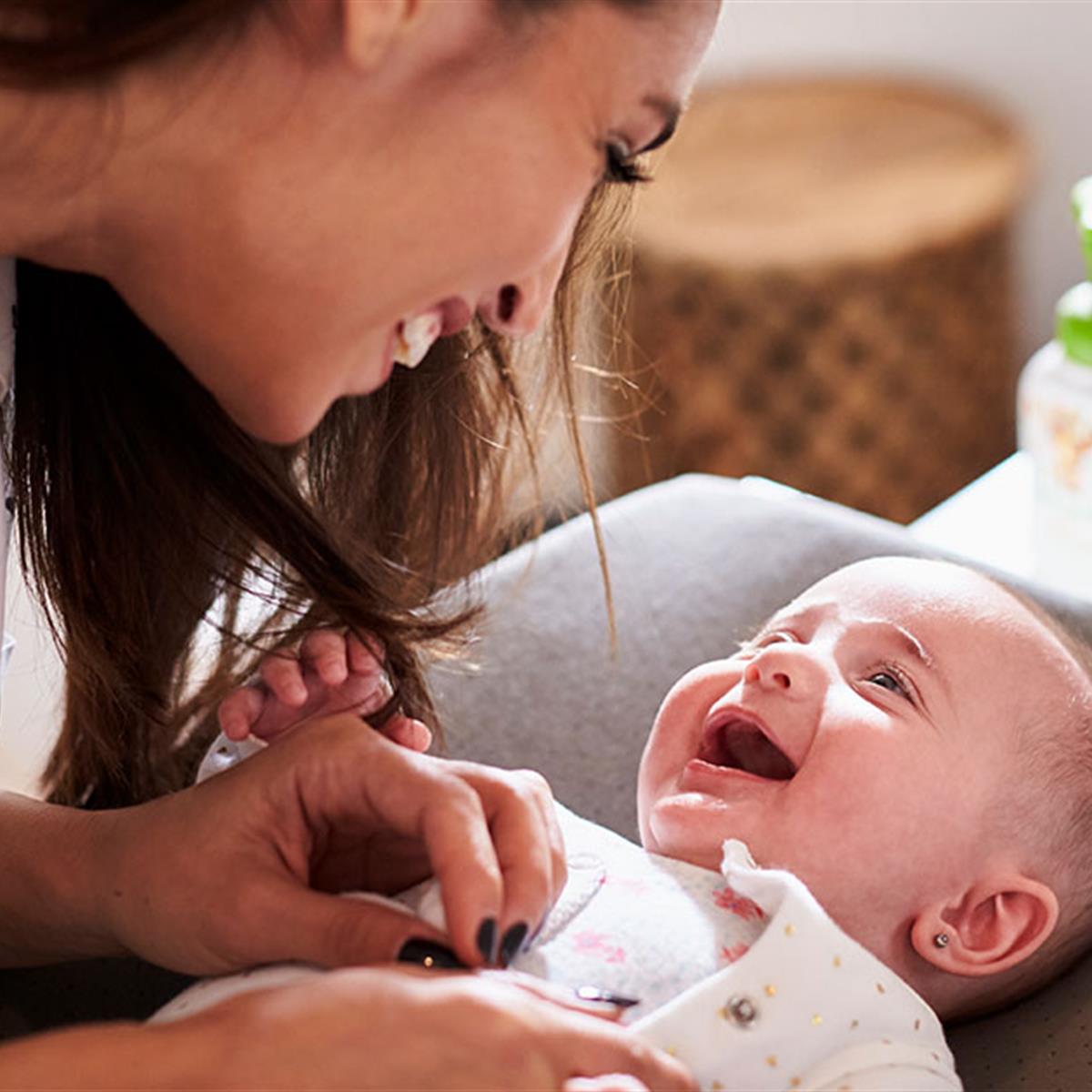
Most babies smile socially between 6 and 8 weeks of age. Some smile a little earlier, while others take more time. By about 2 months, many babies smile when a parent talks to them, looks at them, or smiles at them.
A social smile is different from a random smile during sleep. It is a response to a person, voice, face, or warm interaction. This new smile is an early sign that your baby is noticing people and beginning to take part in simple back-and-forth communication.
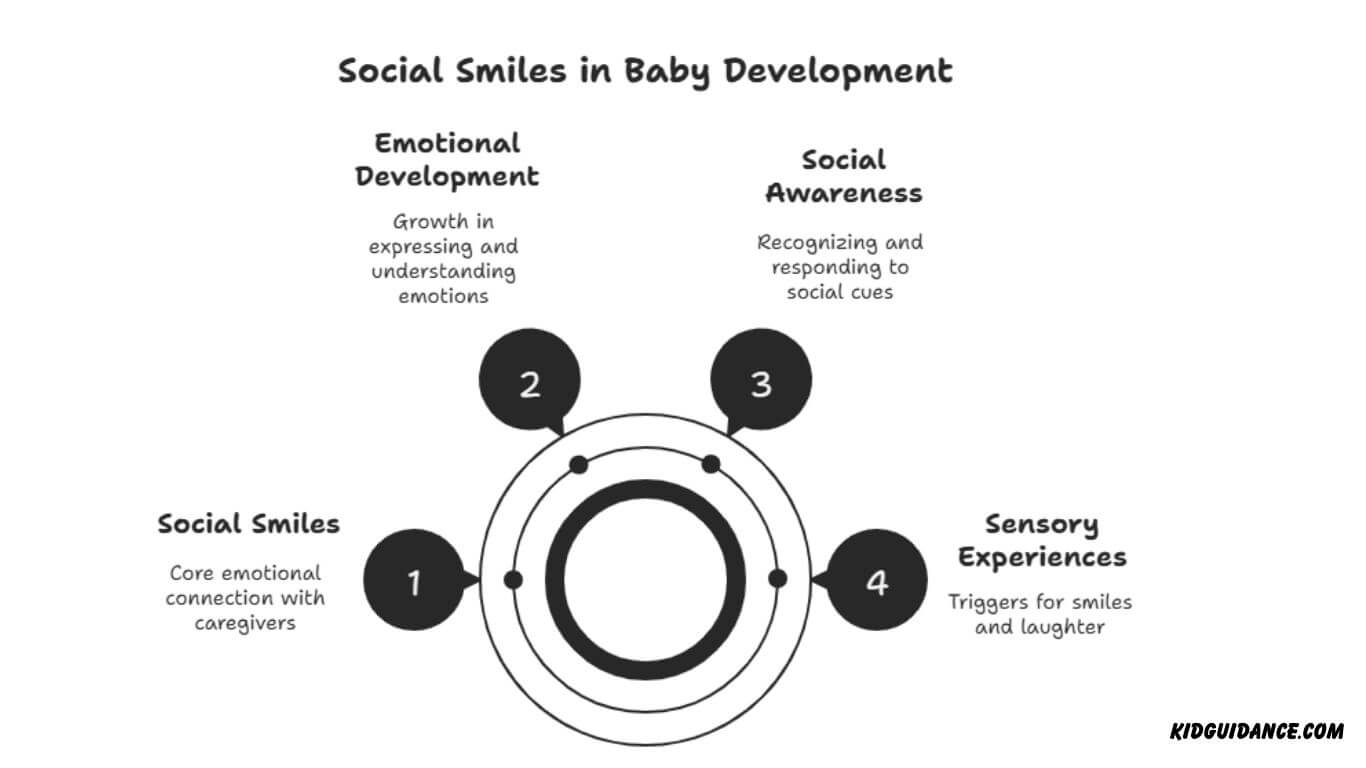
What Is a Social Smile?
A social smile is a smile that happens in response to another person. Your baby may smile when you:
- Look into their eyes
- Talk in a gentle voice
- Smile at them
- Pick them up
- Sing or make a soft sound
- Play during a calm, alert time


Newborns can smile from birth. These early smiles often happen during sleep, after feeding, or when your baby feels relaxed. They are often called reflex smiles. They do not yet show that your baby is responding to you.
A social smile is more purposeful. Your baby may look at your face, pause, and then smile. The smile may last only a second at first. That still counts.
Social smile vs. reflex smile
| Type of smile | When it often appears | What it may mean |
|---|---|---|
| Reflex smile | From birth to about 6 weeks | A normal body response during sleep or calm states |
| Social smile | Often around 6 to 8 weeks | A response to a person, face, voice, or interaction |
| Laugh or chuckle | Often around 4 months | A later social and emotional skill |
These age ranges are guides, not strict deadlines. Babies develop at different rates.
When Do Babies Start Smiling at You?
Most babies begin smiling at people around 6 to 8 weeks, or close to 2 months. The Centers for Disease Control and Prevention lists “smiles when you talk to or smile at her” as a developmental milestone for many babies by 2 months. You can review the milestone list on the CDC’s 2-month developmental milestones page.
At first, your baby may smile only once or twice a day. The smile may come when your baby is fed, rested, and calm. Over the next few weeks, smiles often become easier to notice and happen more often.
Your baby may not smile every time you speak. Babies can look away, yawn, or fuss when they need a break. A lack of response during one tired moment does not mean there is a problem.
A simple age guide
- Birth to 6 weeks: Smiles may happen during sleep or after feeding.
- 6 to 8 weeks: Many babies begin to smile in response to faces and voices.
- 2 to 3 months: Smiles often become more clear and frequent.
- Around 3 to 4 months: Many babies add chuckles, squeals, and more active social play.
Some babies smile at 5 weeks. Others may not show a clear social smile until closer to 10 or 12 weeks. The full pattern matters more than one exact day.
How to encourage Your Baby’s Social Smile
You do not need special toys or lessons. Your face and voice are the best tools. Try these steps when your baby is awake and calm:
- Hold your baby close, about 8 to 12 inches from your face.
- Make eye contact without forcing it.
- Smile and speak in a soft, slow voice.
- Pause for a few seconds.
- Watch for a look, small movement, sound, or smile.
- Respond with another smile or gentle word.
This pause gives your baby time to respond. Early communication can feel slow, like a quiet game of catch. You offer a smile, your baby watches, and then your baby may send a small signal back.


Choose the right time
Your baby is more likely to engage when they are:
- Fed
- Awake
- Calm
- Comfortable
- Not too warm or cold
Try after a nap or diaper change. Avoid practicing when your baby is hungry, overtired, or upset.
Follow your baby’s cues
A baby may need a break if they:
- Turn their head away
- Stiffen their body
- Yawn
- Frown
- Fuss
- Close their eyes
Stop and try again later. Social play should feel pleasant, not like a test.
Why Your Baby May Not Smile Yet
A baby may not smile socially at 6 weeks for many normal reasons. Development does not follow a perfect calendar.
Common reasons include:
- Your baby is still very young.
- Your baby was born early.
- Your baby is tired or hungry.
- Your baby has a calm or serious temperament.
- Your baby needs more time to focus on faces.
- The room is too bright or noisy.
- Your baby is not feeling well.
Newborn vision also develops over time. Young babies usually see best at close range. A close face, soft voice, and calm room may work better than a busy setting.
Corrected age for premature babies
If your baby was born before 37 weeks of pregnancy, ask the pediatrician how to track milestones. Health professionals may use corrected age during the first two years.
To estimate corrected age:
Chronological age − weeks born early = corrected age
For example, a baby who is 10 weeks old but was born 6 weeks early has a corrected age of about 4 weeks. This is a simple estimate, not a diagnosis. Your baby’s pediatrician can explain how it applies to your child.
The American Academy of Pediatrics offers guidance on tracking development in babies born early through HealthyChildren.org.
When Should You Call the Pediatrician?
Talk with your baby’s pediatrician if your baby has no social smile by about 3 months, especially if your baby also does not look at faces, respond to voices, or show other forms of engagement.
Call sooner if your baby:
- Rarely looks at faces
- Does not seem to react to loud sounds
- Does not move both sides of the body in a similar way
- Seems unusually floppy or stiff
- Loses a skill they already had
- Has trouble feeding or gaining weight
- Seems sick, very sleepy, or difficult to wake


These signs do not prove that something is wrong. They show that a checkup may help. A pediatrician can review hearing, vision, feeding, muscle tone, medical history, and development.
The CDC advises parents to act early when a child is not meeting milestones, loses skills, or causes concern. You can use the CDC’s Learn the Signs. Act Early. resources and bring your questions to the child’s doctor.
Do not compare your baby with a cousin, friend’s baby, or social media post. Online age charts often leave out corrected age, health history, and normal variation.
What Other Milestones May Appear Around 2 Months?
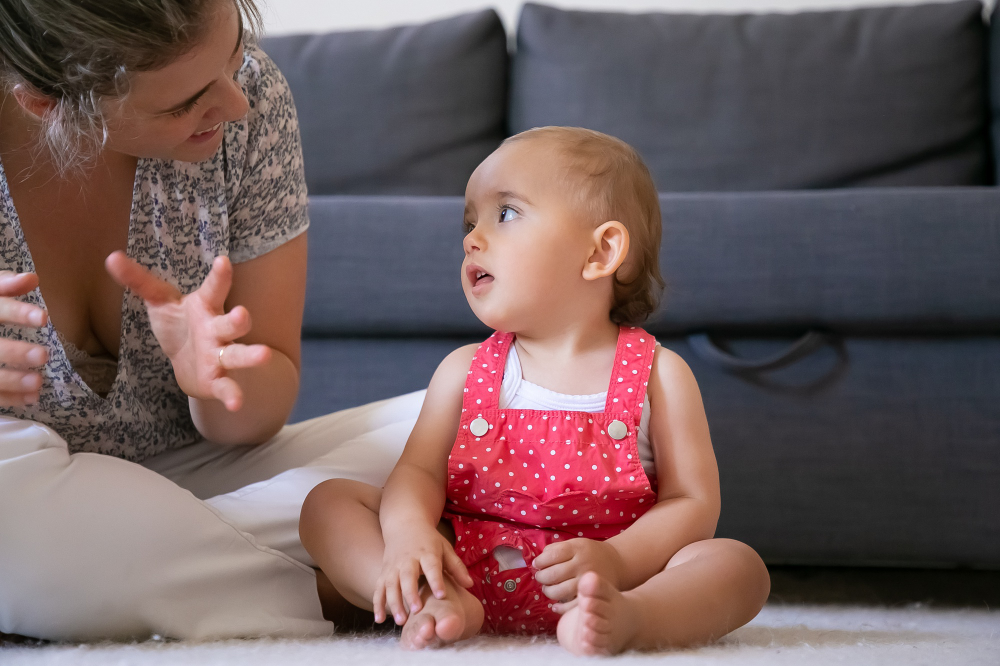
A social smile is one part of early development. Around 2 months, many babies also begin to:
- Calm when spoken to or picked up
- Look at a parent’s face
- Seem happy to see a caregiver
- Make sounds other than crying
- React to loud sounds
- Watch a person move
- Hold their head up briefly during tummy time
Your baby does not need to show every skill on the same day. Developmental milestones describe what many children can do by a certain age. They are not a test that your baby must pass perfectly.
The most useful approach is to watch the overall pattern. Is your baby becoming more alert? Do they respond to your voice? Are they gaining new skills over time? Share both progress and concerns at well-child visits.
Common Questions About Baby Smiles
Do newborns smile because they are happy?
Newborn smiles are often reflex smiles. They can happen during sleep, after feeding, or when your baby feels comfortable. A smile that responds to your face or voice is more likely to be a social smile.
Can a baby smile socially at 4 weeks?
Yes, some babies show an early social smile at 4 weeks. Others need several more weeks. A smile at 4 weeks is possible, but not smiling yet at that age is also usually normal.
Is it normal for a 2-month-old not to smile?
Some 2-month-old babies are still developing this skill. Check whether your baby looks at faces, responds to voices, and shows other signs of engagement. If your baby has no social smile by about 3 months, or you have other concerns, contact the pediatrician.
Do babies with autism smile socially?
A social smile alone cannot diagnose or rule out autism. Autism screening looks at many patterns over time, including social attention, communication, play, and behavior. A pediatrician should assess any developmental concern.
When do babies laugh?
Many babies begin to chuckle around 4 months. Some laugh earlier or later. Smiling usually comes before clear laughter, but the timing varies.
Key Takeaways
- Most babies smile socially around 6 to 8 weeks.
- A social smile responds to a face, voice, or person.
- Newborn smiles during sleep are often reflex smiles.
- Calm, face-to-face play can encourage early smiles.
- Premature babies may follow corrected age.
- Contact the pediatrician if there is no social smile by about 3 months or if your baby loses skills or shows other concerns.
Conclusion
Most babies begin to smile socially near 2 months. The first smile may be brief and easy to miss, but it marks an important step in early communication.
Talk, smile, sing, and give your baby time to respond. Watch the whole pattern of development rather than one exact milestone. If your baby is not smiling socially by about 3 months or you feel worried sooner, call your pediatrician.


