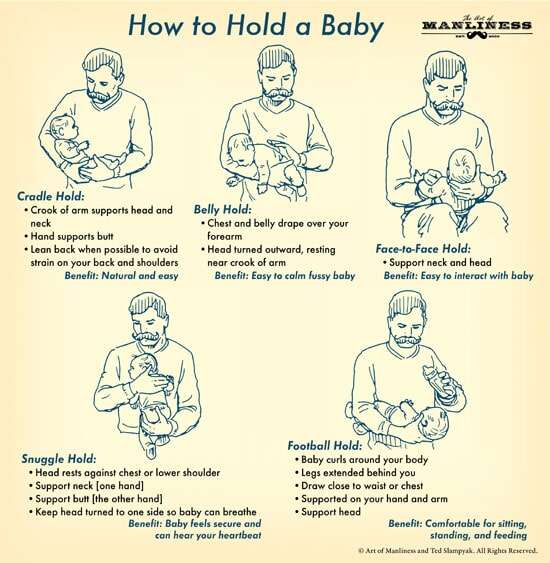
Support the head, tuck the chin, and hold close to your chest for safety.
I have helped hundreds of new parents and caregivers learn how to hold a baby with calm and confidence. This guide explains how to hold a baby safely, step by step, with practical tips, common mistakes, and real-life examples you can use right away.

Why proper holding matters
Holding a baby well keeps them safe. Good hold protects the head, neck, and airway. It also helps the baby feel secure and calm.
When you know how to hold a baby, feeding and soothing are easier. A correct hold supports healthy development. It also lowers the chance of sudden movements that could hurt the infant.
Pediatric guidelines emphasize head and neck support for newborns. Learning the basics early builds confidence. You will worry less and enjoy more of the first months.
Basic holds every caregiver should know
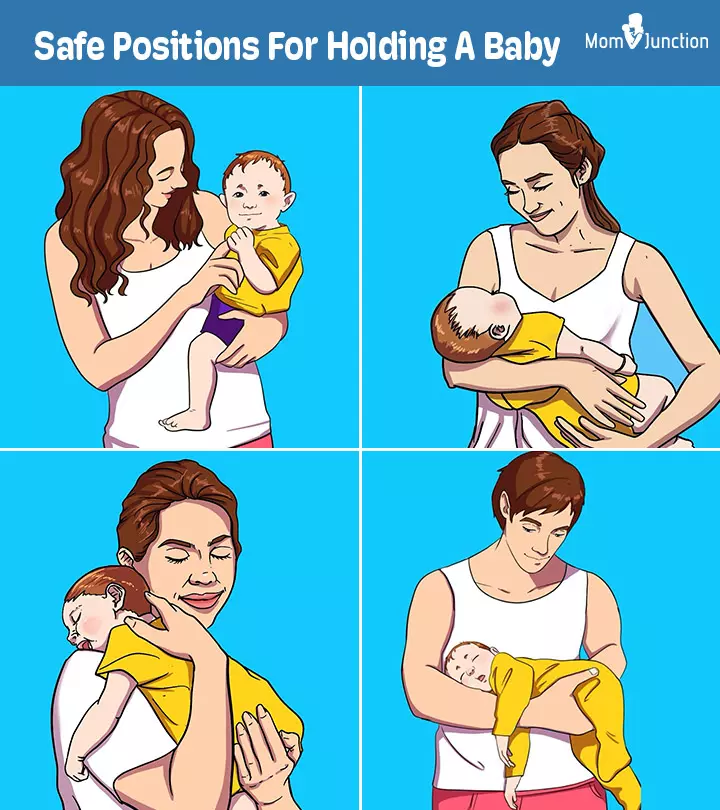
Here are simple holds you will use most often. Practice each one slowly until it feels natural.
- Cradle hold: Support the head with one arm and rest the baby’s body along that arm. Use your other arm to support the bottom or back. This hold is great for feeding and quiet time.
- Shoulder hold: Place the baby upright against your shoulder. Use one hand to support the head and neck. Pat or rub the back gently to help burping.
- Football hold: Tuck the baby along your side with the legs under your arm. Support the head near your hand and the body with your forearm. This hold helps with feeding and gives you a clear view of the baby.
- Hip carry (for older infants): Rest the baby on your hip, with one hand supporting the back and the other on the bottom. This frees one hand and is good for short carries or calming fussy babies.
Each hold helps with different needs. Try them in a safe, seated position first. Rehearse with a doll or pillow if you feel nervous.

Step-by-step: how to hold a baby safely
Follow these steps every time you pick up a baby. Repeat them until they become second nature.
- Wash or sanitize your hands before touching the baby.
- Get close to the baby and bend at the knees, not the waist.
- Slide one hand under the baby’s head and neck. Keep fingers spread for support.
- Place your other hand under the baby’s bottom and back.
- Lift slowly and hold the baby close to your chest.
- Keep the baby’s chin slightly lifted and the airway open.
- If moving, pivot with your feet rather than twisting your spine.
Practice these steps sitting down first. A calm, steady motion helps the baby relax. If the baby squirms, pause and ensure both head and feet are supported.
src="https://cdn.shopify.com/s/files/1/0316/7518/7336/files/how_to_hold_a_baby_3.jpg?v=1690729604"
alt="Holding newborns, preemies, and older infants”
style=”max-width: 100%; height: auto; border: 2px solid black; border-radius: 10px; display: block; margin: 0 auto;”
loading=”lazy”
/>
Holding newborns, preemies, and older infants
Newborns need the most neck and head support. Preemies may have very weak neck muscles and need extra care. Older babies can hold their heads up, but they still need secure support.
- Newborns: Keep head and neck aligned. Use the cradle or shoulder hold for feeding or sleep.
- Preemies: Use extra padding and slow movements. Keep them skin-to-skin when possible to boost bonding and stability.
- Older infants (3–6 months+): You can use more upright holds. Always keep one hand supporting the back or head during transitions.
Adjust your hold as the baby grows. A flexible approach helps you stay safe and comfortable. Watch the baby’s cues to know when to change positions.
Common mistakes and how to avoid them
These mistakes are easy to make, but simple fixes prevent harm.
- Letting the head flop back: Always support the head and neck. If you can see the baby’s face clearly, the head is aligned.
- Holding too far from your body: Keep the baby close to your chest. This lowers strain and reduces jerky movements.
- Holding under the armpits alone: This gives poor head support. Use at least one hand under the head or neck.
- Moving quickly while holding: Slow and steady is safer. Pause when changing positions.
- Using unsafe props: Avoid unsupported surfaces or soft pillows as a substitute for your hand.
If you feel tired or shaky, sit down and place the baby safely in a crib. It is better to pause than to risk a slip.

Tips from experience: real-life lessons
I learned early that gentle confidence helps babies relax. I once held a newborn who cried until I changed from a cradle hold to a shoulder hold. The baby stopped within minutes. Small adjustments often make a big difference.
Trust your body and practice. Use a mirror or record short clips to check your hold. Ask a nurse or experienced caregiver to watch you and give feedback. Little corrections build strong habits.
Keep a calm voice and steady breathing. Babies pick up on tension. When you slow your breath, the baby often calms too. These small habits help you feel more sure when holding any baby.

When to ask for help and safety signs
Ask for help if you feel uncertain or unsafe. New caregivers should request a demonstration from a nurse or parent. If you notice anything off, get help quickly.
Look for these signs that something might be wrong:
- The baby has trouble breathing or noisy breathing.
- The baby is limp and won’t respond to soothing.
- The baby has a fever, unusual color, or vomits repeatedly.
- You feel pain or cannot hold the baby securely.
If any of these occur, place the baby down in a safe space and seek professional help. Being cautious protects both you and the baby.
Frequently Asked Questions of how to hold a baby
What is the safest way to hold a baby?
The safest way is to support the head and neck while keeping the baby close to your chest. Use slow, steady movements and avoid twisting your body.
How do I hold a newborn while burping?
Hold the baby upright against your shoulder with head supported and chin off the chest. Pat or rub the back gently until the burp comes.
Can I hold a baby on my hip?
Yes, for older infants with good head control. Keep one hand on the back and the other on the hip for extra support.
Is it okay to hold a baby on your back?
Carrying a baby on your back is fine for older infants when done securely with a proper carrier. Do not place newborns on your back unsupported.
What do I do if the baby feels floppy?
Support the head and place the baby in a secure hold. If the baby remains limp or unresponsive, call emergency services right away.
How often should I change how I hold a baby?
Change positions every so often to prevent fussiness and support development. Vary holds during feeding, play, and sleep for comfort and growth.
Conclusion
Mastering how to hold a baby keeps infants safe and builds your confidence. Support the head, keep the baby close, and move with calm, steady motions. Practice the basic holds, watch for cues, and ask for help when needed.
Take one small step today: practice the cradle and shoulder holds while seated. With time, the right way to hold a baby will feel natural. Share your questions or experiences below, and consider subscribing for more practical baby-care guides.