A fussy newborn may cry, turn away, latch and unlatch, or feed for only a few minutes. In most cases, the answer is not to force more milk. Start with a calm reset, check for hunger cues, and offer breast milk or infant formula in a slow, supported way.
For babies in the United States, call your pediatrician if feeding problems continue, your baby has fewer wet diapers, or you are worried about weight gain. Seek urgent care for trouble breathing, blue or gray skin, severe weakness, repeated vomiting, or a baby who is difficult to wake.

Why Newborns Get Fussy During Feeds
A fussy newborn may be hungry, tired, too warm, uncomfortable, or overwhelmed. Crying is often a late hunger sign. By then, a baby may be too upset to latch or suck well.
Common reasons include:
- The baby is very hungry and needs calming first.
- Milk is flowing too fast or too slowly.
- The baby needs to burp.
- The diaper is wet or soiled.
- The baby is too tired to feed.
- The baby has nasal congestion.
- The latch is shallow or painful.
- The bottle nipple flow is not a good fit.
- Reflux, illness, or another health issue is affecting feeding.
A newborn may also fuss during a normal growth period. Babies often feed more often during the first weeks of life. This does not always mean that breast milk supply is low or that formula is not satisfying the baby.
The American Academy of Pediatrics recommends watching the whole feeding pattern, including wet diapers, alertness, and growth—not just how long one feed lasts.

Look for Early Hunger Cues
Feed your newborn when you see early hunger cues, rather than waiting for hard crying. Early cues are easier to respond to and may make feeding calmer.
Look for:
- Waking or stirring
- Moving the arms and legs
- Bringing hands to the mouth
- Opening the mouth
- Turning the head toward a touch on the cheek
- Making sucking sounds
- Lip smacking
- Becoming more alert
Crying is a late hunger cue. A crying baby may need a short pause before feeding.
How to calm a crying baby before feeding
- Hold your baby upright against your chest.
- Speak in a quiet voice.
- Reduce bright light and noise.
- Check the diaper and clothing.
- Offer a clean finger for brief sucking if your baby finds it soothing.
- Try feeding again when the baby’s breathing slows.
Do not shake, bounce hard, or handle a baby roughly. If you feel overwhelmed, place your baby on their back in a safe crib and take a short break. Ask another trusted adult for help.

How to Feed a Fussy Breastfed Newborn
If your newborn breastfeeds, calm the baby first and then offer the breast. Skin-to-skin contact can help settle a baby and support feeding behaviors.
Try this sequence:
- Place your baby skin-to-skin while keeping the baby’s airway clear.
- Touch the nipple to the baby’s upper lip.
- Wait for a wide-open mouth.
- Bring the baby to the breast, chin first.
- Check that more than the nipple is in the mouth.
- Watch for slow, deep sucks and regular swallowing.
- Offer the second breast when your baby slows or releases the first.
A good latch should not cause sharp or pinching pain. You may feel pulling or tugging, but ongoing pain can signal a latch problem.
If milk seems to flow too fast
A strong let-down may cause coughing, choking, clicking, pulling off, or crying. You can try:
- Feeding in a reclined position
- Keeping the baby more upright
- Letting the first strong flow spray into a cloth before relatching
- Pausing to burp the baby
- Offering the breast again after the flow slows
Avoid pumping large amounts before every feed unless a lactation professional advises it. Extra pumping can sometimes increase milk production and make a fast flow worse.
If milk seems to flow too slowly
Keep the baby close and use gentle breast compression while the baby sucks. Switch sides when swallowing slows. If your baby remains upset, a lactation consultant can check the latch, milk transfer, and feeding plan.
The U.S. Office on Women’s Health provides breastfeeding support information and links to help. In the United States, you can also contact the National Breastfeeding Helpline at 1-800-994-9662.

How to Bottle-Feed a Fussy Newborn
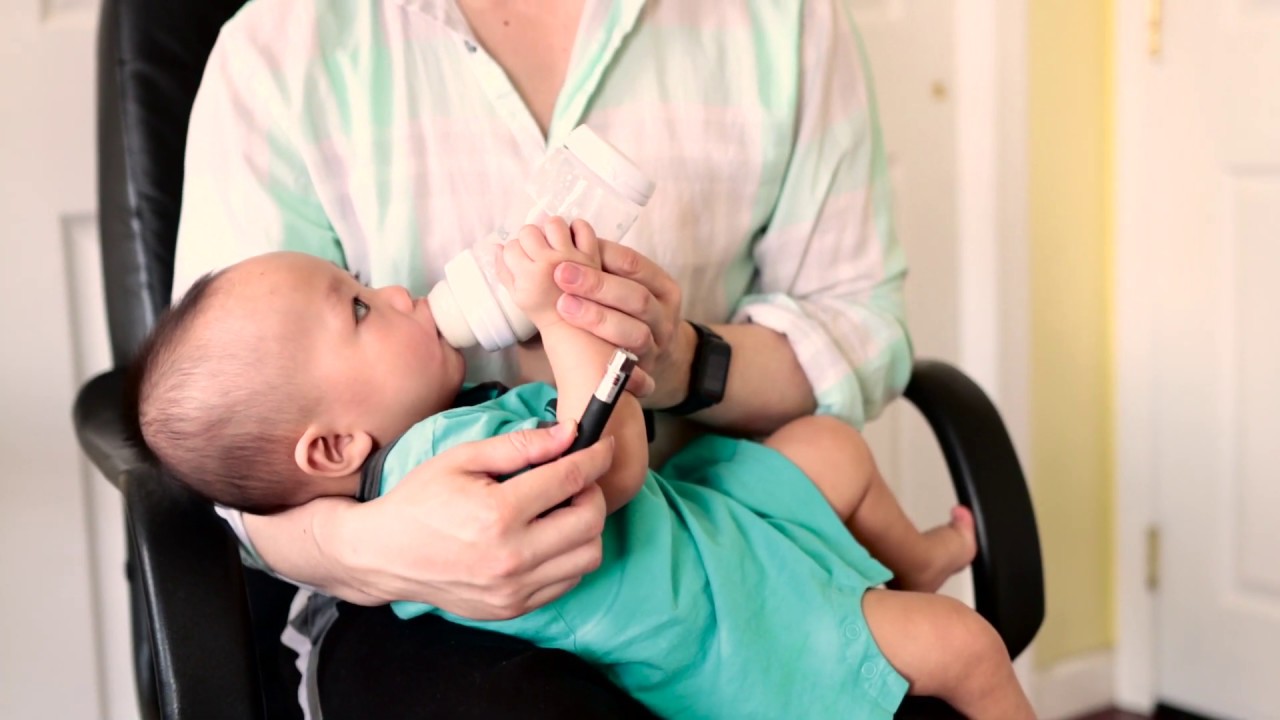
Bottle-feeding works best when your baby is calm, upright, and able to control the pace. This method is often called paced bottle-feeding.
Use paced bottle-feeding
- Hold your baby semi-upright, with the head and neck supported.
- Keep the bottle mostly horizontal.
- Touch the nipple to the baby’s lips.
- Wait for the baby to open and draw in the nipple.
- Let the baby suck for several times, then pause.
- Tip the bottle down or remove it briefly when the baby shows a pause.
- Burp the baby if needed.
- Stop when the baby shows fullness cues.
A horizontal bottle slows the flow compared with holding the bottle straight up. It can help a baby take breaks and may reduce gulping.
Choose the right bottle nipple flow
A nipple that flows too fast may cause:
- Coughing
- Choking
- Milk leaking from the mouth
- Pulling away
- Widened eyes
- Fast, noisy breathing during the feed
A nipple that flows too slowly may cause:
- Long, tiring feeds
- Frustration
- Falling asleep before taking enough milk
- Flattening or collapsing of the nipple
Use the nipple flow recommended by the bottle maker as a starting point, but watch your baby’s behavior. Do not enlarge a nipple hole with a needle or cut it. This can change the flow in an unsafe and unpredictable way.
Never prop a bottle or leave a bottle in a baby’s mouth without an adult holding it. Bottle propping can raise the risk of choking, ear infections, and overfeeding.

How Much and How Often Should a Newborn Eat?
Newborns usually feed often, day and night. The amount varies by age, body size, feeding method, and medical needs.
Breastfed babies may feed about 8 to 12 times in 24 hours during the early weeks. Some feeds will be short, while others will last longer. Bottle-fed babies may take small amounts at frequent intervals, but the correct amount should follow the baby’s cues and the advice of the pediatrician.
Do not force a specific amount if your baby shows signs of fullness. These signs may include:
- Turning the head away
- Closing the mouth
- Relaxing the hands
- Slowing or stopping sucking
- Falling asleep peacefully
- Pushing the bottle away
A baby does not need to finish a bottle. Feeding past fullness may lead to discomfort and can make it harder for the baby to notice natural hunger and fullness cues.
Use diapers and growth as better guides
One fussy feed does not show whether your baby is getting enough. More useful signs include:
- Regular wet diapers
- Soft stools, when expected for your baby
- Periods of alertness
- A strong suck
- Satisfied behavior after some feeds
- Weight gain checked by a health professional
Diaper patterns change during the first days after birth. Ask your pediatrician or hospital care team what to expect for your baby’s age and birth history.
The CDC’s infant feeding guidance recommends discussing feeding concerns and growth with a health care professional. Premature babies and babies with medical conditions may need a different feeding plan.

Check Formula Preparation and Storage
If your baby drinks formula, prepare it exactly as the label states unless your pediatrician gives different instructions. Use the correct water-to-powder ratio. Adding extra water can cause dangerous electrolyte problems, while adding too much powder can place too much strain on a baby’s kidneys.
For powdered formula:
- Wash your hands before preparation.
- Use clean bottles and nipples.
- Measure water first, unless the label says otherwise.
- Add the exact amount of powder.
- Use the scoop that comes with the formula.
- Mix well.
- Do not microwave the bottle.
- Test the temperature on your wrist before feeding.
The FDA explains safe infant formula preparation and storage. Follow the product label for exact storage limits. As a general safety rule, discard formula left in a bottle after a feed because bacteria can grow after contact with saliva.
Ready-to-feed formula does not need to be mixed with water. Do not dilute it unless a pediatrician specifically instructs you to do so.
If your baby has a special formula, allergy concern, poor weight gain, or feeding disorder, ask the pediatrician before changing products.
Match the Problem to the Likely Cause
Use the pattern—not one isolated feed—to decide what to try next.
| What you notice | Possible cause | What to try |
|---|---|---|
| Baby cries before latching | Late hunger cue or too much stimulation | Calm the baby, dim the room, then offer the breast |
| Baby coughs or gulps at the breast | Fast milk flow | Try a reclined position and short pauses |
| Baby pulls away from the bottle | Flow may be too fast, gas, or fullness | Use paced feeding and pause to burp |
| Baby takes a long time to finish a bottle | Flow may be too slow or baby is tired | Check the nipple and ask the pediatrician if feeds remain long |
| Baby arches and cries during feeds | Gas, reflux, pain, or flow trouble | Keep the baby upright and seek advice if it continues |
| Baby falls asleep after a few sucks | Sleepiness, jaundice, illness, or low milk transfer | Gently wake once and seek medical advice if feeds stay weak |
| Baby feeds often but has few wet diapers | Possible low intake or dehydration | Call the pediatrician promptly |
| Baby refuses several feeds | Illness, pain, congestion, or another problem | Call the pediatrician the same day |
These are possible causes, not a diagnosis. A newborn who repeatedly struggles to eat needs a professional assessment.

What Not to Do When a Newborn Is Fussy
Avoid practices that may increase risk or hide a feeding problem.
- Do not force the breast or bottle into your baby’s mouth.
- Do not force your baby to finish a bottle.
- Do not add cereal, juice, or water to a newborn’s bottle.
- Do not use honey for a baby under 12 months.
- Do not switch formula repeatedly without medical guidance.
- Do not use a homemade infant formula.
- Do not microwave breast milk or formula.
- Do not prop a bottle.
- Do not feed a baby who is lying flat.
- Do not let a baby sleep with a bottle.
- Do not add rice cereal to a bottle unless a clinician specifically directs you.
Do not put a sleeping baby on a couch, adult bed, recliner, or padded surface after feeding. Follow the American Academy of Pediatrics safe sleep guidance: place the baby on their back on a firm, flat, separate sleep surface.

When to Call a Pediatrician
Call your baby’s pediatrician promptly if your newborn:
- Has fewer wet diapers than expected
- Feeds poorly over several feeds
- Is too sleepy to wake for feeds
- Has a weak suck
- Repeatedly coughs, chokes, or turns blue during feeds
- Vomits forcefully or repeatedly
- Has blood in the stool or vomit
- Shows signs of dehydration, such as a very dry mouth or unusual sleepiness
- Is not gaining weight as expected
- Has ongoing feeding pain or a persistent refusal to eat
For babies younger than 3 months, a rectal temperature of 100.4°F (38°C) or higher requires immediate medical advice. The AAP advises contacting a health professional right away rather than waiting to see if the fever goes away.
Call 911 in the United States for trouble breathing, blue or gray skin, severe choking, collapse, or a baby who cannot be awakened.

A Simple Plan for the Next Fussy Feed
Use this short plan:
- Pause and observe. Look for hunger, fullness, gas, tiredness, or illness.
- Calm the baby. Hold the baby close and reduce noise and light.
- Check the setup. Support the head and neck. Keep the baby semi-upright for bottle-feeding.
- Offer milk. Use a deep latch at the breast or paced bottle-feeding.
- Pause when needed. Burp, rest, and let the baby control the pace.
- Stop at fullness cues. Do not pressure the baby to take more.
- Record the pattern. Note feeds, wet diapers, vomiting, coughing, and behavior.
- Call for help if it repeats. A pediatrician, lactation consultant, or feeding specialist can observe a feed and find the cause.
A written record can help the clinician see whether the problem is a single difficult feed or a pattern that affects intake.

FAQs About Feeding a Fussy Newborn
Should I feed my newborn every time they cry?
Not always. Crying can mean hunger, but it can also mean gas, a wet diaper, tiredness, heat, cold, or a need for comfort. Check early hunger cues and try calming the baby before offering milk.
How can I tell whether my baby is hungry or has gas?
A hungry baby may root, open the mouth, bring the hands to the mouth, and become more alert. A baby with gas may squirm, draw up the legs, grimace, or pause during feeding. These signs can overlap, so look at the full pattern and ask your pediatrician if you are unsure.
Should I wake a newborn to feed?
Some newborns need to be awakened for feeds, especially if they were premature, have jaundice, have low blood sugar, or are not gaining weight. Follow the feeding plan from your baby’s pediatrician. Do not create a wake-up schedule based only on general advice.
Is spit-up during a feed normal?
Small amounts of spit-up can be common. Keep the baby upright for a short time after feeding and avoid pressure on the belly. Call the pediatrician for green vomit, blood, repeated forceful vomiting, breathing trouble, poor feeding, or poor weight gain.
When should I see a lactation consultant or feeding specialist?
Ask for help when breastfeeding hurts, your baby cannot maintain a latch, feeds are consistently very long, bottle-feeding is stressful, or your baby coughs and chokes often. In the United States, your pediatrician or hospital can help you find a lactation consultant or pediatric feeding therapist.
Conclusion
The safest way to feed a fussy newborn is to respond early, calm the baby, offer breast milk or properly prepared formula, and let the baby control the pace. Watch wet diapers, alertness, and growth rather than judging one difficult feed.
If your baby repeatedly refuses feeds, seems unusually sleepy, has breathing trouble, or shows signs of dehydration, contact a U.S. pediatrician promptly. A feeding professional can often identify a latch, flow, positioning, or medical issue before it becomes a larger problem.