
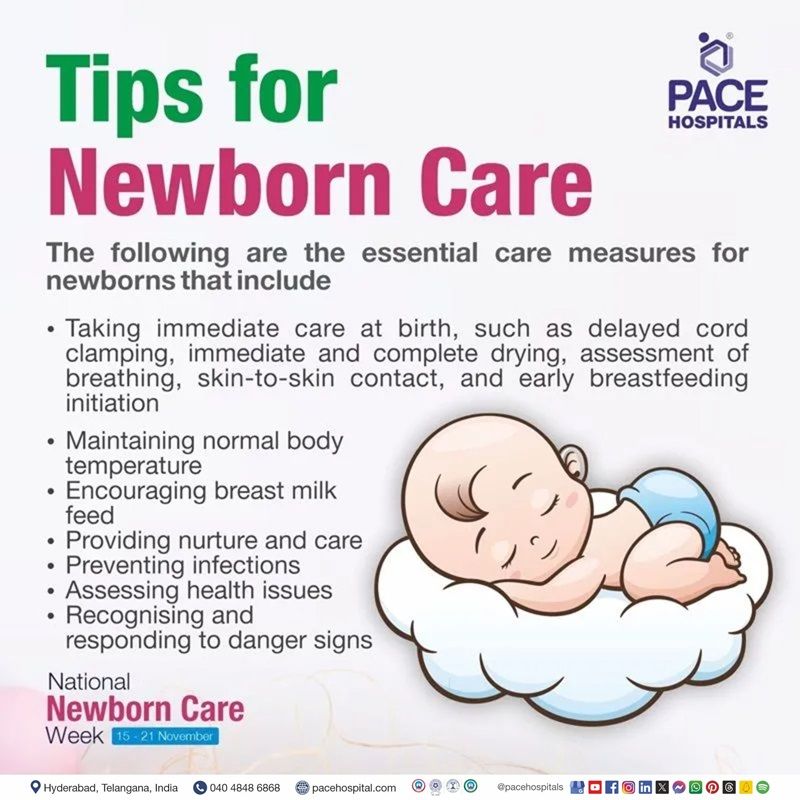
Caring for a newborn at home means meeting a few basic needs again and again: feed the baby, keep the baby warm and dry, provide safe sleep, watch for signs of illness, and get help when something seems wrong. In the United States, your baby’s pediatrician is your main guide, especially during the first checkup and the first few weeks.
Newborn care can feel like a lot at first. You do not need to do everything perfectly. A calm routine, safe habits, and close attention to your baby’s cues will take you far.

Prepare Your Home Before Bringing Baby Home
A newborn needs a clean, safe place to sleep, a way to feed, diapers, basic clothing, and a plan for medical care. You do not need every baby product sold in stores.
Before coming home, set up:
- A firm, flat sleep surface, such as a crib, bassinet, or bedside sleeper
- A fitted sheet made for that sleep surface
- Newborn diapers and wipes
- Clean cotton clothes that fit without covering the face
- A digital thermometer
- Burp cloths
- Feeding supplies that match your plan
- A properly installed rear-facing car seat
- The name and phone number of the baby’s pediatrician
- Emergency numbers, including 911
The sleep space should be ready before the baby arrives. Keep it free of pillows, blankets, bumper pads, stuffed toys, and positioners. The American Academy of Pediatrics recommends that babies sleep in the same room as a parent, but on a separate sleep surface.
Wash your hands before touching the baby, preparing formula, feeding, or caring for the umbilical cord. Ask visitors to wash their hands too. People who are sick should wait until they recover before visiting.
Know what a newborn normally does
Many newborns:
- Sleep about 14 to 17 hours over a full day, but in short periods
- Wake often to feed
- Have irregular breathing for short periods
- Sneeze, hiccup, spit up small amounts, or cry often
- Lose some weight in the first days after birth
- Have several wet and dirty diapers each day as feeding becomes established
Your baby’s doctor will track weight, feeding, jaundice, and development. Keep every newborn visit, even when your baby seems well.

Feed Your Newborn Often and Watch for Feeding Problems
Most newborns need to feed often, both day and night. Breastfed babies commonly feed 8 to 12 times in 24 hours. Formula-fed babies also need regular feeds, but the amount and timing can vary by age, weight, and medical advice.
Feed your baby when you see early hunger cues, such as:
- Moving the hands toward the mouth
- Opening the mouth
- Turning the head toward a touch on the cheek
- Making sucking sounds
- Becoming more alert
Crying is a late hunger cue. A crying baby may be harder to feed, so try to respond to earlier signs when you can.
breastfeeding basics
A deep latch can help your baby get milk and reduce nipple pain. The baby’s mouth should cover much of the darker area around the nipple, not just the nipple itself. You should hear or see regular swallowing after sucking begins.
Ask for help if breastfeeding hurts throughout a feed, your nipples bleed, your baby cannot stay latched, or your baby remains very sleepy during feeds. In the US, a lactation consultant, the baby’s pediatrician, or a hospital feeding service can help.
Newborns who receive breast milk may need vitamin D. The Centers for Disease Control and Prevention and the AAP commonly recommend 400 international units of vitamin D each day for breastfed or partly breastfed infants. Ask your child’s clinician which product and dose are right for your baby.
Formula-feeding basics
Use commercial infant formula made for babies. Follow the label exactly. Some formulas use a scoop, while others are ready to feed. Do not add extra water, cereal, or other ingredients.
Unsafe mixing can cause serious problems. Too much water may not provide enough nutrition and can disturb the baby’s salt balance. Too little water can strain the baby’s kidneys and cause dehydration.
Wash and prepare bottles as directed. Hold your baby during the feed. Do not prop a bottle or leave it in the baby’s mouth while the baby lies alone. Throw away leftover formula from a feed rather than saving it for later.
Burping and spit-up
Hold your baby upright against your chest or support the head while sitting the baby on your lap. Gently pat or rub the back. Some babies burp quickly; others do not need to burp every time.
Small spit-ups are common. Call the pediatrician if vomiting is forceful, green, bloody, frequent, or linked with poor feeding, a swollen belly, fever, or unusual sleepiness.

Follow Safe Sleep Rules Every Time
The safest sleep position for a newborn is on the back, for every nap and every night. Place the baby on a firm, flat, non-inclined surface made for infant sleep.
Use this safe sleep setup:
- Put the baby on the back.
- Use a crib, bassinet, or bedside sleeper that meets current US safety standards.
- Use only a fitted sheet.
- Keep the sleep area in your room, near your bed.
- Keep the baby’s face and head uncovered.
- Move the baby from a car seat, swing, or stroller to a firm sleep surface when practical.
Do not place a newborn to sleep on a couch, adult bed, recliner, waterbed, or soft mattress. Bed sharing is especially risky when an adult is very tired, uses alcohol or drugs, smokes, or takes medicine that causes sleepiness.
Swaddling may calm some newborns, but it does not lower the need for safe sleep. If you swaddle:
- Place the baby on the back.
- Use a light, snug wrap around the chest.
- Leave enough room for the hips and legs to move.
- Stop swaddling when the baby shows signs of rolling.
- Never use a weighted swaddle or weighted blanket.
A sleep sack that allows free arm movement can be used after swaddling ends. Avoid overheating. Dress the baby in about one more layer than a comfortable adult would wear in the same room, unless the clinician gives different advice.
Keep the Umbilical Cord and Skin Clean
The umbilical cord stump usually dries and falls off on its own. Keep it clean and dry unless your baby’s clinician gives other instructions.
To care for the cord:
- Wash your hands before touching it.
- Fold the diaper below the stump.
- Let air reach the area.
- Use a clean, damp cloth if urine or stool gets on it.
- Do not pull the stump off.
- Do not apply alcohol, powders, oils, or home remedies unless instructed.
Call the pediatrician if the skin around the cord becomes red, swollen, warm, or tender, or if you see pus, a bad smell, or continued bleeding.
Give sponge baths at first
Give sponge baths until the cord falls off and the area heals. Newborns do not need a bath every day. Two or three baths each week may be enough, with daily cleaning of the diaper area, face, neck folds, and hands.
Make bath time safer:
- Gather everything before starting.
- Keep one hand on the baby at all times.
- Use warm, not hot, water.
- Never leave the baby alone in water, even for a few seconds.
- Test the water with your wrist or elbow.
- Keep water heaters set to reduce burn risk.
- Dry the skin folds well.
A baby can drown in only a small amount of water. If you must leave, take the baby with you.
Change diapers safely
Clean the diaper area from front to back. For a baby with a penis, do not force back the foreskin. For any baby, pat the skin dry and use a barrier cream if redness begins.
Seek medical advice for a rash that spreads, blisters, bleeds, causes open sores, or does not improve with basic care. Frequent loose stools can be normal in breastfed babies, but sudden changes with poor feeding or fewer wet diapers need medical advice.

Check Your Newborn for Signs of Illness
Newborns can become ill quickly. A baby may not show the same signs as an older child, so trust a strong concern and call the pediatrician.
Fever
For a baby younger than 3 months, a rectal temperature of 100.4°F (38°C) or higher needs immediate medical advice. Call the pediatrician or the clinician’s urgent line right away. Do not give fever medicine unless a health professional tells you to do so.
Ask the clinician how to take your baby’s temperature. A digital thermometer is useful at home. Forehead, ear, armpit, and rectal readings do not have the same accuracy, especially in very young babies.
Breathing problems
Call 911 for severe trouble breathing, blue or gray lips or skin, a baby who cannot wake, or a baby who stops breathing.
Get urgent medical help if you notice:
- Breathing that stays fast or looks hard
- Ribs pulling in with each breath
- Grunting
- Long pauses with color change
- Flaring nostrils
- A weak cry with poor feeding
Dehydration and poor feeding
Call the pediatrician if your newborn:
- Refuses several feeds
- Is too sleepy to feed
- Has much fewer wet diapers than expected
- Has a dry mouth
- Has no tears later in infancy
- Vomits repeatedly
- Seems weak or unusually difficult to wake
Wet diapers increase as feeding improves. Your clinician can tell you what diaper count is expected for your baby’s age and feeding pattern. A weight check is often more useful than counting diapers alone.
Jaundice
Jaundice makes the skin or whites of the eyes look yellow. Mild jaundice is common, but it still needs monitoring. Call the pediatrician promptly if yellow color appears during the first day, becomes deeper, spreads to the legs, or occurs with poor feeding or unusual sleepiness.
Do not place a baby in direct sunlight as a treatment. A clinician may need to measure bilirubin and decide whether treatment is needed.

Handle, Soothe, and Move Your Baby Safely
Always support a newborn’s head and neck. A newborn has limited muscle control and cannot hold the head steady.
When lifting the baby:
- Place one hand under the head and neck.
- Place the other hand under the bottom.
- Lift slowly.
- Keep the baby’s face and airway clear.
Never shake a baby. If crying becomes overwhelming, place the baby on the back in a safe crib, leave the room for a few minutes, and call someone you trust. A baby may cry even after you meet every basic need.
Try calm steps such as:
- Feeding if the baby shows hunger cues
- Checking the diaper
- Holding the baby close
- Burping
- Using a quiet voice
- Rocking gently
- Offering a pacifier if appropriate
- Reducing bright light and noise
Stop any soothing method that makes breathing harder or seems to upset the baby.
Use the car seat correctly
Every ride home from the hospital and every later ride should use a rear-facing car seat installed according to the seat and vehicle manuals. The harness should fit snugly, with the chest clip at armpit level when the seat includes one.
Do not put a bulky coat or blanket under the harness. Place blankets over the secured harness instead. Never leave a baby alone in a parked car.
Protect your baby from smoke and illness
Keep the home and car smoke-free. Smoke exposure raises health risks for infants and increases the risk of sudden infant death.
Ask visitors to wash their hands. Avoid close contact with people who have fever, cough, vomiting, diarrhea, or other signs of infection. Discuss vaccines with your child’s clinician, including vaccines recommended for caregivers and household members.

Support Your Own Recovery and Mental Health
Newborn care works best when parents have support. Sleep in shifts when possible, accept practical help, and keep water and easy food nearby. If you gave birth, follow your own discharge instructions and attend your postpartum visit.
Contact a health professional if you have:
- Heavy bleeding
- Chest pain or trouble breathing
- Severe headache or vision changes
- A fever
- Increasing pain, redness, or drainage from a wound
- One-sided leg swelling or pain
- Thoughts of harming yourself or the baby
Feeling sad, worried, or overwhelmed can happen after birth, but severe or lasting symptoms need care. Postpartum depression and anxiety are medical conditions, not personal failures. In the US, call or text 988 for immediate emotional crisis support. Call 911 for immediate danger.
If you are worried that you might lose control while the baby cries, put the baby safely in the crib and step away. Call a trusted person, the baby’s doctor, or a crisis service.

A Simple Newborn Care Routine
A flexible routine can help you remember the basics:
- Check whether the baby is hungry.
- Feed the baby.
- Burp and hold the baby upright if needed.
- Change the diaper.
- Check the baby’s temperature and behavior if something seems unusual.
- Place the baby on the back in the safe sleep space.
- Record feeds, wet diapers, medicines, or symptoms when your clinician asks you to.
Do not force a strict schedule during the first weeks. Newborn needs change from day to day. The goal is not a perfect routine. The goal is safe care and steady feeding.
Call before waiting when:
- Your baby is under 3 months and has a temperature of 100.4°F (38°C) or higher.
- Your baby has breathing trouble.
- Your baby is blue, gray, unresponsive, or hard to wake.
- Your baby is feeding poorly and has fewer wet diapers.
- Your baby has repeated or green vomit.
- You see signs of a serious infection around the cord.
- Your baby’s behavior changes sharply.
When in doubt, call the pediatrician. If the problem may be life-threatening, call 911 rather than waiting for a callback.

Key Takeaways
- Put your newborn to sleep on the back, on a firm, flat surface.
- Keep blankets, pillows, toys, and other soft items out of the sleep space.
- Feed often and watch for early hunger cues.
- Follow formula instructions exactly.
- Keep the cord clean and dry.
- Use sponge baths until the cord falls off and heals.
- A temperature of 100.4°F (38°C) or higher in a baby younger than 3 months needs immediate medical advice.
- Call 911 for severe breathing problems, blue skin, unresponsiveness, or another life-threatening emergency.
- Ask for help with feeding, recovery, sleep, or mental health.
Frequently Asked Questions
How often should I feed my newborn?
Many newborns feed 8 to 12 times per day, but needs vary. Feed when you see hunger cues. Your pediatrician can give more specific advice based on birth weight, weight gain, feeding method, and health.
Should I wake my newborn to feed?
Some newborns need to be woken for feeds, especially if they are very sleepy, premature, jaundiced, or not gaining weight. Ask your pediatrician when your baby can sleep longer between feeds. Do not make this decision based only on age.
Can my newborn sleep on their side?
No. Place your newborn on the back for every sleep. Babies may later roll on their own, but you should still start each sleep on the back and keep the sleep area clear.
How do I know if my newborn is too cold or too hot?
Feel the baby’s chest or back rather than relying only on hands and feet, which can feel cool normally. Remove a layer if the baby is sweaty, hot on the chest, flushed, or breathing faster than usual. Ask the clinician if you are unsure.
Can I use an over-the-counter medicine for my newborn?
Do not give a newborn medicine, supplement, herbal product, or fever reducer unless the baby’s clinician tells you to use it. Many products are not safe for young infants, and the correct dose depends on the baby’s age and weight.
Trusted US Health Sources
For current guidance, use your baby’s pediatrician and trusted US health agencies:
- American Academy of Pediatrics: HealthyChildren.org
- Centers for Disease Control and Prevention: Infant and Toddler Nutrition
- National Institutes of Health: Safe to Sleep
- MedlinePlus: Newborn Care
- 988 Suicide & Crisis Lifeline
Guidance can change, and your baby may have needs that differ from general advice. Use this guide for basic information, then follow the instructions from your child’s clinician.