
In the United States, baby showers are not just for women. Anyone may host or attend one, including the parents’ partners, friends, relatives, coworkers, and children. Some families still prefer a women-only shower, while others choose a coed, family-friendly, or fully gender-neutral event.
There is no single rule that decides who belongs at a baby shower. The parents’ comfort, guest list, budget, culture, and family traditions matter most.

What Is a Baby Shower?
A baby shower is a gathering held before a baby arrives. Guests usually celebrate the parents, share food, play games, and give useful gifts.
In the U.S., showers may be held for:


- A first baby
- Later children
- Adoptive parents
- Foster parents
- Same-sex couples
- Single parents
- Parents expecting through a surrogate
- Families welcoming twins or more than one child
The word “shower” refers to showering the family with good wishes and support. It does not define the guests’ gender.
Traditional baby showers often included women because pregnancy and infant care were once treated as women’s matters. Family life has changed. Many partners now share child care, feeding, medical visits, and household work. A guest list that includes all close supporters may better reflect the parents’ lives.
Etiquette guidance is also more flexible than it once was. The Emily Post Institute presents baby showers as social events shaped by the hosts and guests, rather than as events with one strict format.

Can Men Attend a Baby Shower?
Yes. Men can attend, host, or help plan a baby shower.
A male partner, father, brother, friend, coworker, or grandparent may be part of the event. Some showers include only a few men, while others invite people of all genders.
The same applies to nonbinary and transgender guests. The host should avoid assuming that a guest’s gender determines whether they belong at the shower.
A man who attends a traditional shower is not breaking an etiquette rule. He may take part in the games, bring a gift, help the parents, or simply enjoy the meal and conversation.
The more useful question is not, “Are men allowed?” It is, “Who would make the parents feel supported?”

What Is a Coed Baby Shower?
A coed baby shower includes guests of more than one gender. The parents may attend together, or one parent may be the main guest of honor.


A coed shower can look like any other shower. It may include:
- A meal or buffet
- Baby-themed games
- Gift opening
- Advice cards
- A diaper raffle
- A short toast
- A casual open-house format
- A backyard gathering
- A virtual event for distant guests
The word “coed” can be useful when describing the guest list, but “all-gender” or “family baby shower” may feel more welcoming to some groups.
A coed shower does not need a sports theme, beer, or activities aimed at men. Those details are optional. The best theme reflects the parents’ interests, not a guess about what each guest will enjoy.
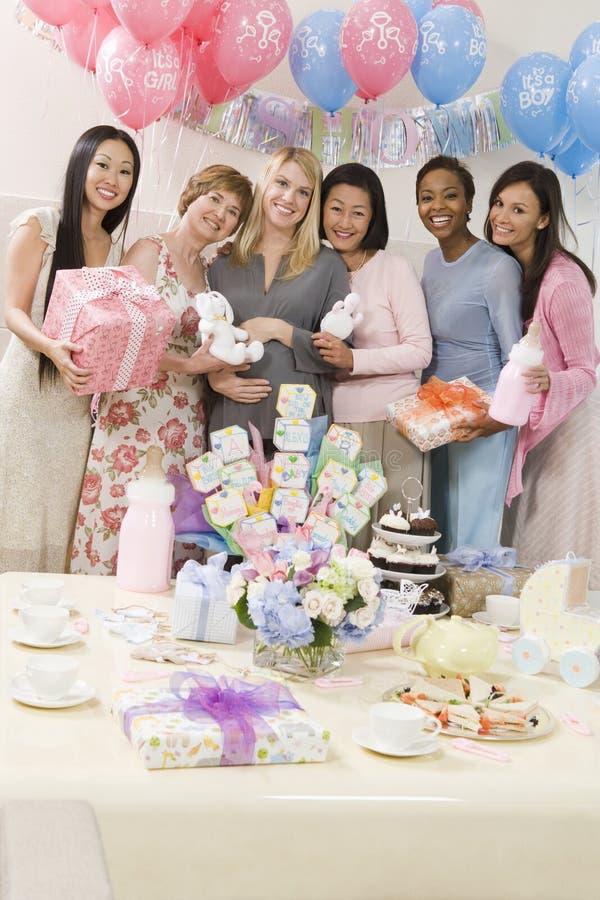
Why Do Some People Still Choose a Women-Only Shower?
A women-only shower can be the right choice for some families. Personal comfort is a valid reason.
Parents or hosts may choose this format because:
- The guest of honor wants a small, private gathering.
- The event follows a cultural or religious tradition.
- The parents want separate celebrations.
- The shower includes personal health or birth discussions.
- The guest of honor feels more relaxed with a specific group.
- Space or budget limits the guest list.
- An older family member prefers a traditional format.
A women-only shower is not automatically outdated or rude. The problem arises when people treat it as the only acceptable choice or exclude someone the parents clearly want to invite.
Hosts should follow the parents’ wishes. If the pregnant person wants a women-only event, friends and relatives should respect that choice. If the parents want a mixed guest list, others should not impose an old rule.

How Should You Decide Who to Invite?
Start with the parents’ comfort, then consider the event’s purpose, size, and setting.
Use this simple process:
Ask the parents what they want.
Find out whether they prefer a coed, women-only, family, workplace, or virtual shower.Set a guest limit.
The number of guests affects the venue, food, games, and gift opening.List the people who offer real support.
Include close friends, relatives, coworkers, neighbors, and chosen family when appropriate.Think about partners and caregivers.
If a guest is invited, consider whether their partner or caregiver should also be invited.Check the event setting.
A formal tea, backyard lunch, restaurant meal, and open house may call for different guest lists.Share clear details.
State the date, time, location, dress expectations, gift information, and whether children are welcome.Avoid surprise additions.
Do not add guests who may create stress for the parents.
A simple planning table can help:
| Shower style | Best fit | Main trade-off |
|---|---|---|
| Women-only | A private or traditional gathering | Some wanted guests may not be included |
| Coed | Parents with a broad support group | The event may be larger |
| Family-friendly | Guests with children or large families | The event may be louder |
| Workplace shower | Colleagues who want to celebrate | It may feel less personal |
| Virtual shower | Guests who live far away | Conversation can feel less natural |

How Do You Word a Coed Baby Shower Invitation?
Use direct, warm language. The invitation should make the guest list clear without making gender the focus.
Examples include:
- “Please join us for a baby shower honoring Alex and Jordan.”
- “Come celebrate the parents-to-be.”
- “All friends and family are welcome.”
- “Join us for lunch, games, and good wishes for the new baby.”
- “Children and partners are welcome.”
If only one parent is being honored, write:


“Please join us for a baby shower honoring Taylor.”
If the shower is women-only, the invitation can say:
“Please join us for a women’s baby shower honoring Taylor.”
Avoid wording that suggests men are unusual guests, such as “Men are welcome too.” That phrase may make the event seem exclusive even when it is meant to be open.
Also avoid assuming that every guest wants to play traditional games. Offer a mix of activities, such as conversation, food, advice cards, a onesie-decorating station, or a diaper-changing contest.

Does a Coed Shower Need Different Games or Food?
No. A coed shower does not require a special menu or game list.
Still, inclusive planning can make the event more comfortable. Choose activities that do not depend on pregnancy experience, gender, or knowledge of baby products.
Good options include:
- Baby-name voting
- Guessing the baby’s arrival date
- Advice cards for the parents
- Decorating bibs or onesies
- A baby-photo guessing game
- A diaper raffle
- A team trivia game
- A meal with informal conversation
Avoid games that embarrass guests or pressure the pregnant person. Do not require anyone to discuss fertility, birth plans, breastfeeding, or medical details.
Food can be simple. Serve dishes that fit the time, place, and guest needs. If alcohol is available, include appealing nonalcoholic choices. Do not assume that every guest drinks or that drinking must be part of a coed event.
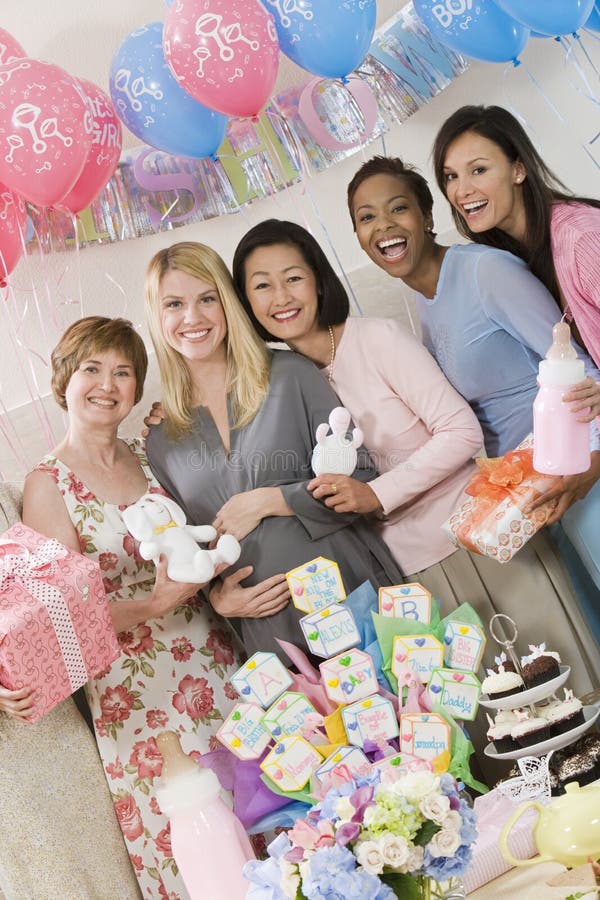
Who Should Host a Baby Shower?
A friend, relative, coworker, partner, or group of people may host a baby shower.
Older etiquette rules sometimes discouraged close family members from hosting because a shower could look like a gift request. Today, many families use a practical approach. A person may host if the event is clearly about support and celebration rather than collecting presents.
The host should:
- Confirm the parents want a shower.
- Set a realistic budget.
- Keep the guest list manageable.
- Ask about gift preferences.
- Make the event accessible.
- Respect cultural and family customs.
- Avoid pressuring guests to buy expensive items.
- Thank guests after the event.
If several people want to help, divide the work. One person can manage invitations, another can plan food, and another can organize games. The parents should not have to carry the entire planning load.

Is It Rude to Have More Than One Baby Shower?
No. More than one shower can be reasonable when each event serves a different group.
Examples include:
- A family shower and a workplace shower
- A local event and a virtual event
- A small gathering for one side of the family
- A separate celebration for adoptive or foster parents
- A shower held in a different city
The risk is guest pressure. People should not feel required to attend every event or bring a gift to each one.


Hosts should keep invitations separate and explain the purpose of each gathering. If the same people are invited to multiple showers, make it clear that their presence matters more than another gift.

Common Mistakes to Avoid
The most common mistake is treating tradition as a universal rule.
Avoid these problems:
- Excluding a wanted guest because of gender: Ask the parents first.
- Using “coed” as a theme instead of a guest-list choice: The event can remain simple and personal.
- Inviting people only for gifts: Invite people who have a real connection to the family.
- Making men or nonbinary guests feel like exceptions: Use welcoming language.
- Assuming every parent wants a shower: Some people prefer a quiet meal or no event.
- Ignoring accessibility: Check seating, parking, restrooms, noise, and mobility needs.
- Pressuring guests to play games: Make participation optional.
- Asking personal medical questions: Let the parents choose what to share.
- Publishing private details online: Ask before posting photos or registry information.
A good shower should feel like support, not a test of social rules.
Frequently Asked Questions
Are baby showers traditionally for women?
Many U.S. baby showers were traditionally organized for women, but that custom is not a requirement. Families may continue it, change it, or create a different format.
Should the father or partner attend the baby shower?
The partner may attend if the parents want them there. Some couples attend together. Others prefer separate celebrations. Both choices are acceptable.
Can a man host a baby shower?
Yes. A man can host alone or work with a group of hosts. Hosting depends on the person’s relationship with the parents, not gender.
What do you call a baby shower for everyone?
Common terms include “coed baby shower,” “all-gender baby shower,” “family baby shower,” and simply “baby shower.” Choose the phrase that best matches the event and the guests.
Is it okay to skip a baby shower?
Yes. Parents may decline a shower or choose a smaller alternative. A meal, video call, registry announcement, or private visit can also celebrate the new arrival.
Conclusion
Baby showers in the United States are not just for women. A women-only shower may suit one family, while a coed, family-friendly, or all-gender shower may suit another.
The best choice comes from the parents’ wishes, the guest list, the setting, and the kind of support the event should provide. Ask the parents, use clear invitation wording, and plan an event where guests can celebrate without pressure.
For the next step, decide whether the parents want a private, coed, family, workplace, or virtual gathering. Then set the guest limit and build the invitation around that choice.
