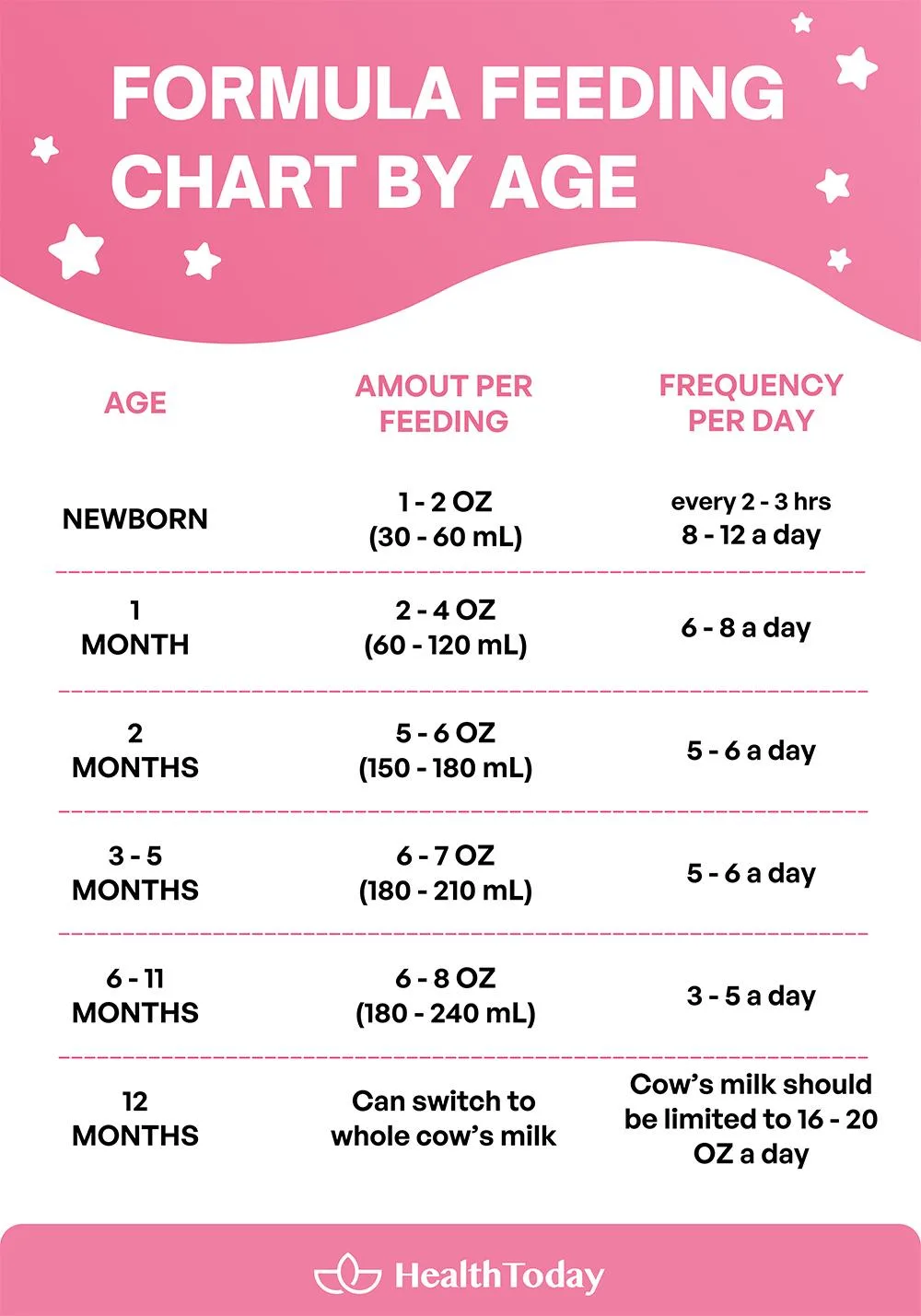
A 2.5-month-old baby usually feeds every 2 to 4 hours during the day, but the right schedule depends on whether your baby breastfeeds, drinks formula, or does both. Many babies take 8 to 12 breastfeeds in 24 hours. Formula-fed babies often take a bottle about every 3 to 4 hours.
These are starting points, not strict rules. In the United States, the American Academy of Pediatrics (AAP) and the Centers for Disease Control and Prevention (CDC) recommend watching your baby’s hunger and fullness cues instead of forcing a set amount or schedule.
How often should you breastfeed a 2.5-month-old?
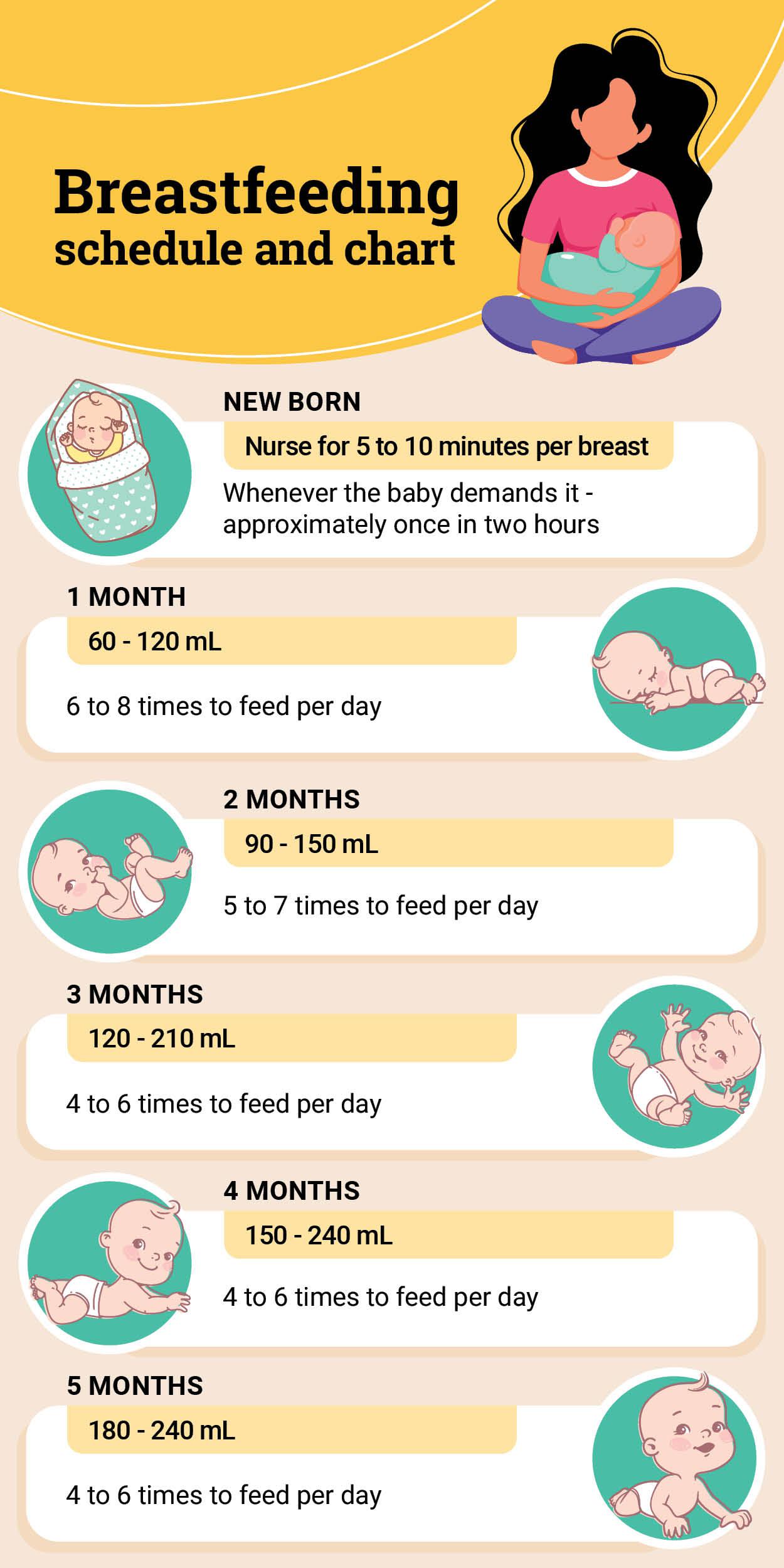
Most breastfed babies at 2.5 months nurse 8 to 12 times in 24 hours, although some feed more or less often. A feeding may last 10 minutes or 40 minutes, depending on your baby’s latch, milk flow, and feeding skills.
Offer the breast when your baby shows early hunger signs. These signs may include:
- Stirring or waking from sleep
- Turning the head toward your chest
- Bringing hands to the mouth
- Sucking on fingers
- Opening and closing the mouth
- Making soft sounds
Crying is a late hunger cue. A very upset baby may have a harder time latching, so try to feed before crying starts.
Some babies follow a loose pattern, such as feeding every 2 to 3 hours. Others “cluster feed,” especially in the evening. Cluster feeding means your baby wants several feeds close together. This can be normal and does not always mean that your milk supply is low.
How do you know your breastfed baby is getting enough?
Feeding frequency alone cannot show how much milk your baby receives. More useful signs include:
- At least about 6 wet diapers per day after the first several days of life
- Regular soft stools, although stool patterns can vary
- Audible swallowing during feeds
- A baby who seems alert at times and satisfied after many feeds
- Steady weight gain at health visits
Your baby’s doctor can assess growth by looking at weight, length, and head growth over time. A single feeding or single weight does not tell the whole story.
If breastfeeding hurts, your baby often falls asleep within a few minutes, or your baby has fewer wet diapers, contact a pediatrician or lactation professional. A poor latch, tongue movement problem, illness, or low milk transfer may be involved.

How often should you give formula to a 2.5-month-old?
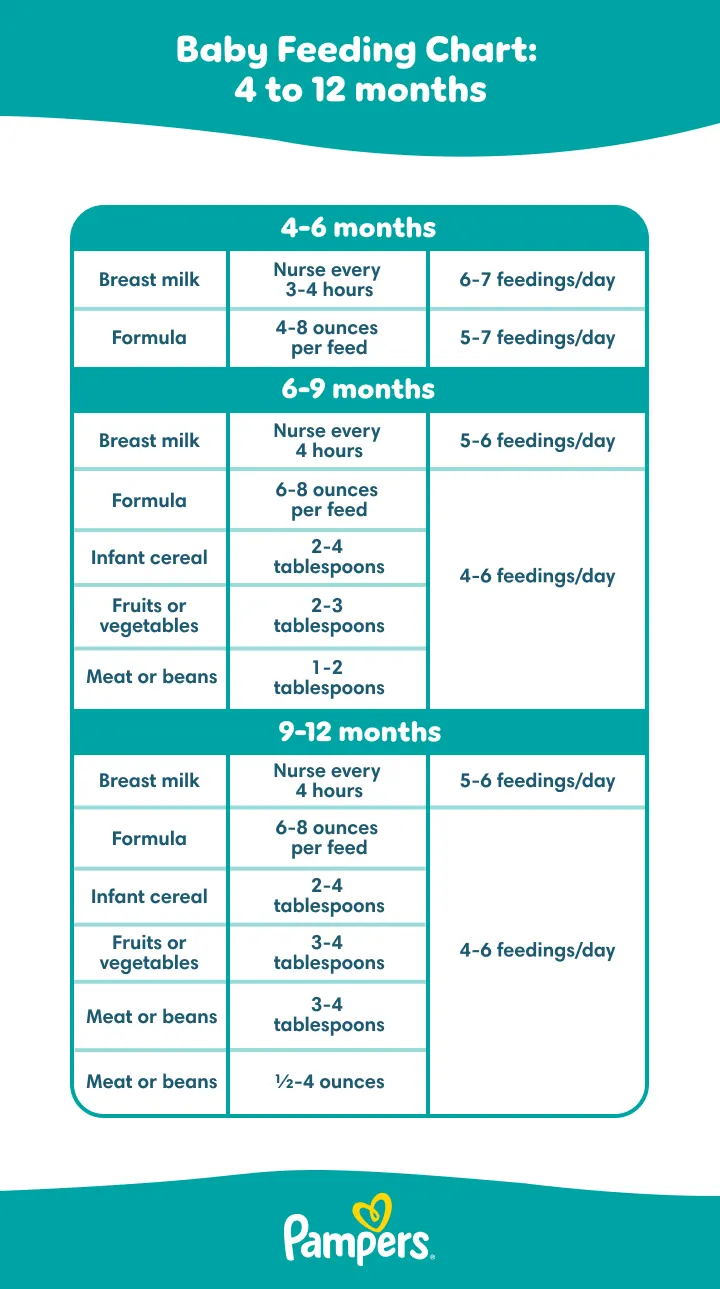
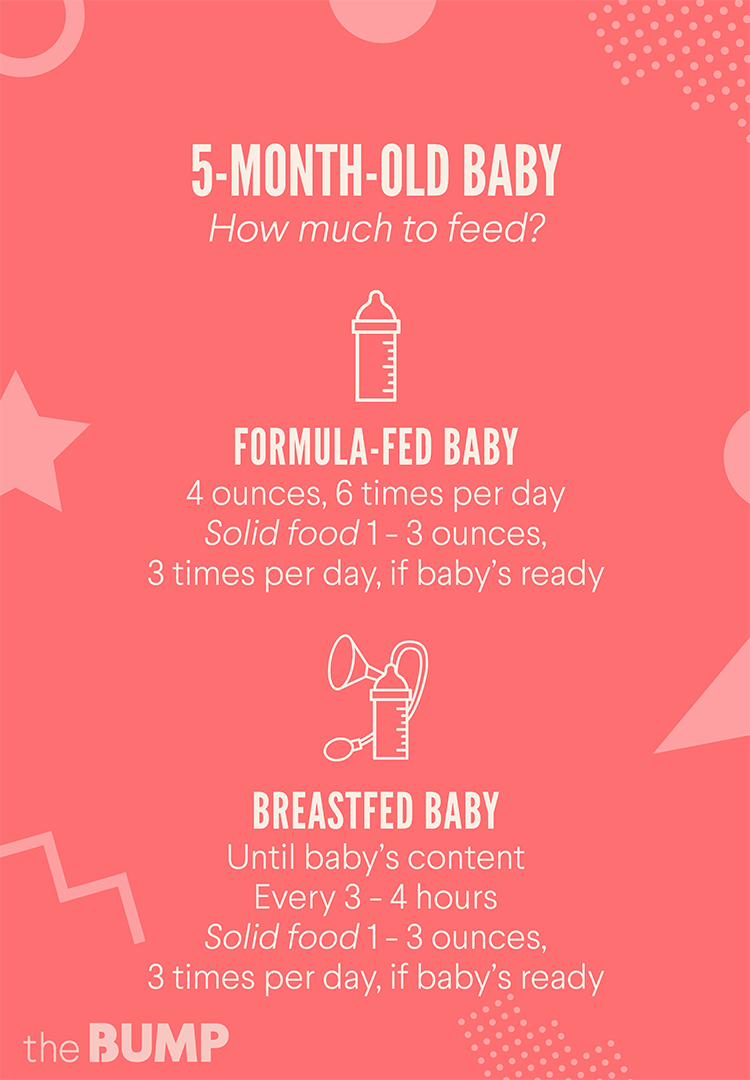
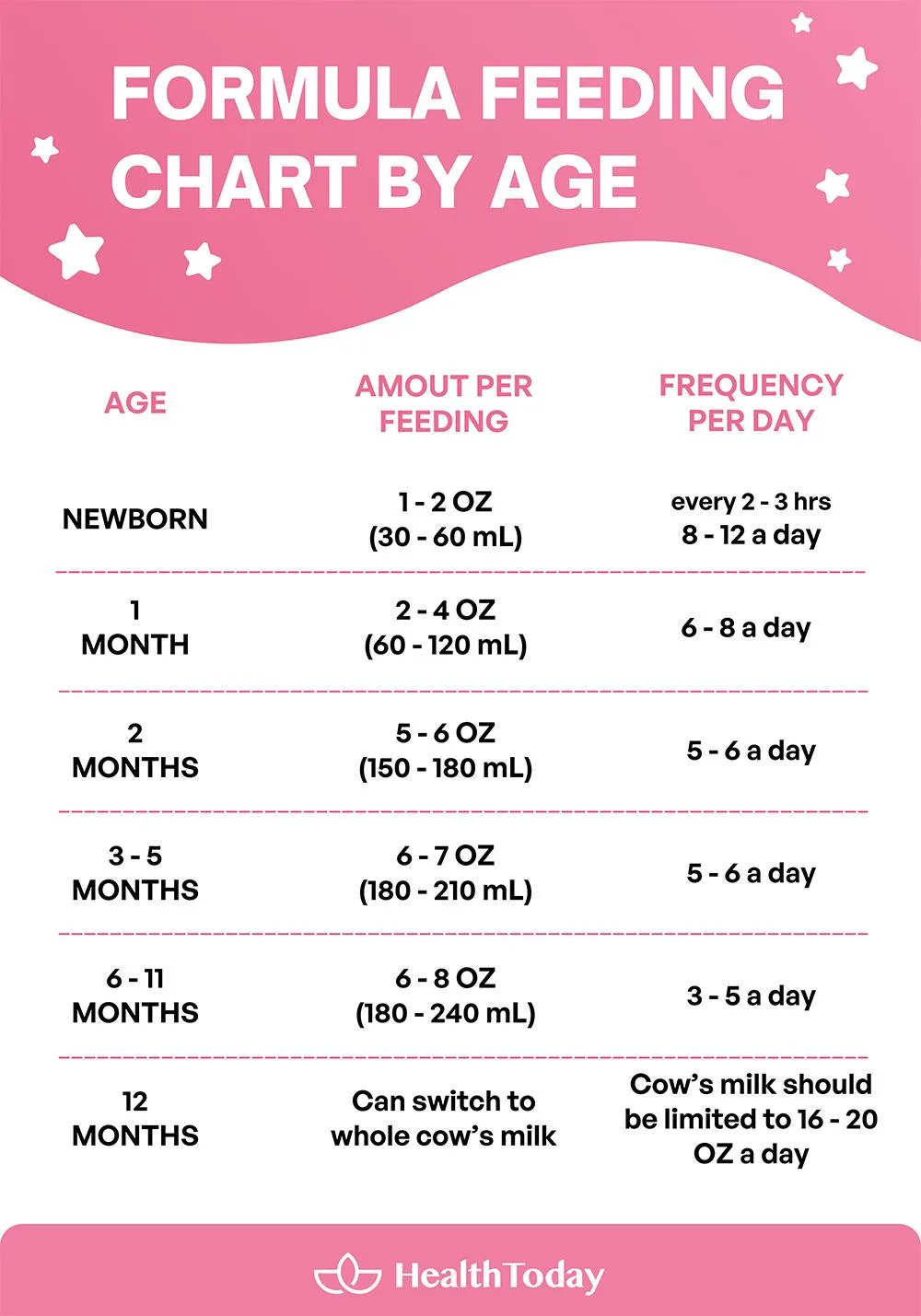
A formula-fed 2.5-month-old often eats 4 to 5 ounces every 3 to 4 hours. Some babies take smaller amounts more often. Others take a little more at some feeds and less at others.
The AAP gives a general daily estimate of about 2.5 ounces of formula per pound of body weight per day, but this is not a target that every baby must reach. The AAP also advises that babies generally should not take more than about 32 ounces in 24 hours unless their doctor gives different advice.
For example, a 12-pound baby might take roughly:
- 30 ounces over 24 hours as a general estimate
- About 6 bottles of 5 ounces each
- Or 7 to 8 smaller bottles spread across the day
this is only a calculation example. Your baby may need a different amount because of growth, health, metabolism, and feeding pattern.
Do not pressure your baby to finish a bottle. Stop when your baby shows signs of fullness, such as:
- Turning the head away
- Closing the mouth
- Relaxing the hands
- Slowing or stopping sucking
- Pushing the bottle away
- Falling asleep in a relaxed way
Never prop a bottle or leave your baby alone with one. Bottle propping can increase the risk of choking, ear infections, and overfeeding.
How much should a mixed-fed baby eat?
A baby who receives both breast milk and formula may have no fixed feeding pattern. Your baby might breastfeed at one feed, take a bottle at the next, or receive a small formula supplement after nursing.
The amount of formula needed depends on how much breast milk your baby took. It is usually not possible to know that amount without weighing the baby before and after breastfeeding. For that reason, use your baby’s cues and growth rather than trying to match a specific bottle amount.
If you are replacing a regular breastfeeding session with formula, your milk supply may decrease over time. If you want to maintain your supply, pumping around the time of the missed breastfeed may help. A lactation consultant can help you build a plan that fits your goals.
Watch your baby’s wet diapers, behavior, and weight gain. These signs are more useful than comparing your baby’s intake with another baby’s intake.
Should you wake a 2.5-month-old to feed at night?
A healthy 2.5-month-old who is gaining weight well may sleep for a longer stretch at night. Many babies still wake to eat one or more times. There is no single normal sleep or feeding schedule at this age.
Ask your baby’s pediatrician whether you should wake your baby if your baby:
- Was born premature
- Has not regained or is not gaining weight well
- Has jaundice or another medical condition
- Has trouble feeding
- Has too few wet diapers
- Is unusually sleepy or difficult to wake
If your doctor says your baby can sleep, you generally do not need to wake the baby just because a certain number of hours has passed. However, continue to offer regular daytime feeds and respond when your baby wakes hungry.
Do not use cereal, juice, or other foods to make a baby sleep longer. Babies younger than about 6 months should receive breast milk or iron-fortified infant formula unless a health professional gives specific instructions.

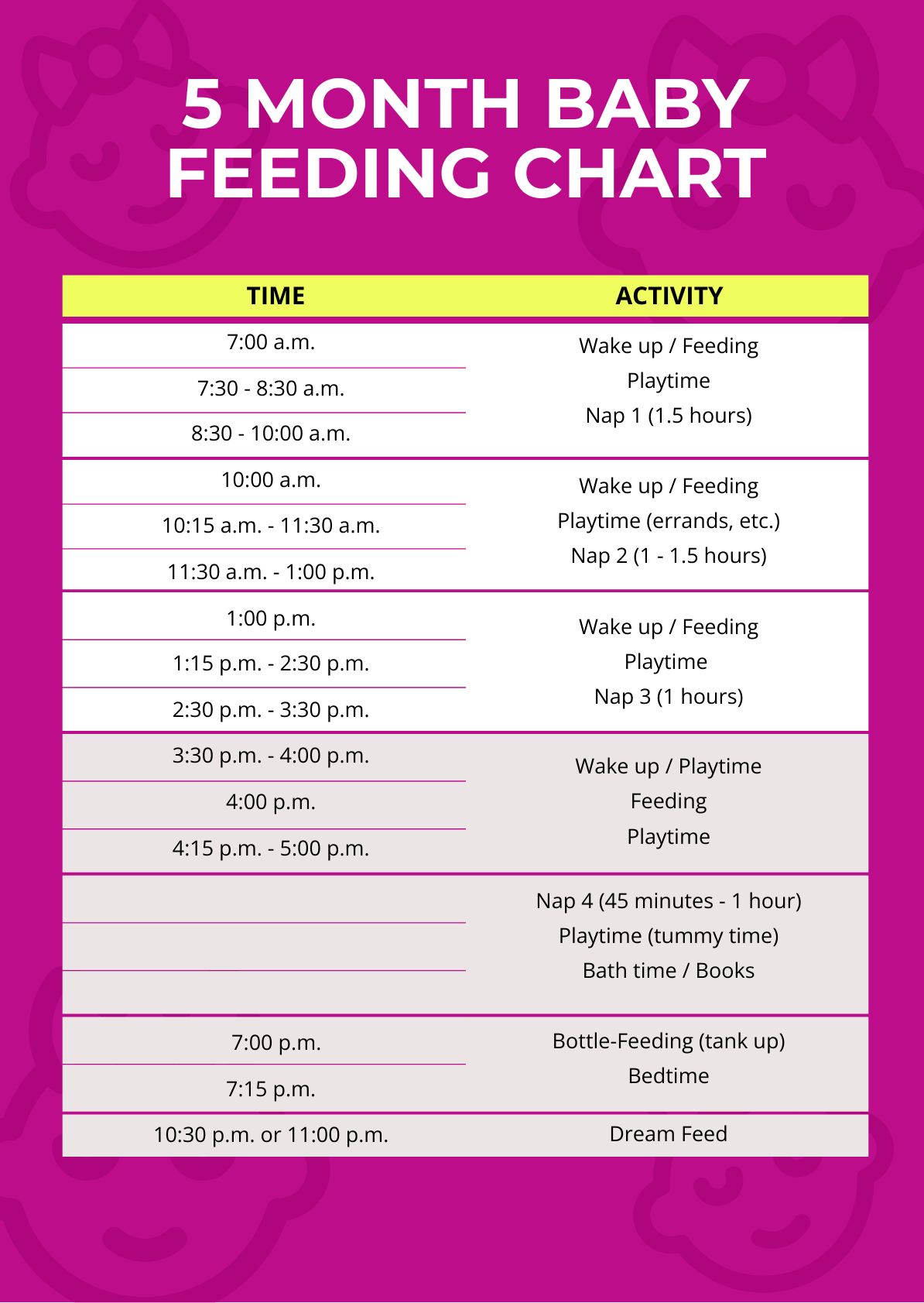
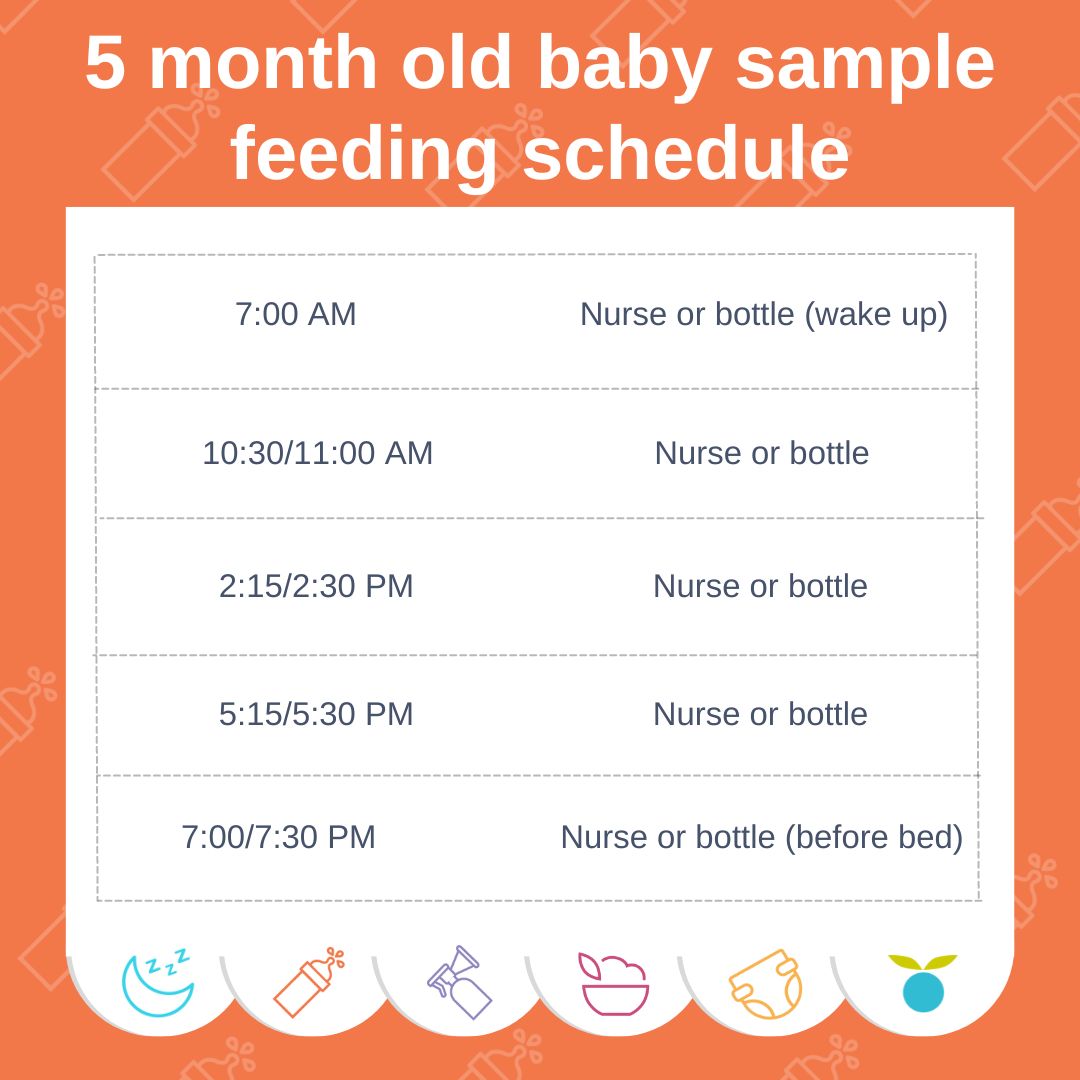
A simple feeding schedule for a 2.5-month-old
A flexible schedule works better than a strict clock-based plan. Here is a hypothetical example:
| Time | Possible feeding |
|---|---|
| 7:00 a.m. | Breastfeed or bottle |
| 9:30–10:00 a.m. | Breastfeed or bottle |
| 12:30 p.m. | Breastfeed or bottle |
| 3:00 p.m. | Breastfeed or bottle |
| 5:30 p.m. | Breastfeed or bottle |
| 7:30 p.m. | Breastfeed or bottle |
| Overnight | Feed when the baby wakes hungry |
Your baby may need more feeds, fewer feeds, or different times. The schedule should bend around hunger cues, naps, growth, and family routines.
For breastfeeding, count feeds from the start of one feed to the start of the next. For example, if your baby starts nursing at 8:00 a.m. and again at 10:30 a.m., that is a 2.5-hour interval.
For formula, prepare and store bottles according to the product label and CDC guidance. Use clean equipment, follow the exact water-to-powder ratio, and do not dilute formula. Throw away leftover formula from a bottle after your baby has fed from it.

What if your baby wants to eat every hour?
Frequent feeding can be normal, especially during a growth spurt, in the evening, or when a breastfed baby is cluster feeding. It can also signal that your baby is not transferring enough milk, is using feeding for comfort, or is having trouble with the latch.
Check these points:
- Look for active feeding. You should see regular sucking and hear swallowing during much of the feed.
- Check the latch. Pain, clicking sounds, dimpling cheeks, or slipping off may suggest a latch problem.
- Count wet diapers. Fewer wet diapers can signal that your baby needs prompt medical assessment.
- Review weight gain. Your pediatrician can determine whether intake is adequate.
- Consider the bottle nipple flow. A nipple that is too fast can cause coughing and gulping. One that is too slow can make a baby tired and frustrated.
Do not automatically extend the time between feeds to create a schedule. A young baby may genuinely need to eat more often.
What if your baby eats less than usual?
One smaller feed is usually not a problem if your baby is alert, has regular wet diapers, and returns to normal feeding. Keep offering breast milk or formula without forcing it.
Call your pediatrician if your baby repeatedly eats much less than usual, refuses several feeds, vomits forcefully, has fewer wet diapers, or seems weak or unusually sleepy.
Seek urgent medical care for a baby younger than 3 months with a rectal temperature of 100.4°F (38°C) or higher. Also seek urgent help if your baby has trouble breathing, turns blue or gray, is difficult to wake, or shows signs of severe dehydration.
Possible dehydration signs include:
- Very few wet diapers
- A dry mouth
- No tears when crying
- Sunken soft spot
- Unusual sleepiness or weakness
Do not give water, electrolyte drinks, cow’s milk, or homemade formula to a young infant unless a doctor specifically directs you to do so.
Feeding safety tips for a 2.5-month-old
Safe feeding protects your baby and helps you notice problems early.
- Wash your hands before preparing formula or handling pump parts.
- Follow the formula label exactly.
- Use breast milk or properly prepared infant formula as the main food.
- Hold your baby during bottle feeds.
- Keep the bottle fairly level to help control milk flow.
- Pause when your baby needs a break.
- Burp your baby if needed, but do not worry if your baby does not burp every time.
- Keep your baby upright for a short time after feeding if spit-up is a concern.
- Place your baby on their back for every sleep, even after a feed.
- Do not add cereal or medicine to a bottle unless prescribed.
- Do not microwave bottles because hot spots can burn your baby.
- Test the milk temperature on your wrist before feeding.
Spitting up is common at this age. Call the doctor if spit-up becomes forceful, green, bloody, painful, or linked with poor weight gain.
Key takeaways
- Feed a 2.5-month-old by hunger and fullness cues rather than by a rigid schedule.
- Breastfed babies often feed 8 to 12 times in 24 hours.
- Formula-fed babies often take 4 to 5 ounces every 3 to 4 hours.
- Some babies feed more often, especially during growth spurts or evening cluster feeds.
- Wet diapers, alertness, satisfaction, and steady growth help show whether your baby is getting enough.
- Ask your pediatrician about night feeds if your baby was premature, has health concerns, or is not gaining weight well.
- Contact a doctor promptly for poor feeding, dehydration signs, repeated vomiting, or a fever of 100.4°F (38°C) or higher in a baby under 3 months.
Frequently asked questions
Can a 2.5-month-old go 4 hours between feeds?
Some babies can go 4 hours between feeds, especially during the day or after a larger bottle. Breastfed babies often feed sooner. Do not stretch feeds if your baby shows hunger cues or if your pediatrician has advised more frequent feeding.
How many ounces should a 2.5-month-old drink per feeding?
Many formula-fed babies take about 4 to 5 ounces per feeding, but the correct amount varies. Breastfed babies do not have a reliable ounce measurement unless milk is pumped. Let your baby stop when full rather than encouraging the baby to finish.
Is it normal for a 2.5-month-old to feed every 2 hours?
Yes. Feeding every 2 hours can be normal, particularly for breastfed babies or during a growth spurt. If feeding is constant and your baby is not gaining weight, has few wet diapers, or seems unsatisfied after most feeds, contact the pediatrician.
How long can a 2.5-month-old sleep without eating?
There is no universal safe time for every baby. A healthy baby with good weight gain may sleep for a longer nighttime stretch, but some babies still wake often. Follow your pediatrician’s advice if your baby was premature, has poor weight gain, or has a medical condition.
When should a baby start solid food?
Most babies are ready for solid foods at about 6 months, when they can sit with support, control their head and neck, and show interest in food. At 2.5 months, breast milk or infant formula should provide the nutrition your baby needs unless a medical professional gives other instructions.
Conclusion
The best answer to “how often should I feed a 2.5-month-old?” is usually every 2 to 4 hours, guided by hunger cues. Breastfed babies often feed more frequently, while formula-fed babies commonly take bottles every 3 to 4 hours.
Focus on the full picture: wet diapers, active feeding, relaxed fullness cues, and steady growth. If your baby’s feeding pattern changes sharply or you notice poor intake, dehydration, unusual sleepiness, or fever, contact your pediatrician rather than trying to fix the schedule alone.