A 5-week-old baby usually feeds 8 to 12 times in 24 hours when breastfed. A formula-fed baby often takes 2 to 3 ounces every 2 to 3 hours, though some babies eat more often and some take a little more at each feed.
These are starting points, not strict rules. In the United States, the American Academy of Pediatrics (AAP) and the Centers for Disease Control and Prevention (CDC) advise feeding newborns based on hunger cues. Your baby’s growth, medical history, and diaper output matter more than the clock.
At 5 weeks, your baby may still feed at night. A steady pattern may begin to form, but a fixed schedule is not expected yet.

How Often Should a 5-Week-Old Breastfed Baby Eat?
Most 5-week-old breastfed babies nurse 8 to 12 times per day. Some babies feed more often, especially during a growth spurt or in the evening. Others take longer, more effective feeds and need fewer sessions.
Offer the breast when your baby shows early hunger cues. These may include:
- Turning the head toward your hand or breast
- Opening the mouth
- Bringing hands to the mouth
- Licking or smacking the lips
- Waking and becoming more alert
- Making small sucking sounds
Crying is a late hunger cue. A crying baby may be harder to latch, so try to feed when you see earlier signs.
A nursing session may last 10 to 45 minutes, but time alone does not show how much milk your baby received. Some babies feed quickly. Others pause, switch breasts, or take a short break.
The best signs that breastfeeding is going well include:
- Your baby swallows during feeds
- Your baby seems relaxed after at least some feeds
- Your breasts feel softer after feeding
- Your baby has regular wet diapers
- Your baby gains weight as expected
The CDC breastfeeding guidance and your baby’s pediatric clinician can help you assess feeding and growth.
Should You Wake a 5-Week-Old to Feed?
Ask your baby’s pediatrician whether you should wake your baby. Many healthy, full-term babies can sleep for a longer stretch at night after they regain their birth weight and show steady growth. However, some babies still need scheduled feeds.
Your clinician may advise waking your baby if your baby:
- Was born early
- Has poor or slow weight gain
- Has jaundice
- Has trouble feeding
- Is unusually sleepy
- Has a medical condition
- Has not yet regained birth weight
Do not let a young baby sleep through many feeds without medical guidance if weight gain is uncertain. A longer sleep period is not always a sign that feeding is going well.
How Much Formula Does a 5-Week-Old Need?
A formula-fed 5-week-old often takes 2 to 3 ounces per feed every 2 to 3 hours. Some babies may take closer to 4 ounces, while others prefer smaller feeds more often.
Use your baby’s hunger and fullness cues along with your clinician’s advice. Do not force your baby to finish a bottle.
Common hunger cues include:
- Rooting
- Sucking hands
- Moving the head from side to side
- Becoming more alert
- Opening the mouth
Signs that your baby may be full include:
- Turning away from the bottle
- Closing the mouth
- relaxing the hands
- Slowing or stopping sucking
- Falling asleep in a relaxed way
The AAP’s HealthyChildren.org guidance explains that formula amounts vary by age, weight, and appetite. Your pediatrician may give a more specific amount if your baby has a health or growth concern.
A Simple Formula-Feeding Example
This example is only a guide:
| Time | Example amount |
|---|---|
| 6:00 a.m. | 2–3 ounces |
| 8:30 a.m. | 2–3 ounces |
| 11:00 a.m. | 2–3 ounces |
| 1:30 p.m. | 2–3 ounces |
| 4:00 p.m. | 2–3 ounces |
| 6:30 p.m. | 2–3 ounces |
| 9:00 p.m. | 2–3 ounces |
| Overnight | One or more feeds as needed |
Your baby may not follow this pattern. The table shows spacing, not a required schedule.
Do not add cereal, extra powder, or extra water to a bottle. Incorrect mixing can make the formula too concentrated or too weak. Follow the label instructions and use safe water as advised by your baby’s clinician. The CDC infant formula preparation guide provides detailed instructions.
How to Feed a 5-Week-Old by Hunger Cues
Responsive feeding means offering milk when your baby is hungry and stopping when your baby is full. This approach works for both breastfed and formula-fed babies.
Use this simple process:
- Watch for early hunger cues. Look for rooting, hand-to-mouth movements, and lip movements.
- Offer breast milk or formula. Hold your baby close and keep the head and neck supported.
- Let your baby set the pace. Pause when your baby slows down or needs a break.
- Burp if needed. Some babies need a burp during or after a feed. Others do not.
- Stop when your baby shows fullness. Do not pressure your baby to empty the breast or bottle.
A bottle-fed baby may need paced bottle-feeding. Hold the bottle nearly level rather than tipped straight down. Let your baby pause during the feed. This can slow the flow and give your baby more control.
Never prop a bottle or leave it in your baby’s mouth while your baby lies alone. Bottle propping can raise the risk of choking, ear infections, and overfeeding.
Breastfeeding parents may offer both breasts at a feed. Start with the breast your baby did not use last, or the breast that still feels fuller. A lactation consultant can check the latch if feeding hurts or your baby is not gaining well.

How Many Wet Diapers Should a 5-Week-Old Have?
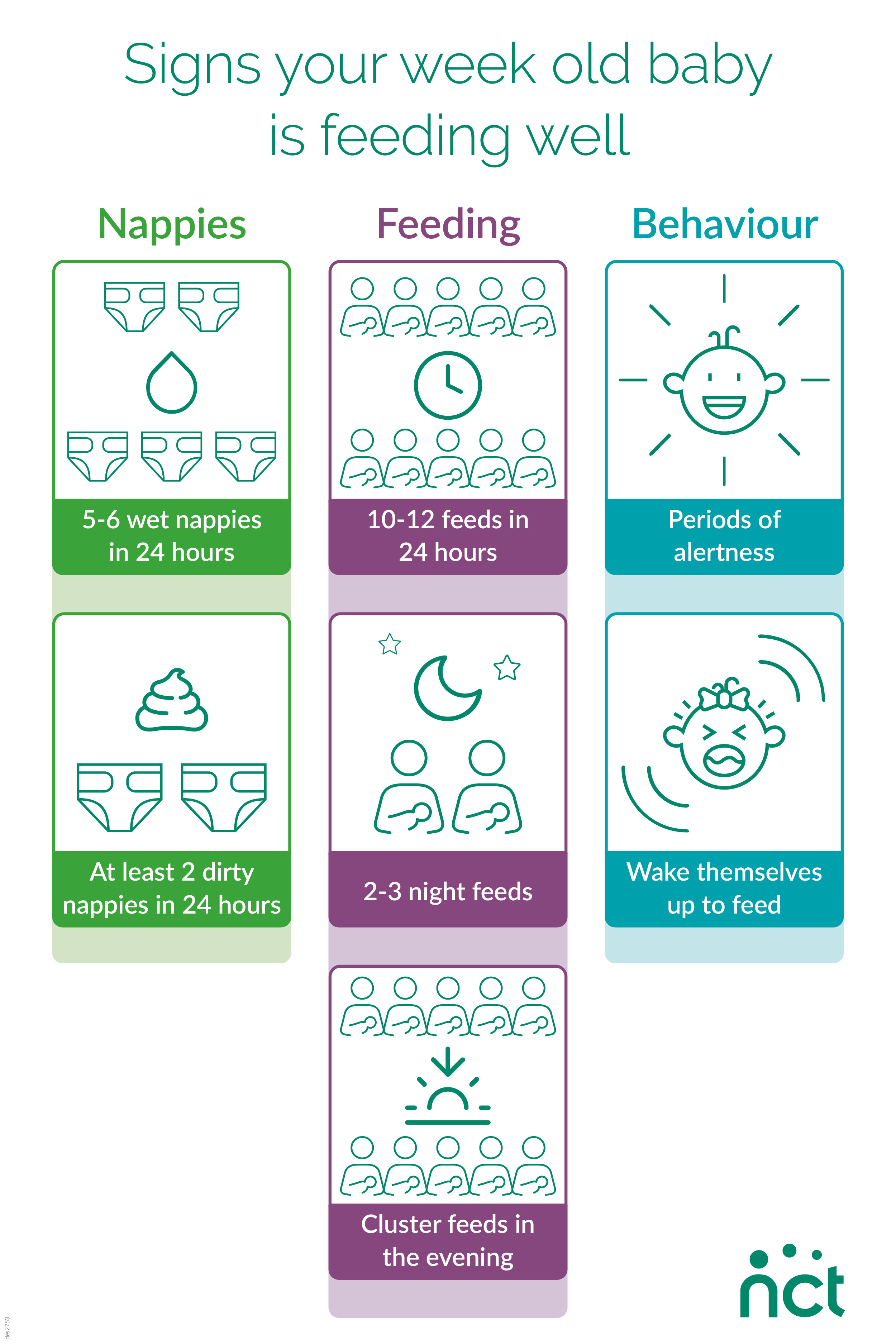
By about 5 weeks, many babies have at least 5 to 6 wet diapers per day. Some have more. A steady pattern of wet diapers, regular stools, and expected weight gain usually gives a better picture than one diaper count.
Diaper patterns can vary:
- Breastfed babies may have several stools each day or may stool less often.
- Formula-fed babies often have firmer stools, but normal patterns still vary.
- A sudden drop in wet diapers can signal that your baby is not getting enough fluid.
Contact your baby’s pediatric clinician if your baby has much fewer wet diapers than usual, very dark urine, a dry mouth, no tears when crying, or unusual sleepiness. These can be signs of dehydration.
Weight checks are especially useful during the first weeks. A baby who seems to feed often may still need help with milk transfer, latch, formula amount, or another medical issue.
If you are worried about intake, write down:
- Start and end times of feeds
- Which breast was used
- Approximate bottle amounts
- Wet diapers
- Stools
- Spitting up or vomiting
- Your baby’s behavior after feeds
Bring this record to the pediatric office or lactation visit.

What Can Change a 5-Week-Old’s Feeding Pattern?
A 5-week-old may feed more often for a few days during a growth spurt. Evening cluster feeding is also common. Cluster feeding means several feeds happen close together over a short period.
Other factors can change feeding frequency:
- Growth and weight gain
- Prematurity
- Breast milk supply
- Milk transfer at the breast
- Nipple flow
- Reflux or discomfort
- Nasal congestion
- Illness
- A poor latch
- An overly fast or slow bottle flow
- Long or difficult feeds
Frequent feeding does not always mean low milk supply. Babies may nurse for comfort, stimulation, or because they are going through a normal period of increased demand.
However, frequent feeding deserves a closer look if your baby is not gaining weight, has too few wet diapers, falls asleep soon after starting every feed, or seems weak. A pediatric clinician or lactation consultant can assess feeding rather than relying on a schedule alone.
When Spit-Up May Need Medical Advice
Small amounts of spit-up are common in young babies. Call your baby’s clinician if spit-up is forceful, green, bloody, or linked with poor weight gain or distress.
Seek urgent medical care for a 5-week-old with:
- A rectal temperature of 100.4°F (38°C) or higher
- Trouble breathing
- Blue, gray, or very pale skin
- Severe weakness or difficulty waking
- Repeated vomiting
- Signs of dehydration
- Refusal to feed
For babies younger than 3 months, the AAP advises prompt medical evaluation for a rectal fever of 100.4°F or higher. Use a thermometer and call your pediatric clinician or seek emergency care based on the instructions you receive.

Common Feeding Mistakes to Avoid
Avoid using a rigid feeding schedule as the only measure of a healthy intake. Two babies of the same age may have different feeding patterns. Growth and diaper output help show whether the pattern is working.
Do not compare breast milk and formula amounts directly. A breastfed baby’s intake is harder to measure, and a bottle makes ounces easy to see. The number of ounces alone does not prove that one baby is eating better.
Avoid these common mistakes:
- Waiting for crying before every feed
- Forcing a bottle after your baby shows fullness
- Adding cereal or extra formula powder
- Giving water, juice, or solid food at 5 weeks
- Propping a bottle
- Putting a baby to sleep with a bottle
- Ignoring a sudden change in wet diapers
- Assuming a sleepy baby is always satisfied
- Using a feeding app instead of watching the baby
- Delaying care when a young baby has a fever
Breast milk or iron-fortified infant formula should provide your 5-week-old’s nutrition. Most babies are not ready for solids until around 6 months, when they show signs of developmental readiness and a health professional agrees.
For sleep, place your baby on their back on a firm, flat sleep surface. Keep the sleep space free of loose blankets, pillows, bumpers, and toys. The AAP safe sleep guidance explains these steps in more detail.

Key takeaways
- Breastfed babies commonly eat 8 to 12 times in 24 hours.
- Formula-fed babies often take 2 to 3 ounces every 2 to 3 hours.
- Feed by hunger and fullness cues, not by the clock alone.
- Watch wet diapers, behavior, and weight gain.
- Ask the pediatrician before allowing long overnight stretches if your baby has not regained birth weight or has a medical concern.
- Never give water, cereal, or solid food to a 5-week-old unless a qualified clinician gives specific instructions.
Frequently Asked Questions
Can a 5-week-old sleep 5 hours without eating?
Some healthy, full-term babies may sleep for a longer stretch at night after regaining birth weight and gaining well. Ask your pediatrician before allowing a 5-week-old to sleep 5 hours, especially if your baby was premature, has jaundice, feeds poorly, or has slow weight gain.
Is feeding every hour normal at 5 weeks?
It can be normal for short periods, especially during cluster feeding or a growth spurt. It may need evaluation if it happens at nearly every feed and your baby has few wet diapers, poor weight gain, painful feeding, or ongoing difficulty staying awake.
How do I know if my breastfed baby is getting enough milk?
Look for regular wet diapers, swallowing during feeds, periods of calm after feeding, and expected weight gain. A lactation consultant or pediatric clinician can perform a feeding assessment if you remain unsure.
Should I wake my baby to feed during the day?
Many newborns need regular daytime feeds. If your baby sleeps through several daytime feeds, gently wake the baby and ask the pediatrician whether the feeding plan is suitable. The need to wake depends on growth, birth history, and health.
Can I give my 5-week-old water for hiccups or hot weather?
No. Do not give water unless your baby’s clinician specifically directs you to do so. Breast milk or properly prepared infant formula supplies the fluid a young baby needs.
What should I do if my baby refuses several feeds?
Call your pediatric clinician promptly if a 5-week-old refuses more than one feed, is hard to wake, vomits repeatedly, has fewer wet diapers, or seems ill. Seek urgent care for breathing trouble, severe weakness, or a rectal temperature of 100.4°F (38°C) or higher.
The Next Step for Parents
For the next 24 hours, track feeds, wet diapers, and your baby’s behavior. Use hunger cues to offer breast milk or formula, and contact your pediatric clinician if intake, diapers, or alertness seem lower than usual.
If you are unsure whether your baby is eating enough, a weight check and feeding assessment can give a clearer answer than a strict schedule.