A 5-month-old usually needs breast milk or infant formula every 3 to 4 hours, but some babies eat more often and others go longer between feeds. Breastfed babies may nurse about 5 to 8 times in 24 hours, while formula-fed babies often take 4 to 6 ounces per feed, depending on their needs.
At 5 months, breast milk or iron-fortified infant formula should still provide nearly all of a baby’s nutrition. Some babies are ready to try small amounts of solid food between 4 and 6 months, but solids should complement milk feeds—not replace them.
Every baby grows at a different pace. Hunger cues, growth, wet diapers, and your baby’s health matter more than a strict clock.
A Simple Feeding Guide for a 5-Month-Old
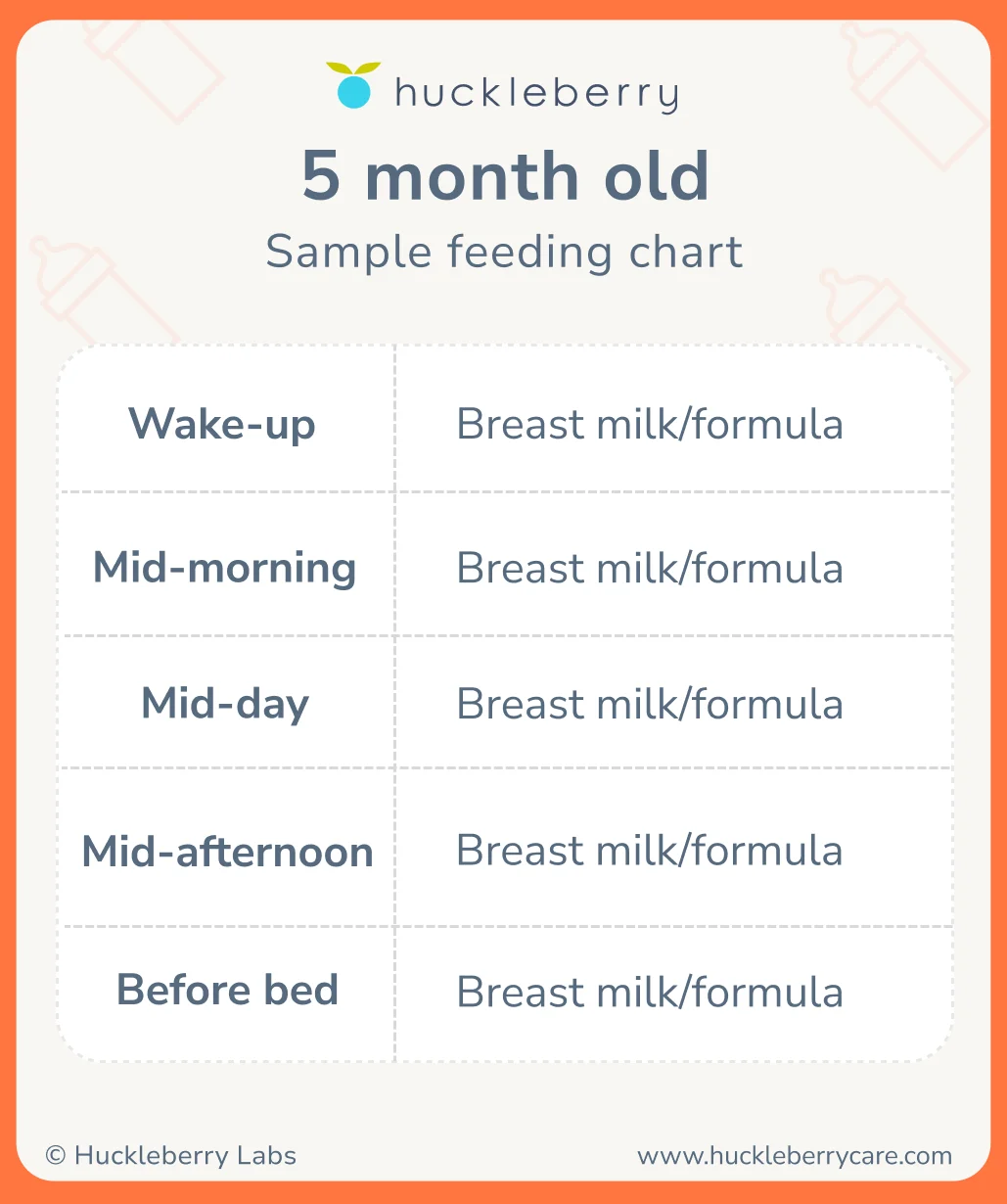
Most 5-month-olds eat about five to eight times per day, including breast milk, formula, or both. A baby who sleeps for a longer stretch at night may take more milk during the day.
Here is a general guide:
| Feeding type | Typical pattern at 5 months |
|---|---|
| Breast milk | About 5–8 nursing sessions in 24 hours, though some babies feed more often |
| Formula | Often 4–6 ounces per feed, about every 3–4 hours |
| Combination feeding | Breast milk and formula based on the baby’s hunger and milk supply |
| Solid foods | Small tastes once daily at first, only if the baby shows readiness |
These are ranges, not rules. A breastfed baby’s intake is hard to measure by minutes at the breast. Some babies nurse quickly, while others need more time. Formula-fed babies may also vary from one feed to the next.
The American Academy of Pediatrics (AAP) and the Centers for Disease Control and Prevention (CDC) recommend following a baby’s hunger and fullness cues. A baby does not need to finish a bottle or eat solids simply because a schedule says it is time.
A healthy feeding pattern may look like this:
- The baby wakes and feeds.
- The baby feeds again after a nap or several hours of play.
- The baby has several wet diapers across the day.
- The baby appears alert and satisfied after many feeds.
- Growth continues along the baby’s own curve.
Some babies still wake to eat at night. Others sleep longer stretches. Neither pattern is automatically better or worse if the baby is growing well and receiving enough milk.

How Much Milk Does a 5-Month-Old Need?
A 5-month-old needs enough breast milk or formula to support steady growth and development. There is no single daily amount that fits every baby, but formula-fed infants often take about 24 to 32 ounces in 24 hours.
A formula-fed baby may drink:
- 4 to 6 ounces at a time
- Every 3 to 4 hours
- With some babies taking smaller, more frequent feeds
- With some babies taking larger feeds less often
Do not force a baby to reach a certain number of ounces. If the baby turns away, closes their mouth, relaxes their hands, or stops sucking, they may be full.
For breastfed babies, the best signs of adequate intake include:
- Regular wet diapers
- Audible swallowing during feeds
- A baby who seems alert when awake
- Good muscle tone and activity
- Ongoing growth at health visits
- Breasts that feel softer after nursing, for the lactating parent
A diaper count can offer useful information, but it does not replace a growth check. Babies vary in urine output, and illness, heat, and feeding changes can affect diapers.
Never dilute infant formula to make it last longer. Use the exact amount of water and powder listed on the label. Too much water can reduce the calories and nutrients the baby receives, while too little water can cause dehydration and other serious problems.
How Do You Know When a 5-Month-Old Is Hungry?
The best time to feed a baby is when early hunger cues appear. Crying is a late hunger cue, so try to respond before the baby becomes upset.
Early hunger signs may include:
- Turning the head toward a breast or bottle
- Opening the mouth
- Bringing hands to the mouth
- Sucking on fingers
- Smacking or licking the lips
- Becoming more alert or active
- Making small sounds
A baby may also root, which means turning the mouth toward a touch on the cheek. Rooting is common in young infants, but some babies show less rooting by 5 months.
Signs that a baby may be full include:
- Turning away from the breast or bottle
- Closing the mouth
- Slowing or stopping sucking
- Relaxing the hands and body
- Pushing the bottle away
- Becoming calm or interested in something else
Try not to use feeding as the only way to settle every cry. Babies may cry because they are tired, wet, too warm, overstimulated, or seeking comfort. Still, when you are unsure, offering milk is reasonable. A baby who is not hungry will often stop or turn away.

Is a 5-Month-Old Ready for Solid Food?
Some babies are ready for solid food around 6 months, while others may show readiness a little earlier. The CDC and AAP recommend looking for all readiness signs rather than relying on age alone.
A baby may be ready when they can:
- Sit upright with little support and control their head and neck.
- Open their mouth when food comes near.
- Move food from the front of the mouth toward the throat.
- Swallow food instead of pushing it back out.
- Show interest in food.
- Reach for objects and bring them to the mouth.
A baby who cannot sit with support, has poor head control, or repeatedly pushes food out may not be ready. Starting too soon can make feeding harder and may increase choking risk.
When a baby is ready, begin with a small amount, such as one or two teaspoons, once a day. Offer a soft, smooth food while the baby is calm and upright. Milk should still come first in the feeding plan.
Good first foods can include iron-rich options such as:
- Smooth meat or poultry puree
- Mashed beans or lentils
- Iron-fortified infant cereal
- Smooth peanut or tree-nut butter thinned with water or puree
- Mashed egg
- Soft, mashed vegetables and fruits
Introduce common allergens in safe forms when the baby is ready, unless a health professional has given different advice. Babies with severe eczema or an existing food allergy may need a specific plan from their pediatrician before trying peanut products.
Do not give honey before 12 months. Avoid cow’s milk as a drink before 12 months, unpasteurized foods, whole nuts, popcorn, hot dog rounds, hard raw vegetables, and other choking hazards. A baby should always sit upright and be watched while eating.

Should Solids Replace Breast Milk or Formula?
No. At 5 months, breast milk or formula remains the main source of calories and nutrients. Solid food is practice: it helps a baby learn new tastes, textures, and eating skills.
If a baby eats a few spoonfuls of cereal or puree, the baby still needs regular milk feeds. Early solid food may not add many calories, and a baby’s stomach is still small.
A practical routine might be:
- Offer breast milk or formula at the usual time.
- Wait until the baby is calm, not extremely hungry.
- Offer a small amount of smooth food.
- Stop when the baby turns away or loses interest.
- Continue normal milk feeds through the day.
Some families offer solids after a milk feed. Others offer them between feeds. The best choice is the one that keeps the baby comfortable and protects milk intake.
Do not put cereal, puree, or other food in a bottle unless your pediatrician specifically instructs you to do so. Adding food to a bottle can raise choking risk and does not reliably help a baby sleep longer.

Example Feeding Schedules for a 5-Month-Old
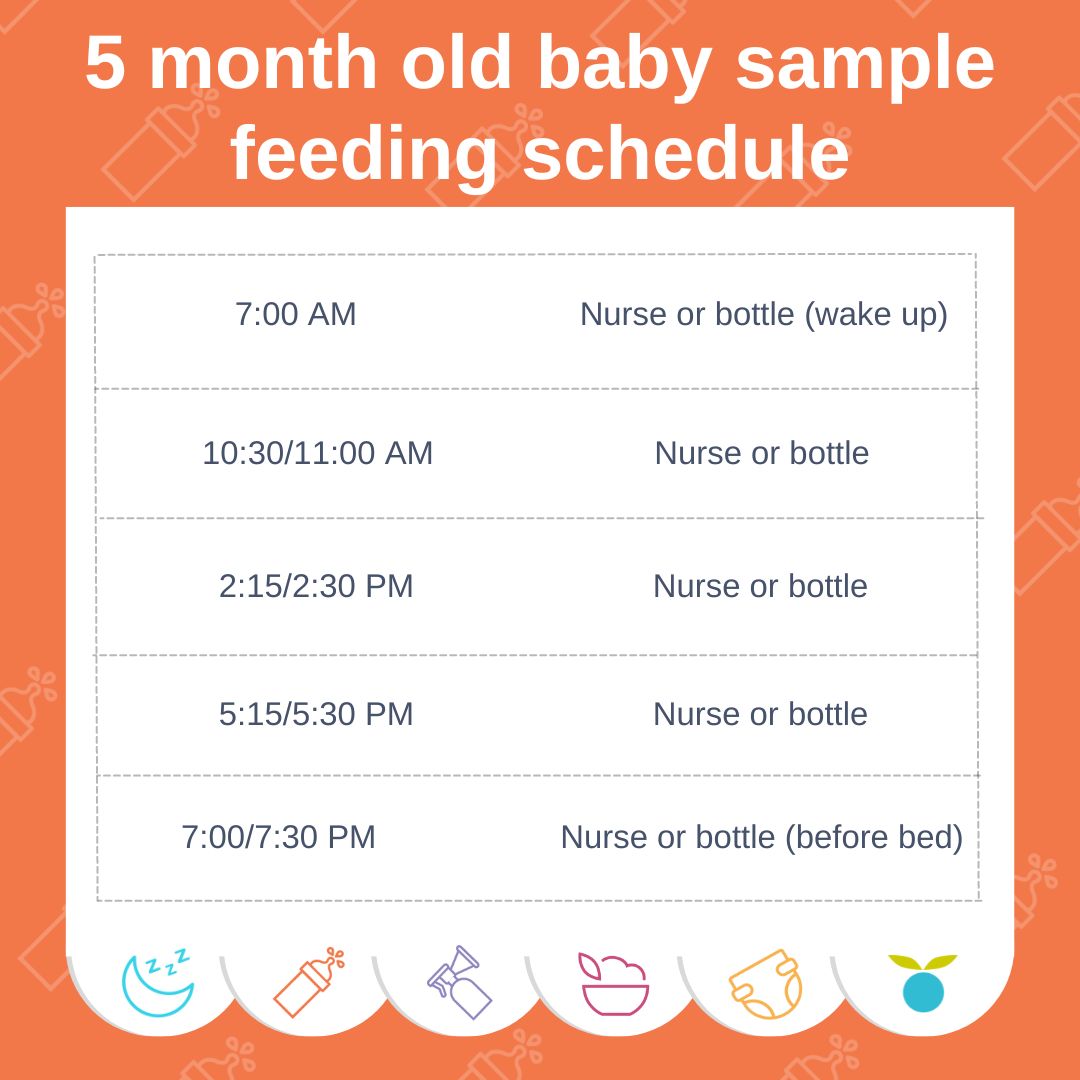
A sample schedule can help you plan, but it should not replace hunger and fullness cues. The times below are examples, not medical targets.
Breastfed baby
- 7:00 a.m.: Nurse
- 10:00 a.m.: Nurse
- 1:00 p.m.: Nurse
- 4:00 p.m.: Nurse
- 7:00 p.m.: Nurse
- Overnight: One or more feeds, depending on the baby
Some breastfed babies nurse eight or more times. Others nurse fewer times but take full feeds.
Formula-fed baby
- 7:00 a.m.: 4–6 ounces
- 10:30 a.m.: 4–6 ounces
- 2:00 p.m.: 4–6 ounces
- 5:30 p.m.: 4–6 ounces
- 8:00 p.m.: 4–6 ounces
- Overnight: A feed if the baby wakes hungry
This schedule could provide about 20–36 ounces, so the baby’s cues and total daily intake still matter. Many babies fall near 24–32 ounces, but individual needs differ.
Baby beginning solids
- Morning: Breast milk or formula
- Late morning or afternoon: Breast milk or formula, then one or two teaspoons of solid food
- Later feeds: Breast milk or formula as usual
As a baby becomes more skilled, the family can slowly increase food variety and texture. There is no need to rush from one small taste to full meals.

What If a 5-Month-Old Wants to Eat Very Often?
Frequent feeding can be normal, but it is worth checking the pattern. A baby may want to eat often during a growth spurt, after a poor feed, during illness, or when learning to nurse more effectively.
Check these points:
- Is the baby latching well or taking the bottle effectively?
- Can you hear swallowing during nursing?
- Is the bottle nipple flow too slow or too fast?
- Does the baby seem satisfied after at least some feeds?
- Are wet diapers regular?
- Is the baby gaining weight as expected?
- Is the baby using feeding mainly for comfort or sleep?
If a breastfed baby nurses constantly and rarely seems satisfied, a lactation consultant or pediatrician can assess milk transfer and feeding technique. If a formula-fed baby wants much more than usual, ask the pediatrician before making a large change in volume.
Do not add cereal to a bottle or force larger feeds to make a baby sleep longer. These steps can create feeding problems and may be unsafe.

What If a 5-Month-Old Suddenly Eats Less?
A short-term change may happen when a baby is teething, congested, distracted, tired, or adjusting to new foods. Offer smaller feeds more often and keep the baby comfortable.
Call the pediatrician promptly if the baby:
- Refuses several feeds
- Has fewer wet diapers than usual
- Is difficult to wake
- Vomits repeatedly
- Has diarrhea with signs of dehydration
- Has a dry mouth, no tears, or unusual sleepiness
- Is breathing hard during feeds
- Is not gaining weight
- Seems weak or unusually irritable
Seek urgent medical care for severe breathing trouble, blue or gray skin, extreme lethargy, or signs of serious dehydration.
A baby who eats less for one feed may be fine. A clear drop in intake across many feeds needs closer attention, especially in a young infant.

How Many Wet Diapers Should a 5-Month-Old Have?
Many 5-month-olds have about five or more wet diapers per day, but diaper counts vary. The trend matters more than one exact number.
A diaper may be less wet than expected if it was changed soon after the baby urinated. Disposable diapers can also hold a large amount of liquid, making changes harder to judge.
Wet diapers are only one part of the picture. Growth, energy, feeding behavior, and stool patterns also help show whether intake is adequate. At routine visits, the pediatrician can check weight and length against the baby’s growth pattern.
Do not give extra water to a 5-month-old unless a pediatrician specifically advises it. Breast milk or properly prepared formula supplies the fluid a young baby needs. Extra water can reduce milk intake and, in large amounts, disturb the body’s salt balance.

Common Feeding Mistakes to Avoid
The most common mistake is treating a general feeding range as a strict requirement. Babies do not all eat the same amount at the same time.
Avoid these practices:
- Forcing a baby to finish a bottle
- Ignoring clear fullness cues
- Replacing milk feeds with solids
- Adding cereal to a bottle without medical direction
- Giving honey before age 1
- Giving cow’s milk as the main drink before age 1
- Offering hard foods that can cause choking
- Feeding while the baby is lying down
- Propping a bottle
- Putting a baby to bed with a bottle
- Diluting or concentrating formula
- Giving water, juice, or herbal drinks without medical advice
Always feed a baby in an upright position and stay close during bottle or solid-food feeds. Follow safe bottle preparation and storage instructions from the formula label and the U.S. Food and Drug Administration.

When to Ask a Pediatrician About Feeding
Ask your child’s pediatrician for guidance if you are unsure whether your baby is eating enough, gaining weight, or ready for solids. A pediatrician can review the feeding history, examine the baby, and check the growth chart.
Get personalized advice sooner if your baby was born prematurely, has reflux, a food allergy, swallowing problems, a medical condition, or difficulty gaining weight. Feeding needs may differ for these babies.
You can prepare for the visit by recording:
- Feeding times
- Approximate bottle amounts
- Nursing length, if useful
- Wet diapers
- Vomiting or diarrhea
- Foods already tried
- Signs of discomfort
- Any change in behavior or sleep
A short record can reveal patterns that are hard to remember. It also helps the clinician give advice based on your baby rather than on a general schedule.

FAQs About Feeding a 5-Month-Old
Can a 5-month-old go 6 hours without eating?
Some healthy babies may sleep for a longer stretch at night, but not every 5-month-old can. Do not intentionally stretch feeds without checking with the pediatrician if your baby has poor weight gain, was premature, or has a medical concern.
How many ounces should a 5-month-old drink at one time?
Many formula-fed babies drink about 4–6 ounces per feed. Some take less or more. Follow hunger and fullness cues, and do not force a bottle. Breastfed babies do not have a reliable ounce amount unless milk is expressed and measured.
Should I feed my 5-month-old before or after solids?
Offer milk first or keep milk feeds on their normal schedule. Then offer a small amount of solid food when the baby is calm and alert. Solids should not reduce the baby’s main breast milk or formula intake yet.
Does starting solids help a 5-month-old sleep through the night?
There is no dependable reason to start solids for sleep. Adding cereal to a bottle is not a safe sleep strategy. Night waking can continue at 5 months, even when a baby eats well during the day.
Can a 5-month-old drink water?
Usually, no extra water is needed before about 6 months unless a pediatrician says otherwise. Breast milk or properly prepared infant formula provides the fluid a young baby needs. Water, juice, and other drinks should not replace milk feeds.
Key Takeaways
- A 5-month-old often eats every 3–4 hours, but normal patterns vary.
- Breastfed babies may nurse about 5–8 times per day or more.
- Formula-fed babies often take 4–6 ounces per feed and about 24–32 ounces per day.
- Breast milk or formula remains the main nutrition at 5 months.
- Start solids only when readiness signs are present.
- Use hunger and fullness cues instead of forcing a strict schedule.
- Contact the pediatrician about poor intake, fewer wet diapers, repeated vomiting, breathing trouble, or poor weight gain.
Conclusion
Most 5-month-olds need several milk feeds throughout the day, often about every 3 to 4 hours. The right amount depends on the baby’s feeding type, growth, sleep, health, and cues.
Keep breast milk or infant formula at the center of the diet. If your baby shows all the signs of readiness, you can introduce tiny amounts of soft food while continuing regular milk feeds. When your baby’s pattern changes or you are worried about intake, the pediatrician is the safest source of personalized advice.