CMPA in babies is an immune reaction to cow’s milk proteins that can cause gut, skin, or breathing symptoms.
If you are asking “what is CMPA in babies,” you may be worried about reflux, crying, rash, diarrhea, or feeding problems. Cow’s milk protein allergy can look different in each baby, so knowing the signs, diagnosis steps, and safe feeding options can help you seek the right care without unnecessary food changes.
What Is CMPA in Babies?
CMPA stands for cow’s milk protein allergy. It happens when a baby’s immune system reacts to proteins found in cow’s milk.
These proteins may be present in:
• Standard infant formula
• Dairy foods eaten by a breastfeeding parent
• Milk-based products such as cheese, yogurt, butter, and cream
CMPA is not the same as lactose intolerance. Lactose is a milk sugar, while milk proteins are the part that triggers CMPA. True lactose intolerance is uncommon in young infants, while CMPA can occur during the first year of life.
CMPA may affect the skin, digestive system, or breathing. Some babies develop symptoms within minutes of feeding. Others develop problems several hours or even days later.

How Does Cow’s Milk Protein Allergy Affect Babies?
A baby’s immune system normally learns to accept food proteins. With CMPA, the immune system treats cow’s milk protein as a threat. It then releases chemicals that cause inflammation.
There are two main types of CMPA:
IgE-mediated CMPA
This type causes fast symptoms. They often appear within minutes to two hours after a baby consumes cow’s milk protein.
Possible symptoms include:
• Hives or raised, itchy welts
• Swelling of the lips, face, or eyelids
• Vomiting soon after feeding
• Coughing, wheezing, or trouble breathing
• Sudden pale skin or unusual sleepiness
• Anaphylaxis, which is a severe and urgent allergic reaction
Non-IgE-mediated CMPA
This type causes delayed symptoms. Signs may appear several hours or days after exposure.
Possible symptoms include:
• Frequent vomiting or reflux
• Loose stools or diarrhea
• Blood or mucus in the stool
• Constipation
• Stomach pain or severe crying
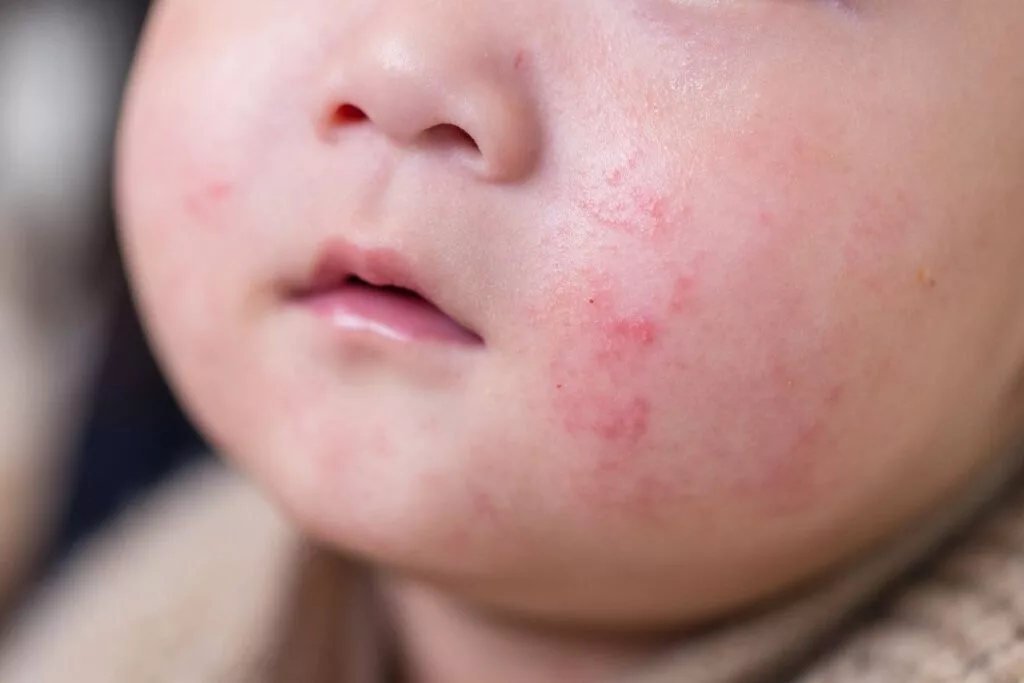
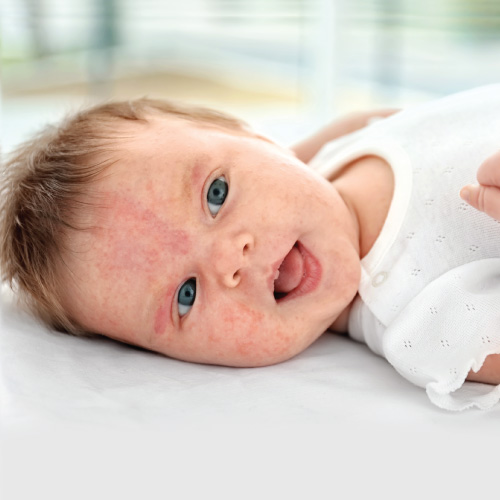
• Eczema or dry, inflamed skin
• Poor feeding or slow weight gain
Some babies have a mixed form, with both immediate and delayed symptoms. This is one reason CMPA can be hard to identify from symptoms alone.
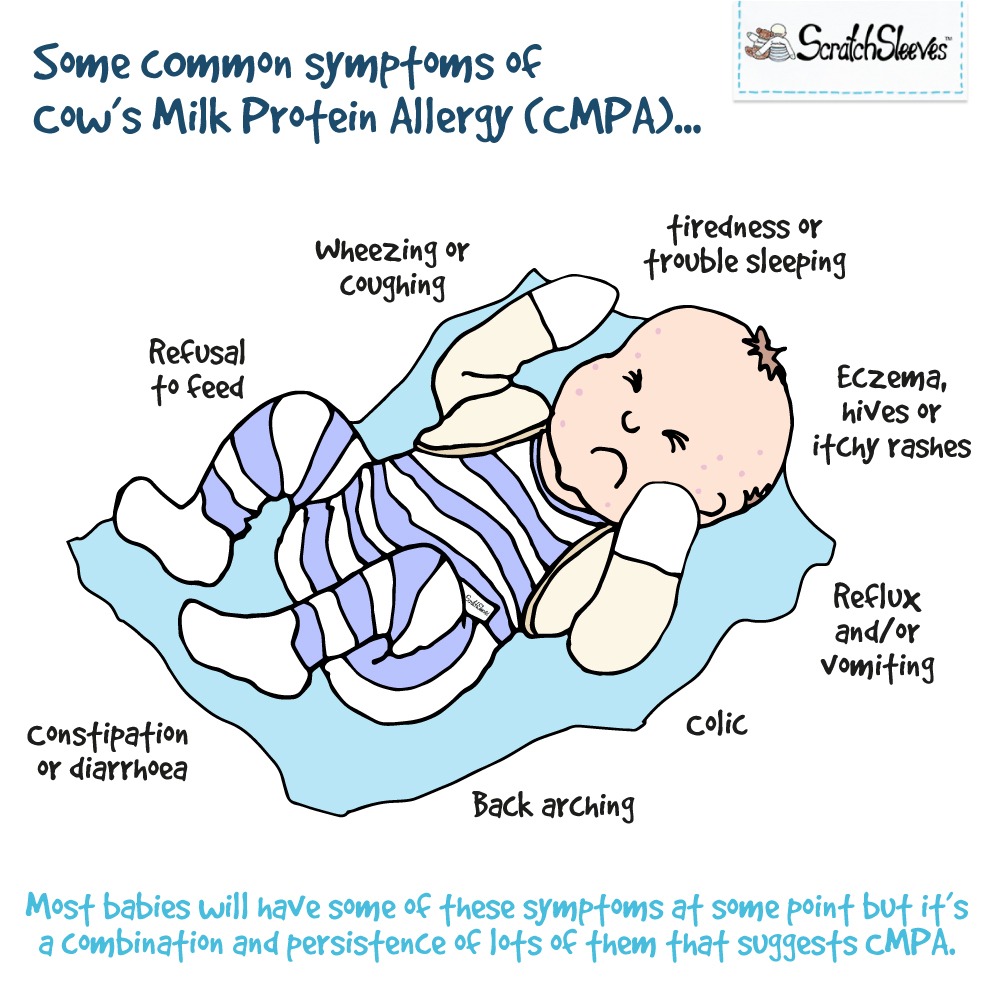
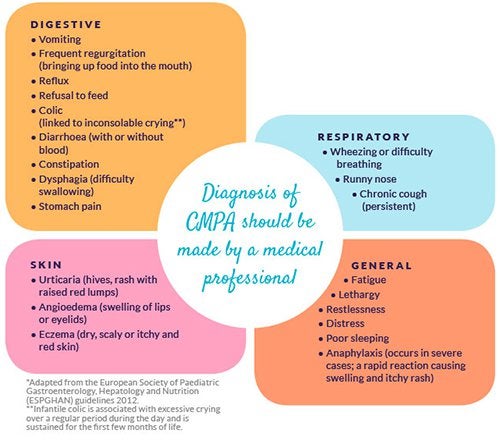
Common CMPA Symptoms in Babies
The symptoms of CMPA can range from mild to severe. One baby may have only eczema, while another may have vomiting, bloody stools, and poor growth.
Common signs include:
• Skin symptoms such as hives, swelling, redness, or eczema
• Digestive symptoms such as vomiting, diarrhea, constipation, gas, or blood in the stool
• Feeding problems such as refusing the bottle or breast
• Ongoing irritability during or after feeds
• Respiratory symptoms such as coughing, wheezing, or a runny nose
• Poor weight gain or fewer wet diapers
• Pale skin, weakness, or extreme sleepiness
Many of these signs are common in babies without CMPA. Reflux, viral illness, sensitive skin, overfeeding, and normal infant crying can look similar.
For example, mild spit-up alone does not prove CMPA. Likewise, green stool may occur for many harmless reasons. A pattern of symptoms linked to milk protein exposure is more useful than one symptom by itself.
When CMPA Symptoms Need Emergency Care
Call 911 or your local emergency number if your baby has signs of a serious allergic reaction.
Emergency signs include:
• Trouble breathing or noisy breathing
• Swelling of the tongue, throat, or face
• Widespread hives with vomiting
• Repeated vomiting with weakness or pale skin
• Sudden limpness or unusual unresponsiveness
• Blue or gray lips or skin
Do not wait to see whether these symptoms improve. Anaphylaxis can progress quickly.
Blood in the stool also needs medical attention, especially if it is more than a small streak or appears with fever, severe pain, repeated vomiting, or a baby who looks unwell. A healthcare professional should assess the cause.

What Causes CMPA in Babies?
The exact cause of CMPA is not fully understood. It involves a mix of immune development, family history, and other biological factors.
A baby may have a higher chance of allergy if close family members have:
• Food allergies
• Eczema
• Asthma
• Hay fever or other allergic conditions
However, CMPA can occur in babies without any family history. It is not caused by poor parenting, and it is not always preventable.
CMPA may occur in breastfed babies because small amounts of cow’s milk protein can pass into breast milk after a breastfeeding parent eats dairy. It is more common to notice symptoms in babies who drink standard cow’s milk-based formula.
Can Breastfed Babies Have CMPA?
Yes. Breastfed babies can have CMPA, although the exposure is indirect.
Cow’s milk proteins from a parent’s diet may pass into breast milk in small amounts. If a breastfed baby has a clear pattern of symptoms, a pediatrician or allergy specialist may suggest a short dairy-free trial for the breastfeeding parent.
This trial should be planned carefully. Removing dairy without guidance can make it harder to identify the cause and may reduce calcium, vitamin D, protein, or calorie intake.
A breastfeeding parent should:
• Ask a healthcare professional before removing dairy
• Read labels for milk, whey, casein, and other milk ingredients
• Avoid making several major food changes at once
• Use calcium and vitamin D supplements if advised
• Complete the planned reintroduction step when instructed
Most breastfeeding parents do not need to stop breastfeeding because of CMPA.

Can Formula-Fed Babies Have CMPA?
Yes. Standard formulas often contain intact cow’s milk proteins. Babies with CMPA may react to these proteins.
A healthcare professional may recommend an extensively hydrolyzed formula. In this formula, milk proteins are broken into smaller pieces that are less likely to trigger a reaction.
Some babies need an amino acid-based formula. This contains individual amino acids rather than whole milk proteins and may be used when symptoms are severe or do not improve with an extensively hydrolyzed formula.
Partially hydrolyzed formulas are not usually suitable for confirmed CMPA. Their proteins are only partly broken down, so they may still cause a reaction.
Do not switch formulas repeatedly without medical guidance. Frequent changes can cause new stool changes and make it difficult to see whether treatment is working.
How Is CMPA Diagnosed?
There is no single test that confirms every case of CMPA. Diagnosis usually depends on the baby’s history, symptoms, growth, feeding pattern, and response to removing cow’s milk protein.
A clinician may use these steps:
- Review the symptoms and timing after feeds.
- Check the baby’s weight, length, skin, and overall health.
- Consider other causes, such as reflux, infection, or feeding problems.
- Recommend a medically supervised elimination trial when appropriate.
- Reintroduce cow’s milk protein to confirm whether symptoms return.
For suspected IgE-mediated CMPA, a doctor may order a skin-prick test or blood test. These tests can support a diagnosis, but they do not always predict the full clinical picture.
For non-IgE-mediated CMPA, allergy tests are often negative. The elimination and reintroduction process is usually more important.
One common mistake is keeping a baby off dairy for months without a planned reintroduction. That may lead to an incorrect diagnosis and unnecessary food restriction.

The Elimination and Reintroduction Process
A food elimination trial means removing cow’s milk protein for a limited period under medical guidance. The length often depends on the suspected type of CMPA and the baby’s symptoms.
During the trial, parents may track:
• What the baby eats
• Vomiting or spit-up
• Stool changes
• Skin changes
• Crying and feeding behavior
• Wet diapers
• Weight gain
If symptoms improve, the healthcare professional may recommend reintroducing cow’s milk protein. If symptoms return, this supports the diagnosis.
This step matters because babies often improve naturally as they grow. Without reintroduction, it may be difficult to know whether cow’s milk protein was truly the cause.
Reintroduction should not be done at home if the baby has had breathing symptoms, facial swelling, widespread hives, or another possible severe allergic reaction. In those cases, follow a specialist’s plan.

What Formula Is Used for CMPA?
The right formula depends on the baby’s symptoms and medical history.
Extensively hydrolyzed formula
This is often the first medical formula tried for CMPA. The milk proteins are broken into smaller fragments.
Amino acid-based formula
This formula contains no intact milk protein. A specialist may recommend it for severe reactions, poor growth, or symptoms that continue with an extensively hydrolyzed formula.
Soy formula
Soy formula is not automatically the best choice. Some babies with CMPA also react to soy, and suitability depends on age, symptoms, and medical advice.
Goat’s milk formula
Goat’s milk proteins are similar to cow’s milk proteins. Goat’s milk formula is generally not a safe substitute for babies with CMPA unless a healthcare professional specifically recommends it.
Never give homemade formula or dilute infant formula. These choices can cause dangerous nutrient and electrolyte problems.
How Long Does CMPA Last?
Many babies outgrow CMPA during early childhood. The timing varies by the type and severity of the allergy.
Some babies with mild non-IgE-mediated symptoms tolerate milk again during infancy. Babies with IgE-mediated reactions may need longer monitoring by an allergy specialist.
A healthcare professional may suggest planned milk challenges or gradual reintroduction at the right age. The timing depends on the baby’s symptoms, test results, growth, and reaction history.
CMPA is not always lifelong. Still, families should not test milk at home unless a clinician says it is safe.
CMPA, Reflux, and Colic: What Is the Difference?
Reflux is common in babies because their digestive systems are still developing. It may cause small spit-ups without affecting growth or comfort.
CMPA can also cause reflux-like symptoms, but it often includes other signs such as eczema, bloody stool, diarrhea, hives, or poor weight gain.
Colic usually means prolonged crying in an otherwise healthy baby. It does not automatically indicate an allergy.
A simple comparison can help:
• Reflux: Spit-up is common, and the baby often grows well.
• Colic: Crying occurs for long periods, but there may be no allergy signs.
• CMPA: Symptoms may involve more than one body system and may follow milk protein exposure.
These conditions can overlap. A pediatric clinician can help separate normal infant symptoms from signs that need further testing.
Practical Tips for Parents
Caring for a baby with possible CMPA can feel like solving a puzzle while running on little sleep. A few simple habits can make the process clearer.
• Keep a symptom and feeding diary.
• Record the exact formula or foods used.
• Note when symptoms start and how long they last.
• Take photos of hives, eczema, or unusual stool when appropriate.
• Attend weight checks during an elimination trial.
• Ask before removing several foods at once.
• Check labels for milk, whey, casein, milk solids, and butter.
• Tell every caregiver about the feeding plan.
• Keep emergency medicines available if prescribed.
• Ask when and how milk should be reintroduced.
A practical lesson from many feeding plans is that consistency matters. Changing formula, removing dairy, and starting a new supplement on the same day can make the results impossible to interpret.
Nutrition and Growth With CMPA
Babies with CMPA still need enough calories, protein, fat, vitamins, and minerals for healthy growth. A safe replacement formula or a well-planned breastfeeding diet should provide these nutrients.
Infants under 12 months should not receive cow’s milk as their main drink. Cow’s milk does not provide the right balance of nutrients for young babies and may increase the risk of iron deficiency.
Ask for help from a pediatrician or pediatric dietitian if your baby:
• Is not gaining weight
• Drinks much less than usual
• Has fewer wet diapers
• Has repeated vomiting or diarrhea
• Needs several food restrictions
• Has a breastfeeding parent following a strict dairy-free diet
Nutrition advice should match the baby’s age and feeding method. Avoid online elimination lists that remove many foods without a clear reason.
What Research and Clinical Guidance Say
Medical guidance from pediatric and allergy organizations generally supports a careful diagnosis based on symptoms, a limited elimination period, and planned reintroduction.
Important points include:
• CMPA should not be diagnosed from a single symptom alone.
• IgE tests are useful in some immediate reactions but cannot rule out every type of CMPA.
• Non-IgE CMPA often requires clinical elimination and reintroduction.
• Breastfeeding can usually continue with professional support.
• Special formulas should be chosen with medical advice.
• Babies with possible anaphylaxis need urgent emergency care.
Guidance can vary by country and by the baby’s symptoms. Your child’s clinician should adapt the plan to the feeding history, growth pattern, and reaction risk.
Frequently Asked Questions About What Is CMPA in Babies
What is CMPA in babies?
CMPA is an immune reaction to proteins in cow’s milk. It can cause digestive, skin, feeding, or breathing symptoms.
How can I tell if my baby has CMPA?
Look for a repeated pattern of symptoms after cow’s milk protein exposure, such as vomiting, hives, eczema, blood in the stool, or poor feeding. A healthcare professional must confirm the diagnosis because these signs can have many other causes.
Is CMPA the same as lactose intolerance?
No. CMPA involves an immune reaction to milk proteins, while lactose intolerance involves difficulty digesting milk sugar. Lactose intolerance is uncommon in young infants.
Can a breastfed baby have CMPA?
Yes. Small amounts of cow’s milk protein from a breastfeeding parent’s diet can pass into breast milk. A clinician may recommend a supervised dairy-free trial while continuing breastfeeding.
What formula is best for a baby with CMPA?
An extensively hydrolyzed formula is often tried first, while an amino acid-based formula may be needed for severe or persistent symptoms. Ask a pediatrician before changing formula.
Does CMPA cause reflux?
CMPA can cause reflux-like symptoms, but ordinary infant reflux is also very common. Other signs, such as eczema, blood in the stool, hives, or poor growth, make CMPA more likely.
Will my baby outgrow CMPA?
Many babies outgrow CMPA during infancy or early childhood. The timing depends on the allergy type and severity, so reintroduction should follow a medical plan.
When should I seek emergency help for CMPA?
Get emergency help for trouble breathing, swelling of the face or tongue, widespread hives with vomiting, sudden weakness, or unusual unresponsiveness. These may be signs of anaphylaxis.
Conclusion
CMPA in babies is an immune reaction to cow’s milk proteins, not simply a problem digesting milk sugar. Symptoms may affect the skin, stomach, stool, feeding pattern, or breathing, and they can appear quickly or after a delay.
A careful diagnosis usually involves medical history, growth checks, a planned elimination trial, and reintroduction when safe. Do not remove major foods or switch formulas repeatedly without professional guidance.
If your baby has symptoms that suggest CMPA, write down the feeding pattern and contact a pediatric healthcare professional. Use trusted medical resources, follow the recommended plan, and seek urgent care for breathing problems or signs of anaphylaxis.