Introduction
Most 8-week-old babies breastfeed 8 to 12 times in 24 hours, though some feed a little less or more. At this age, breast milk usually remains a baby’s main food. The best guide is not a strict clock. Feed when your baby shows early hunger signs, and watch wet diapers, swallowing, and weight gain to confirm that feeding is going well.
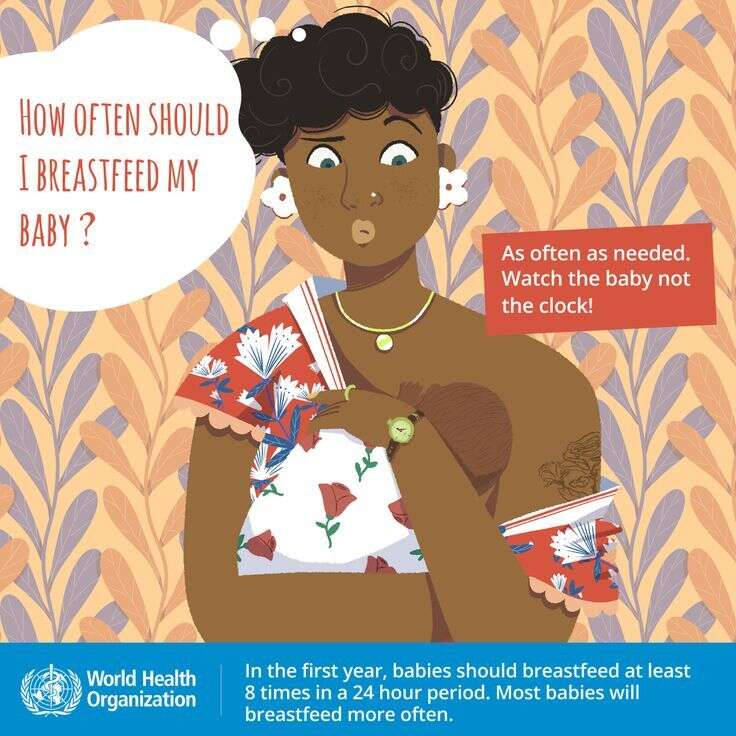
In the United States, the American Academy of Pediatrics (AAP) and the Centers for Disease Control and Prevention (CDC) support breastfeeding on demand. This means offering the breast when your baby seems hungry rather than waiting for a fixed schedule.
Every baby has a different pattern. Some nurse for 10 minutes, while others need 30 minutes. Some space feeds two to three hours apart, while others want several feeds close together. These changes can be normal, especially during a growth spurt.

How Often Should an 8-Week-Old Breastfeed?
An 8-week-old will usually breastfeed about every 2 to 3 hours, for a total of 8 to 12 feeds per day. This is a guide, not a rule.
Your baby may feed:
- More often during the evening
- Less often during one part of the day and more often later
- Every 1 to 2 hours during cluster feeding
- For longer periods during a growth spurt
- At least once or twice overnight, although sleep patterns vary
Some babies take fewer than eight feeds but transfer milk well and gain weight steadily. Others need 12 or more feeds. The number matters less than the full picture: effective sucking, audible swallowing, enough wet diapers, and healthy growth.
Feed by hunger cues
Early hunger cues can include:
- Stirring or waking
- Moving the hands toward the mouth
- Opening the mouth
- Turning the head from side to side
- Licking or smacking the lips
- Making soft sounds
Crying is a late hunger cue. A crying baby may have trouble latching because they are upset. If possible, offer the breast when you first notice your baby stirring or searching.
How long should each breastfeeding session last?
There is no required number of minutes. A feed may last 10 minutes on one breast or 30 minutes across both breasts. Some babies nurse quickly, while others pause often.
Let your baby stay on the first breast while they are actively sucking and swallowing. When the sucking slows, the baby releases the breast, or the breast feels softer, offer the second breast. Your baby may take it or may be satisfied with one side.

How Can You Tell if Your 8-Week-Old Is Getting Enough Milk?
The strongest signs of adequate milk intake are steady growth, regular wet diapers, and active feeding. Breast softness or the length of a feed cannot show how much milk your baby drank by themselves.
Look for these signs:
- At least 5 to 6 wet diapers each day after the first week of life
- Pale urine rather than dark or strong-smelling urine
- Regular stools, although stool patterns can vary by 8 weeks
- Audible swallowing during feeds
- A deep latch that is not painful
- Relaxed hands and body after feeding
- A baby who seems alert during awake periods
– Weight gain confirmed at health visits
Your baby may still root or suck after feeding for comfort. That behavior does not always mean hunger. Babies also suck to relax, settle, or fall asleep.
Weight checks matter
A home scale cannot replace a clinical weight check. Your child’s pediatrician or another qualified health professional can assess weight gain using the baby’s growth pattern, feeding history, and physical signs.
If your baby has not regained birth weight, is losing weight, or has a medical condition, follow the feeding plan given by the pediatrician. Do not lengthen the time between feeds without professional advice.

Should You Wake an 8-Week-Old to Breastfeed?
Whether you need to wake your baby depends on health, weight gain, and your pediatrician’s advice.
If your baby is growing well, has enough wet diapers, and your pediatrician has confirmed that feeding is going well, you may not need to wake the baby for every feed. Many healthy babies begin to have one longer sleep period at night around this age.
You may need to wake your baby if:
- The baby has not regained birth weight
- Weight gain is slow or uncertain
- The baby was born premature
- The baby is very sleepy during feeds
- The baby has jaundice or another medical concern
- Wet diapers have decreased
- Your pediatrician gave you a specific feeding schedule
A longer sleep stretch does not mean every baby should sleep through the night at 8 weeks. Night feeding may still be normal and necessary. Breastfeeding hormones and milk production also respond to regular milk removal, so long gaps may affect supply for some parents.
Ask your baby’s pediatrician or a lactation professional before making a major change to overnight feeds.

What If Your Baby Wants to Breastfeed Constantly?
Frequent feeding does not always mean that your milk supply is low. Many babies have periods of cluster feeding, when they nurse several times within a few hours. This often happens in the late afternoon or evening and may occur during a growth spurt.
Cluster feeding can support milk production because breast milk is made through a supply-and-demand process. The more often milk is removed, the more signals the body receives to keep making milk.
Try these steps:
- Offer the breast when your baby shows hunger cues.
- Check that the latch is deep and comfortable.
- Listen for regular swallowing.
- Offer the second breast when sucking slows.
- Keep track of wet diapers and weight gain.
- Rest, drink to thirst, and eat regular meals.
Do not judge milk supply by how full your breasts feel. After the early weeks, breasts often become softer even when milk production is adequate.
Contact a lactation consultant or pediatrician if your baby feeds almost constantly but rarely swallows, remains distressed after most feeds, has fewer wet diapers, or is not gaining weight.

Is an 8-Week-Old Breastfeeding Schedule Necessary?
A flexible routine often works better than a strict schedule. You can aim for regular opportunities to feed while still responding to your baby’s cues.
A typical day might look like this:
| Time | Possible feeding pattern |
|---|---|
| 6:00 a.m. | Breastfeed after waking |
| 8:30 a.m. | Breastfeed |
| 11:00 a.m. | Breastfeed |
| 1:30 p.m. | Breastfeed |
| 4:00 p.m. | Breastfeed |
| 6:00 p.m. | Cluster feed |
| 8:30 p.m. | Breastfeed before sleep |
| Overnight | One or more feeds, based on the baby |
This is only a hypothetical example. Your baby may feed at different times or need more frequent feeds.
A schedule can help you notice patterns, but it should not override hunger cues. Avoid delaying a feed simply because “it is not time yet.” Also avoid forcing a feed when your baby shows clear signs of being full.

Breastfeeding, Pumping, and Combination Feeding at 8 Weeks
If you breastfeed directly, your baby’s feeding pattern can guide you. If you pump or use formula as well, the plan may need more care.
When a bottle replaces a breastfeeding session, pumping around that time can help maintain milk removal and supply. This is not a perfect rule for every family, but it is a useful general principle.
If you pump exclusively, many parents need several milk-removal sessions across 24 hours. The exact number depends on milk supply, the baby’s needs, and whether the baby was born early or has a health issue. A lactation consultant can help create a plan based on your output and your baby’s weight.
When using a bottle:
- Use a slow-flow nipple when appropriate.
- Hold the bottle more level rather than tipping it steeply.
- Pause during the feed.
- Watch for signs that the baby needs a break.
- Do not pressure the baby to finish the bottle.
These steps support paced bottle-feeding and may make it easier for a breastfed baby to move between breast and bottle.

When Should You Call a Pediatrician or Lactation Consultant?
Call your baby’s pediatrician promptly if your 8-week-old:
- Has fewer than about 5 to 6 wet diapers in 24 hours
- Has very dark urine or orange-red urate crystals after the early newborn period
- Is difficult to wake for feeds
- Feeds weakly or does not swallow
- Vomits green fluid, has repeated forceful vomiting, or seems very ill
- Has poor weight gain or ongoing weight loss
- Has a dry mouth, no tears, or other signs of dehydration
- Develops a fever
For a baby younger than 3 months, a rectal temperature of 100.4°F (38°C) or higher needs urgent medical guidance. Call your pediatrician right away. In an emergency, call 911 in the United States.
A lactation consultant can help with pain, shallow latch, clicking sounds, nipple damage, suspected low supply, oversupply, or a baby who falls asleep soon after starting each feed.

Common Mistakes to Avoid
Counting only the feeds you notice
Short feeds still count. A baby may take a useful amount of milk in a brief session, especially when milk flows well.
Waiting for crying
Crying can make latching harder. Offer the breast at earlier signs of hunger when possible.
Assuming frequent feeding proves low supply
Cluster feeding is common. Check diapers, swallowing, and weight before assuming there is a supply problem.
Using a rigid feeding timer
A timer can help you remember feeds, but it should not replace your baby’s cues or medical advice.
Watching the clock instead of swallowing
The number of minutes at the breast does not prove milk intake. Active sucking and swallowing provide more useful information.
Ignoring pain
Mild pulling or tugging can occur, but sharp pain, bleeding, cracked nipples, or pain that lasts through the feed deserves support. A poor latch is common and treatable.

Frequently Asked Questions
Can an 8-week-old breastfeed only six times a day?
Some babies may feed six times and still grow well, but six feeds is below the common 8-to-12-feed range for young breastfed infants. Ask the pediatrician to review feeding, diaper output, and weight gain if feeds are consistently that infrequent.
How long can an 8-week-old go without breastfeeding at night?
A healthy baby who is gaining weight may sometimes sleep for a longer stretch at night. The safe interval depends on the baby’s growth, medical history, and clinician’s advice. Do not allow long overnight gaps if your pediatrician has told you to wake the baby.
Does cluster feeding mean my baby is not getting enough milk?
Not usually. Cluster feeding is common at 8 weeks and can happen during growth spurts or in the evening. It becomes more concerning when it occurs with poor weight gain, too few wet diapers, weak sucking, or little swallowing.
Should I offer both breasts at every feed?
Offer the first breast until active feeding slows, then offer the second. Your baby may take both breasts or may be satisfied after one. Switching sides on a strict timer is not necessary.
Can I breastfeed too often?
It is generally safe to offer the breast whenever your baby shows hunger cues. Babies may also want to suck for comfort. If feeds are painful, your baby never seems satisfied, or diaper output and weight gain are poor, seek help rather than simply adding more feeds.

Key Takeaways
- Most 8-week-old babies breastfeed 8 to 12 times in 24 hours.
- Feeding every 2 to 3 hours is common, but normal patterns vary.
- Follow hunger cues instead of using a strict clock.
- Check wet diapers, swallowing, behavior, and weight gain.
- Cluster feeding can be normal and does not automatically mean low milk supply.
- Ask the pediatrician before reducing night feeds if weight gain is uncertain.
- Get medical help for dehydration signs, poor feeding, fever, or poor weight gain.
Conclusion
For most 8-week-old babies, breastfeeding on demand means offering the breast whenever early hunger cues appear, often 8 to 12 times each day. A flexible pattern is usually more useful than a fixed schedule.
The next step is to track your baby’s feeds, wet diapers, and any weight information for 24 hours. Share that record with your pediatrician or a lactation consultant if you are unsure whether your baby is getting enough milk.
Sources and Further Reading
- Centers for Disease Control and Prevention: How Much and How Often to Breastfeed
- American Academy of Pediatrics: Breastfeeding and the Use of Human Milk
- American Academy of Pediatrics: Breastfeeding Your Baby
- U.S. Office on Women’s Health: Breastfeeding
- U.S. Food and Drug Administration: Handling and Storage of Breast Milk