
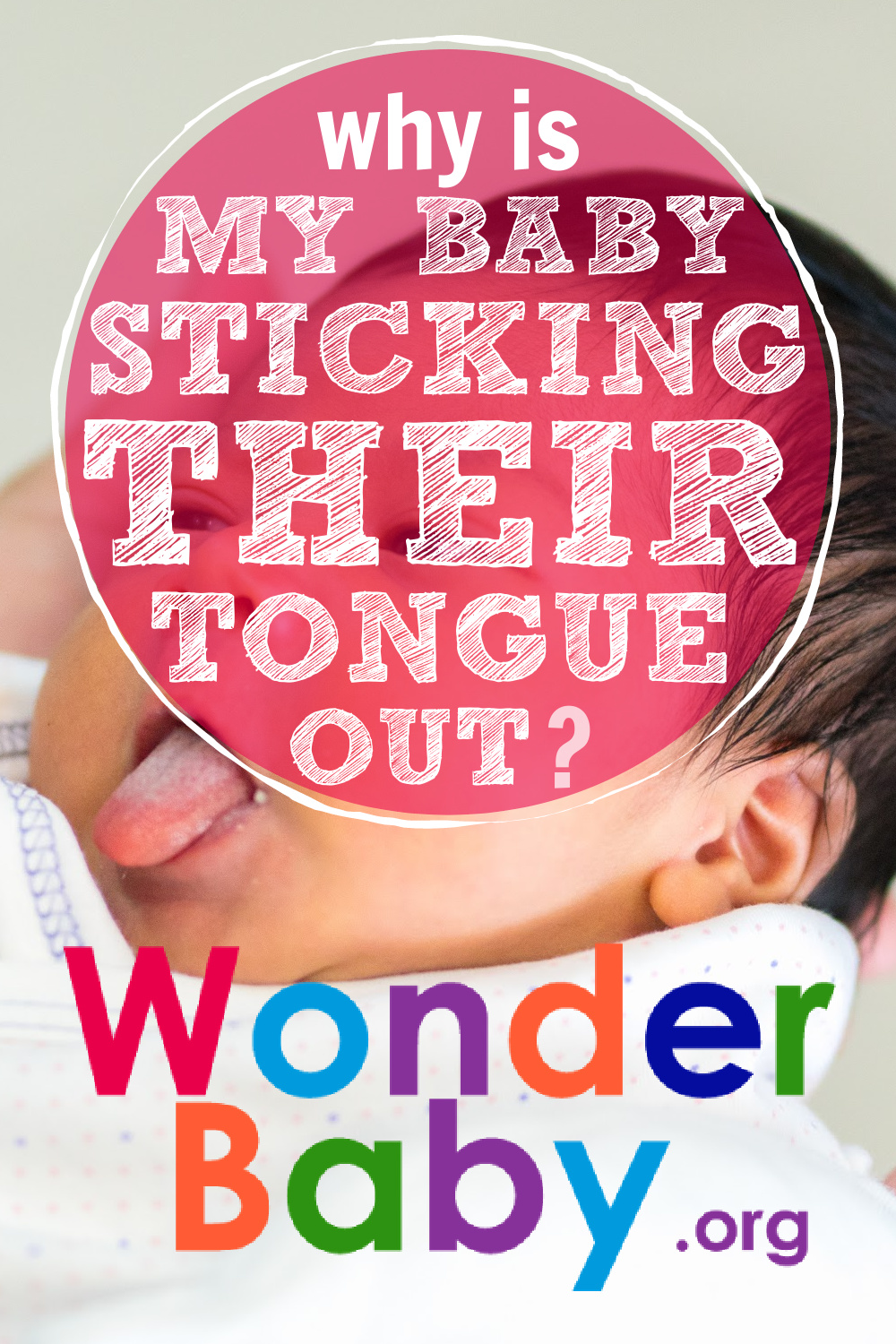
Babies stick their tongues out for many normal reasons. They may be using a built-in feeding reflex, exploring their mouth, copying you, reacting to hunger, or dealing with teething. In most cases, tongue sticking is a normal part of infant development.
The key is to look at the whole baby. Tongue sticking is usually not a concern when your baby breathes well, feeds normally, gains weight, and seems alert and comfortable. However, frequent tongue protrusion with breathing trouble, poor feeding, unusual swelling, or developmental concerns needs medical advice from your child’s pediatrician.

Common reasons babies stick their tongues out
Babies do not always stick out their tongues for the same reason. Age, feeding, mood, and other symptoms can help explain the behavior.
1. The tongue-thrust reflex
Young babies have a normal reflex called the tongue-thrust reflex, also known as the extrusion reflex. When something touches the front of a baby’s tongue, the tongue may move forward. This reflex helps babies manage breast milk or formula and helps protect them from swallowing solid foods before they are ready.


The reflex is strongest in early infancy. It often becomes less noticeable around 4 to 6 months, although the timing can vary. The American Academy of Pediatrics explains that readiness for solid foods depends on several signs, not age alone.
A baby may stick out their tongue during or after a feeding because the tongue is still working as part of this reflex.
2. Your baby is exploring
Babies learn through their senses. Their tongue helps them feel texture, temperature, moisture, and movement. A baby may push out their tongue simply because they discovered they can do it.
This behavior often appears with other forms of exploration, such as:
- Putting hands in the mouth
- Chewing on fingers
- Making new sounds
- Blowing bubbles
- Moving the lips and tongue
- Watching the tongue move in a mirror
This type of tongue play is usually harmless. It may increase when your baby is calm, awake, and interested in the world around them.
3. Hunger or fullness
Some babies stick out their tongues when they are hungry. They may also turn their head, open their mouth, suck on their hands, or make small sounds. These early feeding cues can appear before crying.
Tongue movement can also signal that a baby is full or needs a break. During bottle-feeding, a baby who pushes the nipple out, turns away, or stops sucking may need to pause. Following these cues can help reduce overfeeding and stress during meals.
4. Imitation and social play
Babies often copy facial movements. If you stick out your tongue, your baby may do the same. This can be a simple form of social learning.
Your baby may also use tongue movements to get a reaction. Smiling, laughing, and making sounds can turn the behavior into a fun back-and-forth game. These interactions support early communication and bonding.
5. Teething
Sore or swollen gums can make a baby move the tongue more than usual. Your baby may stick out their tongue, drool, chew on objects, or rub their gums.


Teething does not usually cause severe illness. A fever, diarrhea, or a very ill appearance should not automatically be blamed on teething. Contact your pediatrician if your baby has a high fever, seems unwell, or has symptoms that do not fit ordinary teething.
6. Dry mouth, stuffy nose, or mouth breathing
A blocked nose can make feeding and breathing harder. Some babies open their mouths or hold their tongues forward when they cannot breathe easily through the nose.
Dry air, fever, vomiting, diarrhea, and poor fluid intake can also lead to a dry mouth. Look for signs such as fewer wet diapers, a dry mouth, fewer tears, or unusual sleepiness. These can point to dehydration and need prompt medical guidance.
7. A normal individual habit
Some babies simply have a tongue-out habit. If your baby is growing well, feeding well, breathing comfortably, and meeting expected milestones, the behavior may be part of their normal style.
A habit can come and go. It may be more common when your baby is tired, excited, hungry, or concentrating.

When tongue sticking is usually normal
Tongue protrusion is usually normal when it happens briefly and your baby otherwise seems well.
Use this quick guide:
| What you notice | What it may suggest |
|---|---|
| Tongue out during play | Exploration or imitation |
| Tongue out before feeding | Hunger cue |
| Tongue pushing food or a spoon out | Tongue-thrust reflex or not yet ready for solids |
| Tongue out with drooling and chewing | Teething or oral exploration |
| Tongue out while congested | Trouble breathing through the nose |
| Tongue out with normal feeding and growth | A harmless habit is possible |
A single behavior rarely gives a complete answer. Watch the pattern over several days. Note when it happens, how long it lasts, and whether it affects feeding, sleep, breathing, or comfort.
Signs that support a normal explanation
Your baby is more likely to be experiencing normal development if they:
- Feed without major difficulty
- Have regular wet diapers
- Stay alert during normal awake periods
- Breathe comfortably
- Move both sides of the face normally
- Gain weight as expected
- Respond to voices, faces, and touch
- Show no signs of pain or illness
If your baby is under 6 months old, do not give water, juice, or other drinks unless your pediatrician recommends them. Breast milk or infant formula remains the main source of nutrition during early infancy.
What to do at home
You do not need to stop normal tongue exploration. Instead:
- Watch for hunger and fullness cues.
- Keep feeding calm and unhurried.
- Wipe drool gently to protect the skin.
- Offer safe teethers if your baby is teething.
- Clear nasal congestion only with methods recommended for infants.
- Record a short video if the movement seems unusual and show it to the pediatrician.
Never put food, medicine, honey, or small objects in your baby’s mouth to test the tongue. Honey can cause botulism in babies younger than 12 months, and small objects can cause choking.
Tongue sticking and feeding
Tongue movement can affect both breast- and bottle-feeding. It does not always mean there is a problem.
A newborn may briefly push the tongue forward while learning to latch or coordinate sucking, swallowing, and breathing. Feeding is a complex skill. Some babies need time and support, especially if they were born early or have had medical problems.


During breastfeeding
Ask for help if your baby often:
- Cannot stay latched
- Makes clicking sounds throughout feeds
- Coughs, chokes, or pulls away often
- Takes much longer than expected to feed
- Seems tired during feeds
- Has poor weight gain
- Has very few wet diapers
A lactation consultant or pediatrician can watch a feeding and look for issues with latch, milk flow, positioning, or oral movement. A tongue that sticks out does not by itself prove that a baby has a tongue-tie or another structural problem.
During bottle-feeding
Use paced feeding when advised by your baby’s health care team. Keep the bottle more level rather than forcing milk into the mouth. Pause when your baby shows signs of stress or fullness.
Do not enlarge a nipple hole or switch to a faster-flow nipple without guidance. Milk that flows too fast can cause coughing, gagging, gulping, or pulling away.
When starting solid foods
Babies are generally ready for complementary foods when they show several readiness signs. The CDC’s infant feeding guidance recommends looking for signs such as:
- Sitting up alone or with support
- Good head and neck control
- Opening the mouth when food is offered
- Bringing objects to the mouth
- Swallowing food instead of repeatedly pushing it out
Pushing food out with the tongue can mean the tongue-thrust reflex is still active. It may also mean the texture, taste, spoon, or feeding position is unfamiliar.
Do not force food into your baby’s mouth. Wait a few days and try again if your pediatrician has said your baby is ready.

When should you call the pediatrician?
Call your baby’s pediatrician if tongue sticking is persistent, new, or linked with another concern. The behavior deserves attention when it affects feeding, breathing, growth, or development.
Contact the pediatrician soon if your baby:
- Struggles to breastfeed or take a bottle
- Gags, coughs, or chokes often during feeds
- Has poor weight gain
- Has fewer wet diapers than usual
- Drools with signs of pain
- Seems to have a swollen or unusually large tongue
- Cannot close the mouth comfortably
- Has a tongue that appears weak or moves abnormally
- Has lost a skill they previously had
- Seems unusually sleepy, weak, or difficult to wake
A pediatrician may examine the mouth, tongue, jaw, breathing, muscle tone, hydration, and growth pattern. They may refer your baby to a feeding specialist, speech-language pathologist, lactation consultant, dentist, or another specialist when needed.
Get urgent medical help for breathing or color changes
Call 911 in the United States if your baby:
- Has severe trouble breathing
- Turns blue, gray, or very pale
- Chokes and cannot breathe, cry, or cough effectively
- Becomes unresponsive
- Has sudden swelling of the tongue, lips, or face


Do not wait for a routine appointment when breathing or consciousness is affected. The American Academy of Pediatrics’ HealthyChildren.org provides infant choking and first-aid guidance, but hands-on infant CPR and choking training are the best ways to prepare.

Can tongue sticking out signal a medical condition?
Sometimes, but tongue sticking alone cannot identify a condition. A doctor must consider the baby’s full medical history and physical examination.
Some babies with low muscle tone, certain genetic conditions, neurological conditions, or oral-motor problems may have trouble keeping the tongue in the mouth. They may also have feeding problems, delayed motor skills, unusual muscle tone, or difficulty controlling the head and jaw.
For example, babies with Down syndrome may have low muscle tone and oral-motor differences. But a baby who sticks out their tongue does not automatically have Down syndrome. Many healthy babies do this as part of normal reflexes, play, or exploration.
A persistently protruding tongue can also occur when the tongue is enlarged or when the mouth and jaw do not provide enough space. These causes are uncommon, and they require a professional examination rather than a home diagnosis.
What doctors may check
Your child’s clinician may ask about:
- When the tongue protrusion began
- Whether it happens all the time or only during play or feeding
- Breastfeeding or bottle-feeding details
- Coughing, choking, or noisy breathing
- Weight and wet diapers
- Developmental milestones
- Illness, fever, congestion, or medication
- Family and birth history
A short video can help if the behavior does not happen during the appointment.

Common mistakes parents should avoid
Several common assumptions can create needless worry or delay needed care.
Mistake 1: Assuming tongue sticking always means hunger
Hunger is one possible reason, but babies also stick out their tongues during play, teething, and feeding breaks. Look at several hunger cues instead of using one movement alone.
Mistake 2: Blaming every symptom on teething
Teething may cause drooling, gum discomfort, and chewing. It should not explain serious breathing problems, dehydration, persistent vomiting, or a high fever.
Mistake 3: Starting solids because a baby pushes food out
The tongue-thrust reflex may still be present. Follow readiness signs and your pediatrician’s advice. Starting solids too early can make feeding stressful.
Mistake 4: Trying to hold the tongue inside
Do not push the tongue back, tape the mouth, or use devices without medical instruction. These actions can injure the mouth or interfere with breathing.
Mistake 5: Diagnosing from photos or videos online
A photo cannot show feeding skill, muscle tone, breathing, or growth. Online information can help you prepare questions, but it cannot replace an examination.

Key takeaways
- Babies often stick their tongues out because of a normal tongue-thrust reflex.
- Exploration, hunger, fullness, imitation, teething, and congestion are also common causes.
- Tongue sticking is usually harmless when feeding, breathing, growth, and development are normal.
- Persistent protrusion with feeding trouble, poor weight gain, dehydration, or unusual swelling should be assessed.
- Call 911 for severe breathing trouble, blue or gray color, unresponsiveness, or serious choking.


FAQs
Why does my newborn keep sticking out their tongue?
Newborns often do this because of the tongue-thrust reflex. It helps with early feeding and usually becomes less noticeable as oral control develops. Hunger, fullness, gas, or normal mouth exploration may also play a role.
Is tongue thrusting a sign that my baby is hungry?
It can be. Look for other hunger cues, such as rooting, lip smacking, hand-to-mouth movements, and opening the mouth. Crying is often a later hunger sign.
Why does my baby stick their tongue out after eating?
Your baby may be full, taking a break, exploring, or responding to the taste and texture of food. During solid feeding, pushing food out can also mean the tongue-thrust reflex is still active.
Should I worry if my baby’s tongue is always out?
Ask your pediatrician for an evaluation if the tongue is almost always outside the mouth or if your baby has feeding trouble, poor growth, breathing issues, unusual mouth swelling, or delayed development. Tongue position alone cannot determine the cause.
When do babies stop sticking their tongue out?
There is no exact age. The tongue-thrust reflex often fades around 4 to 6 months, but babies may still stick out their tongues during play, teething, or feeding. Occasional tongue protrusion can remain normal beyond that stage.
Conclusion
Most babies stick their tongues out because they are feeding, learning, playing, or responding to normal reflexes. Watch your baby’s overall health rather than focusing on the tongue alone.
If the behavior is persistent or comes with feeding difficulty, breathing changes, dehydration, poor growth, or unusual swelling, contact your pediatrician. In the United States, seek emergency help by calling 911 for severe breathing trouble, blue or gray skin, unresponsiveness, or serious choking.