At 10 months old, most babies eat three small meals each day while breast milk or infant formula remains their main source of nutrition. Many formula-fed babies drink about 24–32 ounces of formula in 24 hours. Breastfed babies may nurse on a different schedule.
For solid food, begin with a few spoonfuls and build toward about ¼ to ½ cup per meal, based on your baby’s hunger and fullness cues. Some babies eat more, while others eat less. The goal is not to make a baby finish a set amount.
Offer soft foods from several groups, including iron-rich foods, vegetables, fruit, grains, yogurt, eggs, beans, fish, meat, and other safe textures. At this age, babies can usually eat mashed, lumpy, minced, shredded, or soft finger foods.

How Much Should a 10-Month-Old Eat in a Day?
A typical 10-month-old may have:
- Breast milk: On demand, often several nursing sessions each day
- Infant formula: About 24–32 ounces per day, divided among several feeds
- Solid food: Three meals, with one or two small snacks if needed
- Water: Small amounts from an open cup or straw cup
- Juice: None is needed, and the American Academy of Pediatrics recommends avoiding juice before age 1
These are starting points, not strict rules. A baby’s needs depend on body size, activity, growth, illness, feeding skills, and how much milk they drink.
A simple portion guide
Use the following amounts as a flexible guide:
| Food | Starting amount | Possible amount by the end of the meal |
|---|---|---|
| Soft fruit or vegetables | 1–2 tablespoons | ¼–½ cup |
| Oatmeal or other soft grain | 1–2 tablespoons | ¼–½ cup |
| Yogurt or cottage cheese | 1–2 tablespoons | ¼–½ cup |
| Meat, fish, beans, or egg | 1–2 tablespoons | 2–4 tablespoons |
| Breast milk or formula | Offer as usual | Based on hunger cues |
A 10-month-old does not need to eat every food group at every meal. Try to include an iron-rich food at least twice each day and offer a mix of foods over the full day.
Breast Milk and Formula Still Come First
Breast milk or iron-fortified infant formula should remain the main drink for a 10-month-old. Solid food adds new nutrients, flavors, textures, and eating skills, but it does not fully replace breast milk or formula yet.
If your baby drinks formula
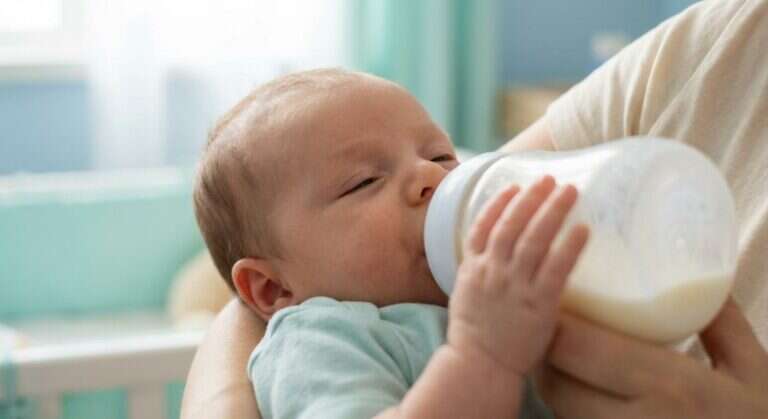
Many babies between 8 and 12 months drink about 24–32 ounces of formula per day. A common pattern is three or four bottles, but some babies need a different schedule.
Do not force your baby to finish a bottle. Stop when your baby turns away, closes their mouth, slows down, or relaxes their hands. Never add cereal, food, or extra water to a bottle unless your child’s health care professional gives you specific instructions.
Prepare formula exactly as the label states. Too much water can lower the calorie and nutrient content. Too little water can make the formula too concentrated.
If your baby breastfeeds
Breastfed babies may nurse several times during the day and night. There is no reliable way to measure the exact amount of milk taken during a nursing session.
Continue offering breast milk when your baby shows hunger. Regular wet diapers, steady growth, and an alert, active baby are more useful signs of adequate intake than the length of a feeding.
When should milk be offered?
Many families offer milk:
- After waking
- Before or after breakfast
- Before or after lunch
- Before or after dinner
- Before bedtime
There is no single correct order. If a baby fills up on milk right before a meal, they may eat less solid food. If they are very hungry, they may become upset before they can practice eating. A flexible routine often works better than a strict clock.

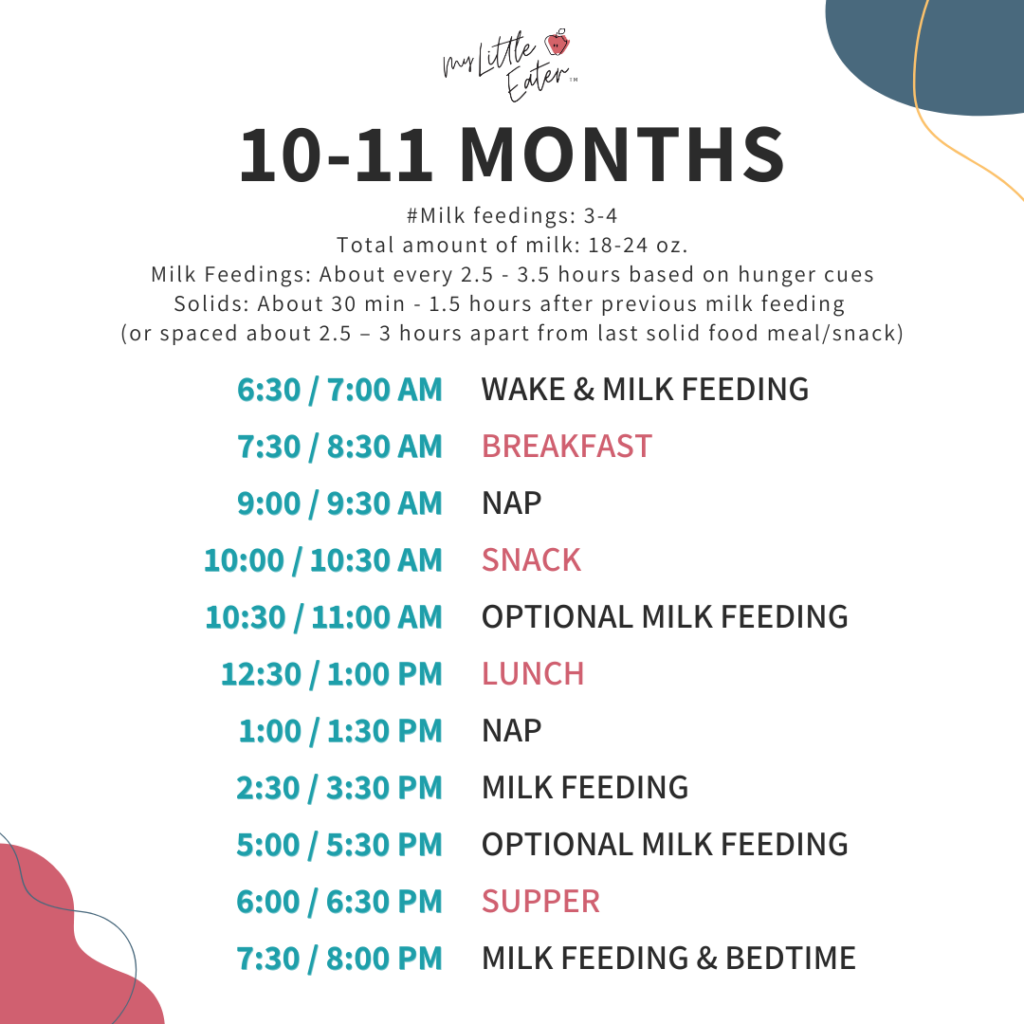
A Sample Feeding Schedule for a 10-Month-Old
A sample schedule can help you plan, but it should not replace your baby’s hunger cues. Adjust the timing to fit naps, sleep, nursing, and your family’s routine.
| Time | Example |
|---|---|
| 7:00 a.m. | Breast milk or formula |
| 8:30 a.m. | Breakfast: oatmeal, banana, and soft scrambled egg |
| 11:00 a.m. | Breast milk or formula |
| 12:30 p.m. | Lunch: shredded chicken, avocado, and soft-cooked vegetables |
| 3:00 p.m. | Breast milk or formula |
| 5:30 p.m. | Dinner: beans, soft pasta, and cooked vegetables |
| 7:00 p.m. | Breast milk or formula |
Some babies need a small snack between meals. Examples include:
- Soft fruit
- Plain whole-milk yogurt
- Toast strips with a thin spread of smooth peanut butter
- Soft-cooked vegetables
- Small pieces of ripe avocado
- Shredded cheese
- A few pieces of soft egg
A snack is optional. If your baby is eating three meals well and still drinking enough breast milk or formula, a snack may not be necessary.
How to use the schedule
Offer the meal when your baby is calm and awake. Give enough time to explore the food, but end the meal when your baby loses interest.
A meal may last about 10–20 minutes. Some babies eat quickly. Others touch, smell, drop, and taste food before eating much. Messy practice is a normal part of learning.

What Foods Should a 10-Month-Old Eat?
A balanced day includes foods that provide iron, protein, healthy fats, carbohydrates, vitamins, and minerals.
Offer iron-rich foods often
Iron supports brain development and healthy blood cells. Good choices include:
- Beef, turkey, chicken, or other soft meats
- Fish with low mercury
- Eggs
- Beans and lentils
- Tofu
- Iron-fortified infant cereal
- Dark leafy greens paired with a vitamin C food
Vitamin C can help the body absorb iron from plant foods. Try beans with tomato, lentils with broccoli, or iron-fortified cereal with strawberries.
Include healthy fats
Babies need energy-dense foods to support growth. Offer:
- Avocado
- Full-fat plain yogurt
- Smooth nut or seed butter spread thinly
- Egg
- Soft fish
- Olive oil mixed into vegetables or grains
Do not serve a spoonful of nut butter by itself. It can stick to the roof of the mouth and create a choking risk. Thin it with water, yogurt, or mashed fruit, or spread a very thin layer on soft toast.
Add fruits and vegetables
Serve fruits and vegetables in soft, safe forms:
- Steamed broccoli florets
- Soft sweet potato
- Cooked carrots
- Ripe pear or peach
- Banana
- Avocado
- Soft-cooked apple
- Peas that are flattened or mashed
- Very soft green beans
Hard raw vegetables and firm chunks of fruit are not safe for most babies at this age.
Choose appropriate grains
Examples include:
- Oatmeal
- Soft pasta
- Rice
- Quinoa
- Polenta
- Soft bread or toast strips
- Pancakes made without added honey
- Iron-fortified infant cereal
A 10-month-old can usually handle more texture than a younger baby. Smooth purées are not required if your baby can safely manage soft lumps and finger foods.

How to Serve Food Safely at 10 Months
Food should be soft enough to mash between your fingers. Cut food into strips or small pieces that your baby can pick up. The best shape depends on your baby’s skills and the food.
Safer food shapes
For many foods, try:
- Finger-length strips for self-feeding
- Thin, soft pieces
- Shredded meat
- Flaked fish
- Mashed beans
- Soft lumps that are easy to gum
Babies do not need teeth to eat soft foods. Their gums can break down many foods, but hard, round, sticky, or tough foods can still cause choking.
Foods to avoid or change
Avoid these common choking hazards unless they are prepared in a safer form:
- Whole grapes: cut lengthwise into quarters
- Hot dogs: avoid rounds; cut lengthwise into thin strips
- Whole nuts and popcorn
- Raw carrots
- Hard apple chunks
- Large pieces of meat or cheese
- Sticky spoonfuls of nut butter
- Whole cherry tomatoes
- Hard candy
- Large globs of dense food
Always seat your baby upright while eating. Stay close and watch the entire meal. Choking and gagging are not the same: gagging is often noisy, while choking may be quiet and prevent normal breathing. Parents and caregivers should learn infant CPR and choking first aid from a qualified program.
Avoid honey before 12 months
Do not give honey, including cooked or raw honey, before your baby’s first birthday. Honey can contain spores that cause infant botulism.
Avoid cow’s milk as a drink before age 1
Small amounts of dairy, such as plain yogurt or cheese, are generally suitable for many babies. However, cow’s milk should not replace breast milk or formula as the main drink before 12 months.
Limit high-salt and high-sugar foods
Babies do not need added sugar. Limit foods such as sweet drinks, desserts, salty packaged foods, and processed meats. These foods can take the place of more nutritious choices.

How Much Water Can a 10-Month-Old Drink?
A 10-month-old can usually drink small amounts of water from a cup with meals. Breast milk or formula should still provide most fluids.
The American Academy of Pediatrics commonly lists about 4–8 ounces of water per day for babies 6–12 months, though needs vary. More water may be needed in hot weather or during illness only when advised by a health care professional.
Too much water can reduce milk intake and, in extreme cases, disturb the body’s salt balance. Do not use water to stretch formula, and do not give water instead of a needed breast milk or formula feeding.
A straw cup, open cup, or small training cup can help your baby learn to drink. Spills are normal. The goal at this stage is skill practice, not replacing bottles right away.

How to Know if Your Baby Is Hungry or Full
Responsive feeding means you decide what, when, and where to offer, while your baby decides whether and how much to eat. This approach helps babies learn to respond to their own hunger and fullness.
Hunger cues
Your baby may be hungry when they:
- Reach for food
- Open their mouth when food approaches
- Lean toward food
- Become excited when they see a bottle, breast, or meal
- Make sounds or gestures for more
Crying is a late hunger cue. When possible, offer food before your baby becomes very upset.
Fullness cues
Your baby may be done when they:
- Turn their head away
- Close their mouth
- Push food or a spoon away
- Slow down
- Lose interest
- Drop food repeatedly
- Relax their hands or body
Do not pressure your baby to take “one more bite.” Appetite can change from meal to meal. Growth spurts, teething, tiredness, and mild illness can all affect eating.
Introducing Allergens at 10 Months
If your baby has not tried common allergens, ask their pediatrician how to introduce them. Current U.S. guidance supports introducing age-appropriate forms of common allergens during infancy rather than delaying them without a medical reason.
Common allergens include:
- Peanut
- Egg
- Dairy
- Wheat
- Soy
- Sesame
- Fish
- Shellfish
- Tree nuts
Introduce one new allergenic food at a time in a safe form. For example, use smooth peanut butter thinned with water or purée, not whole peanuts. Once tolerated, continue offering the food regularly as part of the normal diet.
If your baby has severe eczema, an existing food allergy, or a previous reaction, speak with a pediatrician before introducing peanut or other major allergens. Seek emergency help for breathing trouble, swelling of the lips or tongue, repeated vomiting, widespread hives, pale skin, or unusual sleepiness after eating.

Why a 10-Month-Old May Suddenly Eat Less
A temporary drop in solid food intake is common. Possible reasons include:
- Teething
- A cold or other illness
- Constipation
- Tiredness
- A change in routine
- Too much milk immediately before meals
- Difficulty with a new texture
- Discomfort from reflux or another health issue
Continue offering breast milk or formula and provide small, low-pressure meals. Do not force food or replace every missed meal with snacks.
Call your child’s pediatrician if your baby has repeated choking, trouble swallowing, frequent vomiting, signs of dehydration, persistent diarrhea, poor weight gain, or a major and ongoing drop in intake. A pediatrician can review growth, feeding skills, milk intake, and possible medical causes.
Babies born early or babies with developmental, oral-motor, digestive, or growth concerns may need a personalized feeding plan. A pediatrician or registered dietitian can help set safe targets.

Common Feeding Mistakes to Avoid
Treating portion sizes as a requirement
Portion charts are estimates. They do not tell you exactly how much your baby must eat. Use them to decide what to offer, not to pressure your baby.
Replacing milk too quickly
Some parents reduce breast milk or formula as solids increase. At 10 months, milk still matters. Reduce milk only when your baby naturally takes less and continues to grow well.
Offering only smooth purées
Purées can be useful, but babies also need practice with texture. Gradually offer soft lumps, mashed foods, shredded foods, and safe finger foods.
Adding cereal to a bottle
Adding cereal to a bottle does not reliably help babies sleep longer and can increase choking and overfeeding risks. Use a spoon or offer cereal in a bowl instead.
Serving unsafe “healthy” foods
Raw vegetables, whole nuts, grapes, chunks of meat, and thick nut butter may seem nutritious but can be dangerous. Change the texture and shape before serving.
Comparing your baby with another baby
Two healthy 10-month-olds may eat very different amounts. Growth over time, development, milk intake, and feeding behavior give a better picture than one meal.

Frequently Asked Questions
Should a 10-month-old eat three meals a day?
Yes. Most 10-month-olds can work toward three meals each day. Meals may be small, and some babies also need one or two snacks. Breast milk or formula remains an important part of the diet.
How many ounces should a 10-month-old eat at each meal?
There is no required ounce amount for solids. Start with a few tablespoons and let your baby eat more if they show interest. Many babies may eat about ¼ to ½ cup at a meal, but appetite varies widely.
Can a 10-month-old eat table food?
Yes, if the food is soft, low in salt and added sugar, and prepared to reduce choking risk. Avoid honey, cow’s milk as the main drink, hard foods, whole nuts, popcorn, and other choking hazards.
Should a 10-month-old drink water or juice?
Offer small amounts of water in a cup. Juice is not needed, and the American Academy of Pediatrics recommends no juice before 12 months. Breast milk or formula should remain the main drink.
What if my 10-month-old refuses solid food?
Keep offering small portions without pressure. Try different textures, temperatures, and flavors. Make sure your baby is not too tired or too full from milk before the meal. Contact the pediatrician if refusal persists or affects growth, hydration, or milk intake.
Can a 10-month-old eat eggs, peanut butter, or fish?
Many babies can eat these foods in safe forms. Eggs should be fully cooked. Peanut butter should be thinned or spread very thinly, never served as a thick spoonful. Choose fish that is low in mercury and remove all bones. Ask your pediatrician for guidance if your baby has severe eczema or a known allergy.
Bottom Line
A 10-month-old will often eat three small meals a day, with optional snacks, while breast milk or infant formula remains the main source of nutrition. Offer a few tablespoons at first and allow your baby to decide when they have had enough.
Focus on variety, iron-rich foods, safe textures, water from a cup, and responsive feeding. If your baby has poor growth, feeding difficulty, repeated vomiting, dehydration, or signs of an allergic reaction, contact a pediatrician.