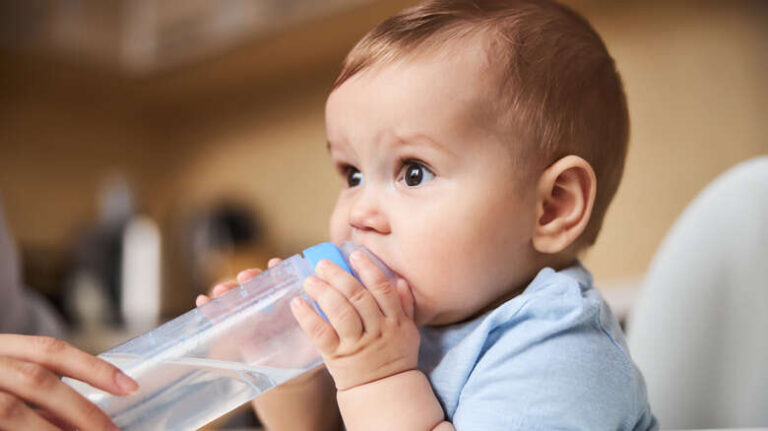
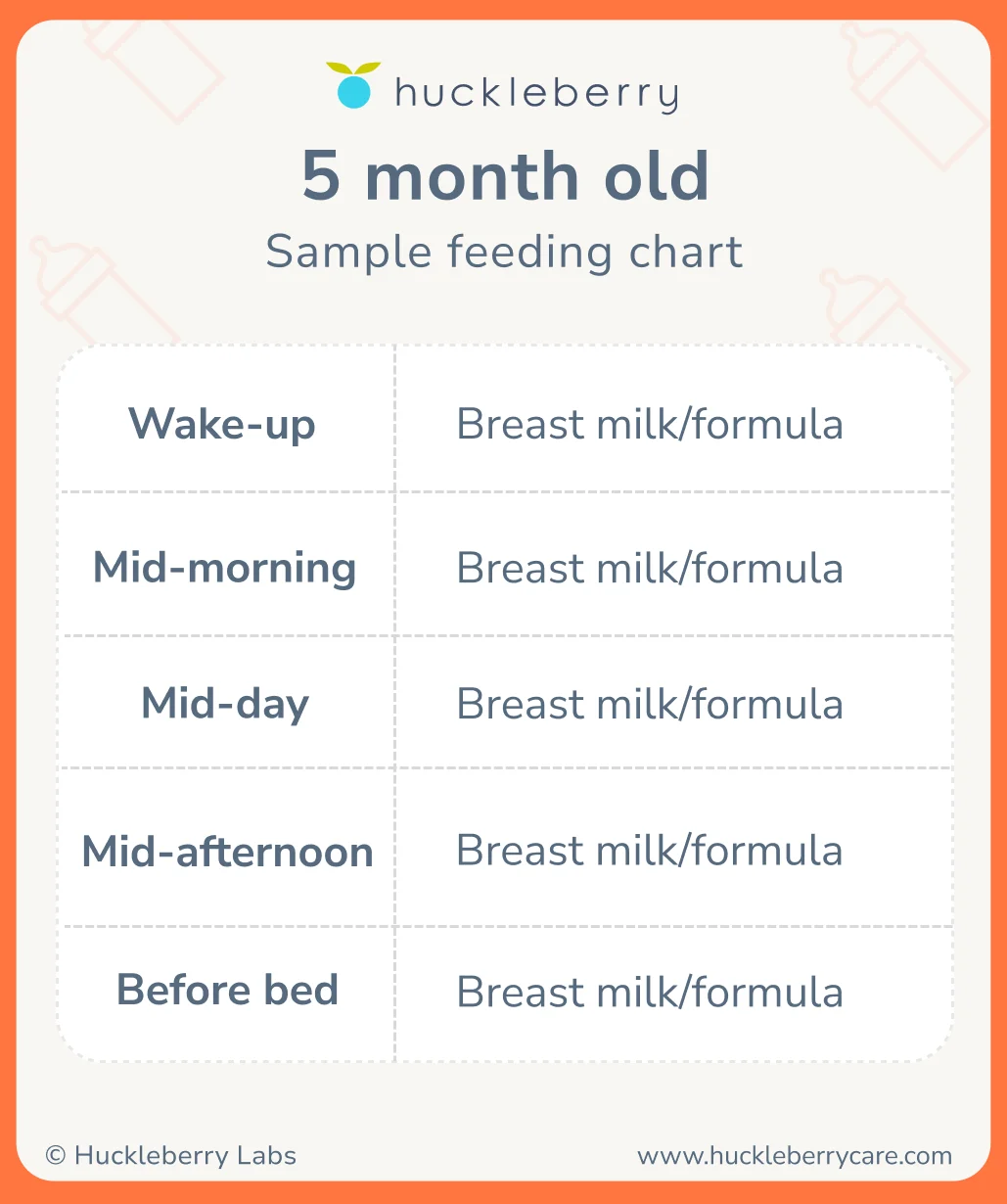
A 5-month-old in the United States usually gets all needed nutrition from breast milk, infant formula, or both. If your baby drinks formula, a common amount is 4 to 6 ounces per feeding every 3 to 4 hours, or about 24 to 32 ounces in 24 hours. Breastfed babies may feed 5 to 8 times a day, but breast milk intake is not measured well by ounces.
These are general ranges, not strict rules. Your baby may need more or less at a feed. Growth, appetite, activity, illness, and whether your baby also breastfeeds can change the amount. The best guide is your baby’s hunger and fullness cues, wet diapers, growth, and advice from their pediatrician.
Quick answer: How many ounces does a 5-month-old need?
Most 5-month-old babies need milk throughout the day and night. A typical pattern looks like this:
| Feeding method | Common pattern at 5 months |
|---|---|
| Breast milk | Often 5–8 nursing sessions in 24 hours |
| Expressed breast milk | Often 4–6 ounces per bottle, though needs vary |
| Infant formula | Often 4–6 ounces per bottle every 3–4 hours |
| Mixed feeding | A combination of nursing, expressed milk, and formula |
Some formula–fed babies take 6–8 ounces at a feed, especially if they feed less often. Others take smaller amounts more often. Do not force a baby to finish a bottle.
The American Academy of Pediatrics and the Centers for Disease Control and Prevention recommend following your baby’s cues rather than using one fixed schedule. By 5 months, milk is still the main food. Most babies are not ready to replace milk feeds with solid food yet.

How much breast milk does a 5-month-old need?
A breastfed 5-month-old usually feeds on demand rather than according to a measured ounce target. Many babies nurse about 5 to 8 times in 24 hours, although some feed more often and some feed less often.
If you pump and offer breast milk in a bottle, start with about 3 to 5 ounces. You can offer more if your baby still shows hunger. Smaller bottles can reduce wasted milk because breastfed babies often take less milk per feed than formula-fed babies.
A baby who breastfeeds may drink different amounts at different times. For example, they may take a short feed after waking and a longer feed before sleep. Growth spurts may also cause more frequent nursing for a few days.
Signs your breastfed baby is getting enough
Useful signs include:
- At least about 5 to 6 wet diapers a day after the early newborn period
- Regular swallowing during feeds
- A baby who seems alert and content at times between feeds
- Steady growth along their own growth curve
- Soft breasts after nursing, though this sign alone is not reliable
Wet diapers and growth are more useful than trying to guess the number of ounces transferred during nursing. A lactation consultant or pediatrician can do a weighted feed if intake is a concern.

How much formula should a 5-month-old drink?
Many 5-month-old formula-fed babies drink 4 to 6 ounces per feeding every 3 to 4 hours. Some babies take 6 to 8 ounces less often. A common daily total is 24 to 32 ounces.
A useful estimate for babies under 6 months is about 2 to 2½ ounces of formula per pound of body weight per day, but this is only a rough guide. It should not be used to push a baby to drink a set amount.
For example, a hypothetical 14-pound baby might need roughly 28 to 35 ounces per day by that estimate. That range may be higher than the usual 32-ounce daily limit often used as a point for discussing feeding with a clinician. Your baby’s growth and feeding pattern matter more than a calculation.
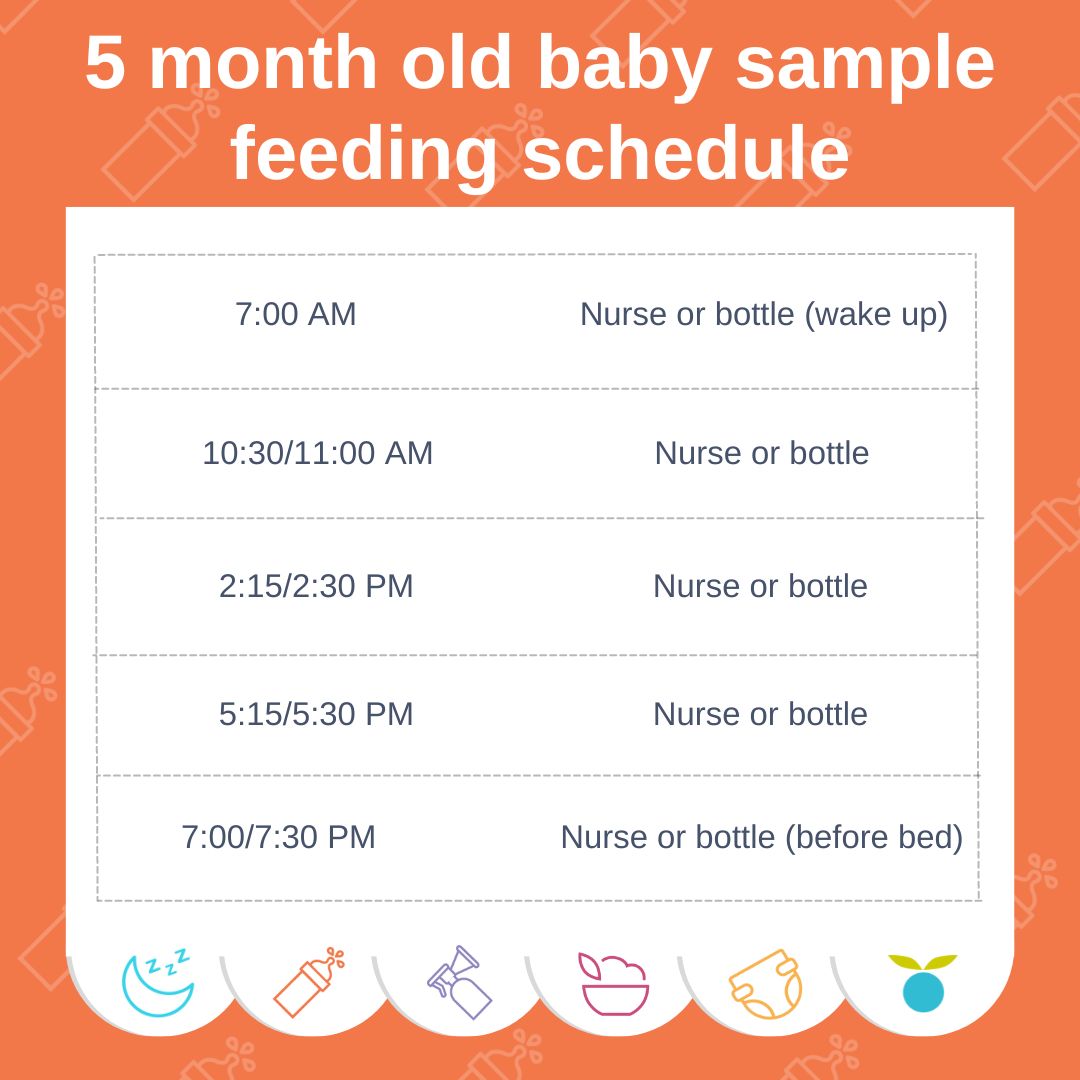
Example formula schedule
This is only an example, not a required schedule:
| Time | Amount |
|---|---|
| 7 a.m. | 5–6 ounces |
| 10:30 a.m. | 5–6 ounces |
| 2 p.m. | 5–6 ounces |
| 5:30 p.m. | 5–6 ounces |
| 9 p.m. | 4–6 ounces |
| Overnight, if needed | 0–4 ounces |
Some babies need an overnight feed at 5 months. Others sleep for a longer stretch. Do not wake a healthy, growing baby for routine feeds unless your pediatrician tells you to do so.
How to tell when your 5-month-old is hungry or full
Your baby’s cues can help you decide when to offer milk and when to stop. Crying is a late hunger sign, so try to feed before your baby becomes upset.
Early hunger cues
A 5-month-old may:
- Turn toward your breast or the bottle
- Open their mouth
- Bring hands to the mouth
- Suck on fingers
- Move arms and legs
- Become more alert or restless
Fullness cues
Your baby may be finished when they:
- Stop sucking
- Turn away from the breast or bottle
- Relax their hands
- Slow down or fall asleep
- Push the bottle away
- Let milk dribble from the mouth
Pause when your baby shows fullness, even if milk remains. Forcing a baby to finish can make it harder for them to notice their own hunger and fullness signals.
Use paced bottle-feeding
Paced bottle-feeding can help a bottle-fed baby control the flow. Hold the bottle more level instead of pointing it straight down. Let your baby pause during the feed, and stop when they show signs of being full.
Use a slow-flow nipple if recommended by your baby’s clinician. A faster nipple does not always solve fussiness or make feeding better.

Does a 5-month-old need solid food?
Most babies should begin solid foods at about 6 months, when they show signs of readiness. Milk remains the main source of nutrition during the first year.
A baby may be ready for solids when they:
- Sit upright with little support
- Hold their head and neck steady
- Open their mouth when food is offered
- Bring objects to the mouth
- Swallow food instead of pushing it out with the tongue
- Show interest in food
Do not add cereal or other foods to a bottle unless your pediatrician specifically instructs you to do so. It can raise the risk of choking and may cause a baby to take in too many calories.
Starting solids early does not usually make a baby sleep through the night. When solids begin, offer small amounts after or alongside milk feeds. Do not use solids to replace breast milk or formula too soon.
What changes the right amount of milk?
The right amount can vary from day to day. These factors may affect how much your baby drinks:
Growth and body size
Larger babies do not always need much more milk, and smaller babies may have strong appetites. The growth chart is more useful than comparing your baby with another child.
Feeding method
Breast milk and formula are digested differently, but neither feeding method gives one universal ounce target. Babies who nurse directly may feed more often than babies who take bottles.
Illness or teething
A stuffy nose, fever, sore mouth, reflux symptoms, or teething pain may reduce feeding for a short time. Offer smaller feeds more often and watch wet diapers.
Sleep changes
Some babies begin sleeping longer at night around this age. They may take more milk during the day, but not every baby follows that pattern.
Bottle size and flow
A large bottle or fast nipple can lead to fast drinking and overfeeding. Start with a smaller amount and offer more if your baby still shows hunger.

How to prepare and store infant formula safely
Safe formula preparation matters as much as the amount offered.
Follow these basic steps:
- Wash your hands and clean the preparation area.
- Use the exact amount of water listed on the formula label.
- Add the exact number of level scoops.
- Shake or mix as directed.
- Feed the prepared formula soon after mixing.
- Refrigerate prepared formula only if the label and your pediatrician’s guidance allow it.
- Throw away formula left in a bottle after your baby has started drinking from it.
Never dilute formula with extra water. Too much water can cause dangerous low sodium levels and poor nutrition. Too little water can overload a baby’s kidneys and provide too many calories.
The CDC provides current guidance on preparing and storing powdered, concentrated, and ready-to-feed formula. Powdered formula is not sterile, so extra precautions may be needed for babies younger than 2 months, premature babies, or babies with certain health conditions.
When should you call your baby’s pediatrician?
Contact your pediatrician if your 5-month-old:
- Has fewer wet diapers than usual
- Has a dry mouth or no tears when crying
- Is unusually sleepy, weak, or hard to wake
- Repeatedly refuses feeds
- Vomits most feeds
- Has diarrhea with reduced drinking
- Coughs, chokes, turns blue, or struggles to breathe during feeds
- Is not gaining weight as expected
- Needs much more than 32 ounces of formula most days
- Has a sudden and lasting change in feeding
Seek urgent care for trouble breathing, blue or gray skin, severe dehydration, unusual unresponsiveness, or repeated vomiting with an inability to keep milk down.
Do not use water, juice, cow’s milk, toddler drinks, or homemade formula as a replacement for breast milk or infant formula at 5 months unless a qualified clinician gives specific instructions.

Common feeding mistakes to avoid
The most common mistake is treating a feeding range as a goal that every baby must meet. A healthy baby may take different amounts from one feed to the next.
Avoid these practices:
- Pressuring your baby to finish a bottle
- Adding cereal to a bottle without medical advice
- Diluting or concentrating formula
- Estimating breast milk intake only by how long a baby nurses
- Replacing milk feeds with solids before your baby is ready
- Comparing your baby’s intake with a sibling or another child
- Ignoring a clear change in wet diapers or behavior
- Propping a bottle or leaving a baby alone with one
If feeding feels stressful, keep a simple 24-hour record of feeds, wet diapers, vomiting, and behavior. Bring it to the pediatrician. A short record can show whether the concern is low intake, frequent feeding, a feeding skill problem, or something else.

Key takeaways
- A formula-fed 5-month-old often drinks 4–6 ounces every 3–4 hours.
- Many formula-fed babies take about 24–32 ounces in 24 hours.
- Breastfed babies often nurse 5–8 times daily, but there is no exact ounce target when nursing directly.
- Follow hunger and fullness cues instead of forcing a set amount.
- Breast milk or infant formula remains the main nutrition at 5 months.
- Ask your pediatrician about poor feeding, fewer wet diapers, repeated vomiting, or concerns about growth.
FAQs
Can a 5-month-old drink 8 ounces at once?
Some 5-month-old babies can drink 8 ounces at one feed, especially if they feed less often. Watch for fullness cues and do not pressure your baby to finish. If your baby regularly needs much more than 32 ounces of formula per day, discuss it with the pediatrician.
How long can a 5-month-old go without eating at night?
A healthy, growing baby may sleep for several hours without feeding at night. Some babies still need one or more night feeds. Your pediatrician can tell you whether your baby needs to be woken based on growth, medical history, and daily intake.
Is it normal for a 5-month-old to eat less some days?
Yes. Appetite can change with sleep, activity, teething, mild illness, and growth patterns. A short-term change is often less concerning when your baby remains alert, has normal wet diapers, and returns to usual feeding.
How many wet diapers should a 5-month-old have?
Many babies have about 5 to 6 or more wet diapers in 24 hours, but patterns vary. A clear drop from your baby’s usual number, especially with sleepiness, dry mouth, or poor feeding, needs medical advice.
Should I give my 5-month-old water?
Usually, no. Breast milk or infant formula supplies the fluid a 5-month-old needs. Extra water can reduce milk intake and, in large amounts, can cause dangerous electrolyte problems. Ask your pediatrician before offering water.
Conclusion
For most 5-month-olds in the United States, milk feeds remain the center of the day. If your baby drinks formula, start with about 4 to 6 ounces every 3 to 4 hours and adjust to hunger and fullness cues. If your baby breastfeeds, offer the breast when hungry and judge intake by wet diapers, behavior, and steady growth rather than ounces.
If your baby’s feeding pattern changes sharply or you are worried about hydration or weight gain, contact the pediatrician. A personal feeding plan is safer than trying to make a general chart fit every baby.
Evidence and U.S. guidance
- Centers for Disease Control and Prevention: How Much and How Often to Feed Infant Formula
- Centers for Disease Control and Prevention: How Much and How Often to Breastfeed
- Centers for Disease Control and Prevention: Infant and Toddler Nutrition
- American Academy of Pediatrics: Starting Solid Foods
- American Academy of Pediatrics: Formula Feeding FAQs