
Switching baby formula is usually safe when you move between similar formulas and follow the label on the new container. You can change brands at once, or make the change over several days by replacing one feeding at a time. Do not dilute formula, mix two powders in one bottle, or switch a baby with a medical need without talking with their pediatrician.
In the United States, infant formula is regulated by the U.S. Food and Drug Administration (FDA) and must meet specific nutrition standards. Still, babies can respond differently to a new formula. A short period of gas, fussiness, or a change in stool color may occur as your baby adjusts.

When can you switch baby formula?
You can often switch formula when your baby needs a different brand, your usual product is unavailable, the cost has changed, or your child’s doctor recommends another type. Most healthy, full-term babies can move between standard milk-based formulas without a special transition.
The key is to compare the type of formula, not just the brand name. A regular milk-based formula is different from a soy formula, extensively hydrolyzed formula, or amino-acid formula.


Before switching, check:
- Your baby’s age and feeding needs
- The formula type
- Whether the new product is powder, liquid concentrate, or ready-to-feed
- The preparation directions on the new container
- Any medical reason your baby uses the current formula
For babies younger than 12 months, use an infant formula made for their age. Do not replace breast milk or infant formula with cow’s milk, plant milk, toddler drink, or homemade formula. The American Academy of Pediatrics explains that cow’s milk should not be used as a main drink before 12 months of age.
Formula types that may require medical guidance
Speak with your baby’s pediatrician before changing to or from:
- Soy formula
- Lactose-free formula
- Partially hydrolyzed formula
- Extensively hydrolyzed formula
- Amino-acid formula
- Premature-infant formula
- Metabolic or other medical formulas
- Formulas used for poor weight gain or feeding problems
A baby with a diagnosed cow’s-milk protein allergy may need a specific hypoallergenic formula. A standard “sensitive” formula may not be enough. That decision should come from a health professional.
How to switch baby formula step by step
There are two safe ways to change formula: switch at once or make a gradual change. For a healthy baby moving between similar standard formulas, either method may work.
Option 1: Switch all at once
An immediate switch is simple:
- Stop using the old formula.
- Prepare the new formula exactly as directed.
- Offer the new formula at the next feeding.
- Watch your baby’s feeding, wet diapers, stool, and comfort over the next several days.
This method can be useful when the old formula is not available. A short adjustment period does not usually mean the new formula is harmful.
Option 2: Change one feeding at a time
A gradual switch may feel easier for some families. It also lets you see how your baby responds.
A simple plan is:
- Give one bottle of the new formula on the first day.
- Give two bottles of the new formula on the second day.
- continue replacing one old-formula bottle each day.
- Use only the new formula once your baby is taking it well.


You do not need to follow a strict four-day or seven-day schedule. The best pace depends on your baby’s response and your clinician’s instructions.
Do not mix different powders in one bottle
Do not combine scoops of two formula powders in the same bottle. Each product may have a different scoop size, powder weight, and water-to-powder ratio.
If you are transitioning gradually, prepare each formula in a separate bottle. Never pour two partly prepared formulas together unless a pediatrician or dietitian gives you exact instructions.
Use the new formula’s preparation directions
Formula labels are not interchangeable. Read the instructions on the new container every time you change products.
For powdered formula:
- Wash your hands before preparation.
- Use a clean bottle and nipple.
- Measure the water first, unless the label says otherwise.
- Add the exact number of level scoops listed.
- Use the scoop that comes with that container.
- Shake or mix as directed.
- Do not add extra water or extra powder.
The CDC’s infant formula preparation guidance states that adding too much water can reduce nutrition and adding too little can cause dehydration or place too much strain on a baby’s kidneys.
Do not make formula weaker or stronger
Never stretch formula by adding more water. Never make a bottle more concentrated because your baby seems hungry.
Incorrect mixing can cause serious problems, including:
- Dehydration
- Too little energy and nutrition
- Electrolyte changes
- Excessive strain on the kidneys
If you are worried that your baby is not getting enough, contact the pediatrician rather than changing the powder-to-water ratio.
Store and discard prepared formula safely
Follow the storage times on the product label and guidance from the CDC. In general:
- Use prepared formula according to the label’s time limits.
- Refrigerate prepared formula promptly when required.
- Throw away formula left in a bottle after a feeding.
- Do not save a bottle that your baby has already sucked from.
- Keep powdered formula sealed in a cool, dry place.
- Check the expiration date and container condition.
If the can is swollen, leaking, rusted, or damaged, do not use it.

What changes are normal after switching formula?
A change in stool is common after a formula switch. Your baby’s stool may change in color, texture, or frequency. Some babies also have mild extra gas or fussiness for a few days.
These changes often improve as your baby adjusts:


- Slightly different stool color
- Softer or firmer stools
- More or fewer stools than usual
- Mild gas
- Temporary changes in appetite
- Mild, short-term fussiness
A stool color change alone does not prove that a formula is wrong. Iron-fortified formulas, for example, can affect stool color.
How long does it take a baby to adjust?
Many babies adjust within several days. Some may take one to two weeks to settle into a new formula.
Look at the overall pattern rather than one diaper or one feeding. A baby who feeds well, has regular wet diapers, and seems comfortable is more likely to be adjusting normally.
Contact the pediatrician if symptoms are strong, last longer than expected, or affect feeding, sleep, hydration, or weight gain.
Signs that the new formula may not be a good fit
Call your baby’s health care provider if you notice:
- Repeated vomiting
- Ongoing watery diarrhea
- Blood or mucus in the stool
- Poor feeding
- Fewer wet diapers
- Poor weight gain
- Severe constipation
- A swollen or painful belly
- Persistent crying with feeds
- Worsening rash or eczema
These signs can have many causes. They do not automatically mean a formula allergy, but they deserve medical review.

Formula intolerance versus formula allergy
Formula intolerance and food allergy are not the same. Mild gas or stool changes are often part of normal digestion and do not necessarily indicate an allergy.
A cow’s-milk protein allergy may cause symptoms such as:
- Hives
- Facial or lip swelling
- Wheezing
- Repeated vomiting
- Blood in the stool
- Significant eczema
- Poor growth
- Severe diarrhea
A sudden allergic reaction can be an emergency. Call 911 in the United States if your baby has trouble breathing, swelling of the face or throat, becomes pale or limp, or shows signs of a severe reaction.
Do not start an elimination diet or a specialty formula based only on online advice. Your pediatrician can decide whether the symptoms fit an allergy, reflux, infection, feeding issue, or another condition.
Reflux is not always a formula problem
Spitting up is common in young babies. It may happen because the muscle between the stomach and esophagus is still developing.
Call the pediatrician for forceful vomiting, green vomit, blood, poor weight gain, breathing trouble, or signs of dehydration. Do not thicken bottles or add cereal unless the child’s clinician gives specific instructions.


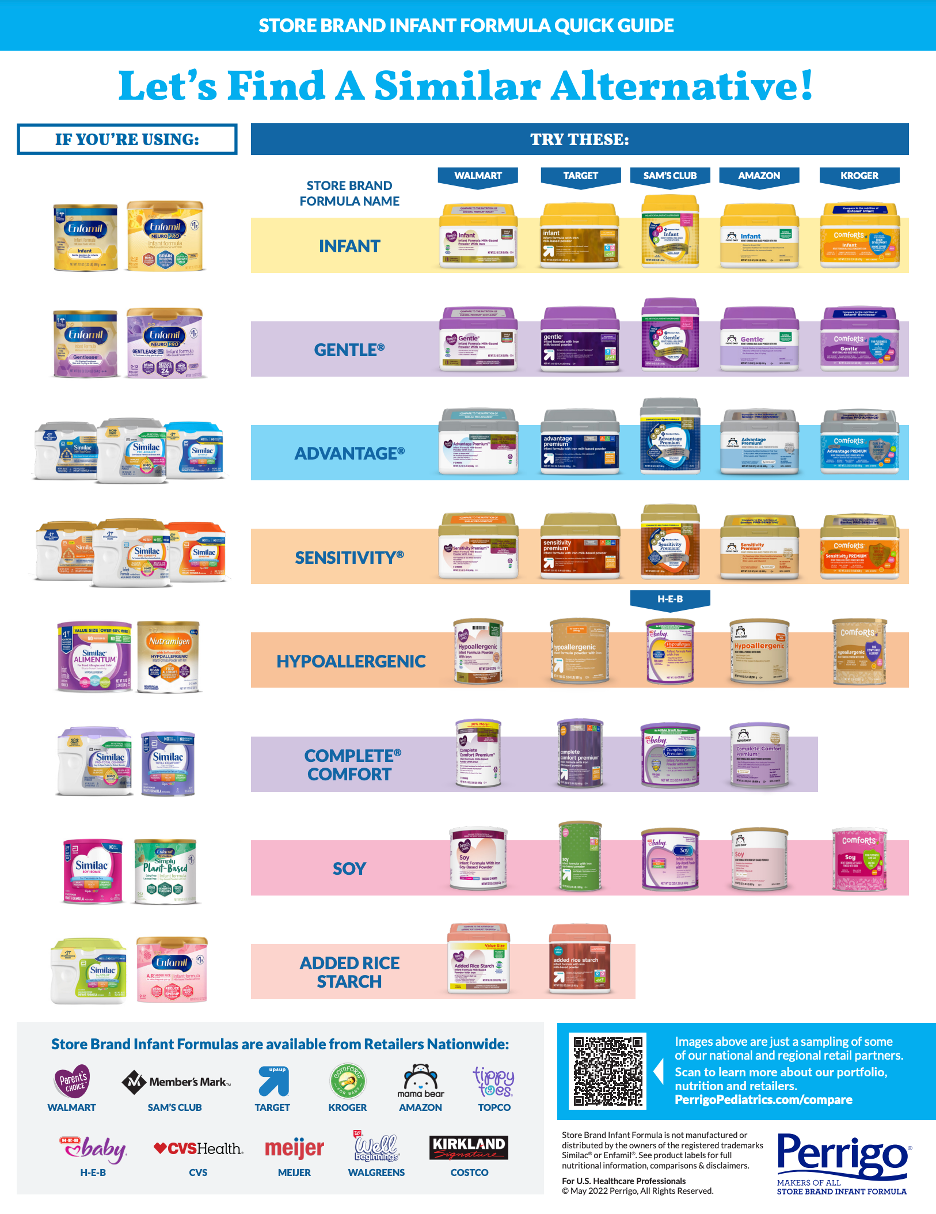
How to choose a new baby formula
For a healthy baby without a diagnosed medical condition, start by matching the current formula’s main features.
| Current formula | Possible next step | Ask the pediatrician first? |
|---|---|---|
| Standard milk-based formula | Another standard milk-based formula | Usually no, if your baby is healthy |
| Soy formula | Another soy formula or a different type | Yes, especially if treating symptoms |
| Partially hydrolyzed formula | Another partially hydrolyzed formula | Often helpful |
| Extensively hydrolyzed formula | Another specialty formula | Yes |
| Amino-acid formula | Another medical formula | Yes |
| Premature-infant formula | Age-appropriate formula after medical review | Yes |
| Formula for poor weight gain | Any replacement formula | Yes |
A higher price does not automatically mean a formula will work better. Compare the formula type, ingredients, preparation method, availability, and your baby’s medical needs.
If supply is the reason for the change, check the FDA’s infant formula safety and supply information and ask your pediatrician or local WIC office for current options. Do not buy formula from an unknown seller or use a damaged or expired container.
Powder, concentrate, or ready-to-feed?
These forms are not always prepared the same way.
- Powder: Must be mixed with water. It is not sterile.
- Liquid concentrate: Usually needs a precise amount of water.
- Ready-to-feed: Usually does not need water added.
Always follow the specific label. A bottle that looks similar to another product may require a different preparation method.

Common mistakes to avoid
Most formula-switching problems come from preparation errors or a switch that was not medically appropriate.
Avoid these mistakes:
- Switching to toddler drink before 12 months
- Using cow’s milk as the main drink for an infant
- Adding cereal without medical advice
- Diluting formula to make it last longer
- Adding extra powder to help a baby sleep longer
- Using the wrong scoop
- Mixing two powders in one bottle
- Keeping unfinished bottles for later
- Changing several things at once
- Assuming every crying spell means an allergy
- Continuing a formula that causes severe symptoms
- Using homemade formula recipes
The FDA warns against homemade infant formula because recipes may lack needed nutrients or contain unsafe ingredients. Homemade formula is not a safe substitute for commercially prepared infant formula.
If your baby has a feeding plan from a pediatrician, gastroenterologist, allergist, or dietitian, follow that plan instead of a general switching schedule.
What to do if your baby refuses the new formula
Some babies reject a new taste at first. Try offering the new formula when your baby is calm and hungry, but do not force the bottle.
You can:
- Offer smaller amounts more often.
- Keep the feeding quiet and unhurried.
- Use the same bottle and nipple at first.
- Check that the formula is prepared correctly.
- Give your baby time to learn the new taste.
- Ask the pediatrician before adding flavoring or switching again.
Do not repeatedly change formulas every day unless a clinician directs you to. Frequent changes make it hard to tell which formula caused a symptom and may add stress for both you and your baby.
Seek medical advice promptly if your baby refuses several feeds, has fewer wet diapers, seems unusually sleepy, or cannot keep feeds down.

Key takeaways
- Most healthy babies can switch between similar standard formulas.
- You can switch all at once or replace one feeding at a time.
- Prepare each formula exactly as its label says.
- Never dilute formula or mix two powders in one bottle.
- Mild gas and stool changes can be normal for a short time.
- Blood in the stool, repeated vomiting, poor feeding, dehydration, or breathing trouble needs medical attention.
- Ask a pediatrician before changing specialty, premature, allergy, or weight-gain formulas.


Frequently asked questions
Can I switch formula brands immediately?
Yes, many healthy babies can switch directly between similar standard formulas. Use the new product’s preparation instructions and watch your baby for feeding problems, dehydration, or severe symptoms.
Should I mix old and new formula during the transition?
Do not mix two different formula powders in one bottle. If you transition gradually, prepare each formula separately and give different bottles at different feeds.
How do I know if my baby is allergic to formula?
Possible allergy signs include hives, swelling, wheezing, repeated vomiting, blood in the stool, severe eczema, or poor growth. Breathing trouble or facial swelling is an emergency. Contact a pediatrician for less severe concerns.
Can switching formula cause constipation?
It can change stool texture and frequency, and some babies may become firmer or less regular. Call the pediatrician for severe pain, a swollen belly, vomiting, blood in the stool, or ongoing constipation.
Can I switch formula because my baby has gas?
You can discuss a change with the pediatrician, but gas is common in young babies and does not always mean the formula is the cause. Check feeding position, nipple flow, burping, and preparation before making repeated formula changes.
What if my usual formula is unavailable?
Ask your pediatrician, pharmacist, or WIC office about a suitable substitute. Match the formula type when possible, and verify the product and preparation instructions. Do not use homemade formula or dilute the formula you have.
Conclusion
For most healthy infants in the United States, switching between similar standard formulas is a manageable change. Choose a comparable product, follow its label exactly, and give your baby time to adjust.
If your baby uses a specialty formula or develops severe symptoms, pause the general switching plan and contact the pediatrician. When in doubt, safe preparation and professional guidance matter more than a quick brand change.
