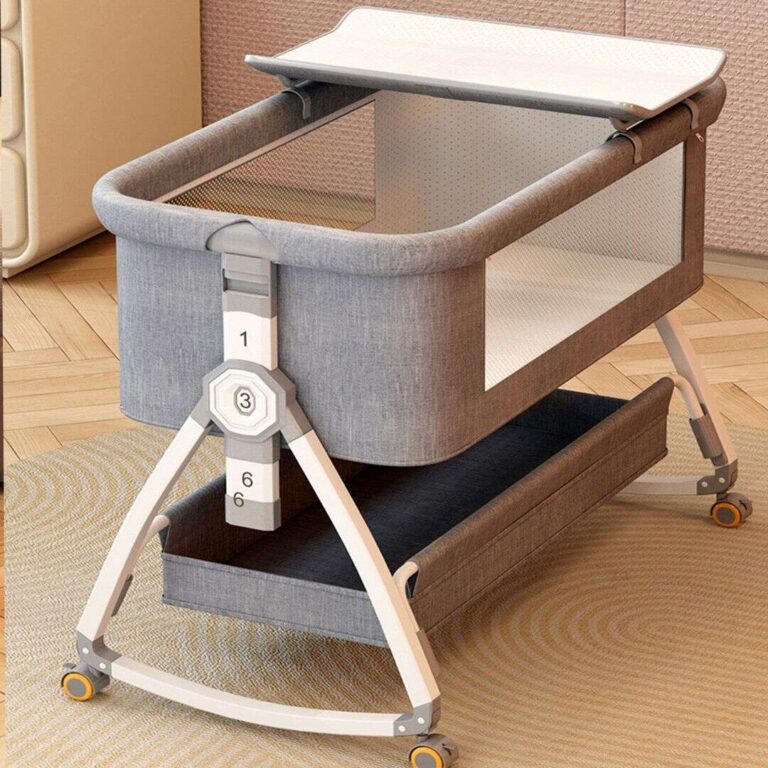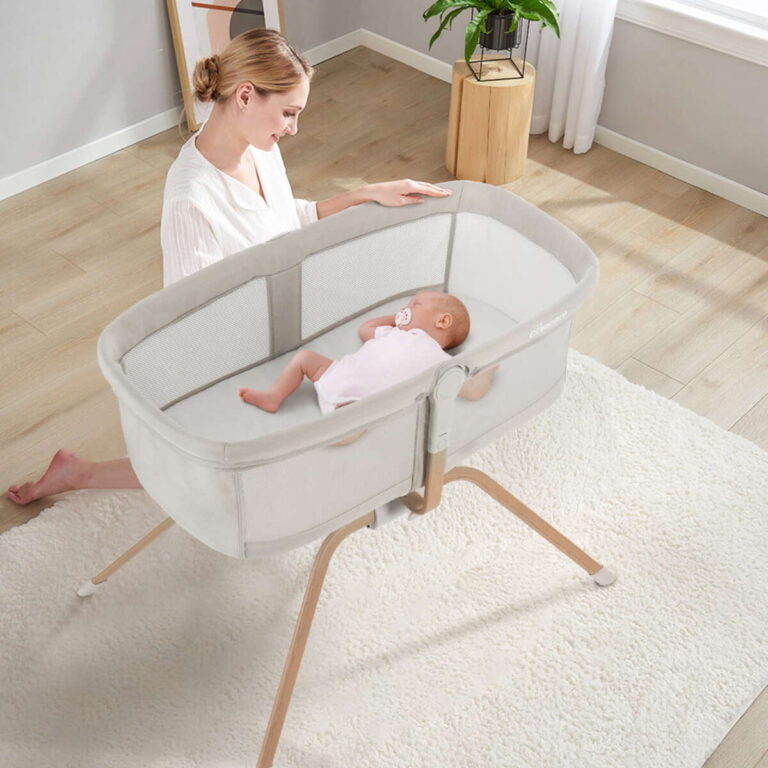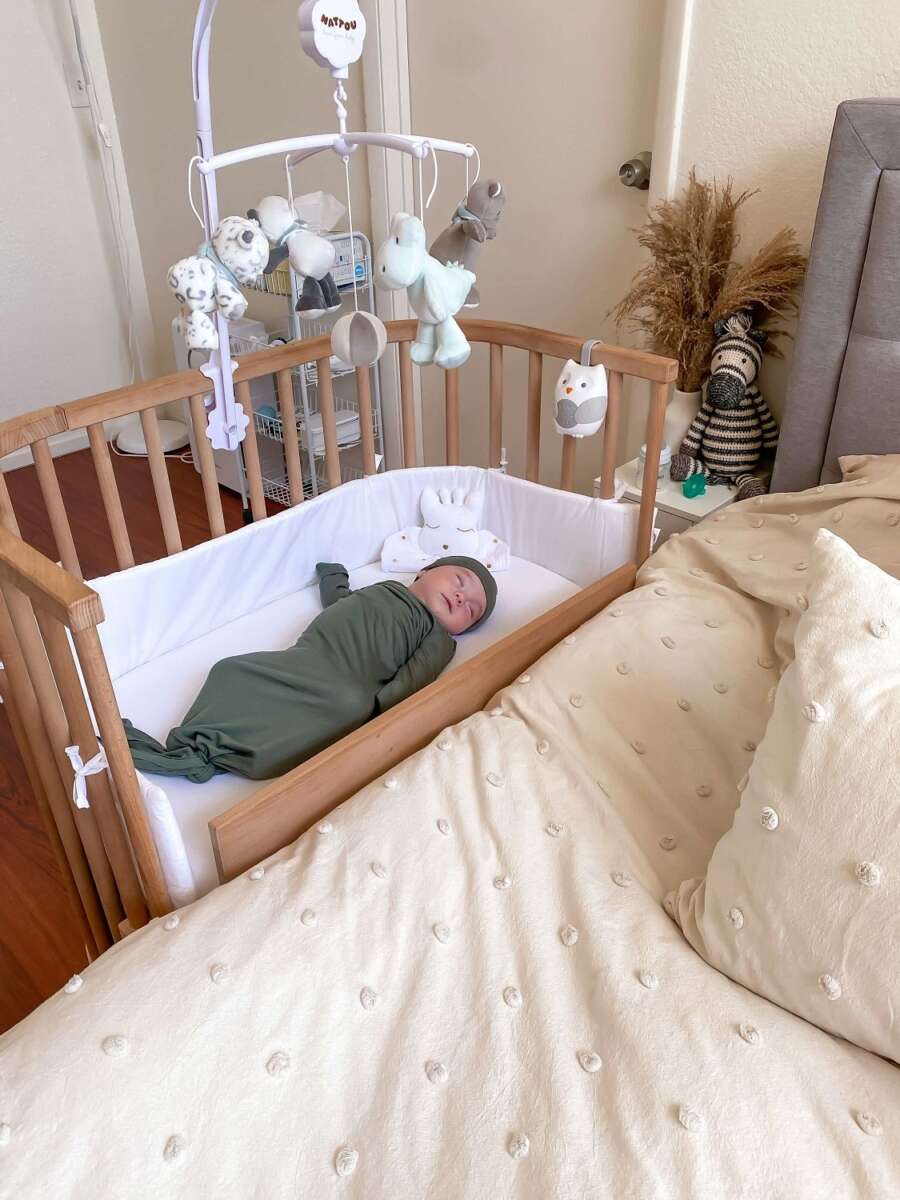
For families in the United States, the safest sleep setup is for a baby to sleep on their back, alone, on a firm, flat surface in the parents’ room. The American Academy of Pediatrics (AAP) recommends room-sharing without bed-sharing, ideally for at least the first six months. If your baby currently sleeps in your bed, moving to a bassinet can feel hard, but a slow and steady plan can make the change easier.
This guide explains how to transition from cosleeping to a bassinet while supporting safe sleep, realistic newborn sleep patterns, and your baby’s need for comfort.
What You Need Before Moving Your Baby to a Bassinet
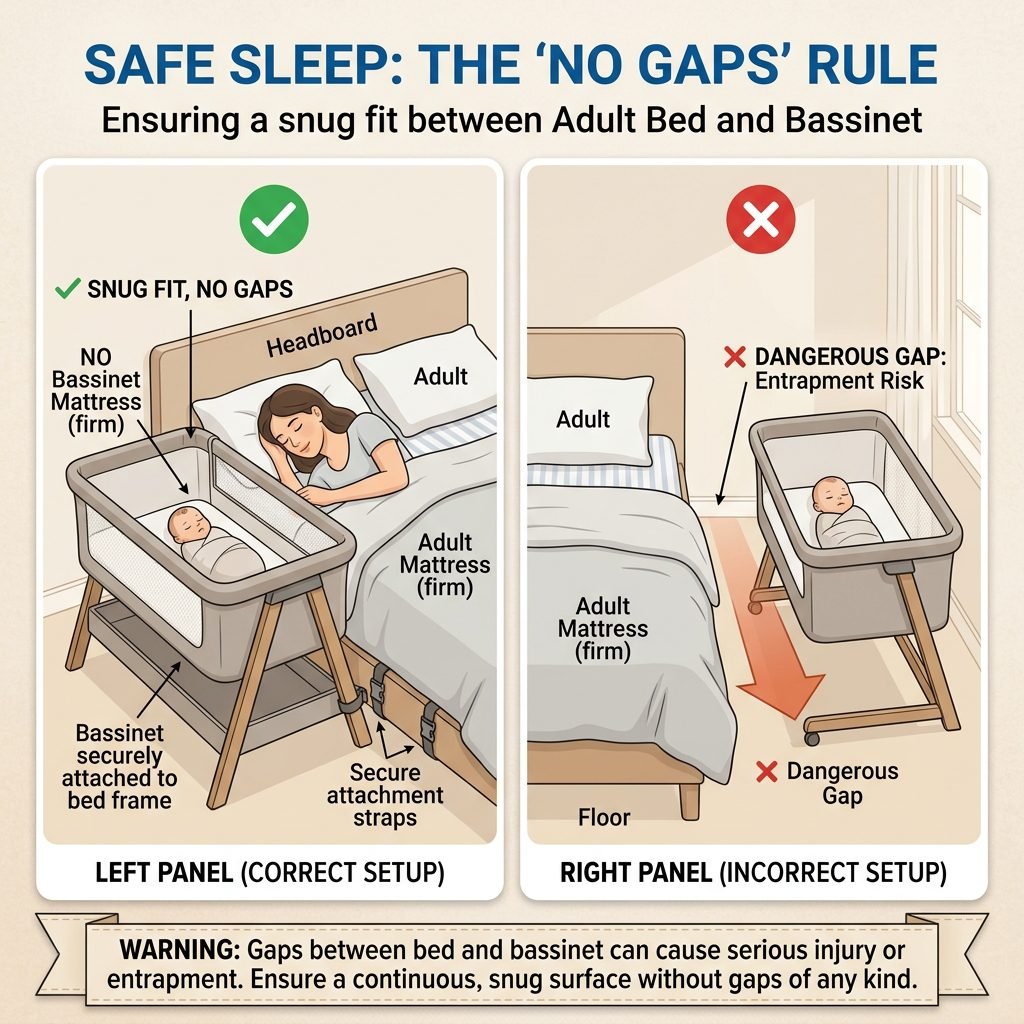
Before you begin, make sure the bassinet is safe, approved for your baby’s age and size, and placed close to your bed. The goal is to make the bassinet the easiest safe place for your baby to sleep.
Check these basics:
- Use a bassinet, crib, or play yard that meets current U.S. safety standards.
- Use a firm, flat mattress with only a fitted sheet made for that product.
- Keep the bassinet in your room, close to your bed.
- Place your baby on their back for every sleep.
- Keep pillows, blankets, bumpers, toys, loungers, and positioners out of the sleep space.
- Make sure the bassinet has not reached its weight limit.
- Stop using it when your baby can roll, push up, or reach the product’s safety limit, whichever comes first.
The AAP safe sleep guidance and the U.S. Consumer Product Safety Commission bassinet rules provide the main safety standards for U.S. families.
What “cosleeping” means
People use “cosleeping” in two ways:
- Room-sharing: Your baby sleeps in the same room but on a separate surface.
- Bed-sharing: Your baby sleeps on the same adult bed as you.
This article focuses on moving a baby from an adult bed to a bassinet. Bed-sharing can increase the risk of suffocation, entrapment, and sleep-related death, especially when an adult is very tired, has used alcohol or sedating medicine, or when soft bedding is present.
If you bring your baby into bed to feed or comfort them, move the baby back to the bassinet before you go to sleep. Avoid couches and armchairs, which can be especially dangerous sleep surfaces.
How to Transition From Cosleeping to a Bassinet
The most effective approach is to make the bassinet familiar, begin with one manageable sleep, and respond to your baby in the same calm way each time.
1. Make the bassinet familiar during the day
Place the bassinet near your bed or in another safe area while you are awake. Let your baby see it and hear you near it. You can also use it for short periods when your baby is calm and alert.
Do not leave your baby unattended in the bassinet for long periods. The purpose is simply to reduce the sense that the bassinet is a strange new place.
2. Start with the first sleep of the night
The first stretch of night sleep is often the easiest time to try. Babies may be more tired then, and you may have a clearer routine.
Use the same steps each night:
- Feed your baby.
- Burp and change them if needed.
- Dim the lights.
- Use a short, calm routine.
- Place your baby on their back in the bassinet.
- Keep your hand near your baby for a moment if they need reassurance.
- Give your baby a brief chance to settle.
A simple routine might include a diaper change, feeding, a song, and a short cuddle. Keep it predictable rather than long.
3. Try putting your baby down calm but awake
“Drowsy but awake” can help some babies learn to settle in the bassinet. It is not a rule, and it does not work for every newborn. Very young babies often need to be held, rocked, or fed to sleep.
If your baby becomes upset, pick them up and soothe them. You can try again when they are calm. The aim is to build comfort, not to force independence before your baby is ready.
4. Use safe comfort, not loose items
You can comfort your baby with your voice, touch, or presence. Try:
- Resting your hand gently on your baby’s chest
- Speaking in a soft voice
- Offering a pacifier if your baby uses one
- Holding and rocking your baby before placing them down
- Staying close to the bassinet for a few minutes
Do not put a pillow, rolled towel, sleep positioner, stuffed animal, or loose blanket in the bassinet. These items can block breathing.
5. Expand the plan slowly
Once your baby manages the first stretch in the bassinet, try using it for the next sleep period. Then work toward using it for naps, if practical.
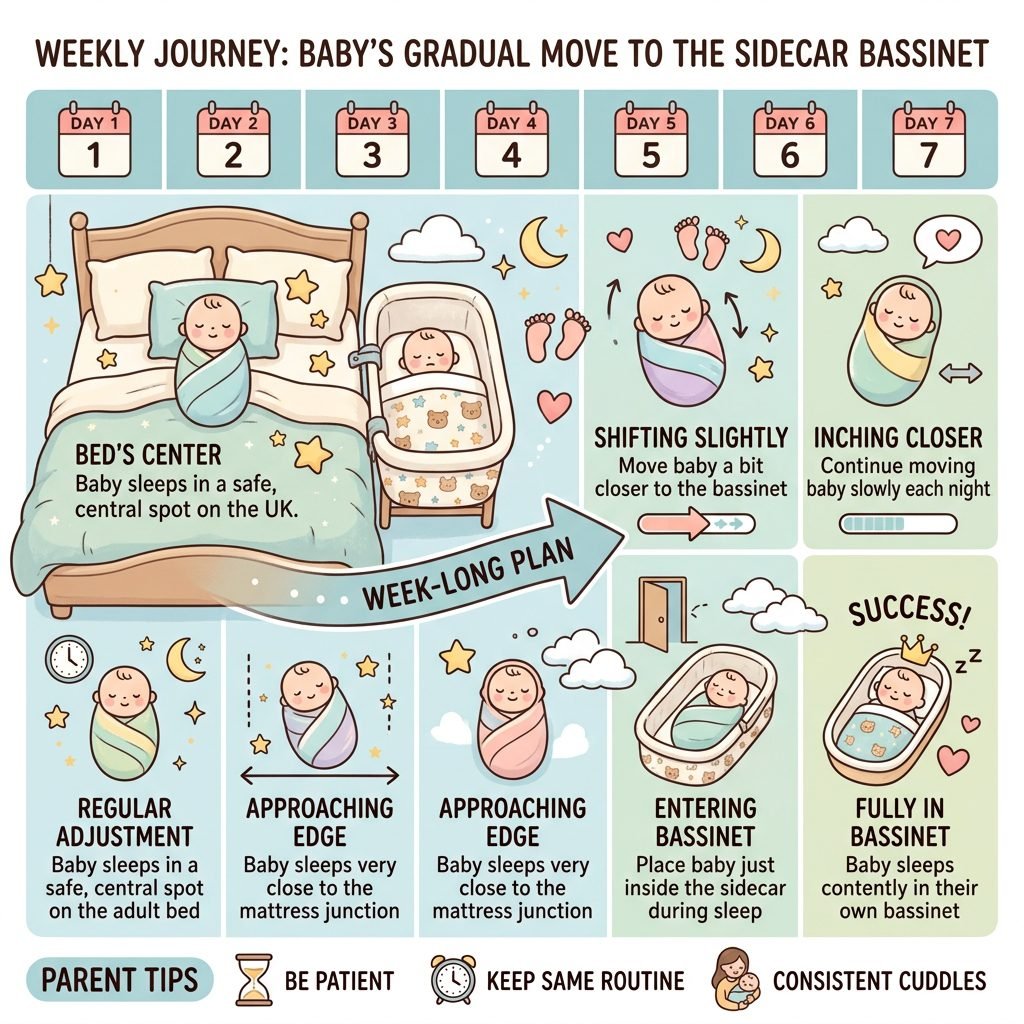
A gradual plan may look like this:
| Stage | Main goal |
|---|---|
| Nights 1–3 | Use the bassinet for the first night sleep |
| Nights 4–6 | Add another night sleep or early-morning sleep |
| Week 2 | Use the bassinet for most night sleep |
| After that | Practice some naps in the bassinet or move to a crib when needed |
This is only an example. Some babies adjust in one night. Others need several weeks. Progress may not be even.

What to Do When Your Baby Cries in the Bassinet
Crying does not always mean the bassinet is unsafe or that the transition has failed. It may mean your baby is hungry, overtired, cold, too warm, uncomfortable, or seeking the closeness they are used to.
Check the basic needs first:
- Is your baby hungry?
- Does the diaper need changing?
- Is your baby too hot or too cold?
- Did your baby burp?
- Are they showing signs of illness?
- Are they already overtired?
- Is the bassinet mattress level and firm?
If your baby is calm but fussing, try gentle reassurance while they remain in the bassinet. If the crying rises, pick them up and soothe them. Once calm, you can try again.
You do not need to leave a young baby alone to cry for a set amount of time. Newborns need frequent care and help with regulation. Comforting your baby will not “spoil” them.
If your baby falls asleep while being held
This is common. Wait until your baby is relaxed, then place them on their back in the bassinet. If they wake, repeat your calming steps.
Some babies sleep better when transferred after a few minutes of deeper sleep. Others do better when placed down before they are fully asleep. Test one approach for a few nights rather than changing methods every few minutes.
If your baby wakes as soon as you put them down
Try these adjustments:
- Lower your baby’s bottom first, then their shoulders and head.
- Keep your hands on your baby for a few breaths after the transfer.
- Use a steady, slow movement.
- Avoid placing your baby down right after a large feed if they need to burp.
- Start the bedtime routine earlier if your baby seems overtired.
If your baby repeatedly wakes and seems uncomfortable after feeds, discuss it with your pediatrician. Do not raise the bassinet mattress or use an inclined sleeper unless a qualified clinician gives specific advice for a medical reason. Inclined sleep products are not recommended for routine infant sleep.

How to Make the Bassinet Feel More Like Your Bed
You cannot safely copy the softness or bedding of an adult bed. Instead, copy the parts that help your baby feel secure: your closeness, your smell, your voice, and a steady routine.
Stay close at first
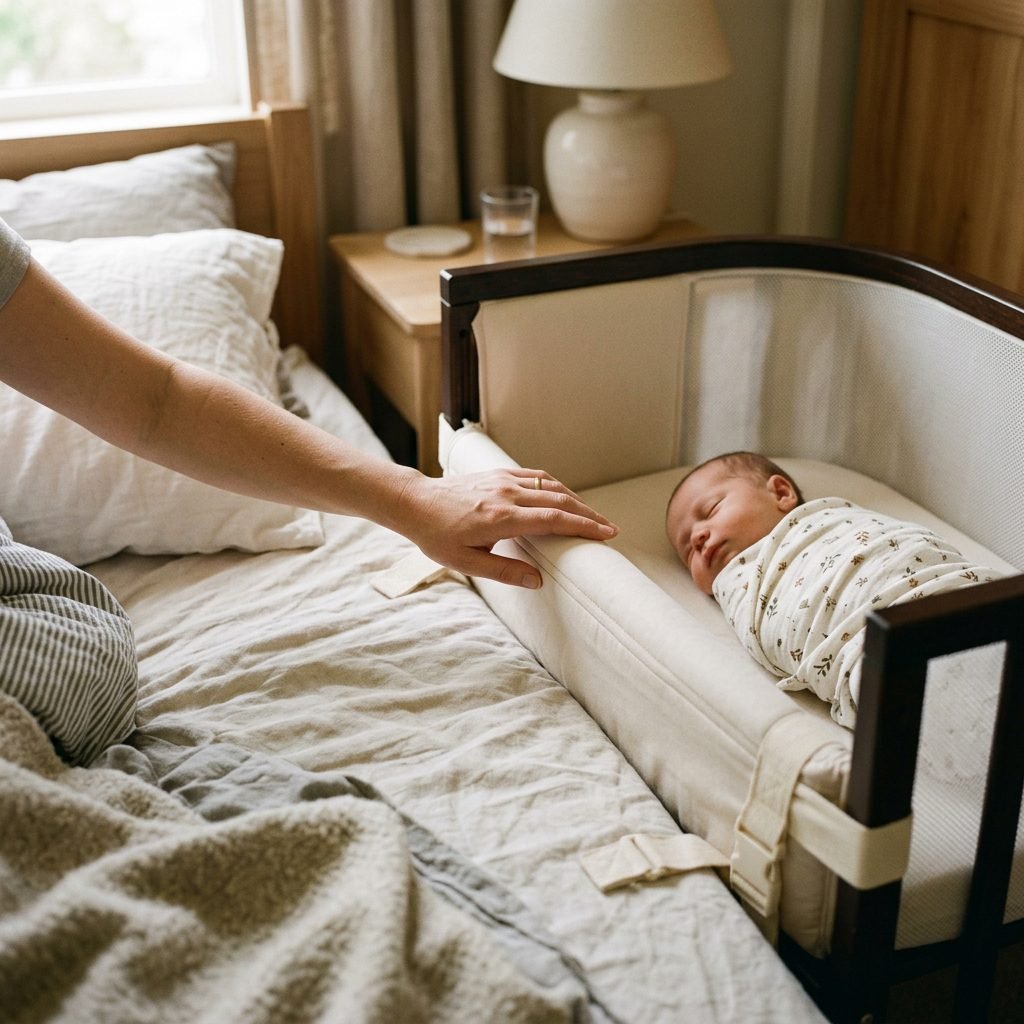
Keep the bassinet beside your bed. Your baby may settle more easily when they can hear and smell you. Room-sharing also lets you respond quickly to feeding and crying.
You can use a quiet voice or gentle touch. Avoid falling asleep while holding your baby in bed, on a sofa, or in a chair.
Use a sleep sack instead of a loose blanket
A properly sized, non-weighted sleep sack can help keep your baby warm without loose bedding. Follow the product instructions and dress your baby for the room temperature.
If you swaddle:
- Place your baby on their back.
- Keep the swaddle snug around the chest but loose around the hips.
- Do not use a weighted swaddle.
- Stop swaddling as soon as your baby shows signs of trying to roll.
Once rolling begins, use an ordinary wearable blanket that leaves the arms free.
Offer a pacifier if appropriate
A pacifier at naps and bedtime may reduce the risk of sleep-related death. If you breastfeed, the AAP suggests waiting until breastfeeding is well established before introducing one, unless your health care professional advises otherwise.
Never attach a pacifier to a cord, clip, strap, or stuffed toy during sleep.
How Long Does It Take to Stop Cosleeping?
Many babies adjust to a bassinet within a few nights, but there is no fixed timeline. Newborn sleep changes often because of growth, feeding needs, illness, and developmental changes.
A transition may take longer if:
- Your baby has always slept in close contact.
- Your baby is very young.
- Your baby is overtired.
- Your baby has reflux symptoms, congestion, or another health issue.
- You are changing several parts of the routine at once.
- Your baby is going through a growth spurt.
Measure progress by small changes. For example, your baby may first sleep in the bassinet for 20 minutes, then one sleep cycle, then two or three hours. That still counts as progress.
The aim is not to make your baby sleep through the night. Young babies commonly wake to feed. The aim is to move sleep to a separate, safe surface.

Safe Sleep Mistakes to Avoid During the Transition
The transition can feel tiring, especially during night feeds. Avoid shortcuts that make the sleep space less safe.
Do not use an adult bed as the backup plan
If you think you may fall asleep while feeding, prepare in advance. Remove pillows, sheets, blankets, and other soft items from the area, and move your baby back to the bassinet as soon as you wake.
The safest option remains a separate infant sleep surface. Never sleep with your baby on a couch or armchair.
Do not use products that claim to prevent rolling or keep babies in place
Avoid:
- Sleep positioners
- Anti-roll pillows
- Wedges
- Inclined sleepers
- Dock-style loungers
- Weighted sleep sacks or swaddles
- Crib bumpers
- Products that strap a baby into a sleep position
These products can create a risk of suffocation or restrict movement.
Do not place the bassinet in an unsafe location
Keep it away from:
- Window cords
- Curtains
- Heaters
- Lamps
- Furniture that could fall
- Pets
- Other children who may place objects inside
Check the product manual for folding, locking, weight, and movement rules. A portable bassinet should be used only as the manufacturer allows.

When to Stop Using the Bassinet
Stop using the bassinet when your baby reaches its stated weight limit, can roll, tries to push up, or can move into an unsafe position. The exact limit depends on the product.
At that point, move your baby to a full-size crib or play yard with a firm, flat mattress. Keep the same safe sleep setup:
- Baby on their back
- No loose bedding or objects
- Firm, flat mattress
- Fitted sheet only
- Separate sleep surface
- Room-sharing when possible
Do not keep using a bassinet simply because your baby still fits by weight. Developmental signs can matter just as much as the listed weight limit.

When to Call Your Pediatrician
Contact your baby’s pediatrician if sleep problems come with signs of illness or feeding trouble. Seek medical advice for concerns such as:
- Trouble breathing
- Blue, gray, or pale skin
- Fever in a young infant
- Poor feeding
- Repeated vomiting
- Fewer wet diapers
- Unusual sleepiness
- Poor weight gain
- Persistent pain or crying that seems abnormal
For babies younger than 3 months, a rectal temperature of 100.4°F (38°C) or higher requires prompt medical guidance. Follow your pediatrician’s instructions and local emergency guidance.
A pediatrician can also help if you suspect reflux, allergies, eczema, tongue-tie concerns, or another issue is making sleep difficult. Do not use sleep medicine, gripe water, or supplements to make a baby sleep unless a clinician specifically recommends it.

Key Takeaways
- Move your baby from an adult bed to a bassinet by starting with one sleep period, often the first stretch of the night.
- Keep the bassinet next to your bed and use your voice, touch, and a steady routine for comfort.
- Always place your baby on their back on a firm, flat surface with no loose items.
- Do not use pillows, wedges, positioners, inclined sleepers, or weighted sleep products.
- Continue responding to hunger and other needs. Moving to a bassinet does not mean expecting a newborn to sleep through the night.
- Stop using the bassinet when your baby rolls, pushes up, reaches the product limit, or meets the manufacturer’s stop-use rule.
Frequently Asked Questions
Is it too late to transition from cosleeping to a bassinet?
No. You can begin whenever you decide that a separate sleep surface is right for your family. Start with one sleep period and keep the routine consistent. If your baby is already rolling or pushing up, use a crib or play yard instead of a bassinet that is not approved for those movements.
Should I put my baby in the bassinet awake or asleep?
Either can work. Some babies settle better when placed down calm but awake. Others need to be held or fed to sleep first. Use a safe transfer and place your baby on their back every time.
Can I put a blanket in the bassinet so my baby feels comfortable?
No. Keep the bassinet free of loose blankets, pillows, toys, and other objects. Use clothing or a properly fitted, non-weighted wearable blanket to help keep your baby warm.
Why does my baby sleep well in my bed but wake in the bassinet?
Your baby may notice the change in warmth, movement, smell, and contact. This does not mean your baby cannot learn to sleep in the bassinet. Keep the bassinet close, use a short routine, and increase practice gradually.
What if my baby refuses the bassinet every night?
Check hunger, temperature, diapers, overtiredness, and signs of illness. Try the bassinet for one sleep period, then comfort your baby and try again later if needed. If your baby seems uncomfortable or sleep remains extremely difficult, contact your pediatrician.
Conclusion
The safest way to transition from cosleeping to a bassinet is to combine a gradual routine with strict safe-sleep practices. Begin with one sleep, keep your baby close, offer calm reassurance, and expect some waking and setbacks.
Your next step is simple: check the bassinet’s instructions, remove every loose item, place it beside your bed, and try the first sleep period tonight.