
Introduction
For a newborn bassinet in the United States, you need only a few basics: the bassinet, its original firm mattress, two or three fitted sheets made for that model, and a safe place to put it. Your baby also needs a wearable blanket for warmth if the room is cool. Pillows, loose blankets, crib bumpers, toys, positioners, and extra mattress pads do not belong in the bassinet.
The safest setup follows guidance from the American Academy of Pediatrics (AAP) and the U.S. Consumer Product Safety Commission (CPSC): place your baby on their back, on a firm, flat, level sleep surface with only a fitted sheet. Keep the bassinet in your room, but not in your bed.
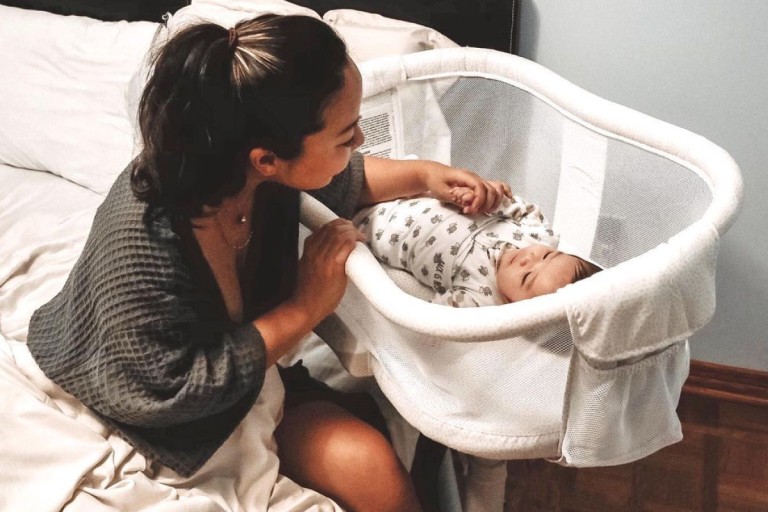
What Do You Need for a Bassinet?
A safe bassinet setup needs these items:
- A bassinet that meets current U.S. safety rules
- The original firm mattress or sleep pad
- Two or three fitted sheets made for that exact bassinet
- A wearable blanket or sleep sack, when needed
- The product manual and registration card
- A safe location away from cords, windows, heaters, pets, and other hazards


That is the complete basic list. You do not need to fill the bassinet with comfort items. A bare sleep space is safer than a soft or crowded one.
1. A safe bassinet
Choose a bassinet that is sold for infant sleep and comes with clear instructions. In the U.S., bassinets and cradles are covered by federal safety requirements in 16 CFR Part 1218, which incorporates the ASTM F2194 standard.
Check the product label, manual, and CPSC recall database before use. If you buy a used bassinet, confirm its model number and age. Do not use it if you cannot verify its safety history or if parts are missing.
2. The original mattress or pad
Use only the mattress or pad supplied by the bassinet maker. It should fit snugly, with no large gaps around the sides.
Do not replace it with:
- A crib mattress
- A changing pad
- A memory foam pad
- A folded blanket
- A sheepskin
- An aftermarket mattress that is not approved for the model
A firm, flat surface helps reduce the chance that a baby’s face will press into soft material. Never add padding to make the bassinet feel more comfortable.
3. Fitted bassinet sheets
Buy two or three fitted sheets made for your specific bassinet. The sheet should stay tight and flat during use.
Before buying extra sheets, check:
- The bassinet brand and model
- The mattress dimensions
- Whether the maker sells approved replacement sheets
- Whether the sheet has elastic that holds it firmly in place
A loose sheet can bunch under a baby or cover the face. Flat sheets, blanket corners, and universal sheets that do not fit well are not safe substitutes.
4. A wearable blanket
A wearable blanket, also called a sleep sack, can help keep a baby warm without loose bedding. Choose one that fits the baby’s current size and allows free movement of the hips and legs.
Avoid weighted sleep sacks, swaddles, or blankets that are too tight. The AAP advises stopping swaddling when a baby shows signs of trying to roll. Once rolling starts, use an ordinary wearable blanket that leaves the arms free.


5. The manual and registration information
Keep the manual near the bassinet. It explains the weight limit, height limit, assembly steps, cleaning rules, and the point when your baby should move to another sleep space.
Register the product with the manufacturer if that option is available. Registration can help the company contact you about a recall or safety update.

What Should Go Inside a Bassinet?
Only three things should normally be inside a bassinet:
- Your baby
- The original mattress or pad
- One tightly fitted sheet
A wearable blanket goes on the baby, not loose beside the baby.
Do not place these items in the sleep space:
- Pillows
- Loose blankets
- Quilts
- Stuffed animals
- Crib bumpers
- Sleep positioners
- Wedges
- Anti-roll products
- Nursing pillows
- Pacifier clips with cords or straps
- Bottles
- Hats
- Extra mattress toppers
- Decorative liners
These products may look useful, but they can add soft material, create entrapment risks, or interfere with breathing. A baby does not need a pillow for head support.
What about a mattress protector?
Use a waterproof cover only if the bassinet manufacturer approves it and it fits under the fitted sheet without changing the mattress shape. Some bassinets already have a cleanable or waterproof sleep surface.
Do not add a thick protector, pad, or topper. If the cover makes the surface softer, less flat, or less secure, remove it.
What about a swaddle?
A swaddle may calm some newborns, but it must be used with care. Place a swaddled baby on their back, keep the swaddle firm but not tight, and make sure the baby cannot overheat.
Stop swaddling as soon as the baby shows signs of rolling. Never use a loose blanket as a swaddle in the bassinet. Follow the swaddle maker’s instructions and your pediatrician’s advice if your baby was premature or has a medical condition.
What about a pacifier?
A pacifier is optional. If you offer one, keep it free of cords, clips, stuffed attachments, and other accessories during sleep. Do not force a baby to use it, and do not attach it to clothing while the baby is in the bassinet.

How to Set Up a Bassinet Safely
Follow this setup process before your baby sleeps in the bassinet.
Step 1: Read the instructions
Read the full manual before assembly. Check the required parts, weight limit, age range, and warnings.


Do not guess how a frame, folding joint, locking bar, or vibration unit should work. If a part does not fit, stop and contact the manufacturer.
Step 2: Assemble and test the frame
Build the bassinet on a level floor. Make sure every lock, leg, wheel, and support is secure.
If the bassinet has wheels, lock them before placing your baby inside. Do not move the bassinet while the baby is in it unless the manual clearly allows that action.
Step 3: Check the sleep surface
Press lightly on the mattress and inspect the edges. The surface should remain firm and flat. The mattress should not slide, bend, or leave wide gaps.
If you can place more than two fingers between the mattress and the side wall, stop using the bassinet until the fit is corrected.
Step 4: Add one fitted sheet
Put on one clean, tight sheet. Do not layer several sheets. Extra layers can loosen the top sheet or change the firmness of the surface.
Some parents place a second sheet under the first to make nighttime changes faster. Do this only if the bassinet maker specifically permits it and the top sheet remains tight. Otherwise, remove and replace the sheet when it becomes wet or dirty.
Step 5: Place the bassinet in the right location
Keep the bassinet in your bedroom, close to your bed, but on its own stable surface. The AAP recommends room-sharing without bed-sharing, ideally for at least the first six months.
Keep it away from:
- Window cords and blind cords
- Curtains
- Wall outlets and charging cables
- Space heaters and radiators
- Direct sunlight
- Ceiling fans that hang low
- Furniture that could fall or be pulled over
- Other children and pets
Do not place a bassinet on a bed, sofa, countertop, table, or other raised surface unless the product is specifically designed and approved for that use.
Step 6: Place your baby correctly
Lay your baby flat on their back for every sleep. The baby’s feet should point toward the bottom of the bassinet when the product design calls for that position.
After placing the baby down, check that the face and head remain uncovered. If the baby falls asleep in a car seat, swing, stroller, or other sitting device, move them to a firm, flat sleep surface as soon as practical.

How Many Bassinet Sheets Do You Need?
Most families need two or three fitted sheets for one bassinet. One can be in use, one can be in the wash, and one can serve as a spare.
You may want more if:
- Your baby has frequent spit-up
- Your baby has diaper leaks
- You do laundry less often
- You use the bassinet for daytime and nighttime sleep
Buy fit before quantity. A sheet made for another brand may not fit safely, even if its listed dimensions look close.


| Bassinet item | Suggested amount | Key condition |
|---|---|---|
| Original mattress or pad | 1 | Use the model-approved part |
| Fitted sheets | 2–3 | Must fit tightly |
| Waterproof cover | 0–1 | Use only if approved |
| Wearable blankets | 1–2 | Match the baby’s size and room temperature |
| Loose blankets | 0 | Do not use in the bassinet |
| Pillows and bumpers | 0 | Do not use for infant sleep |
This list is a practical starting point, not a rule that every family must follow. A second wearable blanket may help when one is in the wash, but avoid dressing your baby in too many layers.

When Should a Baby Stop Using a Bassinet?
Stop using the bassinet when your baby reaches the maker’s limit or shows the movement listed in the manual. Common limits include a weight limit, a height limit, or the ability to push up, roll, sit, or move onto hands and knees.
The exact limit varies by product. Do not keep using a bassinet simply because your baby still fits by length. A baby who can push up may be able to move the product or climb over its side.
Move your baby to a full-size crib, portable crib, or play yard that meets current U.S. safety rules. The new sleep space should also have a firm, flat mattress and a fitted sheet only.
Signs the bassinet may no longer be suitable
Check the manual and stop use if:
- Your baby can roll or push up
- Your baby exceeds the weight or height limit
- The bassinet rocks, tilts, or folds when it should not
- The mattress no longer fits tightly
- A side, leg, lock, or wheel is damaged
- Fabric is torn near the sleep area
- The product has been recalled
- You cannot find a missing part or verify its purpose
Do not repair a structural part with tape, rope, glue, or a homemade piece. Ask the maker for an approved replacement or discontinue use.

Bassinet Safety Mistakes to Avoid
The most common mistake is treating a bassinet like a tiny crib that needs extra padding. Babies need less inside the sleep space, not more.
Avoid these errors:
Using a loose blanket
A blanket can cover a baby’s face or become wrapped around the body. Use a properly sized wearable blanket instead.
Adding a pillow or positioner
Positioners do not replace safe sleep practices. They can create soft, raised, or trapped areas around the baby.
Using an inclined product for sleep
Do not use an inclined sleeper, rocker, or lounger as a routine sleep space. A flat, level surface is the safer choice.
Putting the bassinet on an adult bed
An adult bed is not a stable base for most bassinets. The bassinet may shift, tip, or fall. Follow the manual’s location rules.
Ignoring recalls
Search the CPSC recall database before using a new or secondhand product. Check again if the manufacturer sends a safety notice.
Buying replacement parts from an unknown seller
A part that looks similar may change the bassinet’s fit or stability. Use the manufacturer or an authorized source whenever possible.
Overheating the baby
Dress your baby for the room, not for the season outside. Watch for sweating, hot skin, flushed skin, or a baby who feels unusually warm. Ask your pediatrician how to dress your baby if you are unsure.


Bassinet Checklist for U.S. Parents
Before the first sleep, confirm each item:
- The bassinet is made for infant sleep.
- The model is not recalled.
- The frame is fully assembled and locked.
- The bassinet is on a stable, approved surface.
- The mattress is original or manufacturer-approved.
- The mattress lies flat and fits tightly.
- The fitted sheet is the correct model and size.
- No pillow, blanket, toy, bumper, or positioner is inside.
- The baby will sleep on their back.
- The bassinet is near your bed but not in your bed.
- The baby is below the product’s movement, weight, and height limits.
- You know when to stop using the bassinet.
If any answer is no, fix that issue before using the bassinet.

Frequently Asked Questions
Do you need a waterproof sheet for a bassinet?
No. A waterproof sheet is optional, and some bassinet makers do not allow extra covers. Use one only when the manufacturer approves it and it fits without making the sleep surface soft, loose, or uneven.
Can a newborn sleep in a bassinet all night?
Yes, if the bassinet is approved for sleep, correctly assembled, and used within its limits. Place the newborn on their back on a firm, flat surface with a fitted sheet only.
Can you use a regular crib sheet on a bassinet mattress?
Usually, no. A regular crib sheet may be too large and may not stay tight. Use a fitted sheet made for the bassinet model or one that the manufacturer confirms will fit.
Do babies need a blanket in a bassinet?
No. Loose blankets are not recommended for infant sleep. Use an appropriate wearable blanket if your baby needs another layer.
Can a bassinet go next to a window?
It is better to place it away from windows, blinds, curtain cords, heaters, and direct sun. Keep all cords and hanging objects out of your baby’s reach.
What should you do if the bassinet mattress feels too hard?
Do not add a topper, quilt, towel, or extra pad. Infant mattresses are designed to be firm. If the mattress is damaged or does not fit correctly, contact the manufacturer for a replacement.
Can you use a secondhand bassinet?
You can, but check the model, age, recalls, instructions, condition, and all parts first. Avoid any product with unknown history, missing hardware, damage, or altered parts.
Key Takeaways
For a bassinet, you need a safe bassinet, its firm original mattress, two or three tight-fitting sheets, and an optional wearable blanket. Keep the sleep space bare. Put your baby on their back, keep the bassinet near your bed, and stop using it when your baby reaches the product’s movement, size, or weight limit.
Next action: Read the bassinet manual, check the model for U.S. recalls, and set it up with only the approved mattress and one fitted sheet before your baby sleeps in it.
