Most children have 20 baby teeth: 10 in the upper jaw and 10 in the lower jaw.
Knowing how many baby teeth do kids have helps parents track dental growth, spot problems early, and build healthy habits. Baby teeth may be small, but they guide speech, chewing, facial growth, and the proper placement of permanent teeth. This guide explains when they appear, how they are cared for, and when to call a dentist.

How Many Baby Teeth Do Kids Have?
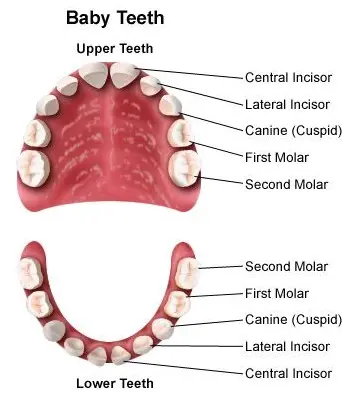
Children usually have 20 baby teeth, also called primary teeth or milk teeth. There are 10 teeth in the upper jaw and 10 teeth in the lower jaw.
Each jaw has five types of teeth:
• Four central and lateral incisors for biting food
• Two canine teeth for tearing food
• Four first and second molars for grinding food
Baby teeth are smaller and whiter than adult teeth. They also have thinner enamel, so decay can spread faster if brushing and dental care are delayed.
A child does not get all 20 baby teeth at once. Teeth usually come in over several years, starting around 6 months of age and ending near age 3. The exact timing can vary. Some healthy babies get teeth sooner, while others do not get their first tooth until after their first birthday.
The answer to “how many baby teeth do kids have” stays the same even when the timing differs. Most children still develop 20 primary teeth by about age 3.
Baby Teeth Chart: When Do They Come In?
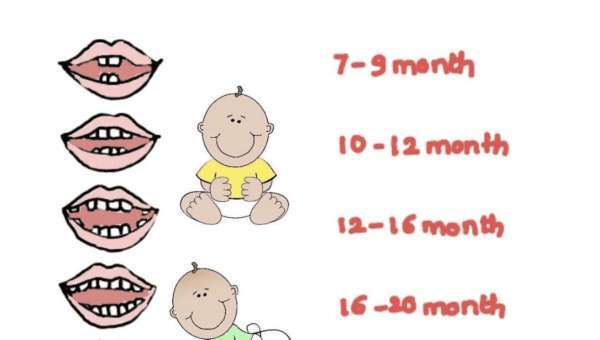
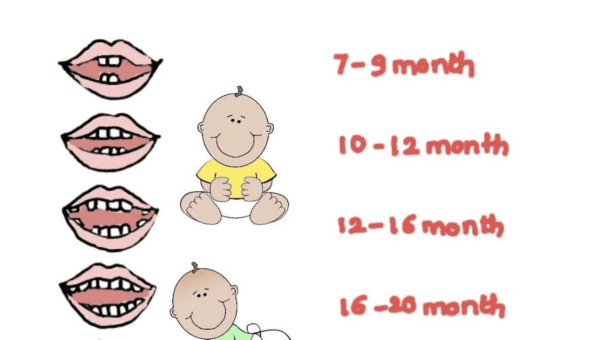
The first baby teeth often appear between 6 and 12 months. In many children, the lower front teeth arrive first. However, tooth order can differ without signaling a problem.
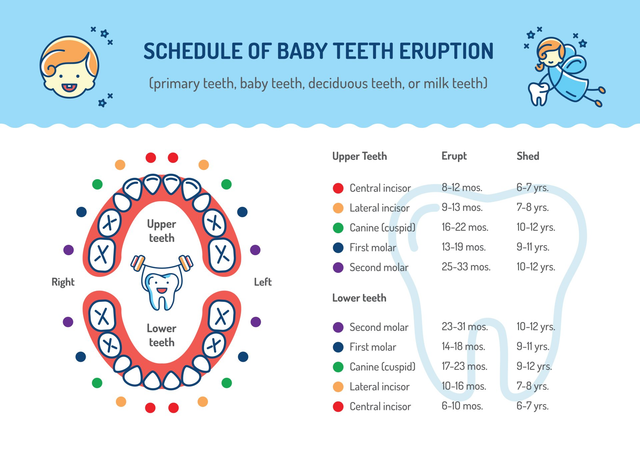
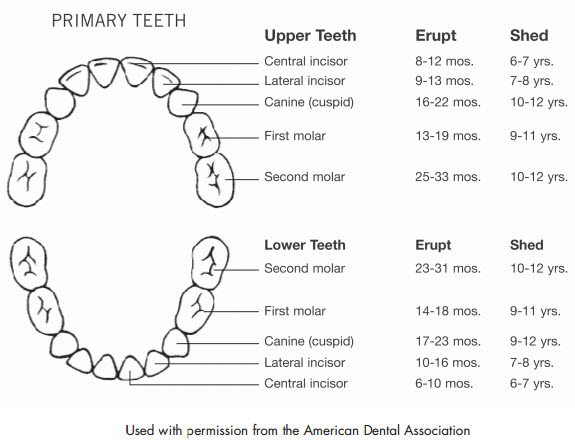
Here is a general baby teeth eruption chart:
| Baby tooth | Usual eruption age |
|---|---|
| Lower central incisors | 6 to 10 months |
| Upper central incisors | 8 to 12 months |
| Upper lateral incisors | 9 to 13 months |
| Lower lateral incisors | 10 to 16 months |
| First molars | 13 to 19 months |
| Canines | 16 to 23 months |
| Second molars | 23 to 33 months |
These ages are estimates, not strict rules. A child may have a different pattern and still have normal dental development.
By age 3, many children have all 20 baby teeth. The American Academy of Pediatric Dentistry recommends that a child visit a dentist by the first birthday or within six months of the first tooth appearing.
Parents often ask how many baby teeth do kids have when a tooth seems late. One late tooth is usually not a concern, but a dentist can check the gums and tooth development if several teeth are missing or delayed.
Why Are Baby Teeth Important?
Baby teeth do much more than fill a child’s smile. They help children chew food, speak clearly, and learn how to move the tongue and jaw.
Baby teeth also hold space for adult teeth. Think of them as small place markers. If a baby tooth is lost too early, nearby teeth may move into the open space. This can make it harder for the permanent tooth to come in correctly.
Healthy baby teeth support several key needs:
• Chewing: Molars break food into smaller pieces.
• Speech: Front teeth help form sounds such as “s,” “f,” and “th.”
• Jaw growth: Tooth use supports normal muscle and bone development.
• Spacing: Baby teeth guide permanent teeth into place.
• Confidence: A healthy smile helps children feel comfortable when they talk and play.
This is why the answer to how many baby teeth do kids have matters less than how well those teeth are protected. Each tooth has a job, even though it will eventually fall out.
A severely decayed baby tooth may cause pain, infection, missed school, poor sleep, or trouble eating. In some cases, a dentist may need to restore the tooth or remove it early.

When Do Kids Lose Their Baby Teeth?
Most children begin losing baby teeth around age 6. The process usually continues until age 12 or 13, when most permanent teeth have arrived.
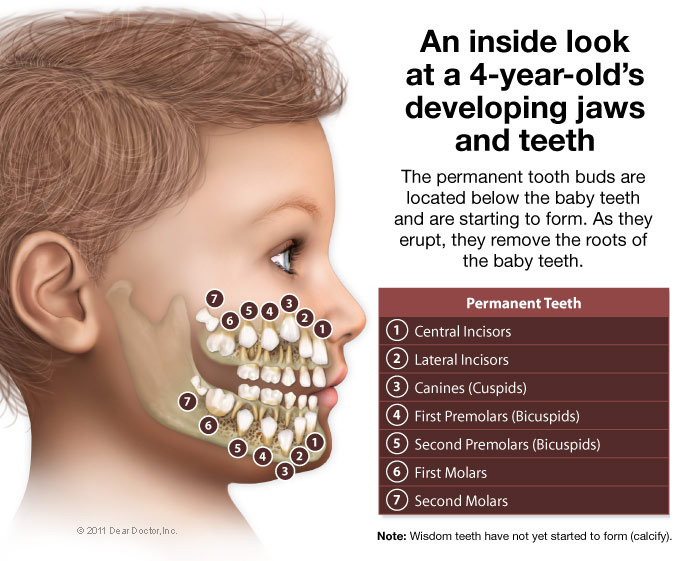
The lower front teeth often loosen first. The adult tooth grows beneath the baby tooth and slowly dissolves its root. This makes the baby tooth wiggle and fall out.
A typical order is:
- Lower central incisors
- Upper central incisors
- Lower and upper lateral incisors
- First molars
- Canines and second molars
Children may lose teeth earlier or later than this pattern. Family history often affects timing. A difference of several months is usually normal.
Parents sometimes worry when a child loses a tooth before age 6. An accident, tooth decay, or natural variation may explain it. If a baby tooth comes out very early, contact a pediatric dentist. The dentist may recommend a space maintainer to help protect the area for the adult tooth.
The number does not change during this stage. A child starts with 20 baby teeth, then gradually replaces them with permanent teeth. Most adults have 32 permanent teeth, including wisdom teeth, although some people naturally have fewer.

Baby Teeth Versus Permanent Teeth
Baby teeth and adult teeth serve similar roles, but they are not the same. Baby teeth have thinner enamel and larger pulp chambers compared with their size. The pulp contains nerves and blood vessels, so decay can reach it quickly.
Permanent teeth are larger and designed to last for life. They also have stronger roots and thicker enamel. Still, permanent teeth can decay, especially during the first few years after they erupt.
Here are key differences:
| Feature | Baby teeth | Permanent teeth |
|---|---|---|
| Total number | 20 | Usually 32 |
| First appearance | About 6 months | About age 6 |
| Color | Often bright white | Often slightly yellow |
| Enamel | Thinner | Thicker |
| Purpose | Early chewing, speech, and spacing | Long-term function |
A common mistake is thinking baby teeth do not need much care because they will fall out. That belief can lead to pain and infection. Learning how many baby teeth do kids have is useful, but knowing how to protect them is even more important.
How to Care for Baby Teeth
Start cleaning your baby’s mouth before the first tooth appears. Wipe the gums gently with a clean, damp cloth. Once a tooth appears, use a soft infant toothbrush.
Use a smear of fluoride toothpaste about the size of a grain of rice for children younger than 3. For children ages 3 to 6, use a pea-sized amount. An adult should help brush until the child can clean every tooth well, often around age 7 or 8.
Good daily care includes:
• Brush twice a day for two minutes.
• Use fluoride toothpaste unless a dentist advises otherwise.
• Lift the lip sometimes to check for white, brown, or dark spots.
• Floss when two teeth touch each other.
• Offer water between meals.
• Limit frequent snacks and sugary drinks.
• Avoid putting a baby to bed with a bottle of milk, formula, or juice.
• Schedule regular dental visits.
Drinks matter. A child who sips juice or sweetened milk all day gives mouth bacteria many chances to produce acid. This acid attacks enamel and can cause early childhood cavities.
One practical tip is to make brushing part of the same routine every night. In many families, brushing after pajamas and before a story works well. Children may resist at first, but calm repetition usually works better than a long argument.
Signs of Tooth Problems in Children
Cavities do not always hurt at the start. Parents should watch for changes in the teeth, gums, eating habits, and behavior.
Contact a dentist if you notice:
• White chalky marks near the gum line
• Brown, black, or yellow spots
• A visible hole or chipped area
• Swollen or bleeding gums
• Bad breath that does not improve
• Tooth sensitivity to cold or sweet foods
• Trouble chewing
• Avoiding food
• Facial swelling or fever
• A tooth that is loose after an injury
Dental pain can affect sleep and mood. A child may become quiet, irritable, or less active instead of saying, “My tooth hurts.”
Facial swelling, fever, trouble breathing, or difficulty swallowing needs urgent medical and dental attention. Do not place aspirin on a child’s gum. It can irritate or burn the tissue.
A dentist can examine all 20 baby teeth, use X-rays when needed, and create a care plan. Early treatment is often simpler and less stressful than waiting.
Common Questions Parents Ask About Baby Teeth
Parents often search how many baby teeth do kids have after noticing a late tooth, a loose tooth, or a dark spot. These answers cover the most common concerns.
Do all children have exactly 20 baby teeth?
Most children develop 20 baby teeth, with 10 in the upper jaw and 10 in the lower jaw. Rarely, a child may have an extra tooth, a missing tooth, or a tooth that never develops.
What is the youngest age a baby can get a tooth?
Some babies get a first tooth around 4 months, while others do not get one until 12 to 14 months. Timing varies, but speak with a dentist or pediatrician if no teeth appear by about 18 months.
Should I worry if my child has fewer than 20 baby teeth?
A child may temporarily have fewer than 20 teeth because eruption happens over several years. If teeth are very delayed, missing on one side, or not appearing in the expected order, a dental examination can help find the cause.
Do baby teeth need fillings if they will fall out?
Yes, a decayed baby tooth may need treatment to stop pain and infection. Keeping it healthy can also protect chewing, speech, and the space needed for the permanent tooth.
When should a child first visit the dentist?
A child should see a dentist by the first birthday or within six months after the first tooth appears. Early visits help parents learn about brushing, fluoride, feeding habits, and cavity prevention.
Is it normal for baby teeth to look slightly yellow?
Baby teeth are often quite white, but small color differences can be normal. A sudden yellow, brown, gray, or dark change should be checked because it may signal decay, injury, or another problem.
Conclusion
Children usually have 20 baby teeth: 10 upper teeth and 10 lower teeth. These teeth support chewing, speech, jaw growth, and the correct spacing of permanent teeth. They usually appear from about 6 months to age 3 and begin falling out around age 6.
The best way to protect baby teeth is simple: brush twice daily with fluoride toothpaste, limit sugary drinks, clean between touching teeth, and arrange regular dental visits. Now that you know how many baby teeth do kids have, use this guide to track your child’s smile and seek professional advice when something looks unusual. Explore trusted pediatric dental resources or schedule a dental checkup to give your child’s teeth a healthy start.