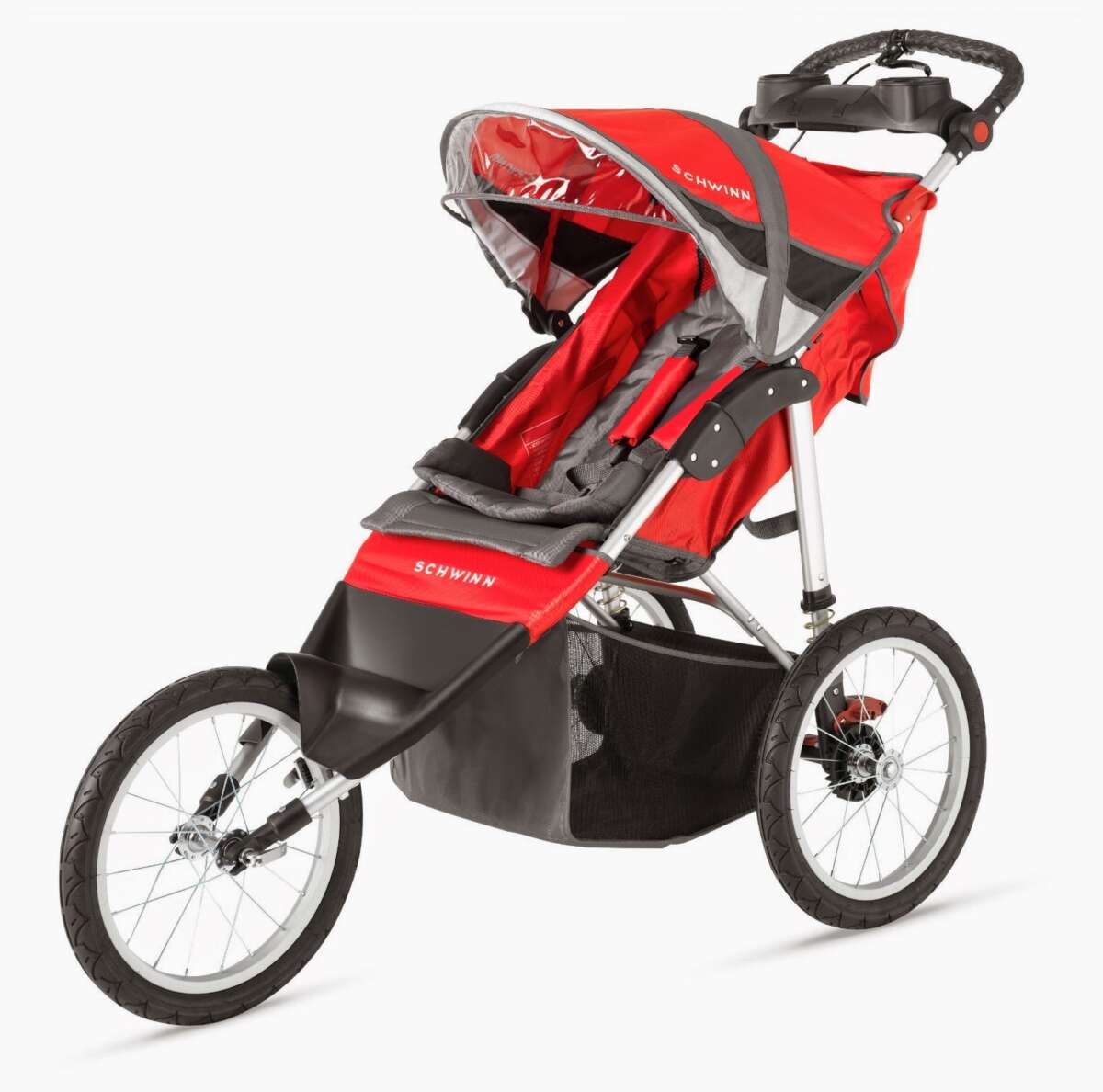
If you plan to run with your child at least once a week, a jogging stroller may be worth buying. If you mainly walk, shop, travel, or use a stroller for short trips, you likely do not need one.
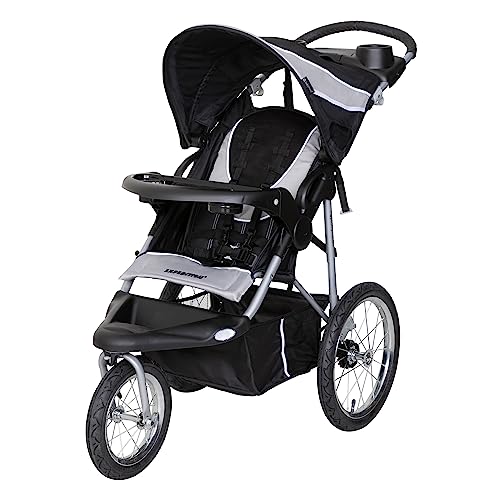
A jogging stroller is built for faster movement and uneven paths. It usually has three large wheels, a front wheel that can lock straight, a hand brake, a wrist strap, and a five-point harness. These features can improve control during a run, but they also make the stroller heavier, wider, and less convenient for daily errands.
The best choice depends on four things: how often you will run, where you will use the stroller, your child’s age, and whether you already own a safe everyday stroller.

Quick answer: Do you need a jogging stroller?
You probably need a jogging stroller only if you meet most of these conditions:
- You plan to run or move quickly with your child on a regular basis.
- You will use paved trails, sidewalks, packed paths, or other suitable surfaces.
- Your child meets the stroller maker’s age and weight rules for jogging.
- You want more stability and control than a standard stroller offers.
- You have room to store a larger stroller.
You probably do not need one if you:
- Mainly take slow walks.
- Use public transit or carry the stroller up stairs.
- Need a compact stroller for stores, travel, or restaurants.
- Run only occasionally and can exercise without your child.
- Expect to jog with a newborn.
A jogging stroller is a specialized tool, not a required baby item. For many families in the United States, a standard stroller provides better value because it works well for walks and daily travel.
What makes a jogging stroller different?
A jogging stroller is designed to stay stable while it moves faster over uneven ground. A regular stroller is usually designed for walking, turning in tight spaces, and easy storage.
The main differences are below:
| Feature | Jogging stroller | Standard stroller |
|---|---|---|
| Wheels | Three larger wheels, often with air-filled or rubber tires | Two small front wheels and two rear wheels are common |
| Front wheel | Often locks straight for running | Usually swivels for easy turns |
| Brakes | Foot brake plus hand brake on many models | Usually a foot-operated parking brake |
| Frame | Larger and more rigid | Often lighter and more compact |
| Best use | Running, trails, long outdoor walks | Errands, travel, sidewalks, and daily use |
| Turning | More stable at speed but wider to turn | Easier in stores and small spaces |
| Storage | Often limited or bulky when folded | Often more compact |
The locked front wheel is especially important. It helps the stroller track in a straight line instead of turning suddenly when the front wheel meets a crack or stone.
That same feature can make a jogging stroller harder to steer through a store. Some models let you unlock the wheel for walking. Others require you to stop and change the setting.
A hand brake can help you slow down on a hill. A wrist strap helps keep the stroller near you if you lose your grip. These features support control, but they do not replace safe speed, good judgment, or the stroller’s instructions.
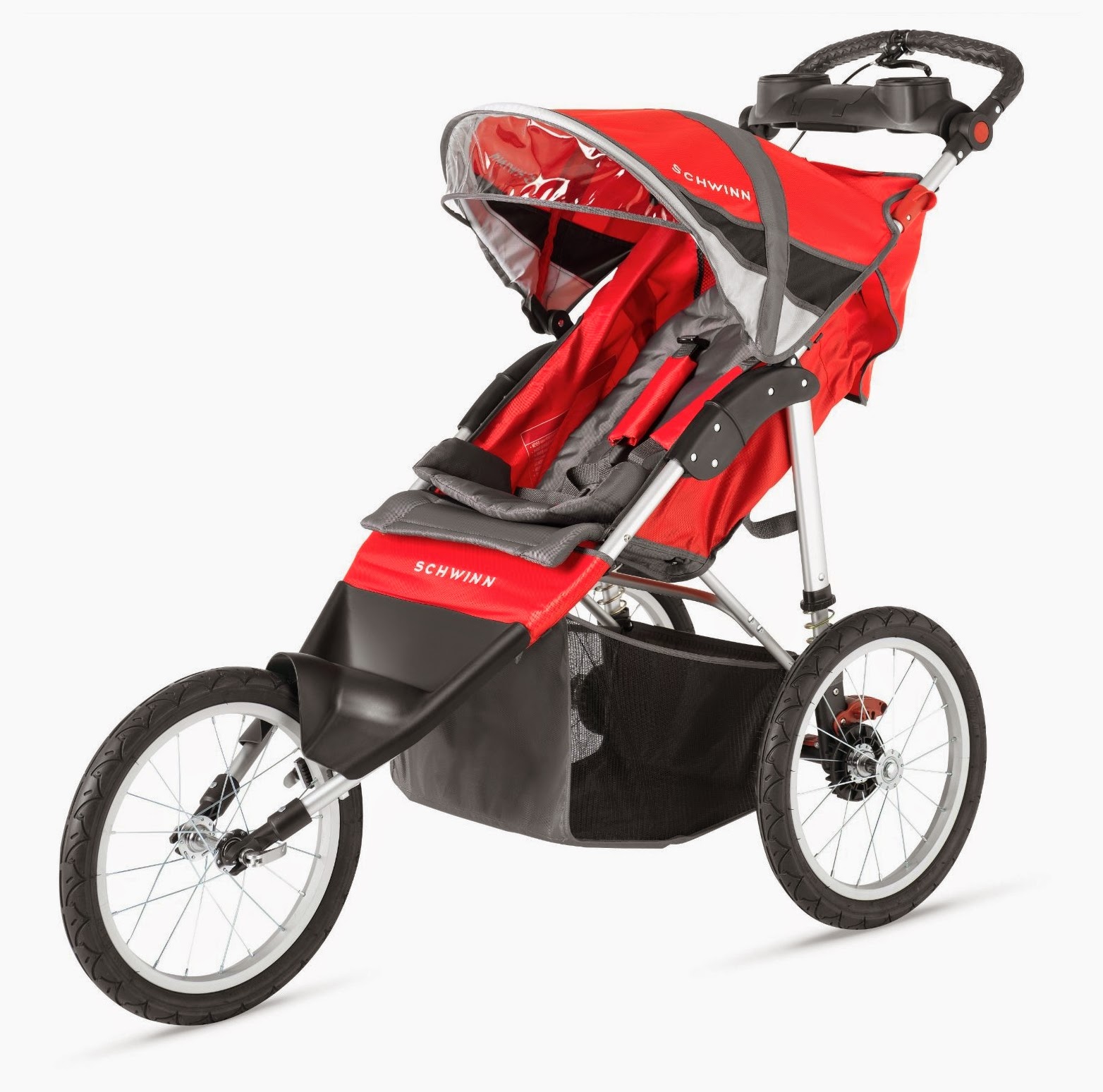
When is a jogging stroller worth the cost?
A jogging stroller is most useful when it solves a problem that your current stroller cannot solve.
Choose one if you run often
If you run two or more times each week with your child, a jogging stroller may make the activity more comfortable and controlled. Large wheels can roll more smoothly over cracks, grass, and packed dirt than small stroller wheels.
You may also benefit from a more stable frame and an adjustable handlebar. These features can reduce the need to push down on the handle, which can make steering less tiring.
You do not need to be a marathon runner. Regular neighborhood runs, trail walks at a fast pace, and run-walk workouts can all justify a jogging stroller.
Choose one if your routes are rough
A jogging stroller can be useful on:
- Paved bike paths
- Smooth gravel trails
- Packed dirt paths
- Sidewalks with regular cracks
- Firm grass
It may not be suitable for deep sand, loose gravel, steep rocky trails, or crowded paths. A larger wheel can handle some bumps better, but no stroller makes rough terrain risk-free.
Skip one if you need a daily errand stroller
Jogging strollers can be awkward in small stores, narrow aisles, elevators, and crowded sidewalks. Their larger frames may also take more trunk space.
A standard stroller may be the better choice if your main needs include:
- Grocery shopping
- Public transportation
- Air travel
- Indoor malls
- Restaurants
- Quick trips
- Carrying the stroller up stairs
Some families use two strollers: one for daily use and one for running. That can work well if you run often and have enough storage. It is not necessary if your budget or home space is limited.
Consider renting or borrowing first
If you are unsure, borrow a jogging stroller from a trusted friend or rent one where available. Test it on the surfaces you expect to use.
Check whether you can:
- Push it without leaning forward.
- Turn it safely at walking speed.
- Fold it without help.
- Fit it in your vehicle.
- Lift it into your trunk.
- Adjust the handlebar and harness.
- Use the brake and wrist strap easily.
A short test can reveal more than a product description. A stroller that feels smooth on a store floor may feel very different on a sloped sidewalk.
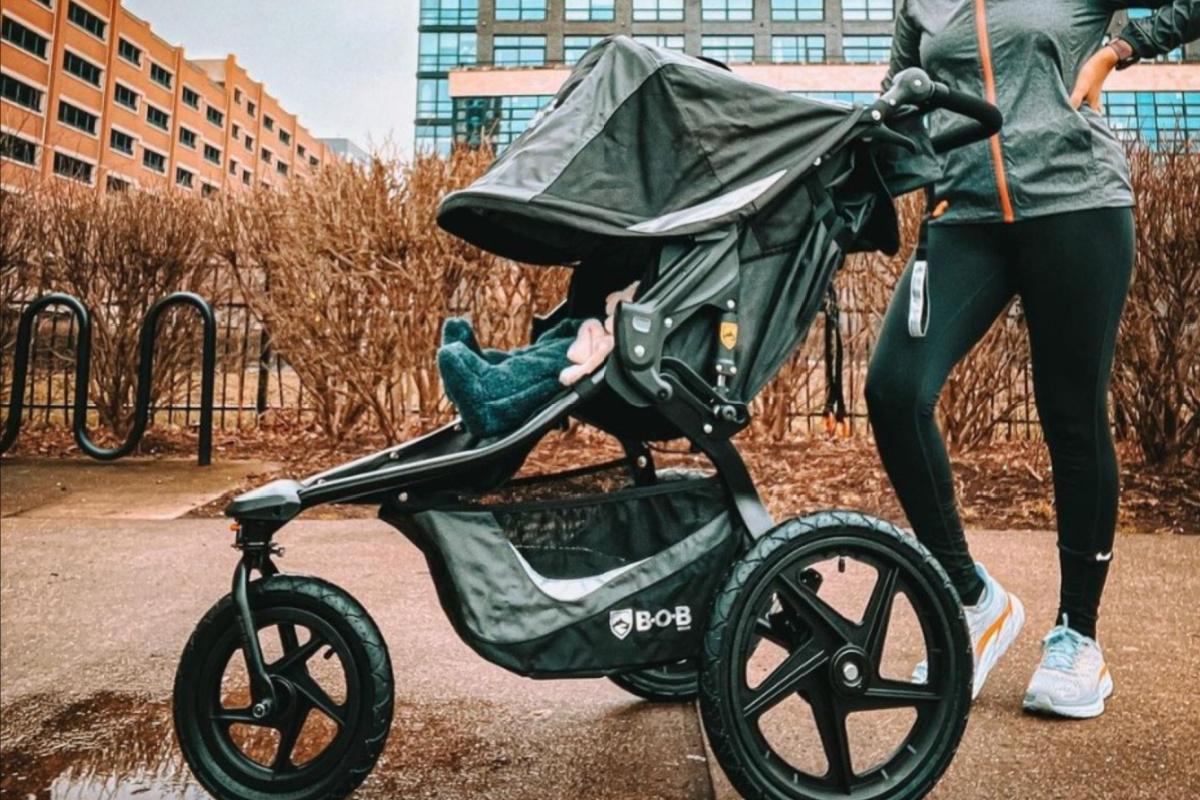
Can you use a jogging stroller with a newborn?
Usually, you should not jog with a newborn in a jogging stroller. Most babies do not have enough head, neck, and trunk control for the movement and vibration of running.
The American Academy of Pediatrics advises parents to wait until a baby is at least 6 months old before using a jogging stroller for jogging. However, the stroller’s manual may set a later age. The manufacturer’s instructions control for that specific model.
A stroller that accepts an infant car seat is not automatically safe for jogging with a newborn. A car seat adapter may support the baby during slow walks, but it may not be approved for running or rough surfaces.
Before jogging with a baby, confirm all of the following:
- The child meets the manufacturer’s minimum age.
- The child can sit upright with steady head control.
- The stroller manual permits jogging at that age.
- The harness fits snugly.
- The child is wearing weather-appropriate clothing.
- The route is smooth and free of avoidable hazards.
When in doubt, use the stroller only for walking or ask your child’s pediatrician. The correct timing can vary for premature babies, babies with developmental concerns, or children with medical conditions.

What should you look for in a jogging stroller?
The most important features are control, fit, and proper use. Extra accessories matter less than a secure frame and a harness that fits your child.
Fixed or swivel front wheel
A fixed front wheel usually gives better straight-line control while jogging. A swivel wheel makes walking and turning easier.
The most flexible design lets you lock the front wheel for running and unlock it for walking. Test the mechanism before buying. It should lock fully and should not shift during use.
Hand brake
A hand brake can help control speed on hills or when slowing down. It is useful, but it does not make steep routes safe by itself.
The brake lever should be easy to reach without changing your grip. Check whether it controls one wheel or more than one wheel, and follow the manual for adjustment and maintenance.
Wrist strap
Use the wrist strap whenever you jog. Attach it to your wrist before you begin moving.
The strap is a backup connection. It may help prevent the stroller from rolling away if you trip or release the handle. It does not allow you to run faster than you can control.
Five-point harness
The harness should fit over your child’s shoulders and hips. Adjust it so your child cannot slip out or lean far to one side.
Use the harness every time, even for a short walk. The Consumer Product Safety Commission recommends using stroller restraints and following the product’s safety instructions.
Adjustable handlebar
An adjustable handlebar can help parents of different heights push with a more upright posture. The handle should feel comfortable without forcing you to reach or hunch.
If two adults will use the stroller, check the full height range before buying.
Wheel and tire type
Air-filled tires often provide a smoother ride, but they need air and can get punctured. Foam-filled or rubber tires may require less maintenance, but the ride can feel firmer.
The right tire depends on your route. Smooth pavement does not require the same setup as a packed dirt trail.
Seat recline and canopy
A deep recline can help with rest during walks. It does not make a stroller safe for jogging with a young baby.
Look for a canopy that blocks direct sun and allows air to move through the seat area. Avoid covering the stroller with a blanket, since this can trap heat and reduce airflow.
Fold and storage size
Measure your vehicle’s trunk and your home storage space. Record the stroller’s folded size, not only its open size.
Also check the stroller’s weight. A model that rolls well may still be difficult to lift.

Jogging stroller vs. regular stroller: which is better?
Neither type is better for every family. The right choice depends on the main job you need the stroller to do.
| Your main need | Better fit |
|---|---|
| Daily errands and stores | Standard stroller |
| Air travel and small car trunks | Compact or travel stroller |
| Long walks on paved paths | Either type |
| Regular running with a child | Jogging stroller |
| Smooth trails and packed dirt | Jogging stroller may help |
| Public transit and stairs | Lightweight standard stroller |
| One stroller for many settings | Convertible jogging stroller, if its limits fit your needs |
A jogging stroller can replace a standard stroller for some families, but it may not replace it well for others. It may be too wide for store aisles and too heavy for frequent lifting.
A standard stroller can sometimes handle brisk walking. That does not mean it is safe for jogging. Check the manual. If the manufacturer does not approve the stroller for running, use it for walking only.
Do not assume that three wheels make a stroller a jogging stroller. Wheel count alone does not establish that a model is designed for running.

How to decide in five steps
Use this short process before you buy.
1. List your real activities
Write down how you will use the stroller in a normal week. Include walking, errands, running, travel, and storage.
Do not plan around an ideal routine. Base the decision on the routine you are likely to keep.
2. Count your running use
Ask how often your child will actually ride during a run.
- Never: You do not need a jogging stroller.
- A few times per year: Borrowing may be more sensible.
- A few times per month: Consider a versatile model.
- Weekly or more: A jogging stroller may be a practical purchase.
This is not a strict rule. It is a way to compare cost, space, and use.
3. Check your routes
Walk or drive your expected routes. Look for hills, loose stones, narrow gates, traffic crossings, and crowded areas.
A smooth, flat route is easier to manage than a steep trail. If you must run near cars, choose a safer route rather than relying on stroller features.
4. Check your child’s age and size
Read the exact manual for the stroller model. Confirm the minimum age for walking, the minimum age for jogging, the maximum child weight, and any restrictions on the seat position.
These limits can differ between models and may change if you use an accessory.
5. Compare the total burden
Consider more than the purchase price. Include:
- Storage space
- Vehicle space
- Tire care
- Repairs
- Accessories
- Cleaning
- How often you will carry it
- Whether you still need a second stroller
A lower-cost stroller that sits unused is not a better value than a stroller you can safely use often.
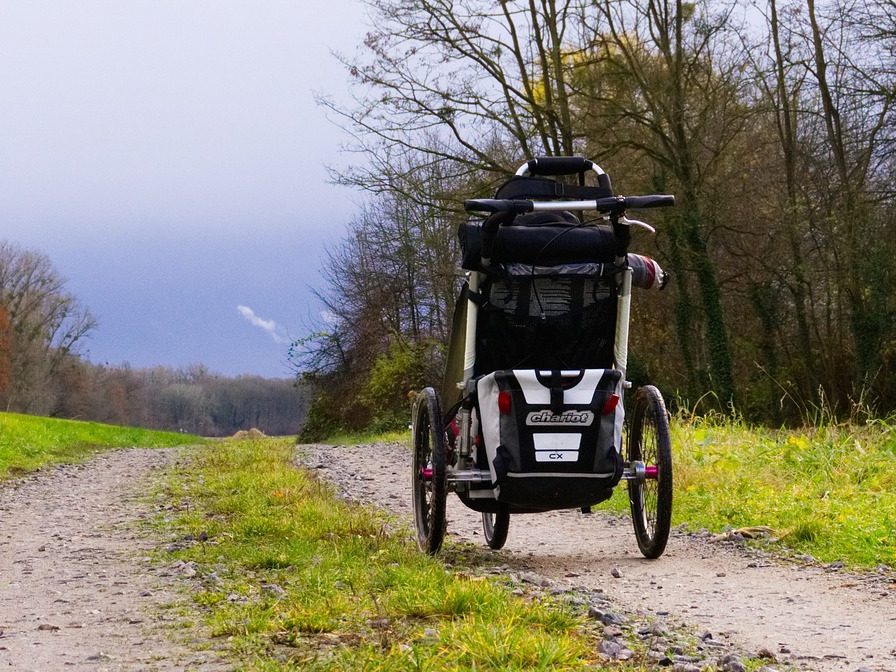
Jogging stroller safety tips for U.S. families
Use a jogging stroller only when the child, stroller, route, and weather are appropriate. The American Academy of Pediatrics and the Consumer Product Safety Commission both stress following the manufacturer’s instructions and using the restraint system.
Before each outing:
- Check that the front wheel is in the correct position.
- Test the parking brake.
- Inspect the wrist strap.
- Check tire pressure if the tires are air-filled.
- Confirm that the harness is secure.
- Remove loose items that could fall into the wheels.
- Check for damaged or loose parts.
During the run:
- Keep one hand on the handlebar.
- Use the wrist strap.
- Slow down before turns and uneven ground.
- Avoid headphones that block traffic sounds.
- Stay on a route with good visibility.
- Keep away from traffic when possible.
- Do not hang heavy bags from the handle.
- Stop if your child appears too hot, cold, tired, or uncomfortable.
Never leave a child alone in a stroller. Engage the parking brake whenever you stop, even on level ground.
Heat and sun
Young children can overheat more quickly than adults. A canopy can provide shade, but it does not solve heat risk. Do not drape a blanket over the stroller.
Choose cooler times of day, allow airflow, and check your child often. Seek medical care for signs of heat illness, such as unusual sleepiness, confusion, fainting, or trouble breathing.
Hills and speed
A hand brake can help you slow down, but it cannot stop every loss of control. Avoid steep hills until you are fully comfortable with the stroller.
If you cannot stop the stroller quickly and smoothly, the route or speed is not suitable.
Recalls and repairs
Before buying a used jogging stroller, check the model, manufacture date, and recall status. In the United States, use the U.S. Consumer Product Safety Commission recall search.
Do not use a stroller with a broken harness, loose wheel, damaged frame, failed brake, or missing safety part. Contact the manufacturer for approved replacement parts.

Common mistakes to avoid
Mistake 1: Jogging with an infant because the car seat fits
Car seat compatibility does not prove that running is approved. Check both the car seat adapter instructions and the jogging stroller manual.
Mistake 2: Leaving the front wheel unlocked
A swivel wheel may turn unexpectedly on a crack or uneven surface. Lock it when the manual requires a fixed wheel for jogging.
Mistake 3: Using a regular stroller for running
A stroller may look sturdy but still lack the wheel design, brakes, or frame needed for running. Use only a model approved for jogging.
Mistake 4: Hanging bags from the handle
Heavy bags can affect balance and increase tip-over risk. Use the basket within its stated weight limit.
Mistake 5: Running too fast
A jogging stroller does not have the same handling as a bicycle or a running track. Start slowly and learn how it behaves on turns, slopes, and rough patches.
Mistake 6: Treating a trail stroller as an all-terrain stroller
“Jogging” does not mean that every surface is safe. Read the manual and avoid terrain that makes the stroller hard to control.

Frequently asked questions
Can I use a jogging stroller for everyday walking?
Yes. Many jogging strollers work well for walks, especially outdoors. However, they may be less convenient in stores, tight spaces, and public transportation because they are often wide and heavy.
Is a jogging stroller safer than a regular stroller?
It can offer better control during jogging when used correctly, but it is not automatically safer in every situation. A regular stroller may be easier to control in a crowded store or narrow sidewalk.
Safety depends on the model, the route, the child’s age, and how the stroller is used.
Can I jog with a baby under 6 months?
The American Academy of Pediatrics advises waiting until at least 6 months for jogging. The stroller maker may require a later age. Always follow the stricter instruction and ask your child’s pediatrician if your baby was premature or has a health concern.
Do I need an expensive jogging stroller?
No. Price alone does not establish safety or performance. Focus on a reliable frame, working brakes, a secure harness, a wrist strap, suitable wheels, and clear instructions.
For a used stroller, inspect it carefully and check for recalls.
Can I take a jogging stroller on gravel?
Some jogging strollers can handle smooth, packed gravel. Loose gravel, deep stones, sand, and rocky trails can make steering and stopping harder. Use the manufacturer’s guidance and test the route at slow speed first.
Bottom line
You do not need a jogging stroller just because you have a baby or enjoy occasional exercise. Buy one when you plan to run often enough for its larger wheels, fixed front wheel, hand brake, and stable frame to matter.
If your main activities are walking and errands, a standard stroller is likely the simpler choice. If you run weekly with your child, choose a jogging model that fits the child’s age, your route, your vehicle, and your storage space.
Before your first run, read the manual, secure the harness, attach the wrist strap, check the brakes and wheels, and begin on a flat, quiet route at a controlled pace.