Most babies start to see at birth, but clear, colorful vision develops steadily during the first year.
When can babies start to see? Newborns can see light, shapes, faces, and movement from their first day, though their vision is blurry and limited. As the brain and eyes mature, babies learn to focus, track objects, recognize familiar faces, and judge distance. This guide explains normal baby vision development, what parents can do to help, and which signs need medical attention.
When can babies start to see?
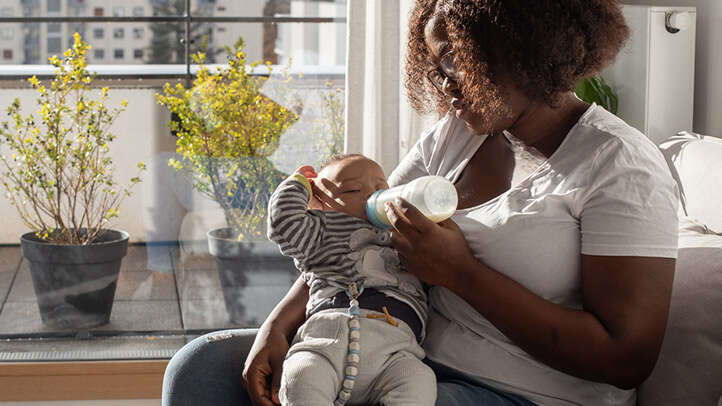
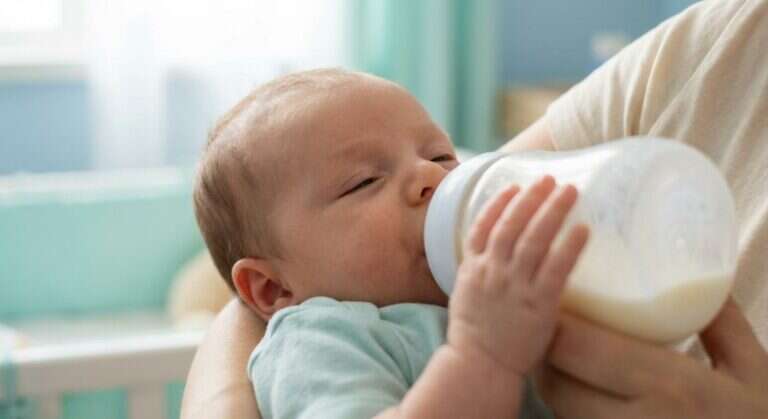
Babies can see at birth. However, newborn eyesight is not sharp. Most newborns see best at a distance of about 8 to 12 inches, which is roughly the space between a baby’s face and a parent’s face during feeding.
At first, babies notice light, dark shapes, large objects, and slow movement. They may stare at a face without following it well. This is normal because the visual system is still developing.
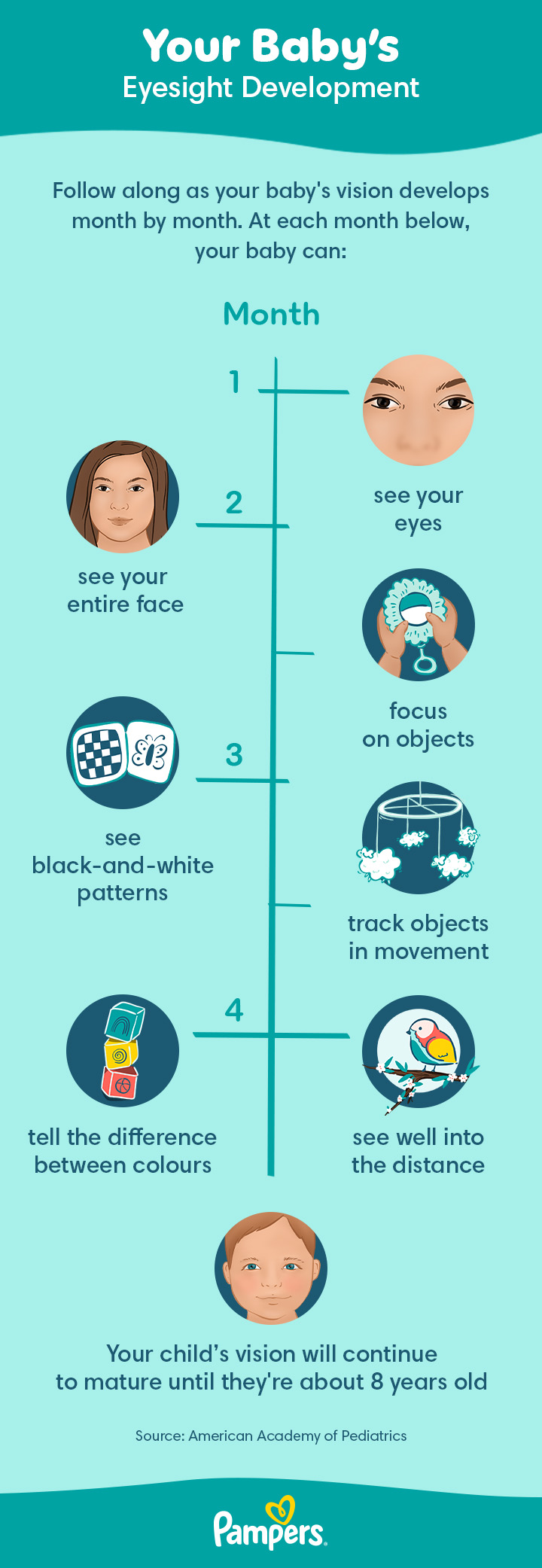
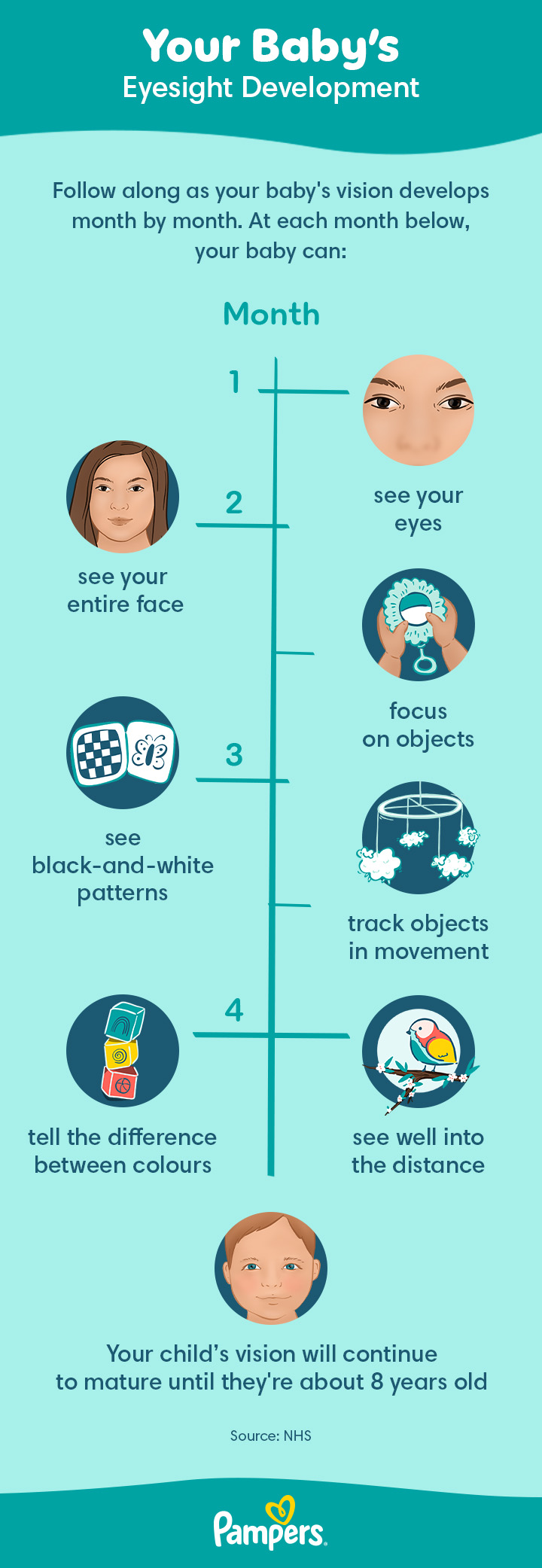
When can babies start to see clearly? Clear vision develops step by step. Many babies begin to focus better during the first few weeks. By about 2 to 3 months, they often track moving objects and look at faces for longer periods.
A newborn may seem to “look through” you. This does not always mean a vision problem. Short attention spans, tiredness, hunger, and bright light can all affect how a baby looks.

What do newborns see?
Newborns do not see the world as a sharp picture. Their early vision is more like a soft watercolor image. They can detect brightness and movement, but fine details remain difficult to see.
A newborn’s eyes may also wander or cross from time to time. The eye muscles are still learning to work together. Occasional wandering is often normal in the first few months.
Newborns usually respond best to:
• Human faces, especially close-up faces
• High-contrast patterns, such as black and white
• Slow movement
• Soft light
• Large shapes
• Familiar voices paired with a face
Babies may prefer faces over toys because faces have strong patterns and emotional meaning. They may also look at a caregiver’s eyes, mouth, or hairline.
When can babies start to see color? Newborns can likely detect some color, but color vision is not yet mature. Many experts believe babies first notice strong colors and contrasts. By around 4 months, most babies can see a wider range of colors.
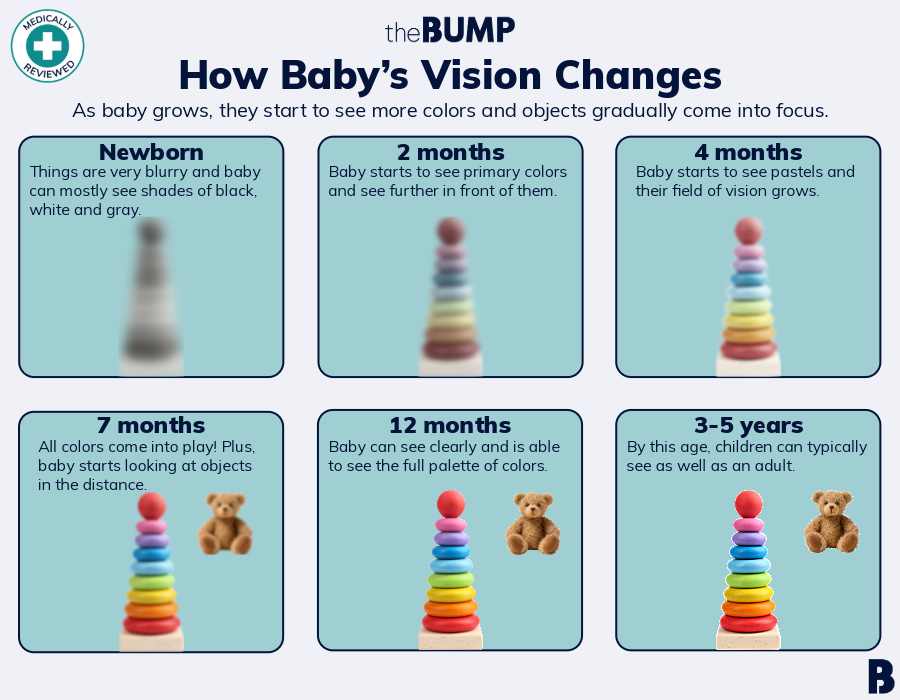
Baby vision development by age
Every baby follows a slightly different pace. The milestones below offer a general guide, not a strict test.
Birth to 1 month
At birth, babies can detect light and large shapes. They may briefly focus on a face or bright object placed nearby.
During the first month, your baby may:
• Look toward a light
• Blink in response to bright light
• Study a face for a short time
• Prefer objects close to the face
• Briefly follow a slow-moving object
Do not expect steady eye contact all day. Newborns sleep often and may look away when overstimulated.
2 to 3 months
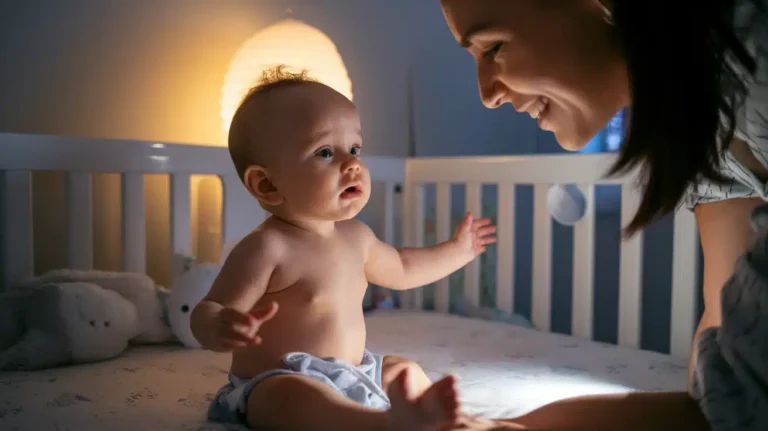
Vision usually becomes more organized during this stage. Babies often begin to follow a moving face or toy from side to side.
You may notice that your baby:
• Makes longer eye contact
• Smiles at familiar faces
• Watches hands and fingers
• Tracks a toy across the room
• Looks from one object to another
• Begins to reach toward nearby objects
When can babies start to see faces clearly? Many babies show stronger interest in faces around 2 to 3 months, but their vision is still developing.
4 to 6 months
By 4 months, many babies have better eye control and depth awareness. They may reach for toys with greater accuracy and notice small details.
At this age, babies often:
• Recognize familiar people from farther away
• Follow objects in many directions
• Reach for toys
• Notice bright colors
• Watch their own hands
• Explore objects by looking, touching, and mouthing
Some babies begin rolling toward an interesting object. Visual interest can support movement and play.
7 to 9 months
Vision becomes more similar to adult vision, although it may still continue to sharpen. Babies often notice small objects and changes in distance.
They may:
• Look for dropped objects
• Pick up small items
• Recognize people across a room
• Watch moving pets or vehicles
• Enjoy picture books
• Use vision to support crawling
This is also a key time for safety. Babies may see small objects but still put them in their mouths. Keep coins, buttons, batteries, and tiny toys out of reach.
10 to 12 months
By the first birthday, many babies use vision to guide crawling, standing, and walking. They can often notice familiar objects and people across a room.
A baby may:
• Point to pictures
• Find a hidden toy
• Pick up small foods
• Watch a ball roll
• Recognize familiar people at a distance
• Copy facial expressions
When can babies start to see like adults? Vision is often much clearer by 12 months, but visual skills continue to mature throughout childhood.

How baby eyesight changes during the first year
Baby vision changes because the eyes and brain must learn to work as a team. The eyes collect information, while the brain gives that information meaning. This process is called visual development.
At first, a baby may see a face but not understand that it belongs to a familiar person. With repeated exposure, the brain connects the face, voice, smell, and touch. Over time, the image becomes more meaningful.
Several skills develop together:
• Focus: The ability to make an object look clear
• Tracking: The ability to follow a moving object
• Eye teaming: The ability to use both eyes together
• Depth perception: The ability to judge distance
• Color vision: The ability to notice and name different colors later
• Visual attention: The ability to look at something for longer periods
These skills do not appear all at once. A baby may track well but still struggle to reach accurately. Another baby may focus on faces but show little interest in toys.
When can babies start to see well? Most babies show major progress during the first 6 months. Still, normal development has a wide range.
How to support healthy vision development
You do not need expensive products to help your baby’s eyesight. Simple daily activities are often enough.
Try these practical ideas:
- Hold your baby close during feeding and talking. Your face is a natural visual target.
- Move a toy slowly from side to side. Pause if your baby loses interest.
- Use simple, high-contrast toys during the early months.
- Give your baby supervised tummy time. This supports head control and visual exploration.
- Read picture books with large shapes and clear colors.
- Change the position of toys so your baby can look in different directions.
- Let your baby explore safe objects at different distances.
- Avoid overwhelming your baby with flashing lights or too many toys.
- Keep smoke away from your baby and attend regular health visits.
- Follow recommended eye checks and pediatric appointments.
A useful lesson for new parents is to watch the baby, not the clock. If your baby turns away, becomes fussy, or stops looking, offer a break. Looking away can be a sign of tiredness, not poor eyesight.
Another common mistake is comparing babies too closely. One baby may track a toy early, while another may focus more on faces. Milestones are useful guides, but a pattern over time matters more than one day.
Is blurry vision normal for a newborn?
Yes. Blurry vision is expected in newborns. Their eyes can detect light and movement, but their ability to focus on fine details is limited.
Newborns often see best at close range. This is helpful during feeding and bonding because a caregiver’s face is usually nearby.
Mild eye crossing or wandering can also occur early on. The eyes should gradually work together more consistently during the first few months.
However, persistent eye turning, unusual eye movements, or a white reflection in the pupil should not be ignored. Contact a pediatrician or pediatric eye doctor if you notice these signs.
Signs your baby may need an eye check
Most babies develop vision without a serious problem. Still, early care matters because the visual system develops quickly. Some eye conditions are easier to treat when found early.
Talk with your baby’s health care professional if your baby:
• Does not seem to notice bright light
• Does not look at faces by about 2 to 3 months
• Does not track a moving object by about 3 to 4 months
• Has eyes that constantly turn in or out
• Has rapid, shaking eye movements
• Has pupils that look white or cloudy
• Has frequent redness, swelling, or discharge
• Holds objects unusually close later in infancy
• Uses one eye more than the other
• Does not improve over time
A single missed milestone does not prove a vision disorder. Babies may be premature, tired, ill, or simply developing on their own schedule. Still, it is wise to share concerns rather than wait.
Premature babies may need extra monitoring because their eyes and visual systems had less time to develop before birth. Your pediatrician can explain the right screening plan.
Baby eye color and vision
Eye color and eyesight are different things. A baby can have blue, brown, green, or gray eyes and still have normal or abnormal vision. Eye color does not show how clearly a baby can see.
Many babies are born with lighter-looking eyes. Pigment may increase during the first year, so the final color can change. This change does not usually affect visual development.
Parents sometimes worry when a baby’s eyes look different in photographs. A red reflection can be normal because light reflects from the back of the eye. A repeated white reflection, especially in one eye, needs prompt medical advice.
Never rely on photographs alone to diagnose an eye problem. A professional examination is the safest way to check a baby’s eyes.
When can babies start to see color?
Babies likely see some color from birth, but early color vision is limited. Strong contrasts and bright colors tend to attract their attention more than pale shades.
By about 2 months, many babies show growing interest in colorful objects. By around 4 months, color vision is usually much more developed.
You can support this skill with:
• Bright but safe toys
• Colorful picture books
• Simple patterns
• Natural light during play
• Objects placed at a comfortable distance
Avoid placing very bright lights directly near your baby’s eyes. Normal room light and gentle play are enough.
Screen time and newborn eyesight
Screens are not needed to improve baby vision. Infants learn best from real faces, movement, touch, and three-dimensional objects.
For children younger than 18 months, many pediatric experts recommend avoiding screen media other than video calls. Video calls can support social connection when an adult is present and engaged.
A phone or tablet may hold a baby’s attention, but that does not mean it improves eyesight. Real-world play helps babies practice focus, tracking, reaching, and depth awareness.
A better choice is to talk, sing, read, and play face-to-face. These activities support vision as well as language and emotional development.
Frequently Asked Questions About When Can Babies Start to See
When can babies start to see after birth?
Babies can see from birth. Their vision is blurry, and they see best at close range, especially about 8 to 12 inches from their face.
When can babies start to see clearly?
Many babies focus better by 2 to 3 months and show major visual progress by 4 to 6 months. Vision may continue to sharpen throughout the first year and beyond.
Can newborns see color?
Newborns may see some color, but their color vision is not fully developed. Strong colors and high-contrast patterns usually attract attention first.
When do babies recognize their parents?
Babies recognize caregivers through a mix of vision, voice, smell, and touch. Visual recognition often becomes clearer during the first few months, as babies focus better on familiar faces.
Should newborns have eye exams?
Newborns receive basic eye checks as part of routine health care. Additional exams may be needed if there is a family history of eye disease, premature birth, unusual eye movements, or other concerns.
Is it normal for a baby’s eyes to cross?
Occasional crossing or wandering can be normal in the early months. Constant eye turning or crossing that continues after the early months should be discussed with a pediatrician or eye specialist.
What should I do if my baby does not track objects?
Mention it to your baby’s pediatrician, especially if your baby is around 3 to 4 months or older. The doctor can assess development and decide whether a formal eye exam is needed.
Conclusion
When can babies start to see? Babies see from birth, but their vision begins as blurry and close-range. During the first year, they gradually improve focus, tracking, color vision, depth awareness, and recognition of familiar faces.
Support this growth with face-to-face time, safe toys, reading, tummy time, and regular health visits. Trust your observations, avoid close comparisons, and ask a pediatrician about any lasting concern. Explore more trusted infant-development resources, and share your questions or experiences with other parents.