Introduction
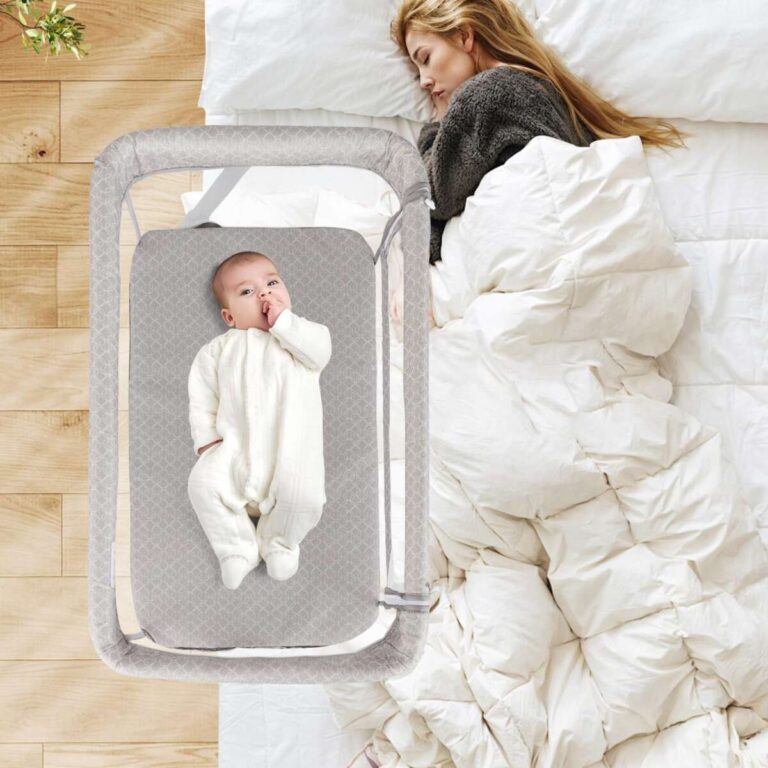
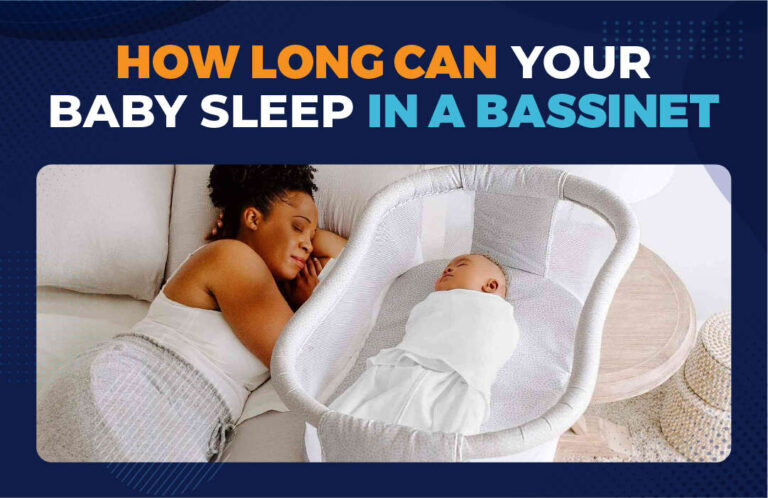
In the United States, a bedside bassinet is usually considered room-sharing, not bed-sharing. Your baby sleeps close to you but on a separate, infant-sized sleep surface next to your adult bed.
People often use “co-sleeping” as a broad term for sleeping near a baby. That can include room-sharing, bed-sharing, or using a bedside sleeper. For safety, though, the distinction matters. The American Academy of Pediatrics (AAP) recommends room-sharing without bed-sharing because it keeps the baby nearby while avoiding the hazards of an adult mattress.
A bedside bassinet can support safe room-sharing when it is made for infant sleep, set up correctly, and used according to its instructions.

What is the difference between co-sleeping, room-sharing, and bed-sharing?
The word co-sleeping does not have one universal meaning. In everyday speech, it may describe any arrangement in which a parent and baby sleep near each other. In U.S. safe-sleep guidance, it helps to use more exact terms.
| Term | What it means | Is the baby on a separate sleep surface? |
|---|---|---|
| Room-sharing | Baby sleeps in the same room as a parent, often beside the adult bed | Yes |
| Bed-sharing | Baby sleeps on the same mattress or sleep surface as an adult | No |
| Bedside bassinet | A small infant sleep space placed next to the adult bed | Yes |
| Bedside sleeper | A product designed to sit beside an adult bed; some have a side that lowers | Yes, when used correctly |
| Co-sleeping | A broad, informal term that may mean room-sharing or bed-sharing | Depends on the person using the term |
So, if your baby sleeps in a bassinet beside your bed, that is generally room-sharing with a separate sleep surface. Some families may still call it co-sleeping because the baby sleeps close by. Both descriptions may be used in casual conversation, but “room-sharing” is more precise for safety discussions.
The AAP recommends that infants sleep in the parents’ room, close to the parents’ bed, but on a separate surface designed for infant sleep. The AAP says this arrangement is ideally used for at least the first six months.

Is a bedside bassinet safe for a newborn?
A bedside bassinet can be an appropriate sleep space for a newborn if it meets current safety requirements and is used as the manufacturer intended. The product name alone does not make it safe.
The U.S. Consumer Product Safety Commission (CPSC) regulates products such as bassinets, cradles, and bedside sleepers. A product should be intended for infant sleep and should have clear instructions, warnings, and assembly requirements.
Look for these basic features:
- A firm, flat, level sleep surface
- A fitted sheet made for that specific product
- No pillows, blankets, bumpers, stuffed toys, or sleep positioners
- A stable base that does not tip or collapse during normal use
- Sides that remain secure
- No large gap between the bedside sleeper and the adult bed
- A weight, height, and age limit that your baby has not exceeded
- Clear instructions from the manufacturer
The safest position for a sleeping baby is on the back for every sleep, including naps. Place the baby with the head and face uncovered. Do not add padding to make the bassinet softer. A soft surface can allow a baby’s face to press into the material and restrict breathing.
A bedside bassinet is not safe if it has been modified, damaged, recalled, or used beyond its limits. Check the product label and search the CPSC recall database before using a secondhand model.

Does an attached bedside sleeper count as bed-sharing?
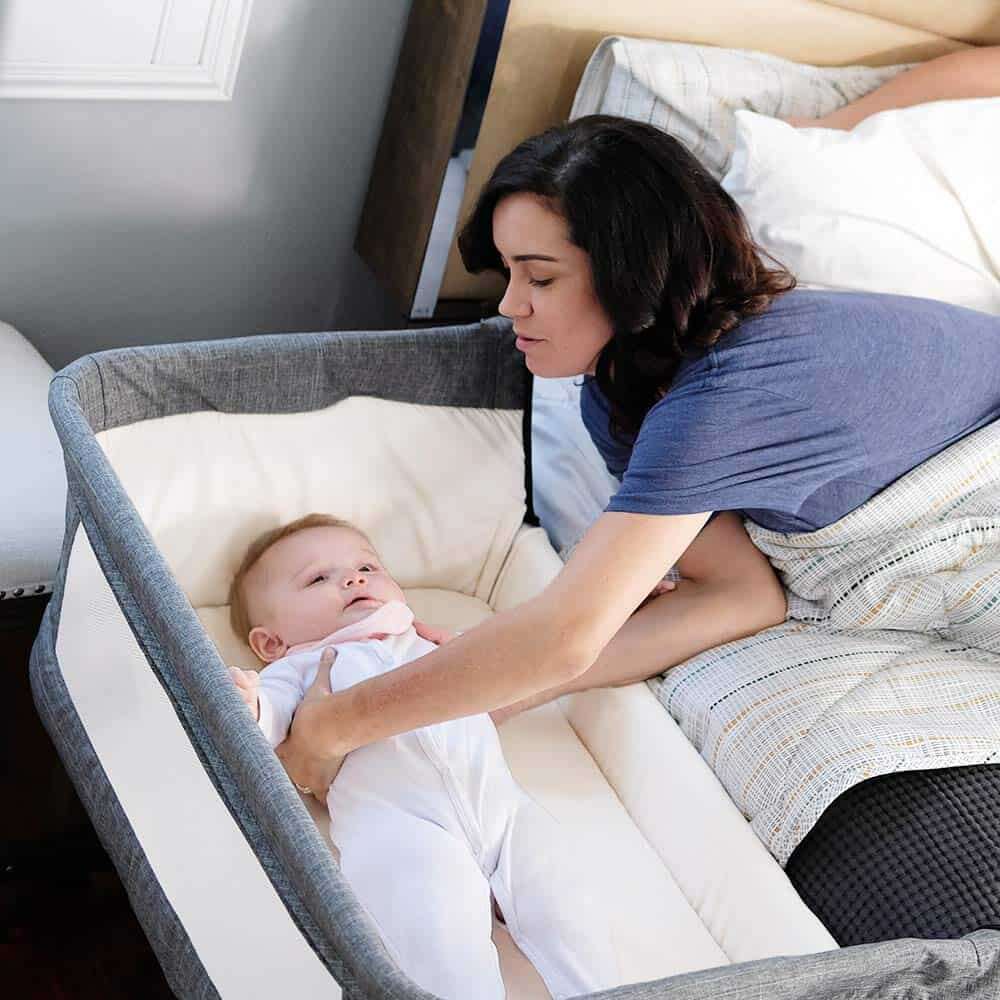
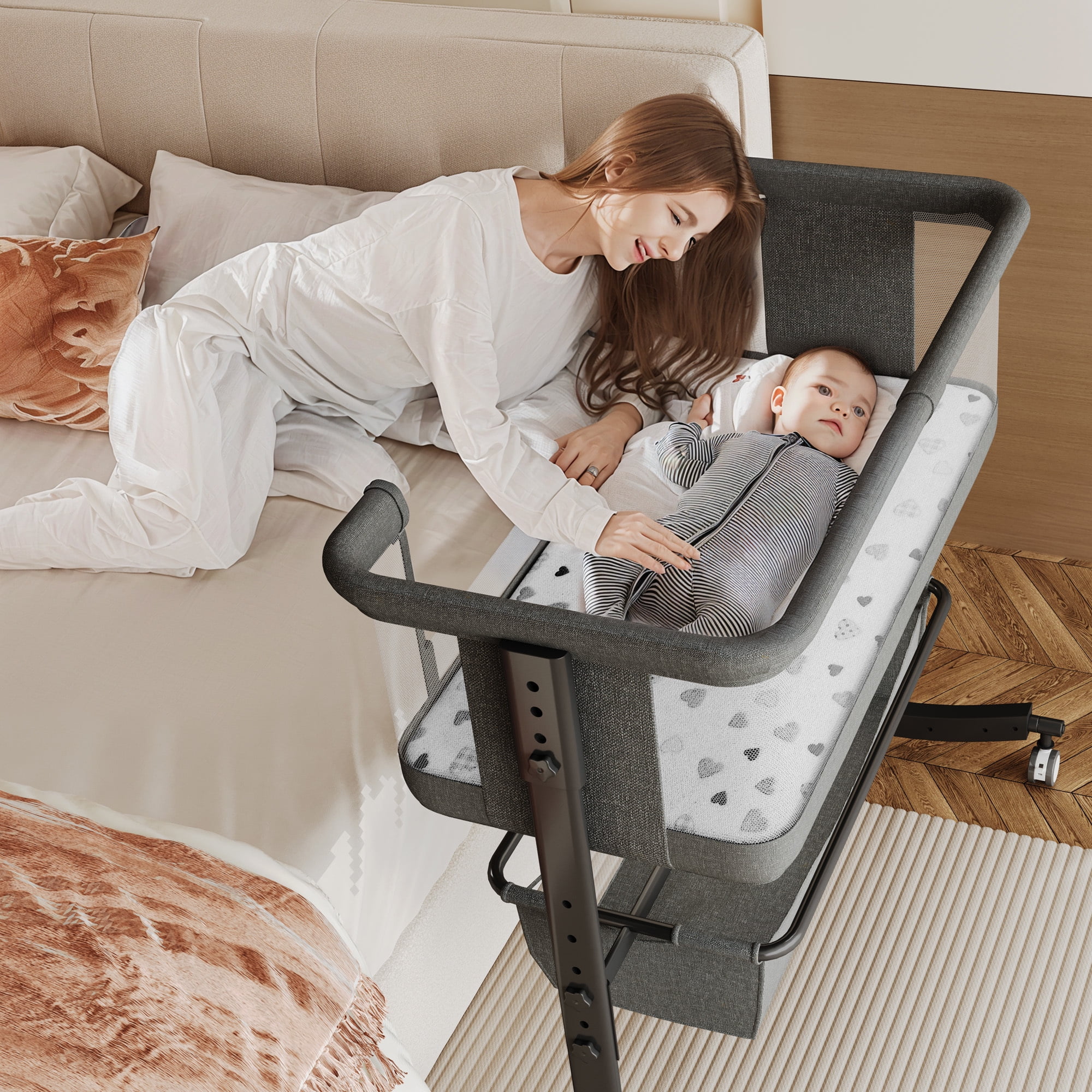
An attached bedside sleeper does not usually count as bed-sharing when the baby remains on the sleeper’s own mattress and the product is correctly secured to the adult bed.
The key question is not whether the product touches your bed. The key question is where the baby’s body rests.
If the baby sleeps on the separate bassinet mattress, the setup is room-sharing. If the baby rolls or is moved onto the adult mattress, the arrangement becomes bed-sharing. A lowered side does not turn the adult bed into the baby’s sleep surface.
Before using an attached bedside sleeper:
- Read the full manual.
- Confirm that the product is approved for use beside your type of bed.
- Attach every strap or fastener listed by the manufacturer.
- Check that the sleeper cannot pull away from the bed.
- Make sure the adult mattress does not press into, cover, or tilt the baby’s sleep area.
- Look for any gap where a baby could become trapped.
- Keep the bassinet’s mattress flat and use only the supplied or approved sheet.
- Recheck the attachment after moving the bed or changing the room setup.
Never assume that a bassinet is safe for bedside attachment simply because it fits next to your bed. A freestanding bassinet and an attached bedside sleeper may have different instructions and safety limits.

What should a baby wear in a bedside bassinet?
Dress your baby in a light layer that is suitable for the room temperature. A wearable blanket may be used if it fits well and does not cover the baby’s face.
Avoid loose blankets, quilts, comforters, hats, and heavy layers during sleep. Babies can overheat more easily than adults, and loose items can cover the nose or mouth.
Signs that your baby may be too warm can include sweating, a hot chest, flushed skin, or damp hair. Check the chest or back rather than relying only on the hands and feet, which can feel cool even when the baby is comfortable.
A swaddled baby must always be placed on the back. Stop swaddling when the baby shows signs of trying to roll. At that stage, use a properly fitted sleep sack or other wearable blanket that allows free movement.
Do not use weighted swaddles or weighted sleep products unless your child’s clinician gives specific advice. The AAP advises against weighted sleep products for infants because of safety concerns.

Bedside bassinet safety checklist
Use this quick check each time you prepare the bassinet:
The sleep space
- Is the bassinet made for infant sleep?
- Is the mattress firm, flat, and level?
- Does the mattress fit tightly with no space around the edges?
- Is the sheet tight and made for that bassinet?
- Is the surface free of pillows, toys, blankets, and positioners?
The baby
- Is the baby placed on their back?
- Is the face and head uncovered?
- Is the baby within the product’s age, weight, and height limits?
- Has swaddling stopped if the baby is trying to roll?
The setup
- Is the bassinet stable?
- If it attaches to the bed, are all approved fasteners secured?
- Is there no gap between the bassinet and the adult bed?
- Are cords, monitor wires, and other objects out of reach?
- Is the bassinet away from sofas, recliners, windows, pets, and other hazards?
If you find a gap, loose fabric, an unstable frame, or a damaged part, move the baby to another safe sleep space. Do not fill a gap with towels, blankets, pillows, or homemade supports. Contact the manufacturer for the approved repair or setup method.
What is the safest way to use a bedside bassinet at night?
The safest routine is simple: feed, comfort, and return the baby to the bassinet before you go back to sleep.
Night feeds can make parents very tired. If you might fall asleep while feeding, remove pillows, blankets, and other soft items from the area first. Once you wake, place the baby back in the bassinet on their back.
Never sleep with a baby on a couch or recliner. These surfaces have a high risk of trapping and suffocating an infant. Bed-sharing is also riskier when an adult is very tired, has used alcohol or drugs, smokes, or takes medicine that causes sleepiness.
Keep the bassinet close enough to reach without stretching, but do not place the baby in the adult bed for convenience. A close sleep space can make feeding and soothing easier without combining the baby’s sleep surface with yours.
Breastfeeding can reduce some sleep-related risks, but it does not make every sleep setting safe. The AAP still recommends returning the baby to a separate sleep surface after feeding.

When should a baby stop using a bedside bassinet?
Stop using the bassinet when the manufacturer’s limit is reached or when your baby can push up, roll, sit, pull up, or otherwise move in a way that makes the product unsafe. The exact limit depends on the model.
Do not wait for the baby to become too large if the manual says to stop earlier. A newborn bassinet may have a smaller sleep area and lower sides than a full-size crib.
Move the baby to a crib, portable crib, or play yard that meets current U.S. safety standards. The new sleep space should also have a firm, flat mattress with only a fitted sheet.
A baby does not need to sleep in the bassinet until a specific month. Development and the manufacturer’s instructions matter more than age alone.

Common mistakes with bedside bassinets
The most common mistake is treating the bassinet as an extension of the adult bed. A baby should remain on the bassinet mattress, not on the adult mattress.
Other mistakes include:
- Adding a pillow or rolled towel to stop the baby from moving
- Using a loose blanket instead of a wearable blanket
- Placing the bassinet on a bed, sofa, table, or other raised surface
- Using a product with a sloped or inclined sleep surface
- Leaving the side lowered when the product instructions require it to be raised
- Ignoring a recall or missing part
- Using a secondhand mattress that does not fit tightly
- Moving the bassinet near a window blind cord or electrical cord
- Continuing to use the product after the baby reaches its movement or weight limit
- Assuming a product marketed as a “co-sleeper” meets all safe-sleep needs
Marketing language can be confusing. “Co-sleeper,” “bedside crib,” and “bedside bassinet” may describe different product types. Read the manual and safety label instead of relying on the name used in an advertisement.
Bedside bassinet versus crib: Which is better?
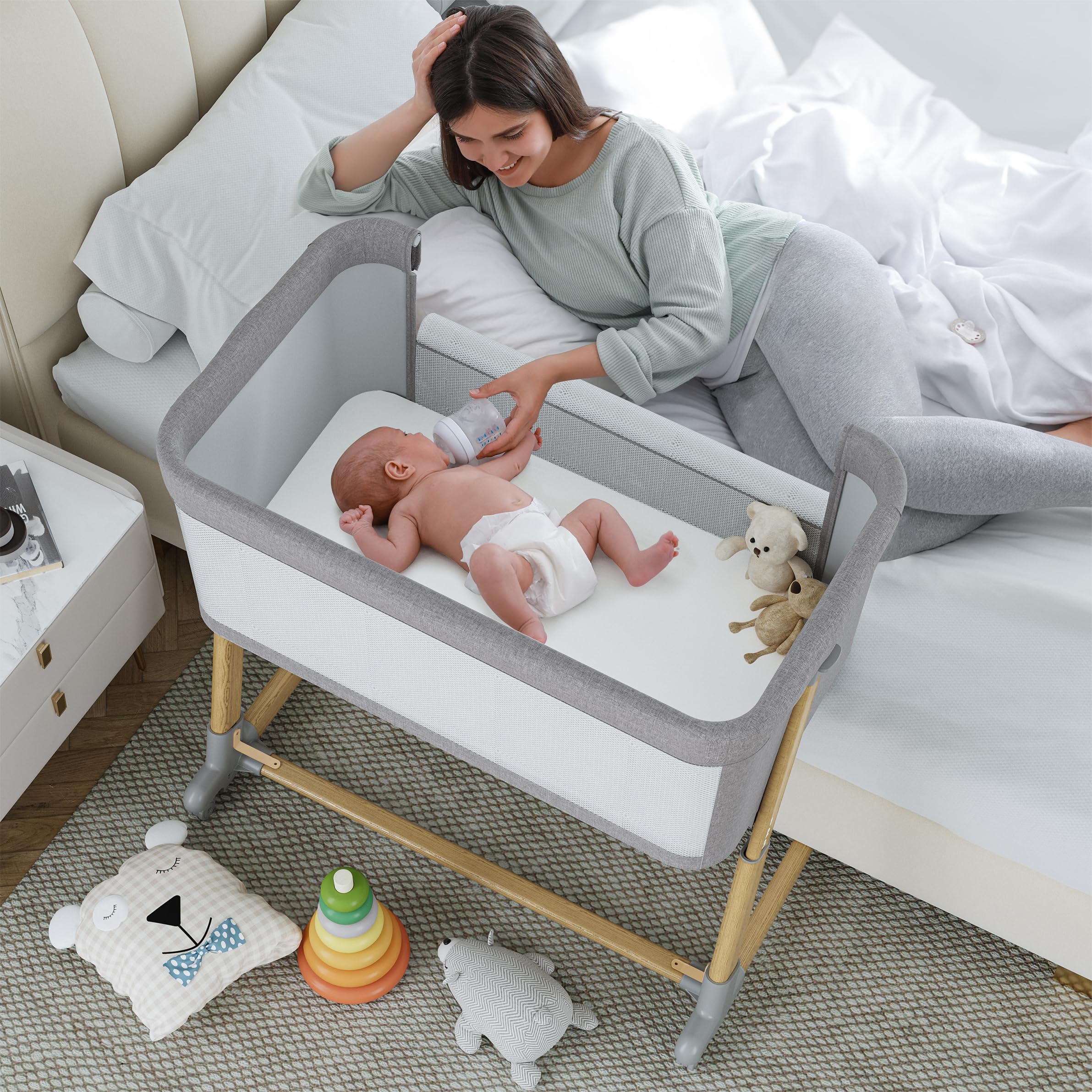
Neither option is automatically better for every family. A bedside bassinet may make nighttime care easier during the early months because it keeps the baby within reach. A crib usually offers more space and can be used for a longer period.
| Consideration | Bedside bassinet | Crib |
|---|---|---|
| Early nighttime access | Usually easier | May require more movement |
| Sleep space | Smaller | Larger |
| Length of use | Often shorter | Usually longer |
| Portability | Many models are easy to move | Often less portable |
| Main safety concern | Gaps, attachment, and short use limits | Incorrect mattress or added soft items |
The deciding factor is not convenience alone. Choose a product that gives your baby a firm, flat, separate sleep surface and that you can set up exactly as directed.

Frequently asked questions
Is using a bedside bassinet the same as sleeping with your baby?
Not usually. If your baby sleeps in the bassinet on its own mattress, you are room-sharing rather than bed-sharing. Some people use “co-sleeping” as a broad term that includes this arrangement.
Can a newborn sleep in a bassinet next to the parents’ bed?
Yes, a newborn can sleep in a suitable bassinet next to the parents’ bed when the product is used according to its instructions. Place the baby on their back on a firm, flat surface with no loose items.
Can I put my baby in the bed for a feed?
You may bring the baby into bed for feeding, but return the baby to the bassinet before you sleep. Clear soft bedding away during the feed, and never feed or sleep with a baby on a couch or recliner.
Is a rocking bedside bassinet safe?
It depends on the product and its instructions. If the bassinet is designed for rocking, use only the approved mode during the approved conditions. Lock or stop the motion if the manual requires it during sleep, or when the baby reaches a stated developmental limit.
What if my baby rolls from the bassinet onto the adult bed?
Move the baby back to the bassinet when you notice it. Then check the setup for a gap, loose attachment, or product limit. If the baby can climb, roll out, or reach the adult bed, stop using that bassinet and follow the manufacturer’s transition guidance.
Does a bedside bassinet reduce the risk of sudden infant death syndrome?
Room-sharing without bed-sharing is associated with a lower risk than having an infant sleep in a separate room, according to the AAP. A bassinet cannot remove all sleep-related risks. Back sleeping, a firm flat surface, an empty sleep space, and avoiding smoke exposure remain important.
Key takeaways
- A bedside bassinet is generally room-sharing, not bed-sharing.
- “Co-sleeping” is a broad term, so ask whether someone means room-sharing or sharing the same mattress.
- Keep the baby on the bassinet’s own firm, flat, separate sleep surface.
- Use only a fitted sheet. Keep pillows, blankets, toys, bumpers, and positioners out.
- Follow the product manual for attachment, weight, height, movement, and age limits.
- Move the baby to a crib, portable crib, or play yard when the bassinet is no longer appropriate.
Conclusion
A bedside bassinet lets a baby sleep close to a parent without sharing the adult bed. In U.S. safe-sleep terms, that is room-sharing with a separate sleep surface.
The safest next step is to check the bassinet’s manual, confirm that it is stable and correctly placed, and use the back-to-sleep setup every time. If the product has a gap, damage, recall, incline, or unclear instructions, do not use it until the issue is resolved.