
In the United States, newborns can sleep safely in either a crib or a bassinet. The key is not the size of the sleep space. The key is that it has a firm, flat mattress, a fitted sheet, and no loose items. It must also meet current U.S. safety rules.
Many parents start with a bassinet because it is small and easy to keep near the bed. A full-size crib can also be used from the first night. You do not need both.

Crib vs. Bassinet: What Is the Difference?
A crib is a full-size sleep space made for infants and young children. A bassinet is smaller and often designed for newborns during the first few months.


Both can be safe when they are made for infant sleep and used as directed. The main differences are size, portability, and how long each product can be used.
| Feature | Crib | Bassinet |
|---|---|---|
| Use period | Newborn stage through toddler years, based on the model | Usually the first weeks or months |
| Size | Larger | Smaller |
| Portability | Less portable | Often easier to move |
| Room use | Works well in a nursery or bedroom | Convenient beside a parent’s bed |
| Weight limit | Usually higher | Must follow the product limit |
| When to stop | When the child reaches the model’s limit or climbs out | When the manual says to stop, or when the baby rolls or reaches the limit |
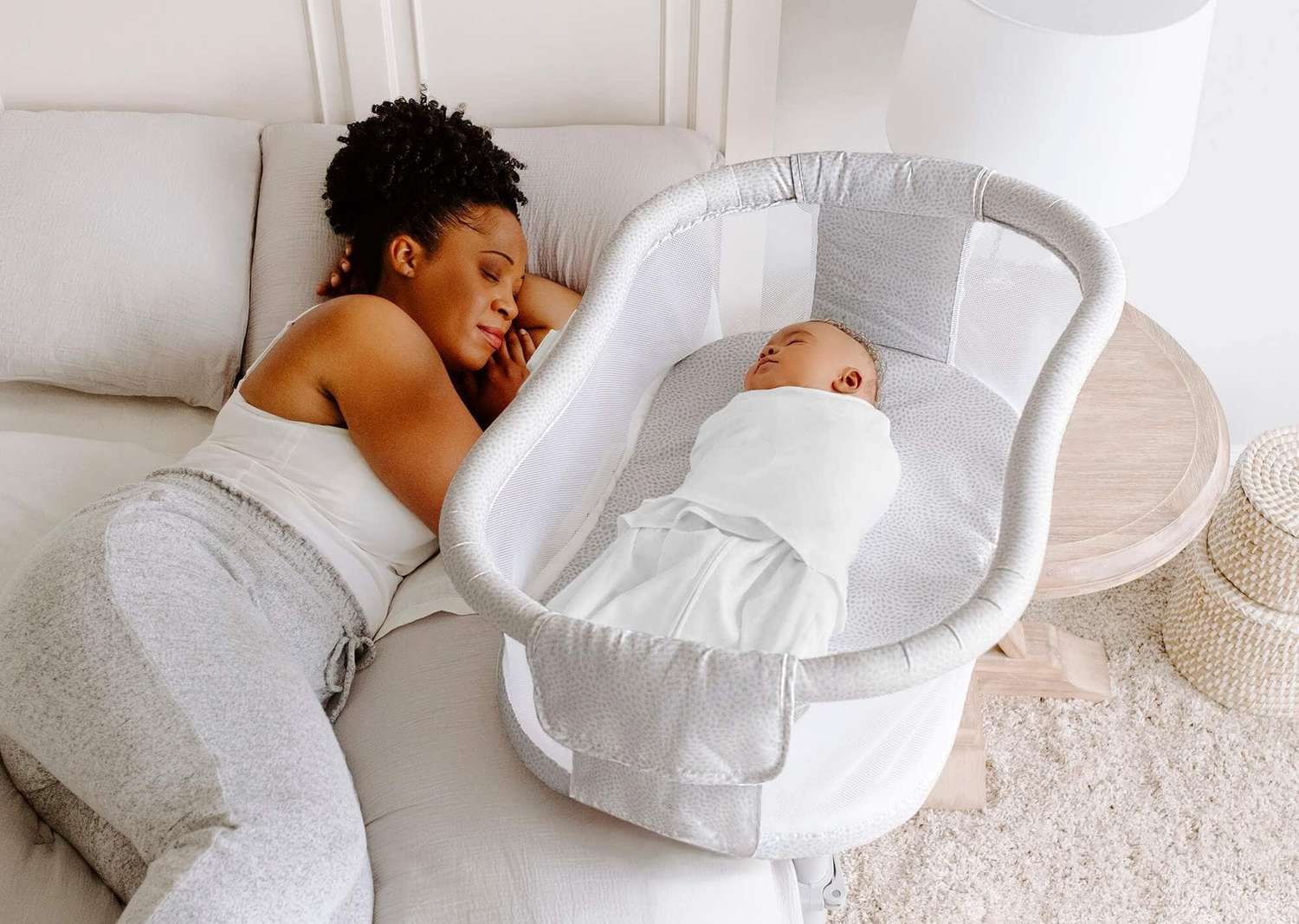
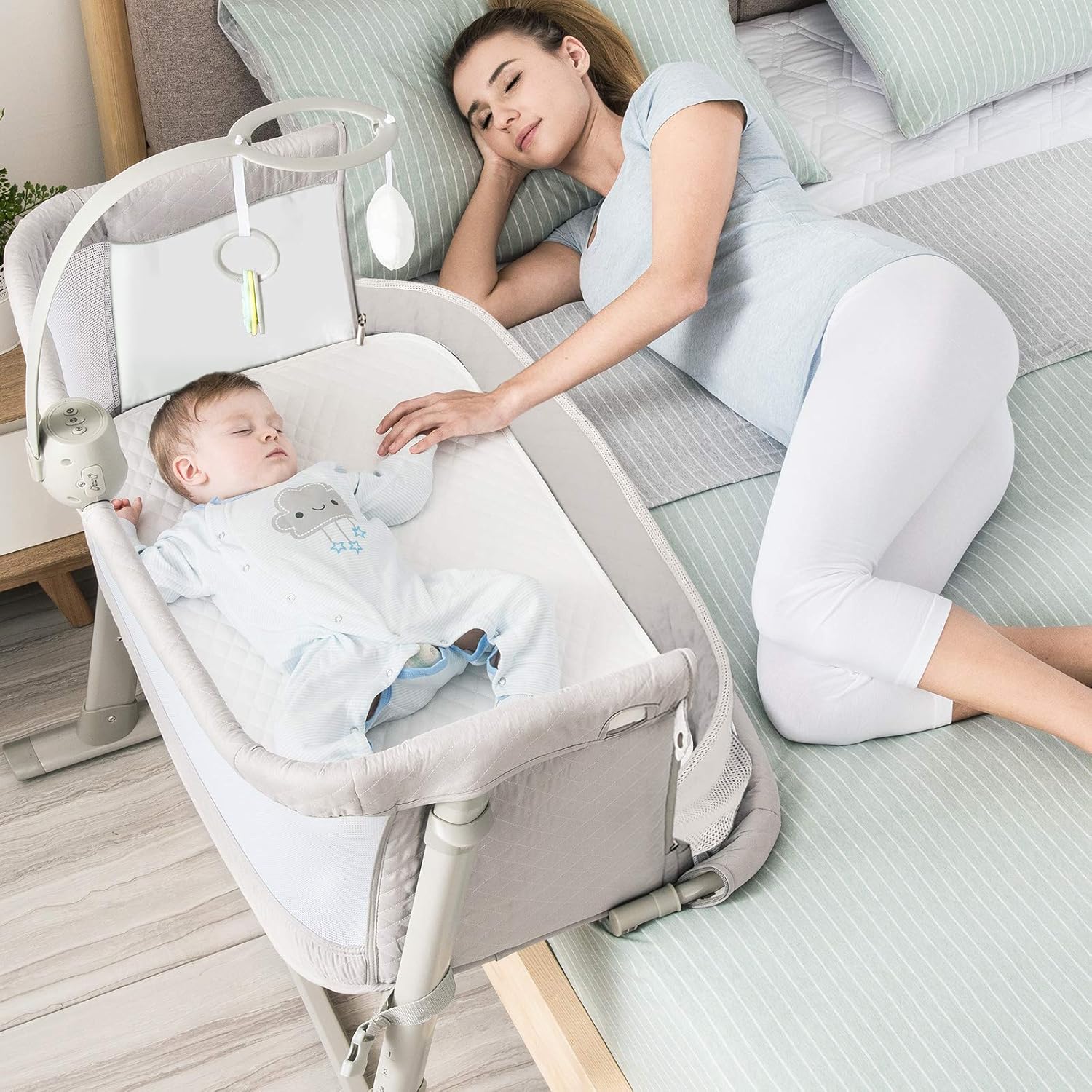
A bedside sleeper is different from a bassinet in some cases. Some bedside sleepers attach to or sit beside an adult bed. Others have a side that lowers. Use only a product that is made for infant sleep and follow its instructions. Do not remove a side or change the product to make it fit your bed.
Is a Crib or Bassinet Safer for a Newborn?
Neither is automatically safer. The safest choice is the product that meets U.S. safety standards and allows the baby to sleep alone, on their back, on a firm, flat surface.
The American Academy of Pediatrics recommends that babies sleep on a separate sleep surface in the same room as their parents or caregivers. Room sharing can make feeding and checking the baby easier. It is different from sharing an adult bed.
The crib or bassinet should have:
- A firm, flat, level mattress
- A fitted sheet made for that mattress
- No gaps between the mattress and the sides
- No pillows, blankets, bumper pads, toys, or stuffed animals
- No added mattress, pad, positioner, or sleep wedge
- A stable frame that cannot tip or collapse during normal use
The U.S. Consumer Product Safety Commission regulates cribs, bassinets, bedside sleepers, and many other infant sleep products. Check the product label, manual, and recall information before use.
A product can look comfortable but still be unsafe for sleep. Soft surfaces and a curled or inclined position can block a baby’s airway. A newborn may not have the strength to move their head if their face presses against a soft surface.

When Should a Newborn Sleep in a Bassinet?
A bassinet may suit a newborn when you want a small sleep space near your bed. It can also help if you live in a small home or need to move the baby’s sleep space between rooms.
Use the bassinet only within its stated limits. The product manual may list:
- A maximum baby weight
- A maximum age
- A height limit
- A requirement to stop when the baby can roll
- A rule to stop when the baby can push up on their hands and knees
- A rule to stop when the baby can sit or pull up


These limits vary by product. The manual is the final guide for that model.
Do not keep using a bassinet just because the baby still fits inside it. Babies develop at different rates. A baby who starts to roll may need to move to a crib even if they are below the weight limit.
Signs It Is Time to Stop Using a Bassinet
Move the baby to a crib when any of these apply:
- The product manual says to stop.
- The baby reaches the weight or height limit.
- The baby begins to roll or shows signs of trying to roll.
- The baby can push up, sit, or pull up, if the manual lists these as stop points.
- The bassinet looks unstable or damaged.
- The mattress no longer fits tightly.
Rolling is not always easy to predict. If your baby is close to rolling, read the manual now and prepare the crib. Do not wait for the first full roll if the product maker gives an earlier stop rule.
When Should a Newborn Sleep in a Crib?
A crib can be used from birth if it is set up correctly. Some families use a crib from the first night because it lasts longer and avoids a later move from a bassinet.
A crib may be the better choice when:
- You want one sleep space from birth through later infancy
- The crib fits safely in your bedroom
- You do not want to track a bassinet’s short-term limits
- Your baby is already showing signs of rolling
- You have limited space for extra baby gear
A full-size crib does not need extra padding to feel less open. Do not add rolled towels, blankets, crib liners, or positioners around the baby. These items can create a suffocation or entrapment risk.
Before use, check that the crib has not been recalled. If it is used or handed down, confirm that it meets current U.S. rules and has all parts and instructions. Avoid cribs with missing hardware, broken slats, loose joints, or homemade repairs.

How to Set Up a Safe Crib or Bassinet
Use the same safe-sleep steps for either product.
1. Place the baby on their back
Put your baby on their back for every sleep. This includes naps and nighttime sleep. The back-sleep position lowers the risk of sleep-related infant death.
If your baby falls asleep in another position, gently move them to the approved sleep space when you can. Once a baby can roll from back to front and front to back on their own, you should still place them on their back, but you do not need to keep turning them back after they roll.
2. Use a firm, flat mattress
The mattress should not slope, sag, or fold. When you press it, it should return to shape rather than form a deep pocket.
Use only the mattress made for that crib, bassinet, or bedside sleeper. A mattress that fits another product may leave dangerous gaps, even if it appears to fit.


3. Use only a fitted sheet
The fitted sheet should stay tight on the mattress. It should not loosen when you pull at the corners.
Do not place these items under or around the baby:
- Loose blankets
- Pillows
- Quilts
- Stuffed toys
- Crib bumpers
- Sleep positioners
- Wedges
- Loungers
- Rolled towels
- Extra mattress pads
If you worry that your baby is cold, ask the child’s doctor how to dress the baby for the room temperature. A wearable blanket may be suitable if it fits well and does not cover the face.
4. Keep the sleep area clear
The baby should sleep alone in the crib, bassinet, or approved bedside sleeper. Keep phones, cords, monitors, and other objects away from the sleep area.
A baby monitor does not make an unsafe sleep space safe. Place the monitor where the cord cannot reach the crib or bassinet.
5. Check the product before each use
Look for:
- Loose screws or fasteners
- Broken or bent parts
- A torn side or mesh panel
- A mattress gap
- A missing fitted sheet
- A frame that rocks or folds
- Damage from moisture or wear
Stop using the product if it is damaged. Contact the maker or replace it with a safe sleep product.
Can a Newborn Sleep in a Pack ’n Play?
A portable play yard may be used for sleep when the model is designed and approved for that use. Use only the original infant sleep surface and fitted sheet made for that model.
Do not add a thicker mattress, a crib mattress, or extra padding. A mattress that seems more comfortable may create gaps along the sides.
Some portable products include an upper bassinet, changing table, or inclined accessory. These parts may have different use rules. Read the product manual and use only the part approved for sleep.
Never let a baby sleep in a changing table, inclined sleeper, swing, bouncer, car seat, or sitting device as a routine sleep space. If the baby falls asleep in one of these places, move them to a firm, flat sleep surface on their back as soon as practical.
Can a Newborn Sleep in a Room Without a Bassinet?
Yes. A bassinet is optional. A crib can be placed in the parents’ bedroom if it fits safely.
The American Academy of Pediatrics recommends room sharing without bed sharing, ideally for at least the first six months. Room sharing may lower the risk of sleep-related death and lets caregivers respond quickly.


If the crib cannot fit in the bedroom, use it in a separate room with the same safe setup. Do not place a crib or bassinet on a bed, couch, table, or other raised surface unless the entire product is specifically designed and approved for that use.
The adult bed is not a substitute for a crib or bassinet. A sleeping adult can cover a baby with bedding or trap the baby against a mattress or wall.
What If the Baby Will Not Sleep in the Crib or Bassinet?
A newborn may sleep better when held, fed, or rocked. That is common. The challenge is to keep the baby safe when the caregiver becomes tired.
Try these steps:
- Feed and burp the baby.
- Check the diaper and room temperature.
- Swaddle only if the baby is not trying to roll.
- Place the baby on their back in the crib or bassinet.
- Keep the space dark and quiet at night.
- Use a calm, short routine before sleep.
- If the baby wakes, check basic needs before adding items to the sleep space.
Do not sleep with the baby on a couch or recliner. These surfaces can be especially dangerous if the caregiver falls asleep.
If you bring the baby into bed for feeding or comfort, clear pillows and blankets away first. When you wake, move the baby back to their own sleep space. Avoid bed sharing when an adult has used alcohol, cannabis, sedating medicine, or tobacco, or when the adult is extremely tired.
Ask a pediatrician for help if your baby has trouble breathing, feeds poorly, has unusual weakness, or does not wake for feeds as expected. Seek emergency help for blue or gray skin, severe breathing trouble, or a baby who cannot be roused.
Common Mistakes to Avoid
The most common errors involve adding products or delaying a needed move.
Using an inclined product for sleep
Inclined surfaces can allow a baby’s head to fall forward. This can narrow the airway. A product marketed for naps, reflux, or soothing is not automatically safe for unsupervised sleep.
Adding a soft mattress
A soft mattress can increase the risk of the baby’s face pressing into the surface. Use the original firm mattress that fits the product.
Keeping a bassinet too long
The size of the baby is only one factor. Rolling, pushing up, and the product’s own rules also matter.
Using loose swaddles
A loose blanket can cover the face. If you swaddle, keep the fabric snug around the chest but loose around the hips. Stop swaddling when the baby shows signs of trying to roll.
Buying a used crib without checking it
Older cribs may not meet current requirements. Avoid products with missing parts, drop-side designs, damage, or an unknown history. Check the CPSC recalls database before use.

A Simple Decision Guide
Choose a bassinet if:
- You want the baby close to your bed
- You want a small and portable sleep space
- You can follow its age, weight, and movement limits
- You are ready to move the baby when the manual requires it


Choose a crib if:
- You want one sleep space that lasts longer
- The crib can safely fit in your bedroom
- Your baby is close to rolling
- You prefer not to buy a short-term product
Choose both only if the cost and space make sense for your family. Having both does not make sleep safer by itself.
The most useful question is not, “Which one is best?” Ask instead: Does this product give my newborn a separate, firm, flat, clear, and approved sleep space? If the answer is yes, either a crib or bassinet may work.
Key Takeaways
- Newborns can sleep safely in a crib or bassinet.
- A bassinet is optional, not required.
- Use a firm, flat mattress with a fitted sheet only.
- Place the baby on their back for every sleep.
- Keep the crib or bassinet free of blankets, pillows, toys, bumpers, and positioners.
- Follow the product’s weight, age, and movement limits.
- Stop using a bassinet when the manual says to stop or when the baby begins to roll.
- Share a room, but do not share an adult bed.
- Check used products for recalls, damage, missing parts, and outdated designs.
FAQs
Can a newborn sleep in a crib from birth?
Yes. A newborn can sleep in a full-size crib from birth if the crib meets current U.S. safety rules and has a firm, flat mattress with a fitted sheet.
Do newborns need a bassinet?
No. A bassinet can be convenient, but it is not required. A safe crib can serve as the baby’s sleep space from the beginning.
How long can a baby sleep in a bassinet?
It depends on the model. Stop when the baby reaches the listed weight, height, age, or movement limit. Many products require a move when the baby begins to roll or push up.
Can a baby sleep in a bedside sleeper?
Yes, if it is made for infant sleep and used according to its manual. Keep it beside the adult bed, not inside the adult bed. Do not modify or remove parts.
Should a newborn sleep with a blanket?
The safest sleep space is free of loose blankets. Use clothing or an appropriately fitted wearable blanket instead, and ask the baby’s doctor about clothing if you are unsure.
What should I do if my baby rolls in the bassinet?
Stop using the bassinet if its instructions say to stop when rolling begins. Move the baby to a crib or another approved sleep space that meets the child’s current needs.
Conclusion
Newborns may sleep in a crib or bassinet. The right choice depends on your space, budget, and routine, not on a claim that one type is always safer.
Set up the sleep space before the baby arrives. Check the manual and recalls. Then use the same core rules every time: baby on the back, alone, on a firm and flat surface, with no loose items. For U.S. guidance, review the American Academy of Pediatrics safe-sleep recommendations, NIH Safe to Sleep information, and CPSC product safety guidance.
