
Choose a double stroller by matching its layout, safety features, size, weight, and daily family needs.
Learning how to choose a double stroller can feel like solving a puzzle with two moving pieces. The best model depends on your children’s ages, your car, your home, and the places you visit most. This guide brings together practical testing tips, safety advice, stroller types, and real-world lessons so you can buy with confidence.

Start With Your Family’s Daily Needs
The first step in how to choose a double stroller is to think about your normal day. A stroller that works well for city walks may be frustrating in a small car or on narrow store aisles. Your routine matters more than a long list of trendy features.
Write down where you will use the stroller most often:
• Neighborhood sidewalks and parks
• Shopping centers and grocery stores
• Public transit, airports, or busy streets
• Daycare drop-offs and school runs
• Walking trails or uneven ground
• Indoor spaces with narrow doors
Also consider how long you expect to use the stroller. Some families need a double stroller for newborn twins. Others have a baby and an older toddler. These needs are not the same.
An older child may walk part of the time, while a baby may need a fully reclining seat. A stroller for twins may need two matching newborn setups. A stroller for siblings of different ages may work better with one infant car seat and one toddler seat.
Before shopping, ask yourself:
• Do both children need a seat every day?
• Will one child ride more often than the other?
• Do you need a stroller for newborns?
• Will the stroller stay in your car or your home?
• Do you often carry groceries, diaper bags, or toys?
• Will another child use the stroller in the future?
These answers create a useful shopping filter. They can also stop you from paying for features that sound useful but add weight and cost.

Choose the Right Double Stroller Layout
Most double strollers use one of three layouts: side by side, tandem, or convertible. Understanding these designs is central to how to choose a double stroller.
Side by side double strollers
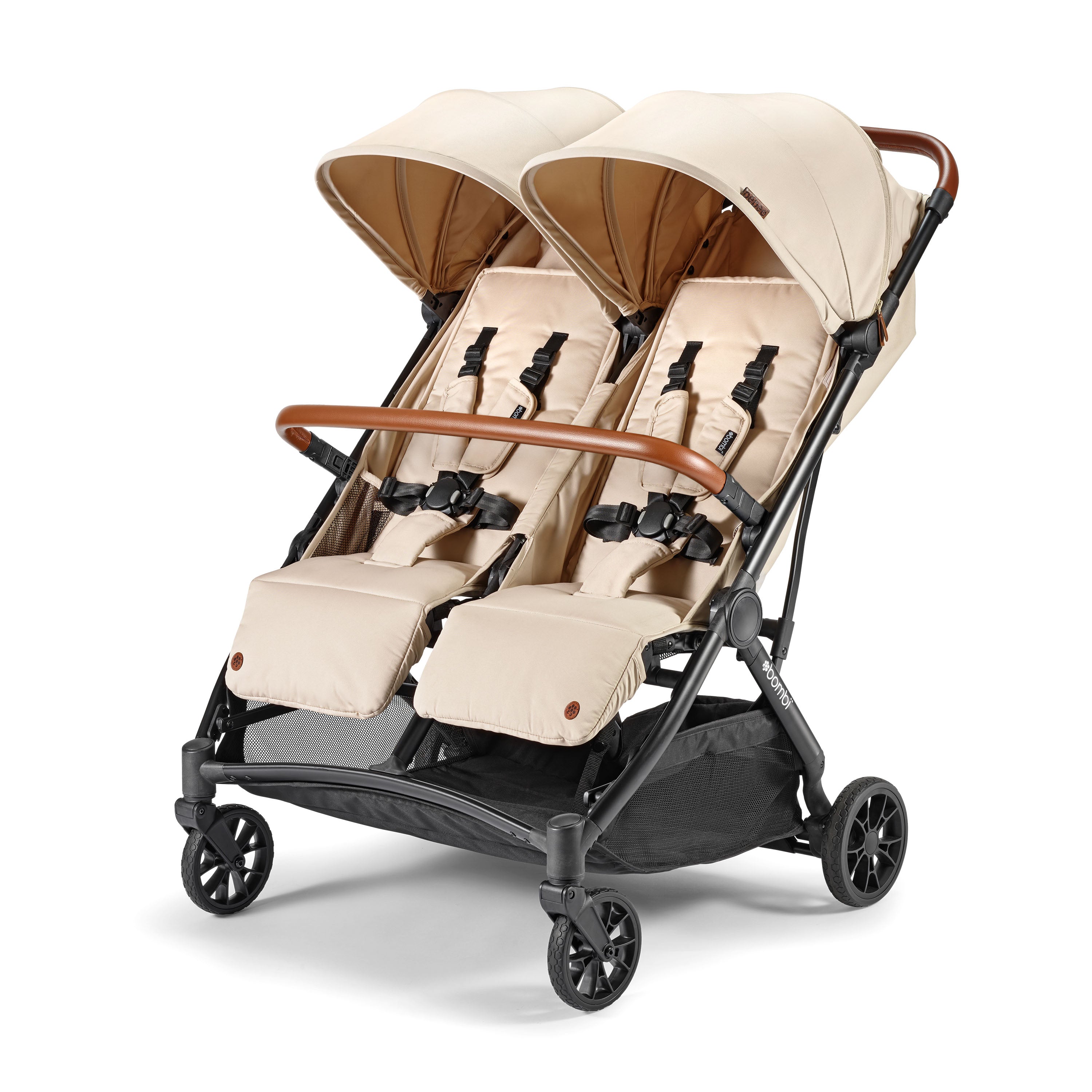
Side by side models place both seats next to each other. Each child usually gets a similar view, seat size, and level of comfort.
Benefits include:
• Equal access to parents and surroundings
• A balanced frame that can feel stable
• Easy interaction between siblings
• Similar recline and footrest options
• Good comfort for two children
The main limitation is width. A wide stroller may not fit through older doorways, small elevators, or checkout lanes. Measure the stroller at its widest point, then compare that number with the doors and spaces you use most.
Side by side models often work well for twins and for parents who spend time outdoors. They can also be easier to push than some long tandem models because the weight sits more evenly across the frame.
Tandem double strollers
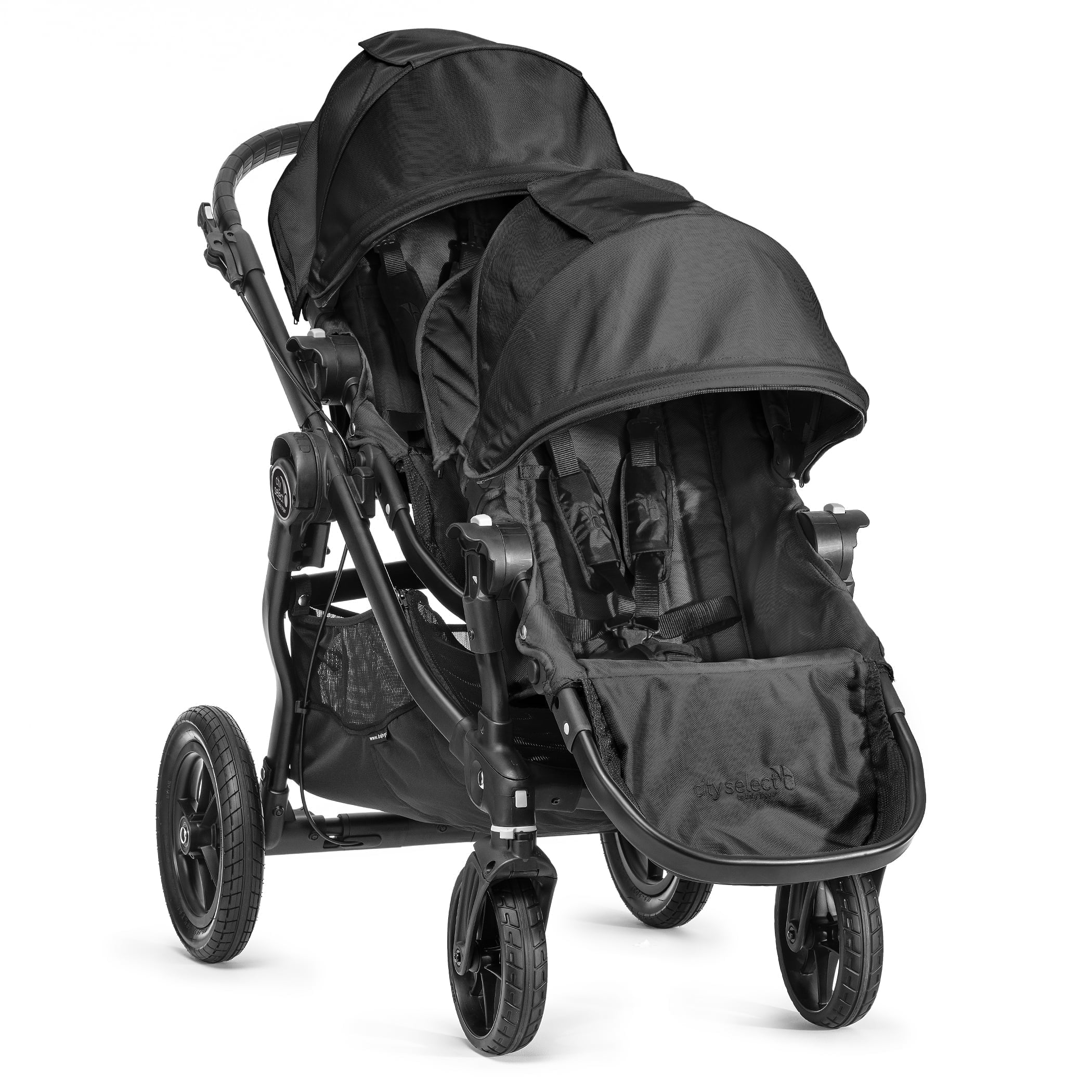
Tandem models place one seat behind the other. They are often called inline strollers.
Their main benefits include:
• A narrower frame
• Easier use in many stores and doorways
• A more compact front-to-back footprint
• Better access to narrow paths
However, tandem models can be long. Turning in tight spaces may take more effort. The child in the back may have less legroom or a less open view, depending on the design.
Some tandem strollers use stadium seating. The rear seat sits higher, which can improve the older child’s view. Check the seat limits closely, since some rear seats have different weight or age rules.
Convertible double strollers
Convertible models can change as your family changes. They may accept an infant car seat, bassinet, toddler seat, or standing board.
This flexibility can be valuable. It may let you use one frame for a newborn and toddler, then later use two seats. Still, convertible designs can have more parts and a higher price. More flexibility does not always mean easier daily use.
When deciding how to choose a double stroller, select the layout that fits your real routes, not just your ideal future plans.
Check Age, Weight, and Seating Compatibility
A stroller’s age range is not a simple marketing label. Read the manual and product specifications for each seat position. A frame may support two children, but not every seat may support a newborn or an older child.
Important details include:
• Minimum age for each seat
• Maximum weight for each seat
• Maximum height or headroom
• Recline limits
• Footrest position
• Whether the seat faces forward or toward the parent
• Whether both seats can recline at the same time
Newborns cannot sit safely in a regular upright stroller seat until they have enough head and trunk control. Many families use approved infant car seats, a compatible bassinet, or a near-flat newborn setup instead.
Do not place a newborn in a stroller seat simply because the seat reclines. A deep recline may still not provide the support a young baby needs. Follow the manufacturer’s instructions and your pediatrician’s advice.
For twins, confirm that the stroller supports two infant car seats if that is your plan. The car seats must be approved for that exact stroller and installed with the correct adapters. Avoid mixing adapters or using unofficial parts.
For siblings with an age gap, check whether the older child can sit comfortably in the second seat. A toddler may need a high weight limit, a roomy seat, and a sturdy footrest. A small seat may become uncomfortable long before the stroller frame reaches its total weight limit.
This is one of the most important lessons in how to choose a double stroller: check the limits for each seat, not only the total stroller capacity.

Compare Safety Features Carefully
A double stroller carries two children, so small safety details matter. In the United States, strollers must meet federal safety requirements. The Consumer Product Safety Commission also provides safety guidance for stroller use and recalls. Still, parents must use the stroller correctly each time.
Look for:
• A secure five point harness for each child
• Reliable brakes on the rear wheels
• A frame that locks fully when opened
• A visible folding lock or safety latch
• Strong wheel attachment points
• Rounded edges and covered moving parts
• A stable base that resists tipping
• A tether strap for the person pushing
A five point harness should fit snugly over the shoulders, hips, and between the legs. You should not be able to pull it away from the child’s body by several inches.
Always use the parking brake when loading or unloading a child. Do not hang a heavy bag from the handlebar unless the manufacturer allows it. Extra weight near the handle can change the balance and increase the risk of tipping.
Never leave a child alone in a stroller. The American Academy of Pediatrics also advises using stroller restraints and keeping small objects away from babies and young children.
A canopy is useful for sun and light rain, but it is not a substitute for close supervision. Do not cover the stroller with a blanket, since trapped heat can become dangerous.
Test the Stroller’s Size and Fold
A double stroller can look manageable in a store and feel huge at home. Before buying, measure the stroller when it is open and folded.
Record these measurements:
• Open width
• Open length
• Open height
• Folded width
• Folded length
• Folded height
• Weight
Then measure your car’s cargo opening and storage area. Do not measure only the space inside the trunk. A stroller may fit inside but fail to pass through the opening.
Test the fold in person if possible. Try it with one hand while holding a diaper bag or pretending to hold a child’s hand. You may need to fold the stroller in a parking lot, at daycare, or beside a busy curb.
Ask these practical questions:
• Can you fold it without removing both seats?
• Does it stand securely when folded?
• Can you lift it into your vehicle?
• Do the wheels fit neatly inside the folded shape?
• Is the latch easy to find?
• Can you open it without pinching your fingers?
A lightweight stroller is not always the best choice. A very light frame may have smaller wheels, less storage, or fewer adjustment options. Focus on the full balance between weight, strength, comfort, and ease of use.

Evaluate Wheel Performance and Steering
Wheel design affects how a double stroller feels after both seats are full. Two children can add a large amount of weight, especially with snacks, bags, and outdoor gear.
Test the stroller on:
• Smooth indoor floors
• Cracked sidewalks
• Small curbs
• Grass
• Gravel, if you use trails
• Tight corners
Look for a handle that feels comfortable at your height. Some handles adjust for different users, which helps when two adults share the stroller.
Large wheels usually handle rough ground better. Swivel front wheels make tight turns easier. Locking front wheels can improve control on uneven paths. Some models offer adjustable suspension to reduce bumps.
A stroller should roll straight without pulling to one side. Push it with both seats occupied if the store allows it. An empty stroller can hide steering problems.
One mistake I often see during stroller comparisons is testing only a few feet on a smooth showroom floor. That is like testing a family car only in a parking space. A short turn, a curb, and a loaded basket tell you far more.

Inspect the Seats, Recline, and Canopies
Children may spend hours in a stroller, so comfort is not a luxury. It is part of daily function.
Check whether each seat has:
• Enough shoulder room
• A supportive backrest
• An adjustable footrest
• A padded harness
• A deep enough seat
• A useful recline
• Breathable fabric
• A washable or removable cover
Independent recline is especially useful when one child naps and the other wants to look around. Check whether both seats can recline at the same time. Some stroller frames limit the rear seat when the front seat is lowered.
Canopies should provide shade without blocking airflow. Look for a wide canopy, a peekaboo window, and ventilation panels. Avoid assuming that a larger canopy always gives better protection. Its position and fabric also matter.
For warm climates, breathable fabric and airflow can be more useful than thick padding. For cold climates, check whether the stroller accepts a compatible footmuff or weather cover. Do not add third party accessories that interfere with the harness or fold.
Your child’s size matters too. A tall toddler may outgrow a seat by height before reaching its weight limit. Sit the child in the stroller and check headroom, knee position, and harness placement.

Review Storage and Accessories
Parents often underestimate storage. Two children can require diapers, bottles, snacks, jackets, wipes, toys, and a change of clothes.
Look for:
• A large under-seat basket
• Easy access from the front and rear
• Zippered pockets
• Cup holder compatibility
• A parent console, if useful
• A safe place for keys and phone
Storage should not affect balance. Keep heavy items low and centered. Avoid filling a small parent console with heavy bottles or attaching bags to the handle.
Consider which accessories are included and which cost extra. Useful accessories may include:
• Infant car seat adapters
• A rain cover
• A snack tray
• A bumper bar
• A standing board
• A travel bag
• A weather shield
Accessories can raise the final price. Compare the complete setup, not only the base stroller price.
A personal lesson here is simple: a huge basket does not help if you cannot reach it when the seats are reclined. Test access with both seats in the positions you use most.

Think About Your Car, Home, and Travel Plans
Your home and vehicle should guide how to choose a double stroller. A stroller may be comfortable outside but difficult to store inside a small apartment.
Measure:
• Your front door
• Interior doorways
• Elevator doors
• Closet or entryway storage
• Vehicle cargo space
• Public transit access points
If you travel by air, check the airline’s current stroller rules before your trip. Policies can vary by airline, aircraft, and gate. A large double stroller may need to be checked at the ticket counter instead of the gate.
For frequent travel, a lighter, more compact model may be worth some compromises. For daily neighborhood walks, larger wheels and stronger suspension may matter more.
If you use public transit, consider width, weight, brakes, and how quickly the stroller folds. You may need to carry it up stairs or lift it onto a bus. A stroller that is perfect for suburban sidewalks may not suit a city commute.
This is why there is no single best double stroller for every family. The right choice is the one that works within your physical space and daily travel pattern.
Compare Price, Warranty, and Long-Term Value
The lowest price is not always the best value. A double stroller may be used for several years, passed between siblings, or resold after your family no longer needs it.
Compare:
• Frame quality
• Seat fabric durability
• Replacement part availability
• Warranty length
• Customer service
• Return policy
• Cost of adapters and accessories
• Weight and expected use
A strong warranty does not cover every problem. Read the terms before buying. Some warranties exclude normal fabric wear, damage from improper folding, or use with unapproved accessories.
Buy from a retailer with a clear return policy. If possible, test the stroller at home without removing tags or packaging right away. Check whether it fits through your doors, folds into your car, and works with your car seats.
Used strollers can offer good value, but inspect them closely. Confirm that the model has not been recalled. Check the brakes, harnesses, frame, wheels, fold lock, and car seat adapters. Avoid a used stroller with missing parts or unknown crash damage.
No stroller should be used after a vehicle crash if the manufacturer says it may be unsafe. A stroller is not a substitute for a properly installed child safety seat.
Use a Simple Double Stroller Buying Checklist
A clear checklist makes how to choose a double stroller less stressful. Take this list to a store or use it while comparing product pages.
Identify your children’s ages, heights, and weights.
Decide whether you need two toddler seats, two infant seats, or a mixed setup.
Choose between side by side, tandem, and convertible layouts.
Measure your doors, elevator, storage area, and vehicle.
Check each seat’s age, weight, height, and recline limits.
Test the harness, brakes, fold, handle, and steering.
Inspect wheel size, suspension, and curb performance.
Check basket access with both seats reclined.
Confirm car seat compatibility by exact model.
Add the cost of adapters and other needed accessories.
Review the warranty, recall history, and return policy.
Test the stroller with your children if the retailer allows it.
Bring a tape measure when shopping. Take a short video of the fold if you compare several models. Small details are easy to forget after testing five strollers in a row.
A good double stroller should reduce daily effort, not add to it. If you struggle to fold it, steer it, or lift it when empty, imagine doing those tasks after a long day with two tired children.
Common Mistakes to Avoid
Many parents focus on the stroller’s appearance and miss the features that affect everyday use. A stylish frame cannot fix a seat that is too narrow or a fold that does not fit your car.
Avoid these common mistakes:
• Buying without measuring your doors and vehicle
• Choosing by total weight capacity alone
• Assuming every seat works for a newborn
• Forgetting infant car seat compatibility
• Testing only on smooth floors
• Ignoring the weight of the folded stroller
• Overlooking basket access
• Adding heavy bags to the handle
• Skipping the warranty and return policy
• Buying a model that suits future needs but not today’s routine
Another mistake is expecting one stroller to do every job perfectly. A large all-terrain model may be excellent for walks but poor for travel. A compact travel stroller may be easy to carry but less comfortable on rough sidewalks.
When learning how to choose a double stroller, accept that every model involves trade-offs. Your goal is not perfection. Your goal is the best match for your family.
How to Choose a Double Stroller for Twins
Parents of twins often need two equal seats from the start. Check whether both seats can accept newborn support and whether both children can recline independently.
Side by side models may offer equal access and similar comfort. Tandem models may fit narrow spaces better. Compare the full width with your home doors, elevator, and favorite stores.
Also check the stroller’s weight with two infant car seats attached. A frame that feels easy to push with empty seats may become difficult when fully loaded.
For twins, pay close attention to:
• Two compatible infant car seats
• Equal seat limits
• Independent canopies and reclines
• A stable frame
• A wide and accessible basket
• A manageable folded size
• Easy loading and unloading
How to Choose a Double Stroller for a Baby and Toddler
A baby and toddler setup often needs more flexibility. One child may need an infant car seat or bassinet, while the older child needs a roomy seat with a high weight limit.
A tandem stroller can be useful when width is a concern. A convertible stroller may help if you expect your toddler to use a standing board later. Check whether the older child can climb in safely and whether the board affects your walking stride.
Think about how much your toddler really rides. If the toddler walks often, a full second seat may not be necessary. A stroller with one main seat and a standing platform could be lighter and easier to store.
The best answer to how to choose a double stroller for siblings is based on both children’s current needs, not only their ages.
PAA-Style Questions About Double Strollers
What is the best type of double stroller?
The best type depends on your space and routine. Side by side models offer similar comfort, tandem models are often narrower, and convertible models provide more setup options.
Are side by side double strollers hard to push?
Not always. A well-balanced side by side stroller with good wheels can push smoothly, but its width may make narrow doors and tight aisles harder to navigate.
Can a newborn ride in a double stroller?
A newborn should use only a setup approved by the stroller maker, such as a compatible infant car seat or bassinet. Do not place a newborn in a regular seat unless the manual specifically allows it.
Do double strollers fit through standard doors?
Some do, but widths vary widely. Measure the stroller at its widest point and compare it with your home, elevator, daycare, and store doors.
Is a heavier double stroller safer?
Weight alone does not determine safety. A stroller should have a stable frame, reliable brakes, secure harnesses, and proper use instructions, while still being manageable for the adult pushing it.
Frequently Asked Questions About How to Choose a Double Stroller
How do I choose a double stroller for different age groups?
Start with the younger child’s needs, then check the older child’s comfort and weight limit. Look for compatible infant support, independent recline, and enough room for the older child to grow.
Should I buy a tandem or side by side double stroller?
Choose tandem if narrow doors and aisles are your main concern. Choose side by side if equal seating, sibling interaction, and balanced handling matter most.
How wide should a double stroller be?
There is no universal ideal width. Measure your narrowest important doorway and choose a model that fits with room to spare, especially if you use elevators or public transit.
What features matter most in a double stroller?
Prioritize safety, seat compatibility, reliable brakes, a secure fold, manageable weight, smooth steering, and a size that fits your home and car. Storage and accessories matter after these core needs are covered.
Can I use one double stroller from birth?
Some models support newborns with two approved infant car seats or bassinets. Always follow the exact manual because age and recline rules can differ between seat positions.
How much should I spend on a double stroller?
Set a budget based on how often you will use it and how long you need it. Include adapters, rain covers, snack trays, and other accessories in the total cost.
Conclusion
Choosing a double stroller becomes much easier when you start with real life. Consider your children’s ages, your daily routes, door and trunk measurements, seat limits, safety features, and folding needs. Then test the stroller as if you were using it after a long day with two tired children.
The best double stroller is not always the widest, lightest, or most expensive model. It is the one that keeps both children secure and comfortable while making your routine simpler. Use the checklist, compare complete costs, and test your top choices before buying. Save this guide, share it with another parent, and explore more child safety resources as your family grows.