Introduction
To check a newborn’s respiratory rate in the United States, watch the baby’s chest or belly rise and fall while the baby is calm. Count each rise for a full 60 seconds. A resting newborn often breathes about 30 to 60 times per minute, but breathing may be uneven. A rate that stays above 60, or breathing paired with signs of distress, needs prompt medical advice.
This guide explains how to count breaths, what can change the result, and when to call a pediatrician or 911. It is general information and does not replace an examination by a qualified health professional.
What Is a Newborn’s Respiratory Rate?
A newborn’s respiratory rate is the number of breaths taken in one minute. One breath includes one chest or belly rise and one fall.
Newborns often breathe differently from older children and adults. Their breathing may speed up, slow down, or briefly pause. This pattern is sometimes called periodic breathing.
A brief pause of less than about 10 seconds can occur in a healthy newborn, especially during sleep. Longer pauses, repeated pauses, or pauses with blue color, limpness, poor response, or breathing trouble are not normal and need urgent care.
Typical resting ranges
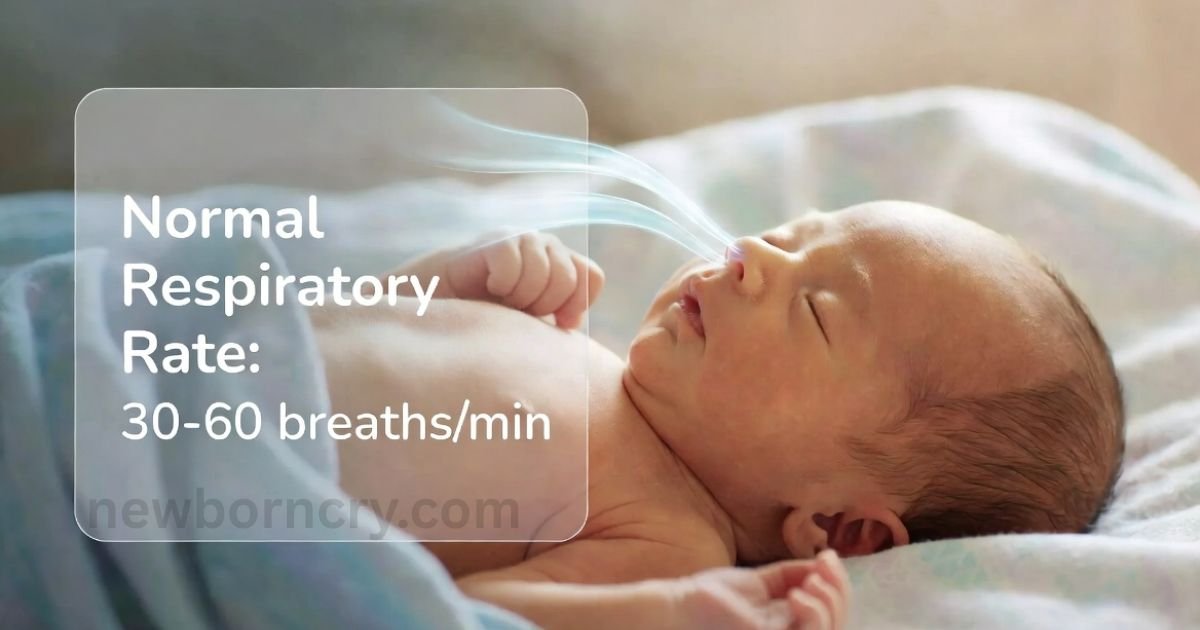
A commonly used reference range for a calm newborn is:
- About 30 to 60 breaths per minute: often within the expected range
- More than 60 breaths per minute at rest: may be fast breathing, especially if it continues
- Fewer than 30 breaths per minute: may be concerning when paired with poor responsiveness, weak breathing, color change, or long pauses
The number alone does not tell the whole story. A newborn who has just cried, fed, or moved may breathe faster for a short time. The most useful count is taken when the baby is calm or asleep and has not just finished feeding.
How to Count a Newborn’s Breaths
You do not need special equipment. A watch or phone timer with a seconds display is enough.
1. Wait for a calm moment
Let the newborn settle. Do not count right after crying, feeding, bathing, or active movement if you can safely wait.
If the baby is asleep, watch without waking them. If the baby is calm but awake, keep the room quiet and avoid touching the chest or belly.
2. Position the baby safely
Place the baby on their back on a firm, flat sleep surface. Do not place pillows, blankets, or other items under the baby to help with counting.
You can also count while holding the baby safely, as long as the baby’s chest or belly is easy to see and the airway remains clear.
3. Watch the chest or belly
Look for a regular rise and fall. Newborns often use their belly more than their chest when they breathe, so the belly may give you the clearest view.
If the baby’s clothing hides movement, gently loosen or move the clothing. Avoid pressing on the baby’s body because touch may change the breathing pattern.
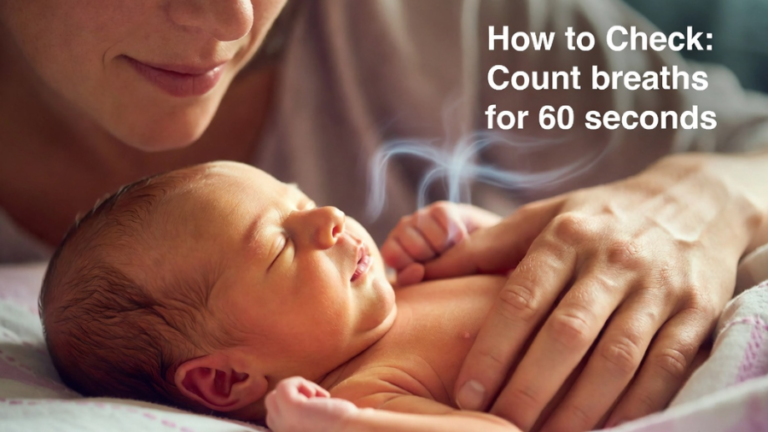
4. Count for a full 60 seconds
Start a timer and count every breath for one full minute.
Count:
- One rise and fall as one breath
- A shallow breath as one breath if you can see a clear rise and fall
- irregular breathing as it occurs rather than trying to average it
Do not count for 15 seconds and multiply by four when checking a newborn. Newborn breathing can change quickly, so a full-minute count is more reliable.
5. Record the result and the conditions
Write down:
- The number of breaths in 60 seconds
- Whether the baby was asleep, calm, crying, or feeding
- Whether the breathing was steady or uneven
- Any signs such as grunting, pulling in at the ribs, or color change
For example: “52 breaths per minute while asleep, steady breathing, no pulling in at the ribs.”
6. Repeat if the number is unusual
If the count is above 60 after the baby has settled, wait a few minutes and count again for a full minute. Do not delay emergency care to repeat the count if the baby looks seriously ill or has trouble breathing.
A result is more useful when the baby is calm and the same method is used each time.
How to Interpret the Number
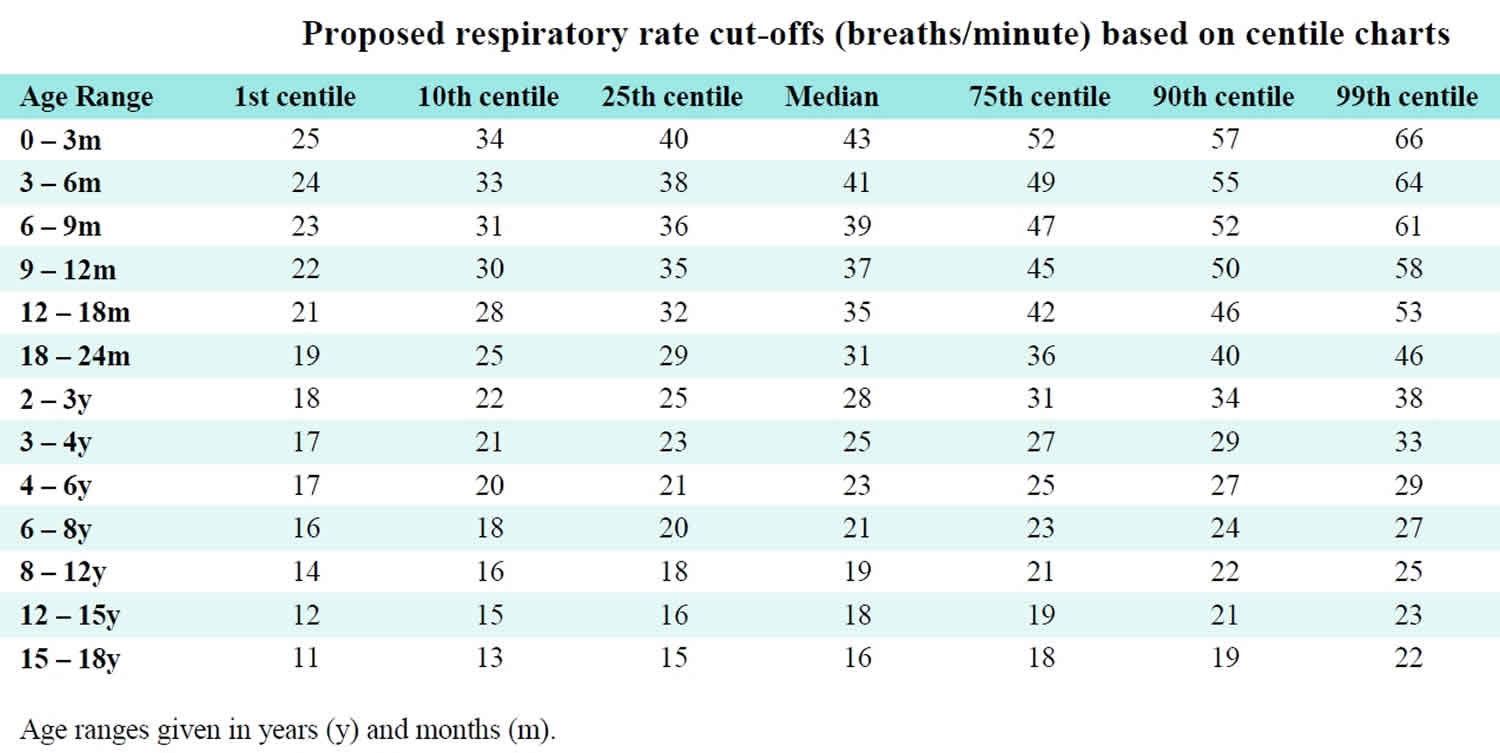
A respiratory rate between 30 and 60 breaths per minute can be normal in a resting newborn. The rate should be considered along with the baby’s color, effort, alertness, feeding, and temperature.
Example readings
| Count in 60 seconds | Possible meaning | What to do |
|---|---|---|
| 30–60 while calm | Often within the expected range | Continue to watch the baby |
| Over 60 once after crying | May be temporary | Let the baby settle, then recount |
| Over 60 while calm on repeated counts | May indicate rapid breathing | Contact the baby’s pediatrician promptly |
| Under 30 with normal color and easy breathing | May occur during sleep | Recheck and watch closely |
| Under 30 with pauses, blue color, limpness, or poor response | Possible emergency | Call 911 |
| Any rate with severe breathing effort | The number is less important than the distress | Call 911 |
This table is a guide, not a diagnosis. A newborn can have a respiratory illness with a rate below 60, and a healthy baby can briefly exceed 60 after crying.
Signs that breathing is difficult
Look for:
- Skin pulling in between the ribs, under the ribs, or above the breastbone
- Nostrils widening with each breath
- Grunting at the end of each breath
- Persistent noisy breathing
- Head bobbing with breaths
- Trouble feeding because the baby must stop to breathe
- Sweating or tiring during feeds
- Pale, gray, blue, or dusky lips or skin
- Unusual sleepiness, limpness, or difficulty waking
The American Academy of Pediatrics advises urgent attention for breathing difficulty, color change, or a baby who is hard to wake. The Centers for Disease Control and Prevention also identifies breathing problems and poor feeding as warning signs that need medical evaluation in newborns.
When to Call 911 or Seek Medical Care
Call 911 in the United States if a newborn:
- Is not breathing normally or does not respond
- Has blue or gray lips, tongue, face, or skin
- Has severe chest retractions or appears to be struggling for each breath
- Has repeated long pauses in breathing
- Becomes limp or cannot be awakened
- Chokes and cannot breathe, cry, or cough normally
If the baby is not breathing normally, follow the instructions of the 911 dispatcher. Begin infant CPR if instructed and if you know how to do it.
Call the baby’s pediatrician promptly if:
- The resting respiratory rate remains above 60
- Breathing is repeatedly fast or irregular
- The baby grunts, flares the nostrils, or pulls in around the ribs
- The baby feeds poorly or has fewer wet diapers
- The baby seems unusually tired or difficult to wake
- You are worried even though the count is in the usual range
A newborn younger than 3 months with a rectal temperature of 100.4°F (38°C) or higher needs immediate medical evaluation. Use a reliable thermometer and ask a health professional about the safest way to measure the temperature.
Do not wait for a respiratory-rate number if the baby appears seriously ill. Breathing effort and skin color matter more than a single count.
Common Mistakes When Checking Breathing
Several simple mistakes can make a newborn’s respiratory rate look too high or too low.
Counting while the baby is crying
Crying naturally raises the breathing rate. Wait until the baby is calm, unless the baby cannot settle because breathing is difficult. In that case, seek medical advice.
Counting for too short a time
A 15- or 30-second count can miss changes in newborn breathing. Count for the full 60 seconds.
Counting movements instead of breaths
One breath is one complete rise and fall. Do not count each small twitch, arm movement, or partial motion as a breath.
Checking only the number
A respiratory rate does not show how hard the baby is working to breathe. Look at the color, chest movement, alertness, and ability to feed.
Relying only on a home monitor
Consumer breathing monitors and pulse oximeters may give false alarms or miss problems. They do not replace watching the baby or getting medical care. If a monitor alarm conflicts with how the baby looks, focus first on the baby and call for help when needed.
Repeatedly disturbing the baby
Touching, repositioning, or waking the baby can change the breathing rate. Watch quietly when possible.
Putting the baby in an unsafe position
Do not place a newborn face down, prop the baby with pillows, or cover the face while checking breathing. Safe sleep still applies during observation: place the baby on their back on a firm, flat surface.

How to Get a More Reliable Reading
Use the same basic method each time:
- Check when the baby is calm or asleep.
- Observe the belly or chest without touching.
- Count for 60 seconds.
- Record the number and the baby’s condition.
- Repeat once after the baby settles if the result seems unusual.
- Contact the pediatrician if the rate remains high or symptoms appear.
If you call the pediatrician, share the exact count and what you saw. For example: “My 5-day-old was asleep, and I counted 68 breaths in one minute twice. I also saw the skin pull in under the ribs.”
That information is more useful than saying only that the baby “seems to be breathing fast.”

Frequently Asked Questions
Should I count a newborn’s breathing while the baby is asleep?
Yes. Sleep is often a good time because the baby is calm. Watch the chest or belly without waking the baby and count for a full minute.
Is periodic breathing normal in a newborn?
Short pauses followed by a few faster breaths can occur in newborns. A pause lasting about 10 seconds or more, repeated pauses, or any pause with blue color, limpness, or poor response requires urgent medical attention.
Is 70 breaths per minute dangerous for a newborn?
A single count of 70 after crying may fall when the baby settles. If the rate stays above 60 while the baby is calm, repeat the count and contact the pediatrician promptly. Call 911 if the baby also has severe breathing effort, blue or gray color, poor response, or cannot breathe normally.
Can a newborn breathe fast after feeding?
Yes. Feeding, crying, spit-up, or mild activity can briefly change the breathing rate. Wait until the baby is calm before counting. Fast breathing with choking, repeated vomiting, sweating, exhaustion, or poor feeding needs medical advice.
Should I use a pulse oximeter to check my newborn’s breathing?
A pulse oximeter measures blood oxygen and pulse, not respiratory rate directly. Home devices can be difficult to use correctly and may produce false readings. Use one only if a health professional has advised you how to use it, and never use it to delay care for a baby who looks unwell.
Key Takeaways
- Count a newborn’s breaths for a full 60 seconds.
- One complete chest or belly rise and fall equals one breath.
- Check when the baby is calm or asleep.
- About 30 to 60 breaths per minute is a common resting range.
- A persistent rate above 60 needs prompt medical advice.
- Call 911 for blue or gray color, severe breathing effort, unresponsiveness, or abnormal breathing with no response.
- The baby’s overall appearance matters more than one number.
Conclusion
To check a newborn’s respiratory rate, watch the belly or chest while the baby is calm and count each complete rise and fall for one minute. Record the number and look for breathing effort, color change, feeding problems, or unusual sleepiness.
If the baby continues to breathe rapidly at rest or shows any sign of distress, contact the pediatrician promptly. For severe breathing trouble, blue or gray color, limpness, or unresponsiveness, call 911 right away.