Introduction
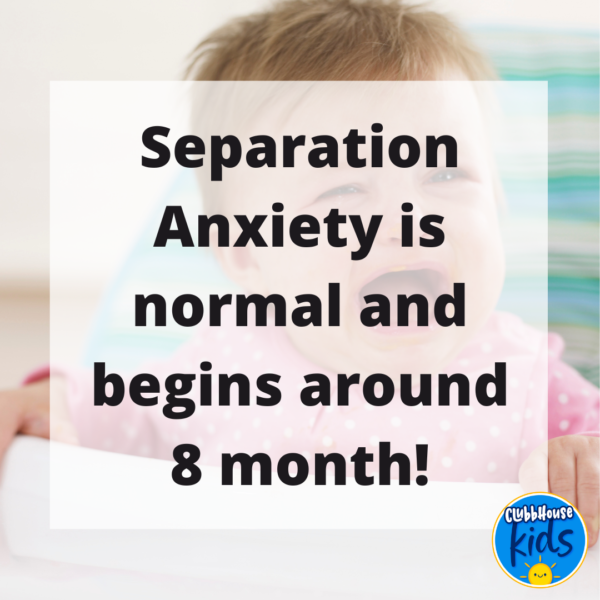
Separation anxiety is common at 8 months. Your baby may cry when you leave the room, cling to you, wake more at night, or resist other caregivers. This often means your baby has formed a strong bond with you—not that you have done anything wrong.
In the United States, the American Academy of Pediatrics (AAP) and the Centers for Disease Control and Prevention (CDC) recognize separation anxiety as a normal part of infant development. It often starts between 6 and 9 months and may come and go through the toddler years.
The best approach is calm, short, and steady. Tell your baby when you are leaving, keep goodbyes brief, return when you said you would, and practice small separations during the day. Do not sneak away. Your baby needs repeated proof that you leave and come back.
What Separation Anxiety Looks Like at 8 Months
An 8-month-old may cry, reach for you, crawl after you, or become upset when you leave. Your baby may also turn away from a new caregiver or become upset in new places.
Common signs include:
- Crying when you leave the room
- Clinging to a parent or main caregiver
- Refusing to be held by someone else
- Crying at daycare drop-off
- Waking at night and looking for you
- Becoming upset when you leave during play
- Following you from room to room
- Taking longer to settle with another caregiver
- Showing fear around unfamiliar people
These behaviors can feel intense, but they are often part of healthy social and brain growth. Your baby is learning that you still exist even when you cannot be seen. This skill is called object permanence.
Your baby also has a better memory than in the first months of life. That helps your baby know who you are. It also makes your absence more noticeable.
Is it normal for an 8-month-old to cry when you leave?
Yes. Separation anxiety often begins during the second half of the first year. It can be stronger when your baby is tired, hungry, sick, teething, or facing a new setting.
Some babies show mild signs. Others cry hard and need more time to adjust. The level of crying does not always show the strength of the bond. A baby who cries at a parent’s departure may simply have a strong way of showing stress.
Separation anxiety may also increase after a change, such as:
- Starting child care
- Moving to a new home
- A parent returning to work
- Travel
- A new babysitter
- A change in the sleep routine
- Illness or a hospital stay
- A new sibling

How to Help an 8-Month-Old With Separation Anxiety
The most useful plan is to make departures predictable and practice them in small steps. Your goal is not to stop every tear. Your goal is to help your baby learn, “My caregiver leaves, and my caregiver comes back.”
1. Use a short, clear goodbye
Say the same simple phrase each time:
“Mommy is going to work. Daddy will stay with you. I will come back after your nap.”
An 8-month-old may not understand every word, but your voice and routine still provide comfort. Keep the goodbye warm and brief.
Long goodbyes can increase stress. Repeatedly walking away and returning may also confuse your baby. Give a hug, say the phrase, and leave.
2. Do not sneak away
Sneaking out may seem easier, but it can make your baby more watchful. Your baby may begin to worry whenever you move out of sight.
Leaving openly helps your baby learn what to expect. You can say goodbye even if your baby cries. A trusted caregiver can then comfort your child.
This does not mean you must ignore distress. It means you can respond with calm confidence rather than making the departure longer and harder.
3. Practice very short separations
Start with a separation your baby can manage. For example:
- Give your baby to a familiar caregiver.
- Leave the room for 30 seconds.
- Return and greet your baby calmly.
- Repeat later.
- Slowly increase the time apart.
You can move from 30 seconds to two minutes, then five minutes. There is no required schedule. Move forward when your baby can handle the current step most of the time.
If your baby becomes very upset, shorten the next practice period. Progress may not be steady every day.
4. Let your baby build trust with other caregivers
A new caregiver should spend time with your baby while you are still present. Let the caregiver:
- Talk and smile with your baby
- Offer a toy
- Read a short book
- Feed your baby when appropriate
- Join floor play
- Comfort your baby while you stay nearby
This gives your baby time to form a safe relationship. If possible, use the same caregiver for repeated visits. Familiar faces and routines can make separation easier.
5. Leave when your baby is fed and rested
Hunger and tiredness can make separation much harder. When you can, plan departures after a feeding and a nap.
This may not be possible every day. Child care, work, and appointments often follow a set schedule. If your baby must separate while tired, use extra time for a calm handoff and ask the caregiver to follow the usual sleep routine.
6. Keep the handoff calm
A calm handoff may look like this:
- Hold your baby close.
- Name the caregiver.
- Share one useful detail, such as when your baby last ate.
- Use the same goodbye phrase.
- Leave without delay.
Avoid showing panic or returning several times after you leave. Babies often notice a caregiver’s tone and body language.
7. Use a safe comfort item
Some babies settle with a familiar sleep-safe item, such as a small soft toy or cloth. However, safe sleep rules matter.
The AAP advises keeping loose blankets, pillows, stuffed toys, and other soft items out of the sleep space for babies. Do not place a comfort item in the crib unless it is safe for your baby’s age and your pediatrician agrees. A familiar caregiver, voice, song, or routine can offer comfort without adding an object to the crib.
8. Play simple separation games
Games such as peekaboo can help your baby practice the idea that people can disappear and return. You can also:
- Step behind a doorway and come back
- Cover a toy with a cloth, then reveal it
- Say “I’ll be right back” before a short trip to another room
- Let your baby watch you leave and return during play
Keep these games light. Stop if your baby becomes too upset.
A Simple Daily Plan for Separation Anxiety
A daily rhythm can reduce stress because your baby knows what comes next. The exact schedule will vary by family, feeding pattern, and sleep needs.
| Situation | What to do | Why it helps |
|---|---|---|
| You leave the room | Say a short goodbye and return soon | Builds predictability |
| A caregiver arrives | Play together before you leave | Builds familiarity |
| Child care drop-off | Use the same handoff routine | Reduces surprise |
| Your baby cries | Let the caregiver comfort your baby | Builds trust with both adults |
| You return | Greet your baby calmly | Shows that you come back |
| Bedtime separation | Follow the same short routine | Signals what happens next |
Example of a short practice routine
Try this when your baby is fed and rested:
- Sit with your baby and a familiar caregiver for five minutes.
- Tell your baby, “I’m going to the kitchen. I’ll be back soon.”
- Leave for one minute.
- Return and say, “I came back.”
- Repeat once if your baby settles well.
- End the practice on a calm note.
Do not treat this like a test. Your baby does not need to stay quiet for the practice to work. The lesson is that a safe adult remains present and that you return.
How to Handle Separation Anxiety at Night
Separation anxiety can affect sleep. Your baby may wake and cry for you, resist being put down, or become upset when you leave after the bedtime routine.
Start by checking basic needs. Your baby may be hungry, sick, too hot, too cold, or uncomfortable. Teething and developmental changes can also disturb sleep.
Then keep your response calm and predictable:
- Use a short bedtime routine.
- Put your baby down on their back in a safe sleep space.
- Keep lights low during night checks.
- Use a quiet voice.
- Offer brief comfort.
- Avoid turning the wake-up into playtime.
- Follow the sleep plan recommended by your pediatrician.
Safe sleep remains essential. The CDC and AAP recommend placing babies on their backs for every sleep, using a firm, flat sleep surface, and keeping the sleep area free of loose bedding and soft objects. Room-sharing without bed-sharing is recommended for at least the first 6 months and ideally the first year.
If your baby is sick, in pain, or not feeding well, address that issue first. Separation anxiety should not be used to explain every night waking.

What to Do at Daycare Drop-Off
Daycare drop-off often causes the most visible distress. A baby may cry as you leave but settle soon after. Ask the caregiver what happens after you go. This helps you separate normal protest from ongoing distress.
A useful drop-off plan includes:
- Arrive with enough time for a calm handoff.
- Tell the caregiver one key detail about feeding, sleep, or mood.
- Use the same goodbye words.
- Give a hug or kiss.
- Leave without sneaking away.
- Ask for an update at an agreed time.
Do not stay for a long time to stop every tear. A long, uncertain goodbye may make the transition harder.
You can also send a family photo for the caregiver to show during the day, if the child care center allows it. Your baby may not understand the photo as a message, but it can become part of a familiar routine.
If your baby continues to cry for a long period after you leave, ask the center what soothing steps they use. A consistent caregiver can often identify patterns, such as distress that occurs only before naps or feeds.
Common Mistakes That Can Make Separation Harder
Most parents make at least one of these mistakes. They are understandable, but small changes can help.
Staying too long after saying goodbye
A parent may keep returning to offer “one more hug.” This can restart the crying and make the goodbye feel uncertain.
Try instead: Give one warm goodbye and leave.
Leaving without warning
Sneaking away can make your baby more alert to your movements.
Try instead: Tell your baby before you go, even if the goodbye is short.
Changing the plan every time your baby cries
If one day you leave and the next day you cancel every plan, your baby may have a harder time learning the routine.
Try instead: Keep the plan steady when it is safe to do so.
Passing your baby between many adults
Too many new faces can overwhelm an 8-month-old.
Try instead: Begin with one calm, familiar caregiver.
Practicing during hunger or overtiredness
A tired or hungry baby has less ability to cope with stress.
Try instead: Practice after sleep and feeding when possible.
Using screens as the main calming tool
A screen may distract a baby for a short time, but it does not build a relationship with the caregiver.
Try instead: Use a familiar voice, song, book, toy, or play routine.

How Long Does Separation Anxiety Last?
Separation anxiety does not follow one exact timeline. It may last for weeks or return during stressful changes. Many children show stronger separation anxiety during the second year, even if symptoms improve for a while.
The key question is not, “Has my baby stopped crying yet?” Ask instead:
- Can my baby settle with a trusted caregiver?
- Is my baby eating and sleeping reasonably well?
- Can our family follow daily routines?
- Does the distress improve with practice?
- Is my baby still playing and developing?
Improvement may look small. Your baby may cry for ten minutes instead of thirty, accept another caregiver more quickly, or calm after hearing your usual goodbye phrase.
When to Call Your Pediatrician
Call your child’s pediatrician if separation distress is severe, keeps getting worse, or disrupts feeding, sleep, child care, or family life. A pediatrician can check for illness, pain, sleep problems, developmental concerns, or other causes of distress.
Seek prompt medical advice if your baby has signs such as:
- Trouble breathing
- Poor feeding or repeated vomiting
- Fewer wet diapers than usual
- Extreme sleepiness or difficulty waking
- A high fever or a baby who looks very ill
- A sudden, unusual change in behavior
- Persistent inconsolable crying
- Loss of a skill your baby previously had
Separation anxiety alone is usually not an emergency. However, sudden distress may be your baby’s way of showing pain or illness.
You can also ask the pediatrician for help if you feel overwhelmed, anxious, or unable to manage the daily crying. Support for the parent is part of good infant care.

Frequently Asked Questions
Should I let my 8-month-old cry when I leave?
You do not need to prevent every cry, and you do not need to ignore your baby. Give a clear goodbye, leave your baby with a safe caregiver, and allow that caregiver to offer comfort. If your baby remains highly distressed, shorten the separation and try again later.
Will separation anxiety hurt my baby’s emotional development?
Normal separation anxiety does not mean your baby is being harmed. A warm, steady response helps your baby learn that caregivers can leave and return. Comfort, routine, and reliable care support secure attachment.
Is it better for the other parent to handle the separation?
Often, a familiar second parent or caregiver can help. Let that adult build a relationship with your baby before taking over a difficult handoff. The best caregiver is not always the person who cries the least; it is the calm, trusted adult who can provide safe care.
Can I use a blanket or stuffed animal to comfort my baby?
Follow safe sleep guidance. Loose blankets and soft objects should not be placed in an infant’s sleep space. During awake time, a familiar item may help if it is age-appropriate and used under supervision. Ask your pediatrician about any item you want to use for sleep.
What if my baby is fine with one caregiver but cries with everyone else?
That can be normal. Start with the caregiver your baby knows best. Have new caregivers visit while you are present, and give them repeated chances to play and comfort your baby. Familiarity usually grows through short, calm contact.
Key Takeaways
- Separation anxiety at 8 months is common.
- It often reflects a strong bond and growing memory skills.
- Use short, clear goodbyes.
- Do not sneak away.
- Practice brief separations when your baby is fed and rested.
- Let other caregivers build trust before you leave.
- Keep daycare and bedtime routines predictable.
- Follow safe sleep rules.
- Call your pediatrician if distress is severe, sudden, worsening, or linked with signs of illness.
Conclusion
The most helpful response to 8-month-old separation anxiety is steady practice, not a perfect goodbye. Tell your baby when you are leaving, leave with calm confidence, and return as promised. Over time, these small, repeated experiences teach your baby that separation is temporary and that trusted caregivers remain close.
For trusted U.S. guidance, review information from the American Academy of Pediatrics, the CDC infant and toddler development resources, and the AAP safe sleep recommendations.