
A baby is considered full term from 39 weeks, 0 days through 40 weeks, 6 days of pregnancy.
Knowing when a baby is full term can make the final weeks of pregnancy feel less confusing. The terms “early term,” “full term,” and “late term” describe important changes in a baby’s brain, lungs, liver, and feeding skills. This guide explains the full-term pregnancy timeline, why 39 weeks matters, and what to expect as your due date approaches.
What does full term mean?
A baby is full term at 39 weeks, 0 days through 40 weeks, 6 days of pregnancy. This is the standard definition used by major medical groups, including the American College of Obstetricians and Gynecologists.
Pregnancy is measured from the first day of the last menstrual period. That means the 40-week count starts about two weeks before conception usually happens. If your care team gives you a due date, it marks about 40 weeks of pregnancy, not the exact day your baby must arrive.
The full-term period is a window, not one single date. Many healthy babies arrive before or after the estimated due date. Only a small number are born on the exact date written on the calendar.

Pregnancy term categories explained
Doctors use clear terms to describe how far a pregnancy has progressed. These labels help guide decisions about labor, delivery, newborn care, and possible medical risks.
Preterm
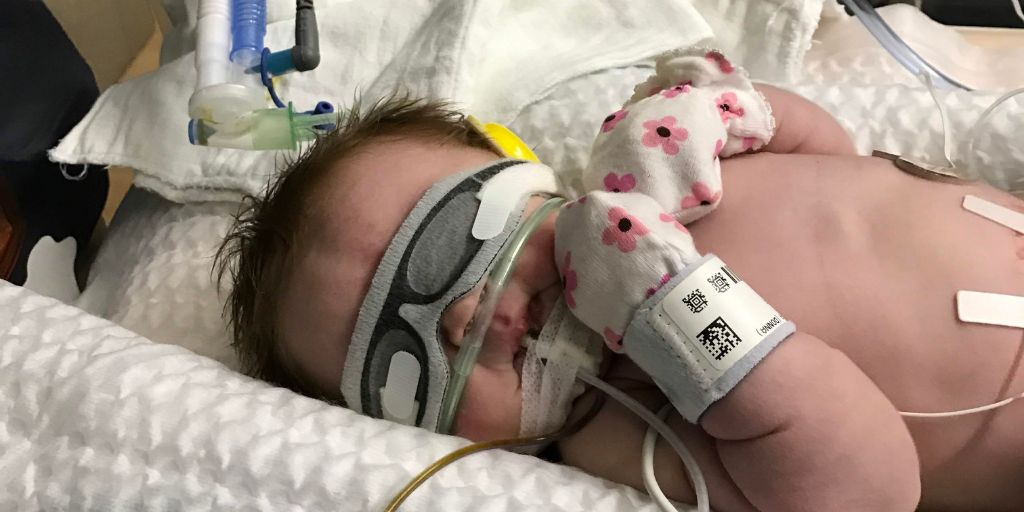
A baby born before 37 weeks, 0 days is preterm. The earlier the birth, the greater the chance the baby may need help with breathing, feeding, body temperature, or other basic functions.
Early term
Early term means 37 weeks, 0 days through 38 weeks, 6 days. An early-term baby may look healthy and act like a full-term baby, but important development is still taking place.
Full term
Full term means 39 weeks, 0 days through 40 weeks, 6 days. At this point, most babies have had more time to develop the skills needed for life outside the womb.
Late term
Late term means 41 weeks, 0 days through 41 weeks, 6 days. Your health care professional may watch you and your baby more closely during this time.
Postterm
Postterm means 42 weeks, 0 days or later. Pregnancy that continues this long may need extra monitoring because the placenta may not work as well over time.

Why is 39 weeks considered full term?
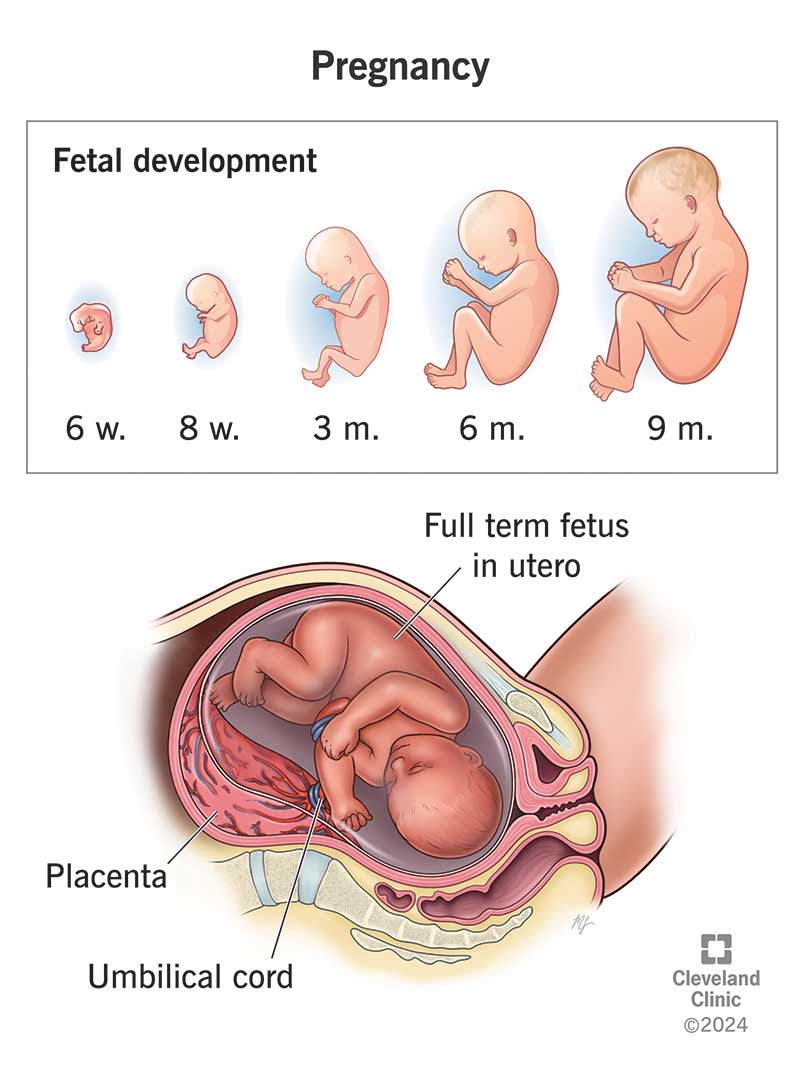
The last few weeks of pregnancy are busy weeks for your baby. Weight gain is only one part of the story. The brain, lungs, liver, immune system, and nervous system continue to mature.
A baby born at 37 or 38 weeks may do very well. Still, research shows that healthy pregnancies usually have better newborn outcomes when delivery happens at or after 39 weeks, unless there is a medical reason to deliver sooner.
Possible concerns with an early-term birth can include:
• Breathing trouble after birth
• Low blood sugar
• Trouble staying warm
• Difficulty latching or taking enough milk
• Jaundice
• A longer hospital stay
• More need for observation in a special care nursery
These risks do not mean every early-term baby will have a problem. They mean the risk is somewhat higher than it is for a baby born at full term. Think of the final weeks as the last part of packing a small suitcase: the main work is done, but several useful items are still being added.

Does a baby develop much between 37 and 39 weeks?
Yes. Development continues during these two weeks, even when a baby appears ready to be born.
The brain grows quickly near the end of pregnancy. The lungs also continue to prepare for steady breathing. Babies may improve their ability to suck, swallow, and breathe in a coordinated way, which supports feeding after birth.
Near-term development may also help a baby:
• Control body temperature
• Maintain a steady blood sugar level
• Wake for feeds
• Digest milk more easily
• Move oxygen through the lungs
• Handle the transition from the womb to the outside world
This is why doctors often avoid elective induction or cesarean birth before 39 weeks when there is no medical need. The word “elective” means the delivery is planned for a nonmedical reason.

Is 37 weeks safe for delivery?
A 37-week baby is usually considered early term, not full term. Many babies born at 37 weeks are healthy, but they have a higher chance of short-term problems than babies born at 39 or 40 weeks.
The safety of delivery depends on more than the week of pregnancy. It also depends on the baby’s growth, the health of the pregnant person, the reason for delivery, and the hospital’s newborn care services.
Your doctor or midwife may recommend delivery before 39 weeks if continuing the pregnancy could be more dangerous. Reasons may include:
• Preeclampsia or severe high blood pressure
• Placental problems
• Poor fetal growth
• Low amniotic fluid
• Certain infections
• Diabetes that is difficult to control
• Reduced blood flow through the placenta
• Abnormal fetal testing
• Significant bleeding
In these cases, an early delivery may be the safer choice. The goal is not always to reach 39 weeks at any cost. The goal is to protect both the pregnant person and the baby.

Why might a doctor recommend delivery before full term?
Pregnancy is not a pass-or-fail race to 39 weeks. Medical conditions can change the balance between staying pregnant and delivering the baby.
For example, severe preeclampsia can harm the pregnant person’s brain, liver, kidneys, and blood vessels. It can also reduce blood flow to the baby. In that situation, delivery may be recommended even if the baby is not yet full term.
A doctor may also recommend early delivery when the placenta is not providing enough oxygen or nutrients. Sometimes the baby’s heart rate, growth pattern, or movement suggests that the womb is no longer the safest place.
If your clinician suggests early delivery, ask:
What is the medical reason for delivery?
What could happen if we wait?
What are the benefits and risks for my baby?
What type of delivery is recommended?
What newborn care may be needed?
Clear questions can help you make sense of a stressful decision. A planned early birth is often recommended because the medical team believes its benefits outweigh the risks of continuing the pregnancy.
Can labor start before a baby is full term?
Yes. Labor can begin at any point, including before 37 weeks. Sometimes the cause is clear, such as ruptured membranes, infection, or cervical changes. In many cases, no single cause is found.
Call your maternity unit or health care professional right away if you have signs of possible preterm labor, such as:
• Regular contractions that become stronger or closer together
• Pelvic pressure
• Low back pain that does not go away
• Menstrual-like cramps
• A sudden increase in vaginal discharge
• Fluid leaking from the vagina
• Vaginal bleeding
• A noticeable decrease in fetal movement
Do not wait for severe pain. Early assessment can help your care team check your cervix, your baby’s heart rate, and whether your water has broken.

How is a due date calculated?
A due date is usually estimated as 40 weeks from the first day of your last menstrual period. An early ultrasound may provide a more accurate estimate, especially when menstrual cycles are irregular or the date of the last period is uncertain.
Your due date is not an expiration date. Labor may begin before it, on it, or after it. Only about 5% of babies arrive on their exact estimated due date.
Several factors can affect the accuracy of a due date:
• Irregular menstrual cycles
• Uncertainty about the last menstrual period
• Ovulation that happened earlier or later than average
• Differences in early fetal growth
• Assisted reproductive treatment
An early ultrasound is often most useful for dating because growth differences are smaller at that stage. Later ultrasounds can estimate growth, but they are usually less precise for changing the due date.
What happens after 40 weeks?
If labor has not started by 40 weeks, that does not automatically mean something is wrong. Many healthy pregnancies continue into the late-term period.
Your health care professional may discuss extra monitoring after 40 weeks. Tests may include a nonstress test, ultrasound, or an assessment of amniotic fluid. The exact plan depends on your health, your baby’s condition, and your medical history.
After 41 weeks, the chance of certain complications may rise. These can include changes in the placenta, lower amniotic fluid, a larger baby, or passage of meconium before birth. Because of these concerns, many clinicians discuss induction around 41 weeks, though the timing should be individualized.
Do not use home methods to start labor without medical advice. Herbal products, castor oil, and other remedies may cause harm or may not work. Talk with your doctor or midwife about safe options.
Does full term differ for twins?
The definition of full term remains 39 weeks, 0 days through 40 weeks, 6 days. However, twins and other multiple pregnancies often need delivery earlier because risks can increase as the pregnancy continues.
The recommended timing depends on whether the twins share a placenta, whether they share an amniotic sac, and whether complications are present. Twin pregnancies also have higher chances of preterm birth, growth concerns, and high blood pressure.
Do not compare a twin pregnancy with a single-baby pregnancy. The best delivery time is based on the type of twins and the health of each baby.
What can parents do while waiting for full term?
The final weeks can feel long, especially when sleep is poor and every cramp seems important. Simple preparation can make this time calmer.
Try to:
• Keep prenatal appointments
• Take medicines only as directed
• Track your baby’s usual movement pattern
• Pack a hospital bag
• Install the infant car seat correctly
• Learn when to call your maternity unit
• Rest when possible
• Eat regular meals and drink enough fluids
• Discuss birth preferences without treating them as a fixed script
One practical lesson from maternity guidance is that flexibility matters. A birth plan is useful as a communication tool, but labor may not follow the plan. Staying informed helps you adjust without feeling that you have failed.
When should you contact your health care professional?
Contact your doctor, midwife, or labor unit if you have concerns about labor or your baby’s movement. You should seek urgent help for heavy bleeding, severe abdominal pain, trouble breathing, chest pain, a severe headache, vision changes, or sudden swelling of the face and hands.
Call promptly if your water breaks, even if you have no contractions. Note the time, the color of the fluid, and whether it has an odor.
Fetal movement patterns vary, but a clear drop in movement deserves attention. Do not rely on a home Doppler to reassure yourself. A heartbeat alone cannot show whether your baby is receiving enough oxygen.
Frequently Asked Questions
When is a baby considered full term?
A baby is full term from 39 weeks, 0 days through 40 weeks, 6 days. Birth at 37 or 38 weeks is called early term.
Is 38 weeks full term?
No. A baby born at 38 weeks is early term, although many babies born then are healthy. The final weeks can still support important brain, lung, feeding, and temperature-control development.
Is 39 weeks a safe time to have a baby?
For most healthy pregnancies, 39 weeks is considered a safe time for birth. Your personal recommendation may differ if you or your baby has a medical condition.
Is 40 weeks the exact time a baby should be born?
No. Forty weeks is an estimated due date, not a required birth date. Many healthy babies arrive before or after 40 weeks.
What happens if a baby is born at 37 weeks?
A 37-week baby is early term. The baby may need extra checks for breathing, feeding, blood sugar, temperature, and jaundice.
Can a doctor induce labor before 39 weeks?
Yes, but there should usually be a medical reason. Conditions such as preeclampsia, poor fetal growth, placenta problems, or abnormal testing may make early delivery safer.
What is the difference between full term and late term?
Full term is 39 weeks, 0 days through 40 weeks, 6 days. Late term is 41 weeks, 0 days through 41 weeks, 6 days.
Conclusion
A baby is full term at 39 weeks, 0 days through 40 weeks, 6 days. Birth at 37 or 38 weeks is early term, while birth at 41 weeks is late term. These labels matter because a baby’s brain, lungs, feeding skills, and temperature control continue to mature near the end of pregnancy.
Your due date is a helpful estimate, not a deadline. Keep your prenatal visits, learn the warning signs, and follow your clinician’s advice if an early delivery becomes necessary. For more pregnancy guidance, explore trusted medical resources and discuss your questions with your doctor or midwife.