
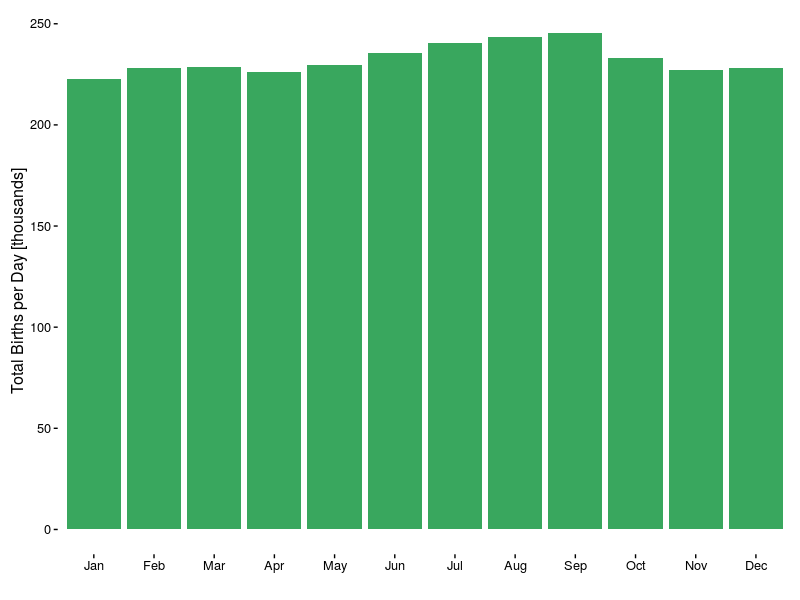
September is typically the month when most babies are born in the United States, though August often ranks close behind.
The answer can change by year, state, and data set. Still, long-term U.S. birth records show a clear late-summer pattern. In this guide, we’ll explain what month are most babies born, why September often leads, and what birth statistics can—and cannot—tell us.

What month are most babies born?
In the United States, September is usually the month when most babies are born. August may take the top spot in some years, especially when birth totals are grouped or measured in different ways.
Data from U.S. birth records has often shown that many of the most common birthdays fall in September. This means September has a high number of births overall, but it does not mean every September day has unusually high births.
The exact result depends on how researchers count births. They may compare:
• Total births in each month
• Average births per day
• Births by weekday
• Births by state or region
• Data from one year or several years
When people ask what month are most babies born, they usually want the broad national answer. For the United States, the best general answer is September, with August also very common.

Why are so many babies born in September?
The main reason is simple timing. A baby born in September was often conceived around December, about nine months earlier.
December includes holidays, vacations, family gatherings, and time away from normal work routines. These changes may increase the chance of conception for some couples. However, conception is affected by many factors, so the holiday link is only one possible explanation.
Birth patterns are also shaped by medical care. Planned cesarean births and labor inductions can move some births away from their natural timing. Doctors may schedule these procedures based on the health of the parent or baby.
Other factors may include:
• Seasonal changes in fertility
• Weather and daylight patterns
• Holiday schedules
• School-year planning
• Access to health care
• Local cultural habits
• Family timing and parental choice
Researchers should be careful when explaining what month are most babies born. A popular theory may sound convincing, but birth trends rarely have one single cause.

What month are most babies born in the United States?
September has often ranked first in U.S. birth statistics. Yet the leading month is not fixed forever.
For example, one year may show August with the highest total. Another year may show September in first place. A small difference in the number of births can change the ranking.
This is why responsible answers use words such as “usually,” “often,” and “in many data sets.” Saying that September is always the top month would be too strong.
The United States also has a large and diverse population. Birth trends in California may differ from those in New York, Texas, or a rural state. National figures combine all of these local patterns into one average.
When studying what month are most babies born, it is also useful to check whether the figures come from:
- Final birth records
- Preliminary estimates
- A national sample
- A single state
- A specific period, such as 1990 to 2022
Final records are usually more reliable because they include late reports and corrections.

Is September really the most common birth month?
September is often the most common birth month in the United States, but the answer depends on the data used.
Many popular birthday lists are based on several years of birth data. These lists often place September birthdays near the top. They may also show that several of the most common individual birthdays occur in the first half of September.
However, a “common birthday” list is not the same as a “most common birth month” table. A birthday list compares individual calendar dates. A monthly table adds all births from the entire month.
A fair summary is:
• September is the usual U.S. leader in long-term comparisons.
• August often ranks very close to September.
• Some recent years may show August first.
• Results vary when researchers use daily averages instead of monthly totals.
• Other countries may have a different peak birth month.
So, what month are most babies born? In the U.S., September is the safest general answer, but it should not be treated as an unchanging rule.

The difference between total births and daily birth rates
A month with 31 days has more chances to record births than a month with 30 days. February has even fewer days. This creates an important measurement issue.
Suppose August and September have nearly the same number of births. September has 30 days, while August has 31. August might have more total births, but September could have a higher average number of births per day.
Researchers may calculate the daily average like this:
Total births in the month ÷ Number of days in the month = Average births per day
This small detail can change the answer to what month are most babies born. Total monthly births are easy to understand, but daily averages can offer a fairer comparison.
Weekdays also matter. Planned inductions and cesarean deliveries are less common on weekends than on weekdays in many hospitals. As a result, some dates look unusually popular, while others appear less common.
The best data analysis explains the measurement method instead of presenting one number without context.

What are the most common birth dates?
Several popular data reviews have found that early and mid-September contain many common U.S. birthdays. September 9 is often mentioned as one of the most frequent birthdays in large historical data sets.
Other dates near the beginning of September may also rank highly. These dates are close to the typical birth window for conceptions that occur around the December holidays.
Still, birth-date rankings have limits. They can be affected by:
• The years included in the study
• Whether leap years are included
• Births from one country or many countries
• Planned deliveries
• Changes in population size
• The way missing records are handled
A common birthday does not mean that date is lucky, unhealthy, or better than another date. It simply means more birth records were reported for that day in a particular data set.

Does the month of birth affect a baby’s health?
The birth month alone does not determine a child’s health, personality, intelligence, or future success. These outcomes depend on genetics, prenatal care, nutrition, family support, education, environment, and many other factors.
Some research has found small links between birth season and certain health outcomes. These links may relate to sunlight, infections, allergies, school-entry rules, or other seasonal conditions.
Such findings are usually statistical associations. They do not prove that being born in September causes a specific result. For one child, family care and medical support matter far more than the calendar month.
Parents should also avoid worrying about the month when their baby is due. A healthy pregnancy and safe delivery are the main goals. Birth timing should be guided by medical advice, not by popular birthday statistics.

Does the birth month affect school performance?
In some school systems, children born soon after the enrollment cutoff may be older than classmates born near the end of the eligibility period. This age gap can affect early classroom performance.
For example, two children may be in the same grade, but one may be almost a year older than the other. At a young age, that difference can influence reading skills, attention, sports ability, and confidence.
This effect is about school cutoff dates, not a special quality of the birth month. It may become smaller as children grow.
Parents can use this information in a practical way:
• Check the local school enrollment cutoff.
• Ask how the school handles readiness concerns.
• Compare a child with their own development, not only with classmates.
• Speak with teachers and pediatric professionals when needed.
The month when most babies are born is an interesting population pattern. It should not be used to predict what one child can achieve.
How reliable are birth-month statistics?
Birth statistics are useful, but they are not perfect. National data may include reporting delays, changes in hospital practices, and shifts in population size.
A strong study should explain its time period and method. It should also separate total births from birth rates, since a growing population can raise the number of births even if the rate stays stable.
When reviewing what month are most babies born, look for these details:
• The country being studied
• The years covered
• Whether the data is final or preliminary
• Whether the study counts totals or daily averages
• Whether multiple births are included
• Whether the results apply to all births or a sample
It is also wise to compare more than one source. If several long-term data sets show a late-summer peak, confidence in the broad pattern increases. If one recent report gives a different result, that may reflect normal yearly variation.
What can parents learn from these trends?
Birth-month statistics can help families understand population trends, but they have little value for predicting an individual pregnancy.
A due date is an estimate, not a promise. Most babies do not arrive on the exact date predicted by an early ultrasound or last menstrual period. Labor can begin earlier or later, and medical care may change the delivery plan.
A useful approach is to prepare for a range of dates:
- Pack a hospital bag before the due month.
- Arrange transportation and child care early.
- Keep important medical numbers easy to find.
- Follow prenatal visit and testing advice.
- Ask the care team when to call about labor signs.
- Make flexible plans for work and family support.
The practical lesson is simple: statistics can provide context, but personal medical guidance should always come first.
Frequently Asked Questions About What Month Are Most Babies Born
What month are most babies born in the U.S.?
September is usually the month with the most U.S. births in long-term comparisons. August often ranks close behind, and the leading month can change from year to year.
Why are September births so common?
Many September births follow conceptions that occurred around December. Holiday schedules, time off, seasonal patterns, and personal choices may all contribute, but no single cause explains the trend.
What is the most common birthday?
September 9 is often listed among the most common U.S. birthdays in large historical data reviews. The exact ranking changes depending on the years and records included.
Are more babies born in summer or winter?
In the United States, late summer and early fall often have more births than winter months. This pattern is not universal, since countries and regions can have different seasons and birth trends.
Does birth month affect personality?
There is no strong evidence that birth month determines personality. A child’s traits are shaped by many influences, including genetics, relationships, learning, health, and life experiences.
Does September have more births because of Christmas?
Conceptions around the December holidays may help explain some September births, but this is only one possible factor. Birth trends also reflect fertility, medical scheduling, culture, and changes in population behavior.
Can the most common birth month change?
Yes. The top month can change when researchers examine a different year, country, state, or calculation method. September is a common U.S. leader, but it is not guaranteed to rank first every year.
Conclusion
September is generally the month when most babies are born in the United States, with August often close behind. The pattern may relate partly to December conceptions, but medical scheduling, culture, fertility, and data methods also play a role.
Remember that national trends do not predict an individual baby’s arrival or future. Use birth statistics as an interesting guide, while relying on qualified health professionals for pregnancy and delivery decisions. Explore trusted birth data, discuss questions with your care team, and share your own observations about seasonal birth trends.