
Most children outgrow a stroller between ages three and five, but size, weight, safety, and comfort matter more than age.
Knowing what age is too big for a stroller is not always simple. A tall three-year-old may outgrow one before a smaller five-year-old, while a child with fatigue, a disability, or a long travel day may still need one. After reviewing stroller safety guidance and common manufacturer limits, the clearest answer is this: stop using a stroller when your child exceeds its limits or can no longer ride safely and comfortably. This guide explains how to tell the difference and what to do next.
What age is too big for a stroller?
For most children, a stroller is no longer needed for daily use between ages three and five. However, there is no universal age when every child must stop using one.
The safest answer to what age is too big for a stroller depends on four factors:
• The stroller’s maximum weight limit
• Your child’s height and body size
• Whether your child can sit safely and follow basic rules
• Whether the stroller still feels stable, roomy, and comfortable
Many full-size strollers support children up to about 50 pounds. Some lightweight travel strollers support less, often between 35 and 45 pounds. Always check the instruction manual or the label on your exact model.
A child can be too big for a stroller even when they are under the weight limit. For example, their shoulders may rise above the harness opening, their legs may hang awkwardly, or they may lean far over the side. These signs can make the stroller unsafe.
Typical stroller age and weight limits
Most strollers are designed for a broad age range, but their limits vary by type. The product label is more reliable than a general age chart.
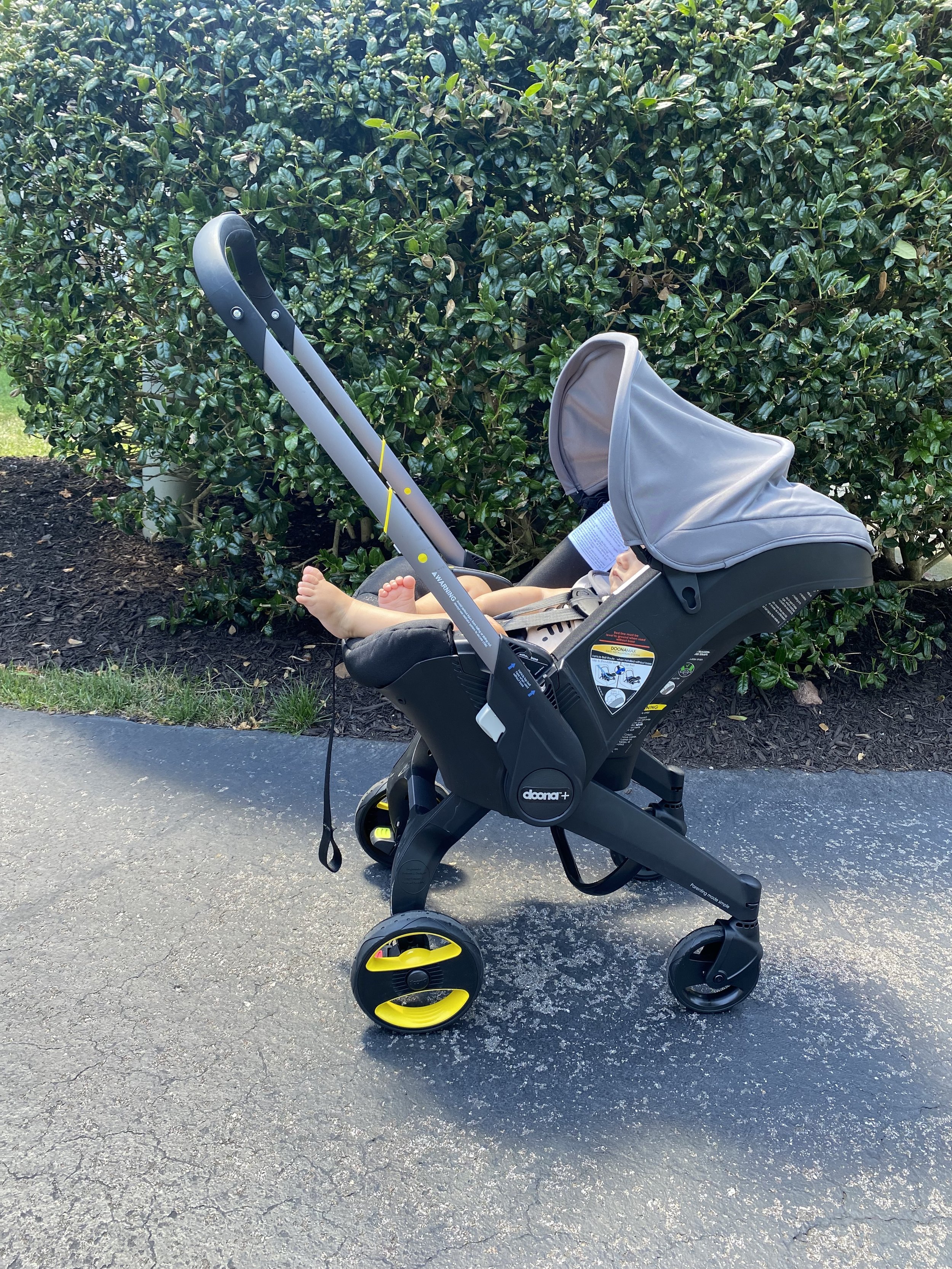
Infant car seat strollers
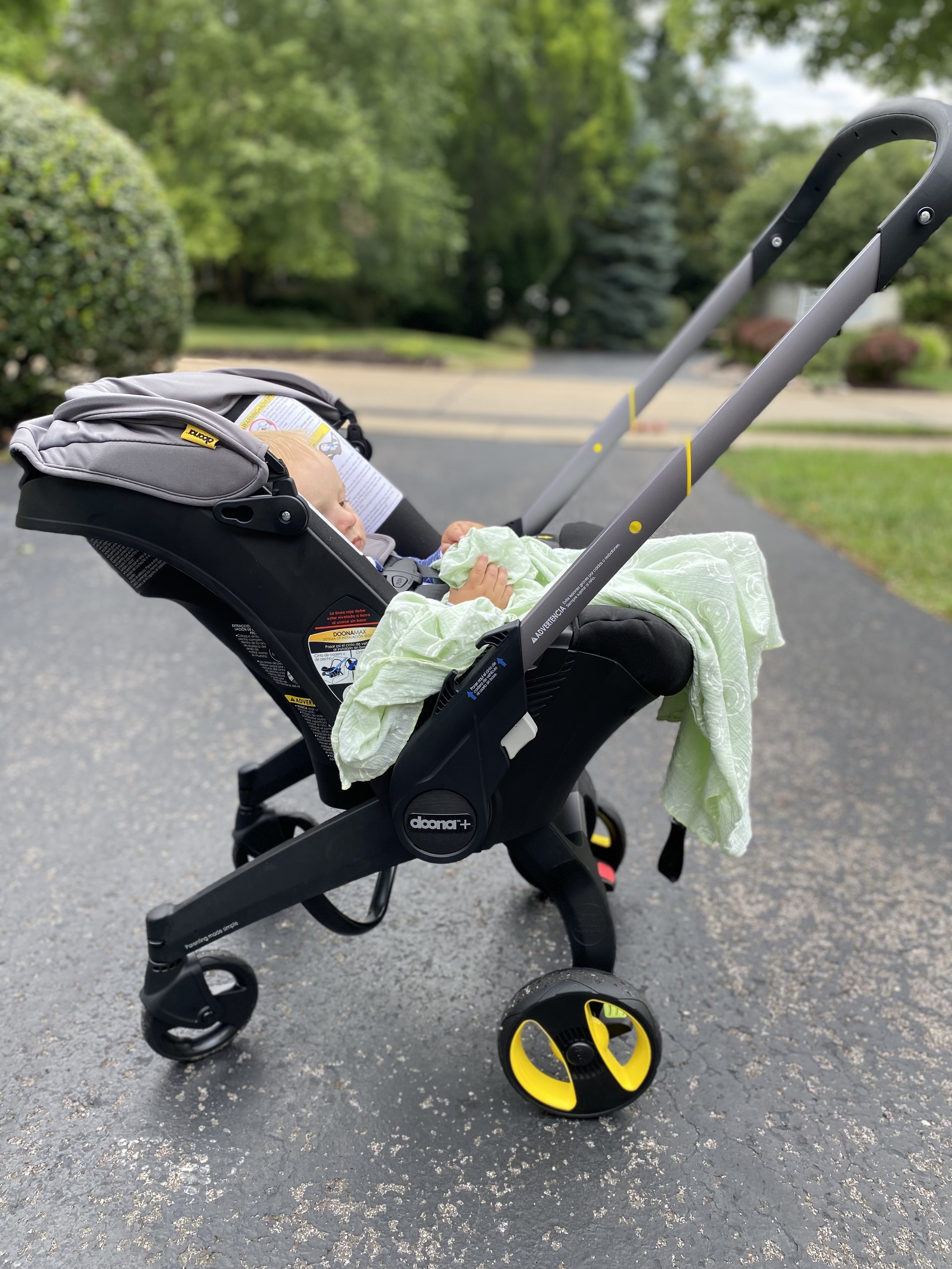
Infant car seat strollers are made for newborns who use a compatible infant car seat. They are not usually designed for an older child to sit in the stroller seat.
The infant car seat itself has separate height and weight limits. Many babies outgrow the car seat before their first birthday, although timing differs. Once your baby no longer fits the car seat, use the stroller seat only if the manufacturer allows it and your child can sit upright safely.
Standard full-size strollers
Full-size strollers often support children from about six months to three or four years. Some models allow use up to 50 pounds or more.
These strollers usually have better padding, larger canopies, and stronger wheels. They are useful for long walks, errands, and travel. Still, a large child may become uncomfortable before reaching the listed weight limit.
Lightweight and umbrella strollers
Umbrella strollers are easy to carry, but they often have lower weight limits and smaller seats. Many support children up to 35 or 40 pounds.
A lightweight stroller can be a good backup for airports or busy city trips. It may not be the best choice for a tall preschooler who needs more legroom or a stronger frame.
Jogging strollers
Jogging strollers are often larger and more stable than basic strollers. Yet they still have a maximum weight limit, and some have different rules for running with young children.
Many experts advise waiting until a baby has strong head and neck control before jogging with them. Follow the stroller manual for the minimum age and never jog with an infant in a car seat unless the manufacturer specifically approves it.
Double strollers and stroller wagons
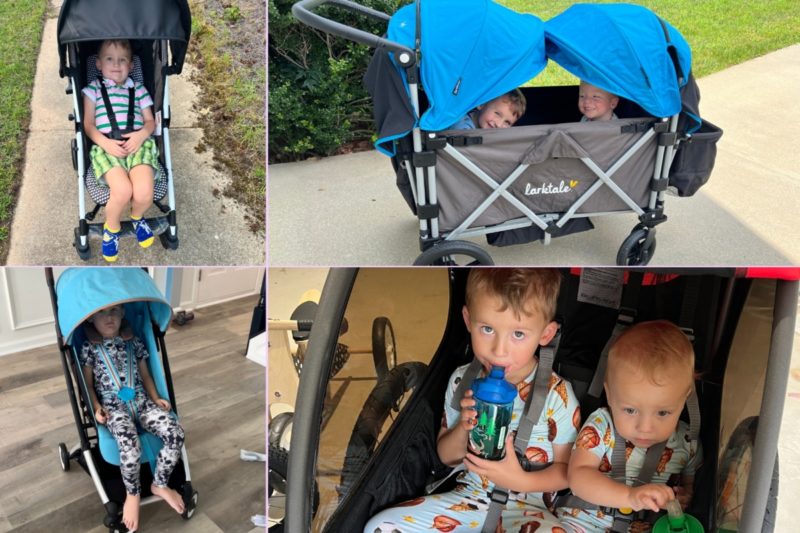
Double strollers may support different weight limits for each seat. A child can outgrow one seat while another child still fits.
Stroller wagons often have higher weight limits and more room. However, they are not automatically safer for older children. Check the harness, side height, brake, and tipping risk before use.
Signs your child has outgrown the stroller
The best way to judge what age is too big for a stroller is to watch how your child fits and behaves inside it. Age gives you a starting point, but the fit gives you the real answer.
Look for these signs:
• Your child is at or above the stroller’s weight limit.
• The top of the child’s head reaches near or above the canopy frame.
• The shoulder straps no longer fit correctly.
• The lap belt rests across the stomach instead of the hips.
• Your child’s knees press tightly against the seat or tray.
• Your child’s feet drag on the ground or wheel area.
• The stroller tips, wobbles, or feels hard to steer.
• Your child climbs out or leans over the side.
• The seat looks too narrow for normal movement.
• Your child complains of pain, heat, or numb legs.
A stroller should feel like a safe seat, not a small cage. If your child cannot sit with a fairly straight back and the harness cannot fit snugly, it is time to stop using that stroller.
When should a child stop using a stroller?
Many children stop using a stroller for daily trips around age three or four. At this age, they can often walk for short errands and stay close to an adult.
That does not mean a preschooler should never use a stroller. Long museum visits, theme parks, airports, city walks, and crowded events can tire even active children. A stroller may also help a child nap, avoid traffic, or stay safe in a large crowd.
The question is not only what age is too big for a stroller. It is also why the child needs the stroller.
A stroller can remain useful when:
• The family is traveling all day.
• The child has a medical condition or disability.
• The child tires quickly or cannot walk long distances.
• The area is crowded or unsafe for free walking.
• The stroller is used for rest rather than constant daily transport.
For children with mobility needs, there is no fair “normal” age limit. A specialized medical stroller or adaptive mobility device may offer better support than a standard stroller. Ask your child’s pediatrician or physical therapist for guidance.

Is stroller use bad for an older child?
Stroller use is not automatically bad for an older child. The concern is whether it replaces movement, affects development, or creates a safety problem.
Young children need regular chances to walk, climb, balance, and play. These activities build strength and coordination. If a healthy preschooler spends most outings strapped into a stroller, they may get less active time.
A practical approach is to use the stroller for long distances and let your child walk during shorter, safe parts of the trip. For example, your child might walk from the parking lot to the store, ride during the busy shopping area, and walk again before leaving.
A stroller also should not be used as a punishment or a way to restrain a child for long periods. Give regular breaks. Offer water, check the child’s posture, and make sure the harness is not too tight.

Stroller safety rules for toddlers and preschoolers
Safe stroller use matters more as children become stronger and more curious. An older child can shift their weight, climb, or pull on the handle.
Follow these basic rules:
• Read the manual for weight, height, and age limits.
• Use the five-point harness whenever the child rides.
• Keep the harness snug but comfortable.
• Lock the parking brake before placing your child in the stroller.
• Never leave a child alone in a stroller.
• Keep bags off the handle unless the stroller has a designed storage area.
• Do not let a child stand on the seat or footrest.
• Keep fingers away from folding hinges and moving parts.
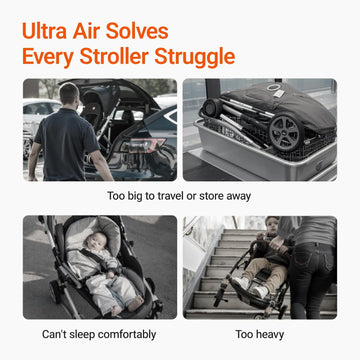
• Avoid stairs and escalators with a child inside the stroller.
• Check wheels, brakes, straps, and the frame often.
• Do not hang a heavy diaper bag from the handle.
A hanging bag can shift the stroller’s center of gravity. In simple terms, it makes the stroller easier to tip backward. Store heavy items low and near the rear wheels when the design allows it.
The Consumer Product Safety Commission has repeatedly warned families about stroller falls, tip-overs, broken parts, and restraint failures. A few seconds of inspection can prevent a serious accident.

How to choose a stroller for a tall or heavy child
If your child is close to the limit, compare strollers by more than the listed weight. A good fit gives your child room without making the frame weak or hard to control.
Check these features:
A high weight limit
Choose a stroller with a limit comfortably above your child’s current weight. Do not assume a stroller rated for 50 pounds will feel good for every 50-pound child.
A tall seat back
Measure your child’s seated height from the seat to the top of the head. Compare it with the stroller’s seat-back height when that measurement is available.
Strong harness placement
The shoulder straps should sit near your child’s shoulders. If they pull down sharply or cannot adjust to the right level, the seat may be too small.
Enough legroom
Your child’s legs do not need to lie flat. However, the knees should not be jammed against the front bar, and the feet should not touch the wheels.
A stable frame
Push the stroller with one hand and test the brakes. It should track straight and stop without a sudden tilt.
A comfortable seat
Look for a supportive seat with enough width. A child who constantly shifts, arches, or tries to escape may not fit well.
Never modify a stroller with homemade straps, added boards, or unapproved seats. Changes can weaken the frame or interfere with folding and braking.

A simple stroller transition plan
Moving away from a stroller can feel hard for both parent and child. A gradual plan often works better than stopping all at once.
- Start with short walks.
Let your child walk in a quiet, safe area. Pick a route that lasts only 10 to 15 minutes.
- Keep the stroller nearby.
Bring it for longer outings, but offer walking time first. This gives your child a safe backup if they become tired.
- Set clear rules.
Explain when your child may ride and when they need to walk. Use simple words such as, “You can ride at the busy street, but you will walk in the park.”
- Practice safety skills.
Teach your child to hold your hand, stop at curbs, and stay close. These skills matter more than walking a certain distance.
- Replace the stroller with planned rest.
Use benches, cafés, quiet corners, or scheduled breaks. A child may ask for a stroller because they need rest, not because they cannot walk.
- Keep exceptions for long days.
A child who walks well at home may still need support during a full day at an airport or amusement park.
In my experience, parents often make one mistake: they wait until a major outing to test stroller independence. A short practice trip reveals much more. It shows whether the child tires, wanders, or needs help before the family is far from home.
When a stroller is still the right choice
There are times when using a stroller beyond the usual preschool years makes sense. Convenience alone is not the only factor.
A stroller can support a child who has:
• Cerebral palsy or another movement condition
• Low muscle tone
• Chronic fatigue
• Balance problems
• Developmental differences
• A temporary injury
• Sensory needs that make crowded places difficult
Parents should not feel pressured by comments from strangers. A mobility aid is a tool, not a sign that a child is lazy or behind.
For a child with special health needs, a standard stroller may not provide enough posture support. An adaptive stroller can offer better head support, foot positioning, harness design, and weight capacity. A pediatrician, occupational therapist, or physical therapist can help select the right equipment.
Ask for professional advice if your child has pain while walking, frequent falls, sudden fatigue, or a major change in mobility. Those signs deserve medical attention rather than a simple stroller decision.

Common mistakes parents should avoid
Several small mistakes can turn a useful stroller into a safety risk.
• Ignoring the manufacturer’s weight limit: The frame and brakes may not work as designed above the limit.
• Using a loose harness: A child can slide down or climb out.
• Choosing age over fit: A four-year-old may fit one stroller but not another.
• Carrying a large bag on the handle: Extra weight can cause a tip-over.
• Letting a child stand: Standing raises the center of gravity and makes falls more likely.
• Using a damaged stroller: Cracked frames, loose wheels, and broken brakes need repair or replacement.
• Relying on a stroller for every short trip: Children need daily movement and practice walking.
• Buying only by online reviews: A popular stroller may still be too narrow or short for your child.
A quick fit check is worth doing every few months. Children grow in sudden bursts, and a stroller that fit well in spring may feel cramped by fall.
How to inspect a stroller before each trip
A short inspection can help you spot problems early. It takes less than a minute.
Check the following:
• Squeeze the brake and confirm that the wheels stop.
• Look for loose screws, cracks, or bent parts.
• Pull each harness strap gently to check for damage.
• Confirm that the seat locks into position.
• Make sure the wheels turn smoothly.
• Check that the child’s feet stay away from moving wheels.
• Test the fold lock before placing the stroller in a car.
• Make sure the canopy or tray does not block the harness.
If a stroller feels unstable when empty, do not place a child in it. If it becomes hard to steer with your child inside, the stroller may be overloaded or damaged.
Frequently asked questions about what age is too big for a stroller
What age do most children stop using a stroller?
Many children stop using a stroller regularly between ages three and five. The right time depends on the child’s size, walking ability, the stroller’s limits, and the type of outing.
Is age four too old for a stroller?
No. A four-year-old may still use a stroller safely if they fit within the manufacturer’s height and weight limits. It can be useful for travel, long walks, crowded events, or a child with mobility needs.
Can a five-year-old still ride in a stroller?
A five-year-old can ride if the stroller is designed for their size and the harness, seat, brakes, and frame remain safe. Many standard strollers are too small by this age, so check the exact product limits rather than relying on age alone.
What is the maximum stroller weight limit?
Many standard strollers support up to 50 pounds, while lightweight models may support 35 to 45 pounds. Some adaptive strollers and stroller wagons support more, but the manufacturer’s stated limit always controls.
Should a child use a stroller every day?
A healthy child should have regular time to walk, play, and build physical skills. A stroller may still be helpful for long outings, but it should not replace normal movement when the child can safely walk.
When should I replace my child’s stroller?
Replace it when your child exceeds the weight or height limit, cannot fit the harness, feels cramped, or causes the stroller to tip or steer poorly. Also replace any stroller with damaged brakes, wheels, straps, or frame parts.
Is a stroller safe for a child who can climb out?
A child who repeatedly climbs out may no longer be safe in that stroller. Stop using it for that child unless a suitable, approved model can keep them secure without restricting normal breathing or movement.
[CodeImg? no, FAQ exception]
Conclusion
There is no single age when every child becomes too big for a stroller. For many children, daily stroller use fades between ages three and five, but the real decision comes from the stroller’s limits, your child’s fit, safe behavior, and the needs of each outing.
Check the weight and height label, use the harness, inspect the frame and brakes, and give your child regular chances to walk. If your child has mobility or health needs, ask a qualified medical professional about adaptive options instead of relying on a standard stroller.
Use this guidance to review your current stroller before your next trip, and share your own transition tips or questions in the comments.