
A newborn can use a stroller from birth if it has a safe, fully flat mode made for newborns.
Knowing when can newborn go in stroller helps parents plan fresh-air walks without risking poor head support, slumped breathing, or unsafe sleep. The right answer depends less on age and more on the stroller design, your baby’s body control, and the way you use the stroller. This guide explains safe newborn stroller use, common mistakes, weather tips, and when to ask your pediatrician for advice.

When Can a Newborn Go in a Stroller?
Most healthy newborns can go in a stroller from the first day home if the stroller has a newborn-approved bassinet or a fully flat recline. Your baby should not sit in a regular upright stroller seat before they can control their head and trunk.
For many babies, this means:
• From birth: Use a stroller bassinet or a true lie-flat seat approved by the manufacturer.
• Around 3 to 6 months: Some babies may use a deeply reclined seat if the stroller manual allows it and the baby has good head control.
• Around 6 months: Many babies can use a standard upright seat, but readiness varies.
The stroller manual is one of your most important safety tools. Some seats look flat but still place a newborn at an unsafe angle. Always check the product label for its minimum age, weight, height, and recline rules.
When asking when can newborn go in stroller, remember that “from birth” does not apply to every stroller. It applies only to a model designed and tested for newborn use.

Why Newborns Need Special Stroller Support
Newborns have weak neck muscles and limited control of their head. Their airway is also small and easy to block if the chin falls toward the chest. A slumped position can make breathing harder, much like bending a soft straw.
A newborn stroller should support your baby’s:
• Head and neck
• Back and hips
• Legs and feet
• Natural breathing position
A flat surface keeps the baby’s body more even. It also reduces the chance of the head tipping forward. This is why a newborn bassinet is often safer than a standard stroller seat.
A five-point harness is important when the stroller design calls for one. It should be snug but not tight. You should be able to place two fingers between the strap and your baby’s body.
Which Stroller Is Safe for a Newborn?
There are three common stroller options for newborns.
Stroller bassinet
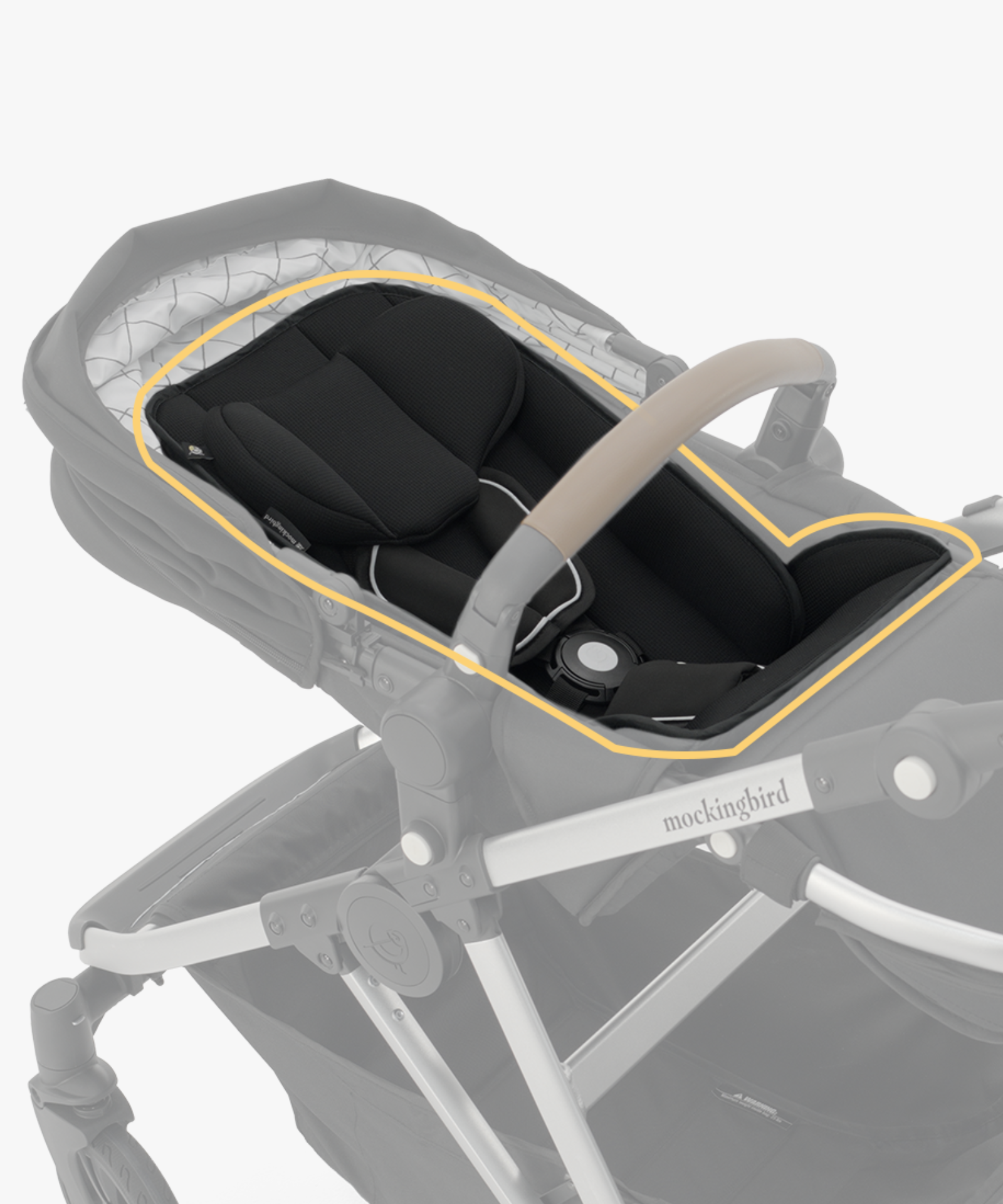
A stroller bassinet gives your baby a flat, firm space. It usually has a wide sleeping area and strong sides. Many bassinets are approved for use from birth, but you should still check the manual.
Use only the mattress and cover supplied or approved by the manufacturer. Extra pillows, thick blankets, sleep positioners, and soft toys can increase the risk of suffocation.
Fully flat stroller seat
Some strollers have a seat that reclines completely flat. This can be safe for a newborn only when the manufacturer says it is suitable from birth.
Check that the seat does not create a bend at your baby’s waist or neck. A small recline is not the same as a fully flat newborn position.
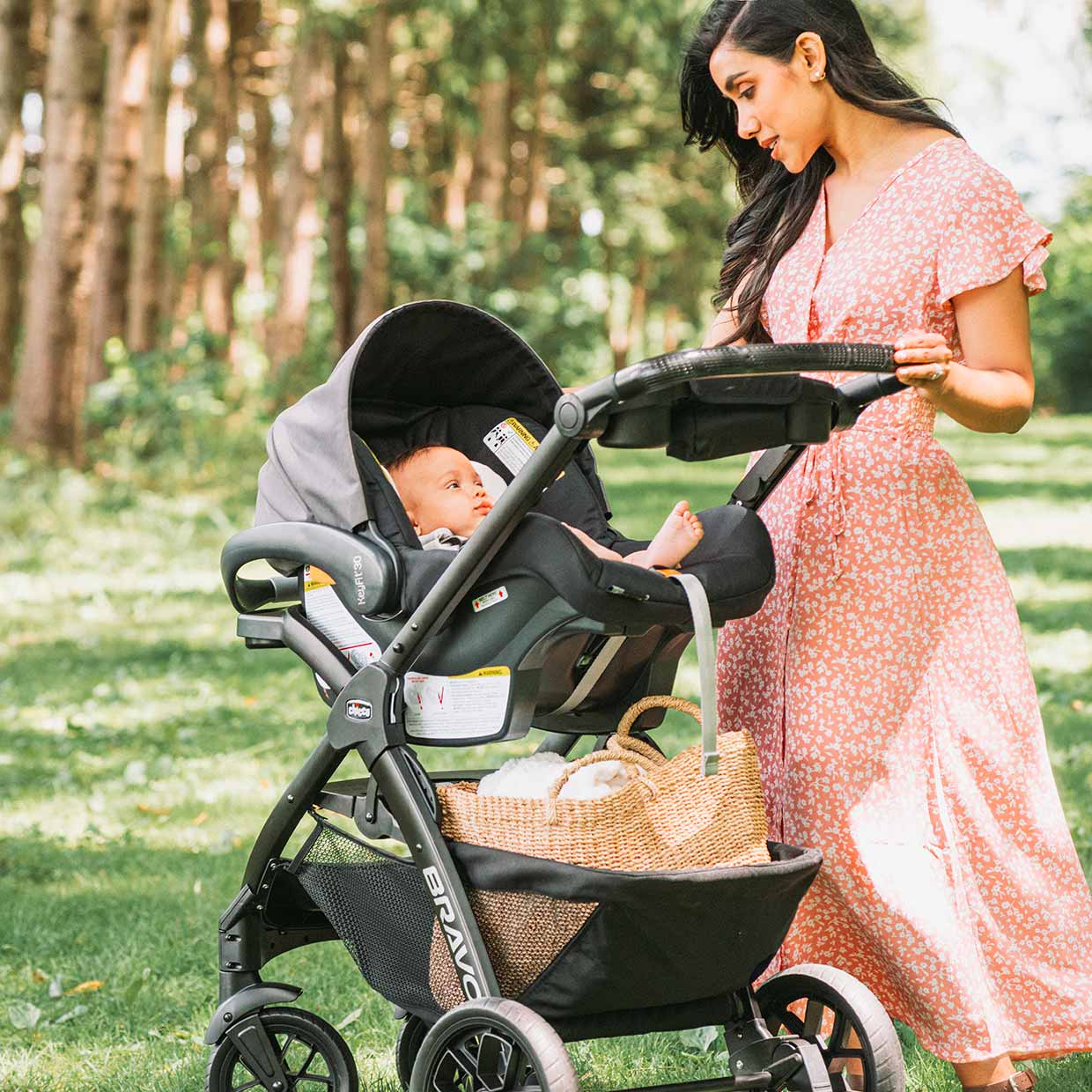
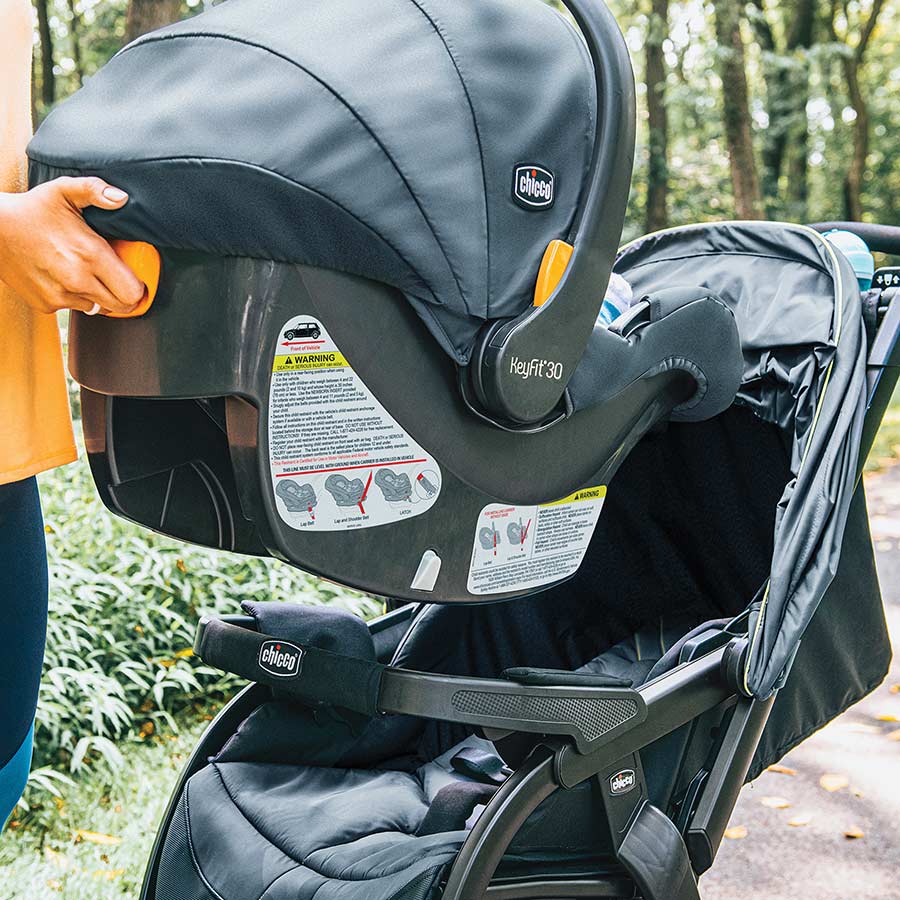
Infant car seat attached to a stroller
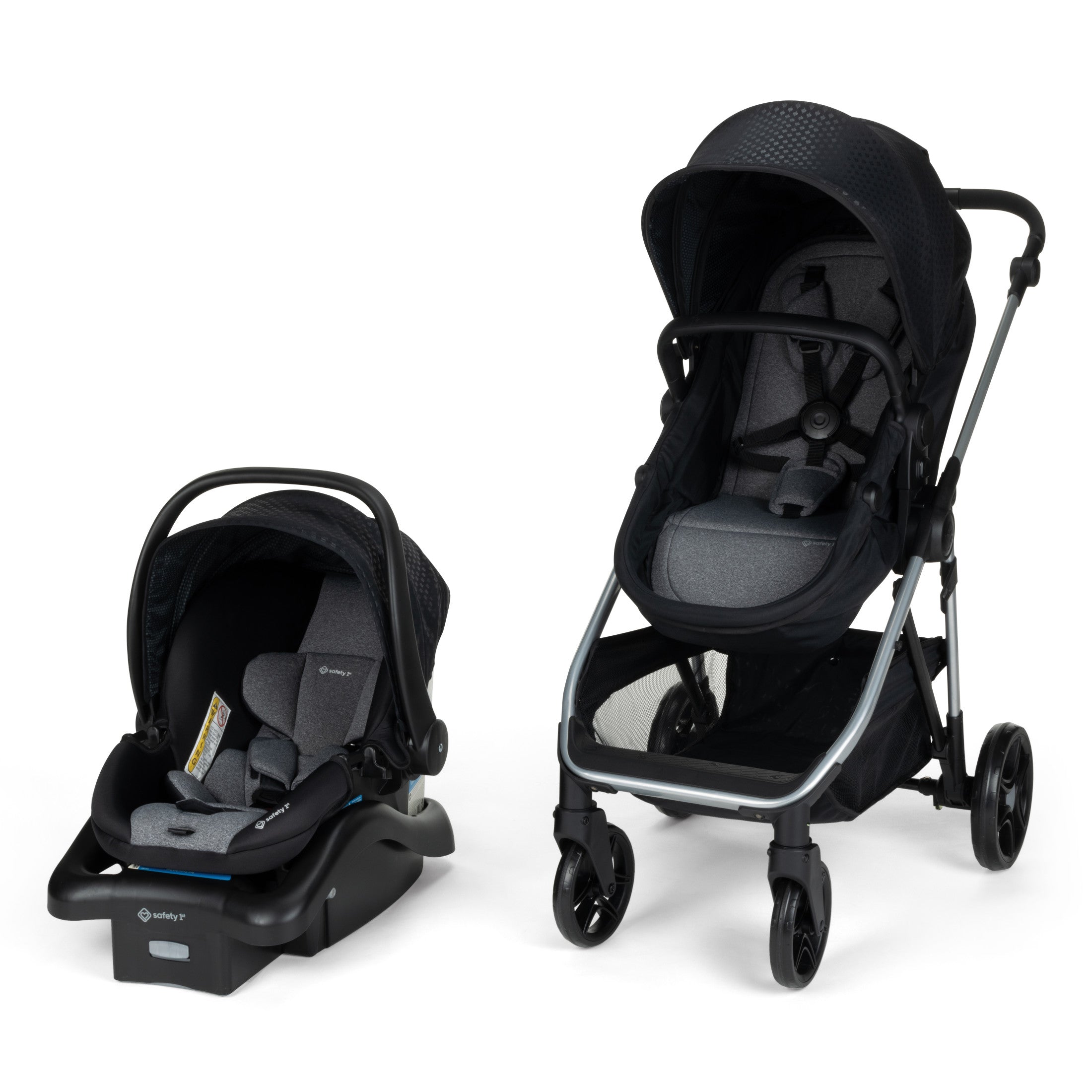
A car seat stroller system is useful for short trips. It lets you move a sleeping baby from the car without waking them.
However, an infant car seat is designed for travel, not routine sleep or long stroller walks. Once you arrive, move your baby to a firm, flat sleep surface as soon as practical. Never place the car seat on a table, couch, bed, or shopping cart.

When Can Newborn Go in Stroller Without a Car Seat?
A newborn can ride without a car seat when the stroller has a newborn-safe bassinet or a manufacturer-approved lie-flat mode. In fact, this setup may be more comfortable for a long walk because it allows a flatter body position.
Do not place a newborn directly in a regular seat just because the seat reclines. Some reclining seats still leave the baby curved or unsupported.
Before leaving home, check these points:
• The seat or bassinet is approved for newborn use.
• Your baby’s head stays centered and supported.
• The chin does not press against the chest.
• The harness is fitted as the manual instructs.
• The stroller does not tip when you place a diaper bag inside.
• The wheels lock properly when you stop.
These checks answer much of the concern around when can newborn go in stroller without relying on age alone.
How Long Can a Newborn Stay in a Stroller?
There is no single time limit that fits every baby or every stroller. A short walk is a sensible place to start. Watch your baby instead of focusing only on the clock.
For a first outing, try 15 to 30 minutes. If your baby stays comfortable, alert, warm, and well positioned, you can slowly increase the time.
Take regular breaks and check your baby often. Stop the walk if your baby:
• Slumps down in the seat
• Has trouble breathing
• Feels very hot or cold
• Becomes pale, blue, unusually sleepy, or hard to wake
• Cries in a way that does not settle
A stroller is not a substitute for a safe sleep space. If your baby falls asleep during a walk, monitor the position closely. When you return home, move the baby to a firm, flat sleep surface.
Safe Stroller Tips for Newborns
A safe stroller walk starts before you leave the house. Read the instructions, inspect the stroller, and dress your baby for the weather.
Use these practical tips:
Use the correct mode. Choose the bassinet or lie-flat setting made for newborns.
Secure the baby correctly. Follow the harness instructions. Do not wrap straps around a blanket.
Keep the airway clear. Make sure the baby’s face is visible and the chin is not pressed down.
Avoid loose items. Do not add pillows, thick quilts, toys, or unapproved inserts.
Use the parking brake. Engage it every time you stop, even on level ground.
Keep both hands available. Do not hang heavy bags from the handle unless the stroller maker approves it.
Stay close. Never leave a newborn alone in a stroller.
Avoid stairs and escalators. Use an elevator or carry the stroller only when it is empty.
Check the wheels. Uneven paths can cause sudden stops or tipping.
Keep the stroller away from traffic. Use sidewalks, parks, and calm paths where possible.
A common mistake is covering the stroller with a blanket to block the sun. This can trap heat and reduce airflow. Use the stroller’s built-in canopy, a well-fitted sunshade, and lightweight clothing instead.

Newborn Stroller Safety in Hot and Cold Weather
Newborns cannot control body temperature as well as older children. They can become overheated or chilled faster than you may expect.
In warm weather:
• Walk during cooler parts of the day.
• Use shade and breathable clothing.
• Check your baby’s chest or back, not just hands and feet.
• Keep air moving around the stroller.
• Never cover the stroller with a thick blanket.
In cold weather:
• Dress your baby in layers.
• Keep the face clear.
• Check the neck and chest for warmth.
• Avoid bulky coats under the harness.
A hat may help in cold weather, but it should fit well and should not cover your baby’s face. If the weather is extreme, staying indoors is the safer choice.

Can a Newborn Sleep in a Stroller?
A newborn may fall asleep in a stroller, but most stroller seats are not intended for routine sleep. The safest sleep space is a firm, flat surface with a fitted sheet and no loose bedding.
A stroller bassinet may be approved for sleep during walks or supervised use. Even then, follow the product instructions closely. Do not assume that every bassinet is approved for overnight sleep.
Car seat attachments need extra care. They are useful for transport, but they are not a replacement for a crib, bassinet, or portable play yard.
If your baby falls asleep, check the breathing position. Once you reach a safe sleep space, transfer your baby when practical.
When Should You Wait Before Using a Stroller?
You may need to wait or ask a pediatrician for advice if your baby was born early, has low muscle tone, has breathing problems, or has a medical condition affecting growth or movement.
Talk with your child’s health care professional before stroller use if your newborn:
• Was born very prematurely
• Uses oxygen or breathing support
• Has trouble feeding or gaining weight
• Has a condition affecting muscle strength
• Cannot maintain a safe head or body position
• Has recently had surgery or a serious illness
For healthy, full-term babies, the main issue is usually the stroller’s design and fit. For babies with special medical needs, individual advice is more important than a general age rule.
How to Choose the Best Newborn Stroller
When shopping for a newborn stroller, look beyond color, weight, and cup holders. Safety and newborn support should come first.
Look for:
• A clear newborn-use rating
• A bassinet or true lie-flat position
• A secure harness
• Strong brakes
• A stable, wide base
• An adjustable canopy
• Easy steering on your usual walking paths
• A clear instruction manual
• Parts that lock firmly into place
A lightweight travel stroller may be convenient, but some models are not safe for newborns. A full-size stroller may offer better support, but it can be heavier and harder to lift.
Think about your daily routine. If you live in an apartment, stroller weight matters. If you walk on grass or rough sidewalks, larger wheels may help. The best stroller is the one that fits your baby, your routine, and the manufacturer’s safety rules.
Common Newborn Stroller Mistakes to Avoid
Many stroller problems come from small choices rather than a lack of care. Parents are often tired, busy, and eager to get outside. A simple checklist can prevent most mistakes.
Avoid these errors:
• Putting a newborn in an upright seat too soon
• Using an insert that was not made for the stroller
• Leaving the baby covered with a blanket
• Allowing the baby to slump
• Carrying heavy bags on the handle
• Using a car seat as a sleep space for hours
• Forgetting to lock the wheels
• Walking in extreme heat
• Leaving the stroller unattended
• Skipping the instruction manual
One lesson many new parents learn after their first outing is that comfort can change quickly. A baby who looked settled at home may become too warm, hungry, or cramped outside. Keep the first trips short and bring basic supplies.
A Simple First Stroller Walk Plan
If you are unsure when can newborn go in stroller, use a gradual plan.
Test the stroller indoors. Place your baby in the approved newborn position and check the head, neck, and body alignment.
Practice the harness. Make sure you can secure and release it easily.
Choose mild weather. Avoid strong sun, heavy wind, extreme cold, or high heat.
Take a short route. Stay close to home for the first walk.
Check your baby often. Look at the face, chest, skin color, and body position.
Return early if needed. A short, calm walk is better than a long, stressful one.
This approach helps you learn how your stroller handles and how your baby responds. It also gives you confidence before longer outings.
Frequently Asked Questions About When Can Newborn Go in Stroller
Can a newborn go in a stroller at one week old?
Yes, a healthy newborn can use a stroller at one week old if the stroller has a bassinet or lie-flat mode approved from birth. The baby must stay properly supported, and the stroller should be used according to its manual.
Can a newborn ride in a regular stroller seat?
Usually, no. A regular upright seat may not support a newborn’s head, neck, and airway well enough, even when it reclines slightly.
What age can a baby sit upright in a stroller?
Many babies are ready around 6 months, but development matters more than age. Your baby should have steady head control and sit well with the support allowed by the stroller.
Can a newborn sleep in a stroller bassinet?
Some stroller bassinets are approved for sleep, while others are meant only for supervised travel. Check the product instructions and use a firm, flat, approved sleep space for routine sleep.
Is a car seat safe for a newborn in a stroller?
A car seat can safely attach to a compatible stroller for travel when used as directed. It should not be used as a regular sleep space or left on a raised surface.
Can I cover my newborn’s stroller with a blanket?
It is best not to cover the stroller with a blanket because it can trap heat and limit airflow. Use the canopy and dress your baby in light layers suited to the weather.
Should I ask a doctor before taking my newborn in a stroller?
Ask your pediatrician if your baby was premature, has breathing problems, has low muscle tone, or has another medical concern. Healthy full-term babies usually need a newborn-approved stroller position and careful supervision.
Conclusion
When can newborn go in stroller? A healthy newborn can usually go out from birth in a stroller bassinet or a manufacturer-approved fully flat position. A standard upright seat is generally better once your baby has strong head control, often near 6 months.
Check the stroller manual, keep your baby’s airway clear, avoid loose bedding, watch the weather, and keep early walks short. If your baby has special medical needs, ask a pediatrician before your first trip. Choose a safe setup, take that first gentle walk, and explore more newborn safety resources as your baby grows.